
Why is my guppy hiding? A guppy may hide while settling into a new tank, avoiding persistent chasing, or seeking shelter. Poor water quality and illness can also cause hiding, while pregnant females and newborn fry may spend more time under cover.
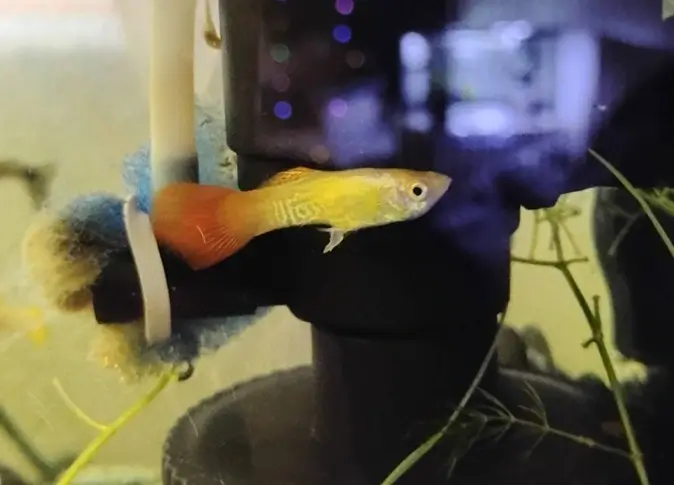
Occasional hiding is not necessarily a problem. What matters is whether your guppy comes out to eat, breathes normally, and swims comfortably. Persistent hiding with appetite loss, rapid breathing, or clamped fins needs prompt attention.
Why Is My Guppy Hiding?
Look for changes that happened before the hiding began, such as adding fish, cleaning the tank, or adjusting the filter. The following causes can help you decide what to check and change.
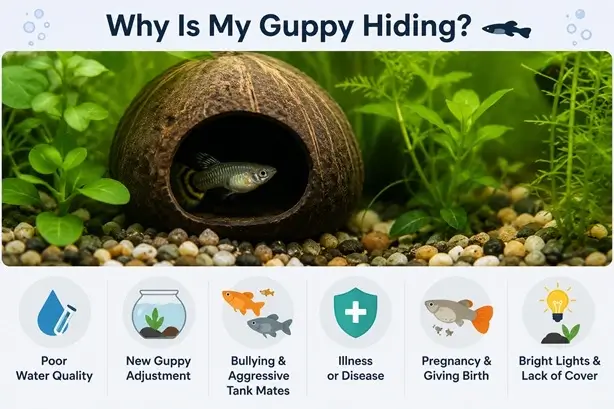
Poor Water Quality
Poor water quality can leave a guppy inactive behind plants or decorations, making it appear to be hiding. Ammonia damages the gills, while nitrite reduces the blood’s ability to carry oxygen. Rapid breathing, clamped fins, or appetite loss may accompany this behavior, even when the water looks clear.
What to do: Test ammonia and nitrite; both should read 0 ppm. If either is detectable, perform a partial water change with dechlorinated, temperature-matched water and retest. Keep the filter running and check the remaining readings against our guppy water parameters guide.
New Guppy Hiding After Purchase
A new guppy may hide while adjusting to an unfamiliar tank. Transport, handling, and differences in water conditions can add to its stress.
What to do: Keep the surroundings quiet, soften harsh lighting, and provide plant cover. Avoid chasing the fish out or rearranging the tank. Offer small amounts of food and remove leftovers. Give it time to settle, but only if water readings are suitable and it is breathing and swimming normally.
Bullying and Aggressive Tank Mates
Repeated chasing, fin nipping, or being driven away from food can make a guppy stay hidden. Other guppies can be responsible, as well as incompatible tankmates.
What to do: Watch the tank quietly, especially during feeding. Add plants or decorations that break up clear lines of sight, while leaving ample swimming space. If chasing continues or injuries occur, separate the aggressor using a suitable divider or another established tank. Check our guppy tank mates guide before changing the stocking.
Illness or Disease
A sick guppy may become inactive and remain behind plants or decorations, making it look as though it is hiding. Loss of appetite, clamped fins, spots, sores, or difficulty swimming suggest more than ordinary sheltering.
What to do: Test the water first, then check for other symptoms. Increase surface agitation if breathing is rapid. Avoid medicating for hiding alone. Use our common guppy diseases guide to help assess the signs, and seek veterinary advice if symptoms persist or worsen.
Bright Lights and Lack of Cover
A guppy may feel exposed in a brightly lit tank with little plant cover. It may retreat behind the filter or decorations for shelter.
What to do: Add plants and shaded areas while leaving open swimming space. Reduce harsh lighting and keep a regular day-and-night schedule.
Excessive Filter Current
If your guppy avoids the filter outlet and stays in sheltered areas, the current may be too strong. Powerhead filters, in particular, can create a strong, concentrated stream that a guppy struggles to swim against. Watch whether it gets pushed sideways or struggles to stay in one place in open water.
What to do: Redirect the outlet toward the glass, use a suitable baffle, or adjust the flow according to the filter’s instructions. Create a calmer swimming area while maintaining filtration and surface movement. Do not switch the filter off to solve the problem.
Common Guppy Hiding Situations
Where your guppy hides can offer clues, but its breathing, appetite, and swimming tell you more about whether something is wrong.
| Hiding Location | Possible Reason | What to Check |
|---|---|---|
| Behind the filter | Avoiding other fish or a strong current. | Watch for chasing or difficulty swimming near the filter outlet. |
| In a corner | Avoiding tankmates or inactive from stress or illness. | Watch for bullying. Test the water if it stays inactive, breathes rapidly, or refuses food. |
| Under rocks or decorations | Seeking shade or shelter after a disturbance. | Check that it can exit safely and comes out to eat and swim normally. |
| Among plants | Resting, seeking shade, or avoiding other fish. | Moving in and out is usually normal. Investigate persistent withdrawal or missed meals. |
Provide several safe retreats so one filter or decoration is not the only shelter available. See our guppy tank setup guide for layout ideas.
Why Is My Female Guppy Hiding?
A female guppy may hide among plants or behind decorations to escape persistent chasing by males. If she comes out but retreats whenever a male approaches, harassment may be the reason.
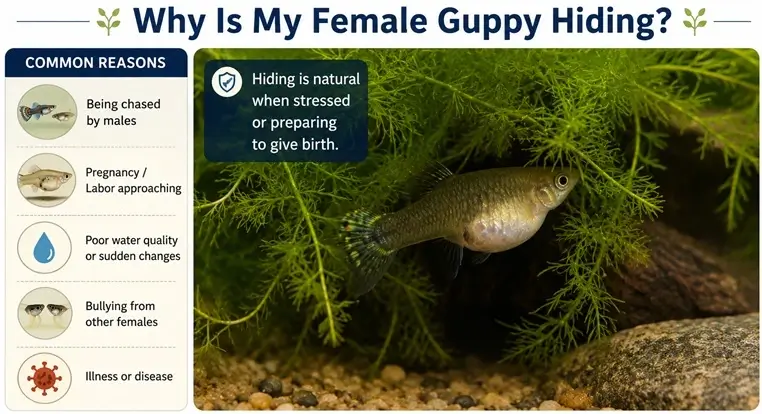
Pregnant females may also seek a quiet, sheltered area as birth approaches. However, hiding alone does not mean she is about to give birth.
What to do: Provide dense plant cover that lets her move out of the males’ sight. If chasing continues and prevents her from feeding or resting, separate the persistent male using a suitable divider or another established tank. See our pregnant guppy guide for other signs of approaching birth.
If she also has clamped fins, persistent rapid breathing, or difficulty swimming, check water quality and investigate illness rather than assuming pregnancy is the cause.
Why Are My Guppy Fry Hiding?
Newborn guppy fry hide to avoid being eaten by larger fish, including their own parents. Dense plants such as Java moss and hornwort, along with floating plant roots, provide shelter where larger fish cannot easily reach the fry.
What to do: Provide plenty of fine plant cover and offer small amounts of finely crushed food near their hiding places. If you want to raise more fry safely, use a separate, cycled nursery tank with gentle filtration. See our guppy fry care guide for feeding and setup advice.
Frequently Asked Questions
Why is my guppy hiding and not eating?
It may be unwell, adjusting to a new tank, or afraid to come out because another fish is chasing it. Test the water and watch what happens during feeding. Does it ignore food, or try to eat but get driven away? Our guppy not eating guide covers other clues.
Why is my guppy hiding after a water change?
Cleaning activity may briefly startle it, but a temperature mismatch, sudden water chemistry change, or untreated tap water can also cause distress. Check the temperature, confirm that you used the correct amount of dechlorinator, and test the water. Rapid breathing or weakness should not be dismissed as normal adjustment. See our water change guide for common mistakes.
Why is my male guppy hiding?
A male guppy may hide to escape repeated chasing or fin nipping from other males or tankmates. Watch whether it retreats whenever another fish approaches, especially during feeding. If there is no chasing, check for a strong current, recent tank changes, poor water quality, or signs of illness.
Why are all my guppies hiding suddenly?
Look for something affecting the whole tank, such as a water quality problem, temperature change, sudden disturbance, or aggressive tankmate. Test the water, check the temperature, and review recent changes to the tank or equipment. If the fish are also gasping, increase surface agitation while investigating.
Should I isolate a hiding guppy?
Hiding alone is not a reason to isolate it. If bullying is the cause, separating the aggressor may allow the targeted fish to feed and rest. A sick fish may need a separate hospital tank for observation or treatment. Use a properly maintained, cycled setup; an unfiltered container can create further problems.
Will my guppy stop hiding?
A guppy may return to its usual activity once it settles in or a problem such as bullying or excessive current is resolved. If illness is making it inactive, improvement depends on the condition and treatment. Look for a returning appetite, normal breathing, and more time swimming outside its shelter.
Related Guppy Problems