
Guppies naturally spend time near the water’s surface, especially when exploring the tank, waiting for food, or resting. So, a guppy staying at the top of the tank is not always a reason to worry.
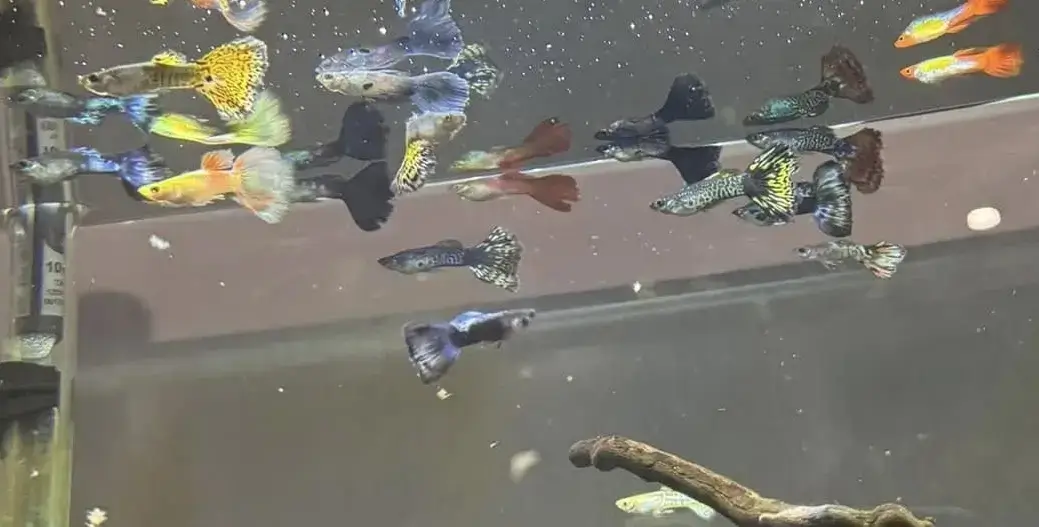
However, there’s a difference between a guppy swimming comfortably near the surface and one that stays there gasping for air. Persistent surface gasping, rapid breathing, clamped fins, or loss of appetite can indicate low oxygen, poor water quality, stress, or illness.
The important thing is to observe how your guppy is behaving and check the water conditions before deciding what to do.
What Causes Guppies to Stay at the Top?
The reason a guppy stays near the surface often becomes clearer when you observe how it behaves, not just where it swims. The table below highlights common situations and their possible causes to help you identify what might be happening in your aquarium.
Common Guppy Surface Behaviors and Possible Causes
| What You’re Seeing | What It May Indicate |
|---|---|
| Swimming near the top but otherwise active | Normal surface-oriented behavior |
| Several guppies gasping at the surface | Low oxygen, ammonia, nitrite, or other water-quality problems |
| New guppy staying near the top | Adjustment stress or unsuitable water conditions |
| Floating at the top and struggling to swim down | Possible buoyancy problem |
| Remaining near the filter | Water movement, oxygenated flow, or a quieter area nearby |
| Pregnant female staying near the top | Seeking a quiet area, stress, or an unrelated health problem |
| Male staying in one top corner | Bullying, stress, or illness |
| Resting near the top at night | Often normal nighttime resting if breathing remains normal |
1. Low Oxygen Levels
When dissolved oxygen becomes too low, guppies may gather near the surface and repeatedly gasp for air. This is different from normal surface swimming, where the fish moves comfortably and breathes normally.
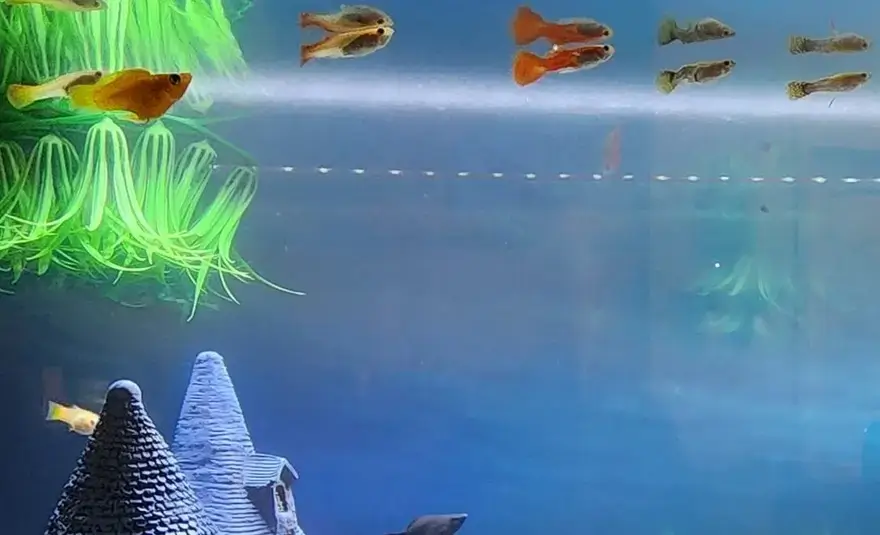
Low oxygen is more likely in:
- Overcrowded tanks — More fish consume more oxygen, increasing demand.
- Poor aeration — Insufficient surface movement can limit oxygen exchange with the air.
- Overly warm water — Warmer water holds less dissolved oxygen.
- Excess organic waste — Decomposing food and waste increase oxygen consumption by bacteria.
- Certain aquarium medications — Some treatments, particularly formalin-based products, can reduce dissolved oxygen. Improper dosing may also irritate fish gills and cause breathing difficulties.
What to look for:
Repeated surface gasping, rapid gill movements, reduced activity, or several fish gathering near the surface.
What to do:
Increase surface agitation immediately using an air stone or filter outflow. Check that the filter is working properly and test the water for ammonia and nitrite.
If waste buildup or poor water quality is contributing to the problem, perform an appropriate partial water change using dechlorinated, temperature-matched water.
Adding live plants is beneficial because they release oxygen during the day through photosynthesis, absorb nutrients such as nitrate, and provide a healthier, more natural environment for guppies. However, good water circulation and aeration are still important.
2. Poor Water Quality
High ammonia and nitrite levels can make it difficult for guppies to obtain or use oxygen properly, causing them to breathe faster or remain near the surface.
Why it happens:
Ammonia can damage delicate gill tissue, reducing its ability to function normally. Nitrite affects the blood’s ability to carry oxygen, so a guppy may show signs of oxygen shortage even when the water contains adequate dissolved oxygen.
What to look for:
Rapid breathing, surface gasping, clamped fins, lethargy, or loss of appetite. Several fish showing similar symptoms can indicate a tank-wide water-quality problem.
What to do:
Test ammonia, nitrite, nitrate, and pH. Ammonia and nitrite should be zero in a properly maintained aquarium.
If ammonia or nitrite is detectable, perform an appropriate partial water change with dechlorinated, temperature-matched water and increase aeration. Check the filter, feeding habits, and stocking levels to identify the underlying problem.
If the behavior started immediately after a water change, also investigate untreated tap water, temperature differences, and sudden changes in water chemistry.
Read our guppy water parameters guide for more information, or see why guppies die after water changes if symptoms began after maintenance.
3. High Water Temperature
Warm water holds less dissolved oxygen than cooler water. When the aquarium becomes excessively warm, guppies may breathe faster or gather near the surface, particularly if aeration is inadequate.
Common causes:
A faulty heater, direct sunlight, high room temperatures, or excessive heat from aquarium lighting.
What to look for:
A thermometer reading above the guppies’ normal temperature range, along with rapid breathing, surface gasping, or reduced activity.
What to do:
Check the thermometer and heater. A stable temperature around76–78°F (24–26°C)is suitable for most guppies.
If the tank is overheating, reduce external heat sources, improve room ventilation, and increase aeration. Lower the temperature gradually rather than making sudden changes that could further stress the fish.
4. Stress or Sudden Environmental Changes
A stressed guppy may spend more time in a corner near the surface, particularly when trying to avoid aggressive tank mates or unfamiliar surroundings.
Common triggers:
- New surroundings — Recently purchased guppies may hide or remain in one area while adjusting.
- Aggressive tank mates — Repeated chasing or fin nipping may force weaker fish into corners.
- Male harassment — Persistent chasing can cause females to retreat from the rest of the group.
- Sudden changes — Major changes in tank layout, lighting, or water conditions can disturb fish.
What to look for:
A guppy remaining in one corner, hiding from other fish, losing color, or becoming reluctant to feed.
What to do:
Observe the tank for chasing or bullying. Provide plants and hiding places, maintain stable conditions, and separate persistent aggressors when necessary.
If male harassment is the problem, keeping approximatelytwo or three females per malemay help distribute attention, provided the aquarium has adequate space.
Some stressed guppies remain near the bottom instead. Our guide on why guppies stay at the bottom of the tank covers that behavior.
5. Illness or Disease
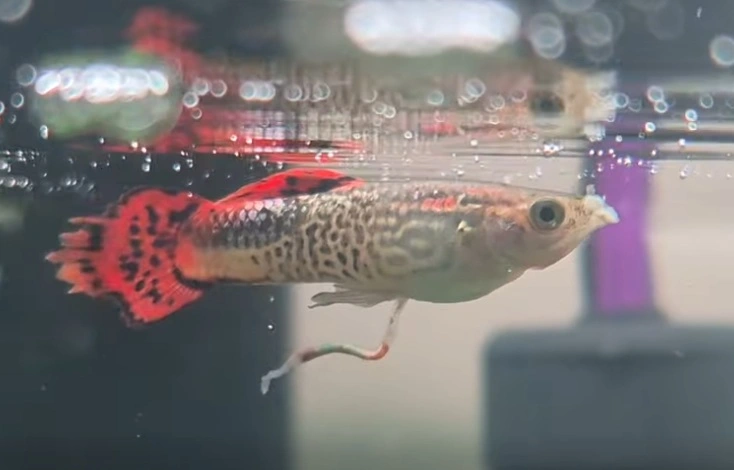
Gill infections, parasites, and other illnesses can cause guppies to breathe rapidly or develop abnormal swimming behavior. Fish with breathing difficulties may spend more time near the surface.
What to look for:
Rapid breathing, clamped or torn fins, white spots, excess mucus, loss of appetite, faded coloration, or unusual swimming movements.
Possible causes:
Gill flukes, ich, velvet, bacterial infections, and other diseases that affect the gills or overall health.
What to do:
Test water quality first, since ammonia and nitrite problems can produce similar symptoms. Examine the guppy for additional signs of disease before selecting any medication.
If an infection is identified, use an appropriate treatment according to the product instructions. A separate, well-aerated hospital tank may be useful for a seriously affected fish, especially when medication is required.
See our common guppy diseases guide for identification and treatment information.
6. Swim Bladder or Buoyancy Problems
A guppy that is physically unable to swim downward may remain at the surface because it cannot control its buoyancy, rather than because it is struggling to breathe.
What to look for:
- Floating sideways or upside down
- Difficulty swimming downward
- Repeatedly floating back to the surface
- Loss of balance or an abnormal body position
- Bloating in some cases
These signs can indicate a buoyancy disorder, although the swim bladder is not necessarily the cause in every case.
What to do:
Check water quality and temperature, then observe whether the guppy can maintain a normal swimming position.
Avoid assuming constipation or using medication without identifying the underlying cause. Persistent loss of balance or worsening swimming difficulties require closer assessment.
For more information, see our guide on why guppies swim upside down.
7. Strong Water Flow
An excessively strong current from a filter or pump can make swimming difficult, causing guppies to gather in calmer areas near the surface or in corners.
What to look for:
Guppies struggling to swim against the current, repeatedly being pushed in one direction, or remaining in a sheltered corner while otherwise appearing healthy.
What to do:
Reduce the filter’s flow if adjustable, or redirect the outflow toward the aquarium glass to soften the current.
Maintain sufficient surface movement for oxygen exchange while providing calmer areas where guppies can swim and rest comfortably.
Frequently Asked Questions
Why Is My Guppy Hanging Near the Filter?
Guppies may gather near a filter because they are attracted to the water movement. Some may also rest in calmer areas around the filter.
However, if several guppies gather near the outflow while breathing rapidly or gasping, check for low oxygen or poor water quality rather than assuming the behavior is normal.
Why Is My Male Guppy Staying at the Top of the Tank?
A male guppy may retreat to a top corner when being chased or bullied by other fish. However, males can also stay near the surface because of poor water quality, stress, or illness.
If he remains in one spot for long periods, stops eating, or breathes rapidly, test the water and observe his overall behavior.
Why Do Guppies Sleep Near the Top of the Tank at Night?
Guppies sometimes rest near the surface at night, remaining relatively still while continuing to breathe. This is generally normal if they swim actively, eat well, and behave normally during the day.
However, continuous gasping or rapid breathing should not be mistaken for normal resting behavior.
Why Is My Baby Guppy Staying at the Top of the Tank?
Guppy fry often swim near the surface while searching for food or staying among floating plants and seeking shelter from adult fish. This is generally normal if the fry are active and feeding.
If several fry appear weak, remain motionless, or repeatedly gasp at the surface, check water quality and aeration.
Why Is My Pregnant Guppy Staying at the Top of the Tank?
A pregnant female may spend more time in a quiet area near the surface, particularly if males are constantly chasing her or birth is approaching.
However, staying near the top alone does not confirm that she is about to give birth. Persistent gasping, rapid breathing, or unusual weakness should prompt a check of water quality and possible illness.