
GloFish Betta is a unique variety of the betta fish (also known as the Siamese fighting fish) that have been genetically modified to exhibit fluorescent colors.
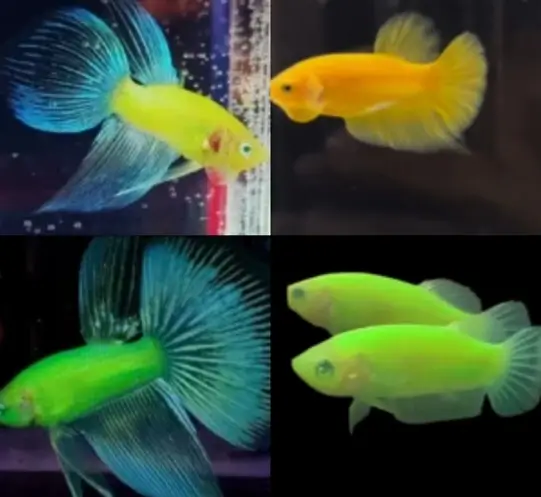
These fish were created by inserting genes from other organisms, including genes originally derived from sea anemones and corals, into the betta fish genome. This genetic modification causes the fish to produce fluorescent proteins, which glow vividly under certain lighting conditions. GloFish bettas have been sold in a small number of officially trademarked colors, most commonly Sunburst Orange, Electric Green, and Moonrise Pink.
Quick Navigation
➜ GloFish Betta Care
➜ GloFish Betta Behavior and Temperament
➜ GloFish Betta Colors
➜ Sunburst Orange GloFish Betta
➜ Electric Green GloFish Betta
➜ Moonrise Pink GloFish Betta
➜ What Makes GloFish Bettas Fluorescent?
➜ GloFish Betta Origin and History
➜ Frequently Asked Questions
GloFish Betta Care
Tank Size
GloFish bettas can survive in smaller tanks of 2 to 3 gallons. A larger tank of 5 to 7 gallons gives them more room to swim and generally supports better growth and a more active, healthy fish. Provide hiding spots like live plants or natural betta caves to help them feel secure and reduce stress.
Water
GloFish bettas are tropical fish and require a heater to maintain a stable temperature between 78–84°F. A gentle filter is recommended to keep the water clean without creating strong currents, bettas prefer slow-moving water. Perform water changes of up to 30% once a week to remove built-up waste and maintain good water quality.
Lighting
Bright lighting isn’t mandatory, but LED lighting will enhance their fluorescent colors noticeably. Standard aquarium lighting also works fine for their day-to-day health.
Diet
GloFish bettas are omnivores and eat a variety of foods, including betta pellets, flakes, and frozen or freeze-dried bloodworms, brine shrimp, or daphnia. Feed twice a day, offering only what they can consume within a few minutes, overfeeding pollutes the water and can lead to health problems.
Tank Mates
GloFish bettas are territorial and should never be housed with other male bettas. Peaceful community fish like small rasboras and tetras can sometimes work, but careful monitoring is needed to confirm compatibility, and a solo setup is always the safest choice.
GloFish Betta Behavior and Temperament
GloFish Bettas behave exactly like standard bettas — the genetic modification affects color, not personality or instincts.
• Males are highly territorial and will flare their fins and gills at other bettas, their own reflection, or sometimes brightly colored tank mates, as a display of aggression rather than actual distress.
• Bubble nesting is normal, healthy behavior. Males often build small clusters of bubbles at the water’s surface, especially in calm, unfiltered corners of the tank — it’s an instinctive breeding behavior, not a sign anything is wrong.
• Bettas are strong jumpers. A tight-fitting lid is essential, since an uncovered tank is one of the most common causes of accidental betta deaths in the hobby.
• Despite the aggression toward other bettas, a GloFish Betta kept alone is typically an active, curious fish that will recognize its owner and often swim to the front of the tank at feeding time.
GloFish Betta Colors
GloFish Bettas are currently available in three officially trademarked colors: Sunburst Orange, Electric Green, and Moonrise Pink. Each color is a genuine, heritable trait rather than a dye or injection, so the fish is born with its color and keeps it for life. All three share the same core care requirements, the differences are purely cosmetic.
Sunburst Orange GloFish Betta
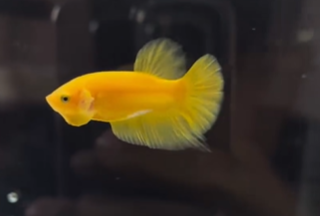
The Sunburst Orange GloFish Betta is a stunning color variation. These bettas have a bright orange-yellow body with a reddish hue that glows vibrantly under blue LED lighting. Their coloration is a genetically inherited trait, passed down from generation to generation, which makes them a beautiful and low-maintenance centerpiece fish. As with any betta, they need to be kept alone, ideally in a proper betta tank with high-quality betta food.
Electric Green GloFish Betta
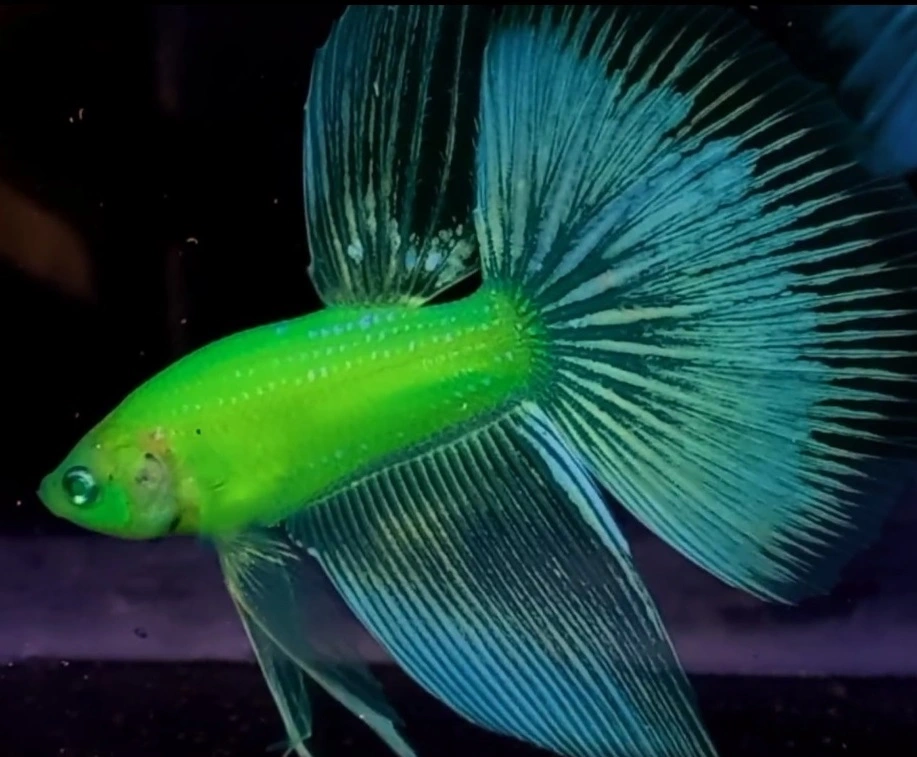
The Electric Green GloFish Betta is another colorful variety, displaying a bright, uniform electric green color across the body. Interestingly, a small percentage, roughly 2–4%, of Electric Green GloFish Bettas carry red pigmentation at birth and may develop red coloring on their fins and body as they mature. This is a natural, harmless part of their genetics rather than a sign of illness, bettas without this pigmentation will not change color. As with all bettas, they should be kept alone with high-quality betta food.
Moonrise Pink GloFish Betta
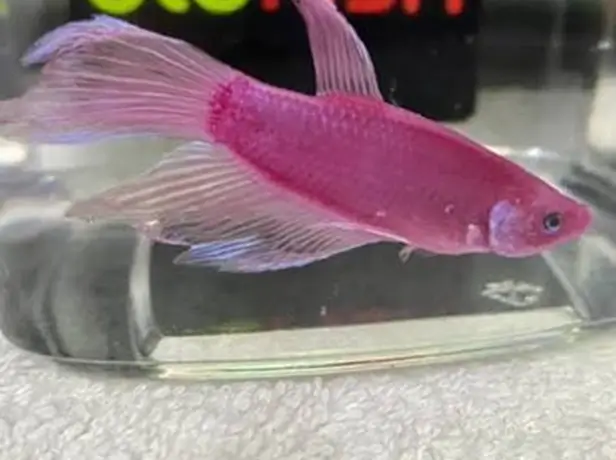
Moonrise Pink is the official trademarked name for the pink GloFish Betta variety. Like the other colors, its fluorescent trait is a hereditary genetic characteristic rather than a dye or injection, meaning the color is passed naturally from parent to offspring and doesn’t fade or wash out over the fish’s life. Moonrise Pink Bettas share the same care requirements as every other GloFish Betta color and should also be kept alone.
What Makes GloFish Bettas Fluorescent?
GloFish Bettas glow because of fluorescent proteins encoded into their genes, originally sourced from organisms like sea anemones and corals. Unlike some ornamental fish that are dyed or injected with color, a GloFish Betta’s glow is a genuine hereditary trait, it’s passed down from parent to offspring naturally, and it does not affect the fish’s health. Their colors appear most vivid under blue LED, actinic, or black lighting, though they still show noticeable fluorescence under standard aquarium lighting.
GloFish Betta Origin and History
GloFish Bettas were introduced by GloFish LLC in February 2020, making betta the newest species added to the GloFish lineup at the time, following the original fluorescent zebra danios, tetras, and barbs. Electric Green was the first betta color released, with Sunburst Orange and Moonrise Pink following afterward. Unlike the original GloFish line, which was developed for environmental pollution research before entering the pet trade, the betta line was created specifically for the ornamental aquarium market.
Frequently Asked Questions
Is there a Purple GloFish Betta?
Not confirmed. GloFish does offer a “Galactic Purple” color, but based on available records, this appears to be available in other GloFish species, like Tetras, rather than as an officially named Betta variety. If you’ve seen one advertised as a “Purple GloFish Betta,” it’s worth confirming with the seller whether it’s a genuine trademarked GloFish product or a different, unrelated color variant.
Are GloFish Bettas discontinued?
Availability has been inconsistent and reports vary, some hobbyist sources indicate the official betta line saw production changes in recent years, while GloFish’s own materials have continued to reference betta colors. Given the mixed information, the most reliable approach is to check current availability directly with GloFish’s official retailers or your local fish store rather than assuming either way.
How can I tell a male from a female GloFish Betta?
The same way you’d sex a regular betta: males have longer, more flowing fins and typically more saturated color, while females are smaller with shorter fins and a rounder body. Female GloFish Bettas can sometimes be kept together in a sorority tank (5 gallons or larger), unlike males, which must always be kept alone.
What temperature do GloFish Bettas need?
78–84°F, the same range as standard bettas. A reliable heater is essential since temperature swings stress bettas and weaken their immune system.
Can GloFish Bettas live with other GloFish?
Not safely with other bettas, they are territorial regardless of color. They may tolerate select peaceful non-betta community fish, but this requires careful monitoring and isn’t guaranteed to work in every tank.
Do GloFish Bettas cost more than regular bettas?
Generally yes, since they’re a patented, trademarked product only sold through licensed retailers, unlike regular bettas which are widely bred and sold by many independent sources.