
The Electric Blue Guppy is one of the most eye-catching blue guppy strains available in the aquarium hobby. Its shimmering metallic blue body, often contrasted by deep black markings, creates an intense iridescent appearance that immediately draws attention. Whether kept in a planted aquarium or a community tank, this beautiful strain stands out because of its vivid coloration and graceful swimming behavior.
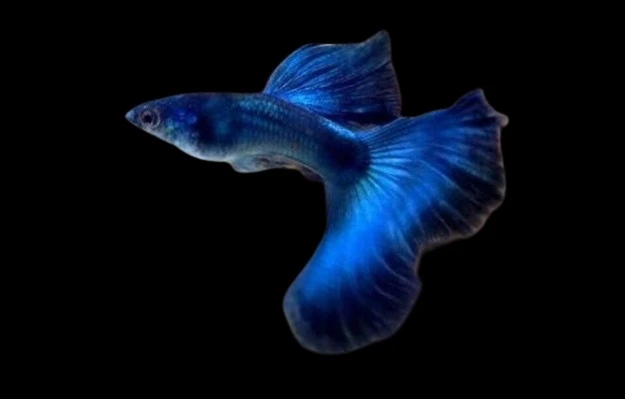
Besides their beauty, Electric Blue Guppies are also beginner-friendly. They are peaceful, hardy, and adapt well to a wide range of aquarium conditions, making them an excellent choice for both first-time fish keepers and experienced breeders. With proper care, these active little fish constantly display their brilliant colors while adding movement and personality to any freshwater aquarium.
Quick Navigation
➜ Electric Blue Guppy Care Guide
➜ Male Electric Blue Guppy
➜ Female Electric Blue Guppy
➜ Electric Blue Guppy Price
➜ Rare Electric Blue Guppy
➜ Dragon Electric Blue Guppy
➜ HB Electric Blue Guppy
➜ Neon Blue Guppy
➜ Japan Blue Guppy
➜ Moscow Blue Guppy
➜ Moscow vs Electric Blue
➜ Other Blue Guppy Varieties
Electric Blue Guppy Care Guide
Size and Lifespan
Electric Blue Guppies are relatively small livebearers that typically grow between 1.5 and 2 inches (4–5 cm) in length. Under good aquarium conditions, they usually live for 2 to 3 years, although exceptional specimens can survive longer when provided with excellent water quality, a nutritious diet, and minimal stress.
Behavior
Electric Blue Guppies are peaceful, energetic fish that spend much of their time swimming in the middle and upper levels of the aquarium. Their active nature makes them excellent community fish, and they thrive when kept with other peaceful species.
Males frequently display to one another by spreading their fins and chasing rivals, particularly when females are present. While this behavior is generally harmless, maintaining a proper male-to-female ratio helps reduce constant harassment. A ratio of approximately 2 males for every 3 females works well in most community aquariums.
Habitat & Care
Although Electric Blue Guppies are small, they appreciate plenty of swimming space. A 10-gallon aquarium is suitable for a small group, while larger tanks provide greater stability and allow the fish to display more natural behavior.
They prefer slightly alkaline water with a pH between 7.0 and 7.5 and a temperature ranging from 72°F to 82°F (22–28°C). Dense vegetation isn’t necessary, but adding a few live plants and hiding areas helps reduce stress and creates a more natural environment.
A quality filtration system keeps the water clean and well oxygenated. Since guppies produce a moderate amount of waste, performing approximately 25% weekly water changes helps maintain excellent water quality and supports long-term health.
Moderate aquarium lighting is ideal. Excessively bright lighting may encourage algae growth, while insufficient lighting can reduce plant growth and make the fish’s vibrant metallic coloration appear less impressive.
Best Tank Mates
Electric Blue Guppies are peaceful and can be successfully kept with many other community fish of similar temperament.
➜Other Guppy varieties
➜Tetras
➜Corydoras Catfish
➜Platies
➜Mollies
➜Shrimps
Avoid keeping them with large aggressive fish or species known for fin nipping, as their flowing fins make attractive targets.
Male Electric Blue Guppy
Male Electric Blue Guppies are the stars of this strain. They display the rich metallic blue coloration that gives the variety its name, often combined with deep black markings that create a striking contrast. Their elongated dorsal and caudal fins make them even more attractive as they glide through the aquarium.
Males are noticeably smaller and slimmer than females, usually reaching 1.5 to 2 inches (4–5 cm). As they mature, their blue coloration gradually intensifies, with healthy adults showing a much deeper metallic sheen than juveniles. Because color continues developing over several months, young males often look less impressive than fully mature specimens.
Like other male guppies, Electric Blue males spend much of the day displaying their fins, courting females, and occasionally sparring with rival males. These interactions are generally harmless and are a natural part of their behavior.
Female Electric Blue Guppy
Female Electric Blue Guppies are larger and fuller-bodied than males but display much more subdued coloration. While some females inherit a faint metallic blue sheen, most lack the brilliant coloration that makes the males so desirable.
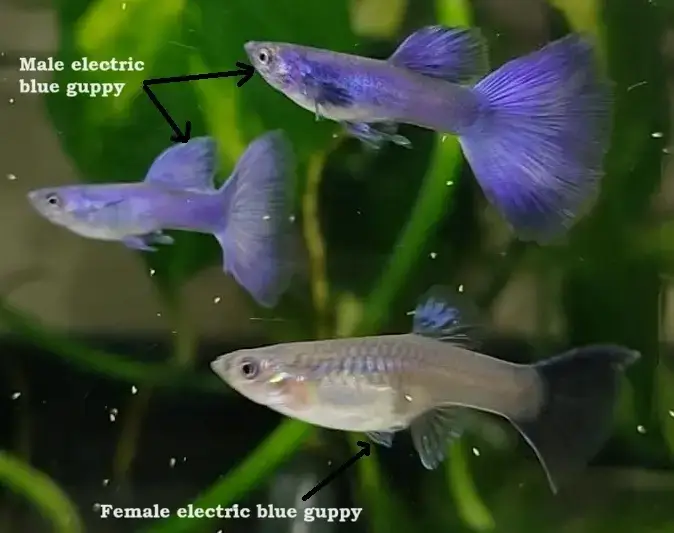
Adult females generally grow to 2 to 2.5 inches (5–6.5 cm). Their bodies are broader, especially around the abdomen, allowing them to carry developing fry. A dark gravid spot is usually visible near the anal fin and becomes increasingly pronounced as pregnancy progresses.
Although females are less colorful, they are equally hardy and play an essential role for hobbyists interested in breeding Electric Blue Guppies.
Electric Blue Guppy Price
The Electric Blue Guppy price typically ranges from $8 to $25, depending on the fish’s age, size, coloration, bloodline, and breeder reputation.
Pet stores often sell hobby-grade fish at the lower end of this range, while dedicated guppy breeders may charge considerably more for specimens with exceptional metallic coloration, superior finnage, and proven genetics.
Many hobbyists also purchase Electric Blue Guppies through aquarium clubs, Facebook groups, and reputable online breeders, where higher-quality fish are often available.
Rare Electric Blue Guppy
A truly rare Electric Blue Guppy displays an even, saturated metallic blue coloration across most of its body and fins with minimal fading or patchiness. Achieving this level of consistency requires many generations of selective breeding, making such fish considerably less common than standard commercial specimens.
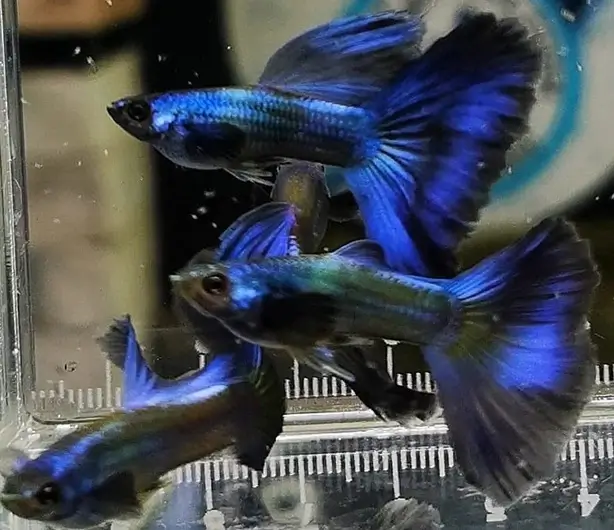
Most Electric Blue Guppies found in local pet stores have good coloration but may show uneven blue coverage or inconsistent black markings. Premium-quality fish usually come directly from specialist guppy breeders who selectively breed for body shape, finnage, and color intensity.
If you’re specifically looking for a rare Electric Blue Guppy, expect to pay toward the higher end of the typical price range.
Dragon Electric Blue Guppy
The Dragon Electric Blue Guppy carries brilliant metallic blue coloration that extends onto the head, creating a more dramatic appearance than the standard Electric Blue strain. This distinctive head coloration is produced by separate genetic traits that breeders have combined with the Electric Blue line.
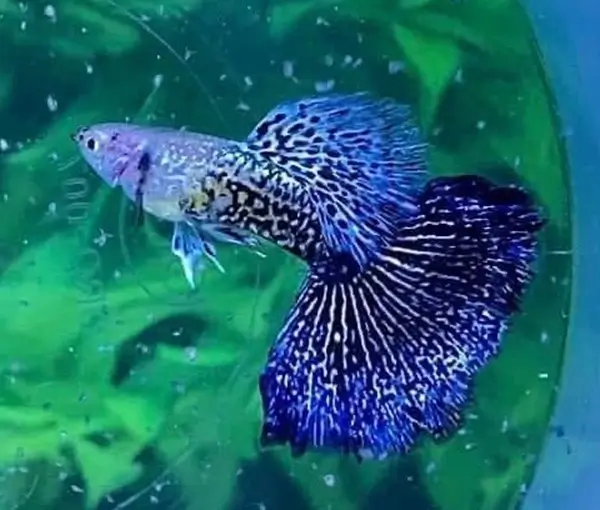
The result is one of the most striking blue guppy varieties available. Despite its unique appearance, care requirements remain identical to those of other Electric Blue Guppies.
HB Electric Blue Guppy
HB stands for Half Black, one of the best-known guppy pattern genes. In HB Electric Blue Guppies, the rear half of the body develops a rich black coloration while the front half and fins display the brilliant metallic electric blue.
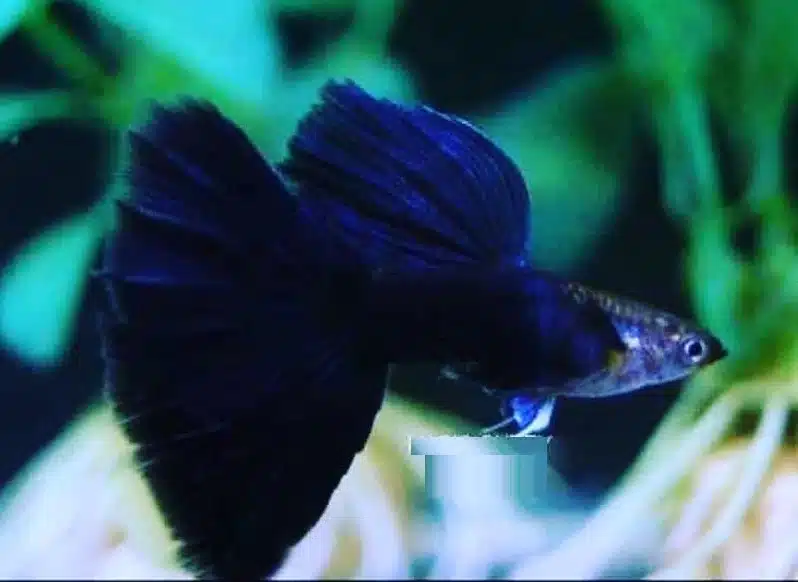
This sharp two-tone contrast makes HB Electric Blue Guppies especially popular among collectors. Apart from the coloration, they are no different from standard Electric Blue Guppies and require the same water conditions, diet, and aquarium setup.
Neon Blue Guppy
The Neon Blue Guppy is often confused with the Electric Blue Guppy, but the two are separate strains. While Electric Blue Guppies display a deep metallic blue body with darker contrasting markings, Neon Blue Guppies exhibit a brighter, lighter blue that appears almost fluorescent under aquarium lighting.
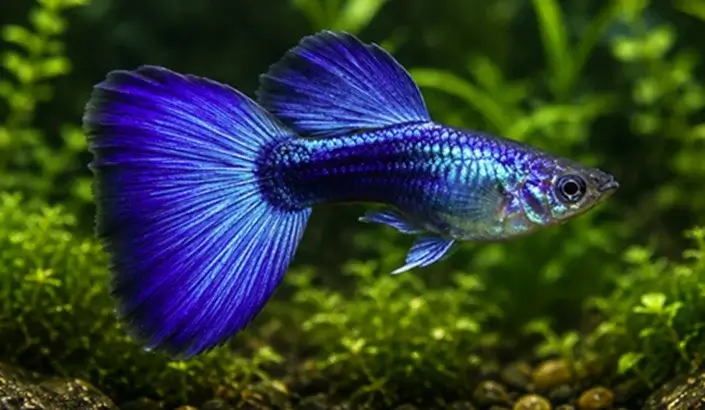
Neon Blue Guppies may range from sky blue to vivid turquoise depending on their genetics and lighting conditions. They share the same peaceful temperament and care requirements as other guppy strains, making them an excellent choice for community aquariums.
If you’re looking for a brighter, more luminous blue, the Neon Blue Guppy is often the better choice. If you prefer a richer metallic appearance with stronger contrast, the Electric Blue Guppy stands out.
Japan Blue Guppy
The Japan Blue Guppy is another distinct strain that should not be confused with the Electric Blue Guppy. Rather than displaying an all-over metallic blue body, Japan Blue Guppies carry a unique blue gene that typically produces a brilliant iridescent blue stripe or shoulder extending across the front half of the body.
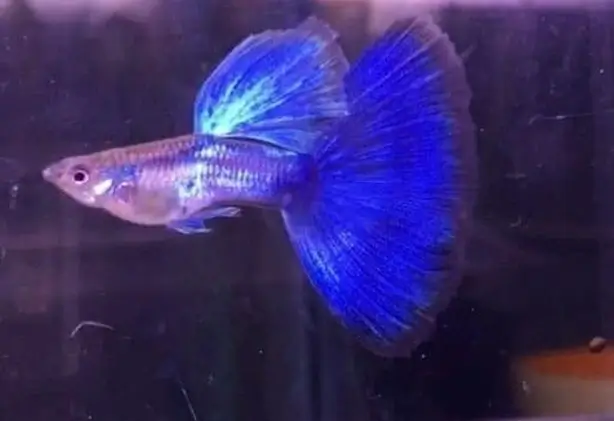
Many Japan Blue Guppies are selectively bred with other strains to create spectacular combinations, making the Japan Blue gene one of the most widely used traits in modern guppy breeding.
Despite their genetic differences, Japan Blue Guppies require virtually the same care as Electric Blue Guppies and thrive under identical aquarium conditions.
Moscow Blue Guppy
The Moscow Blue Guppy is one of the most famous blue guppy strains in the hobby. Unlike the Electric Blue, whose metallic coloration is usually combined with contrasting black markings, Moscow Blue Guppies develop a much deeper, more uniform blue-black coloration covering most of the body.
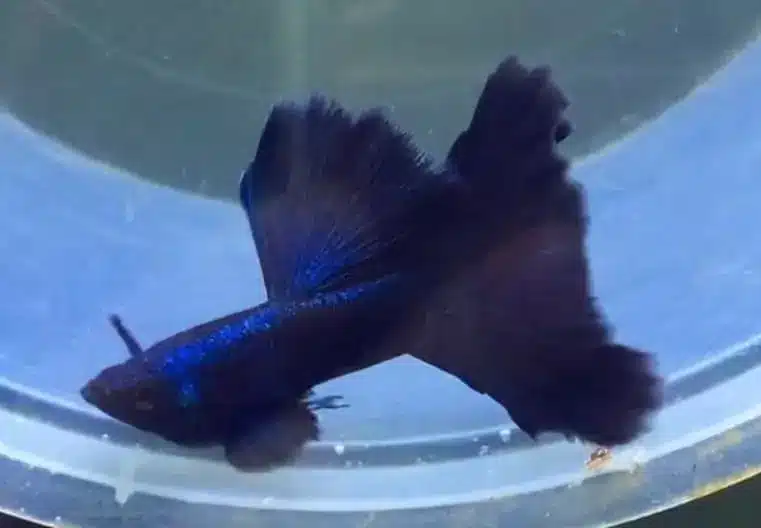
The Moscow strain originated in Russia and has become highly respected among breeders because of its rich coloration, larger body size, and elegant finnage. High-quality Moscow Blues often appear almost velvet blue or dark sapphire under aquarium lighting.
Adult males generally reach 1.5 to 2 inches (4–5 cm), while females grow slightly larger. Like other guppies, they are peaceful livebearers that adapt well to community aquariums when provided with clean water and a balanced diet.
Female Moscow Blue Guppy
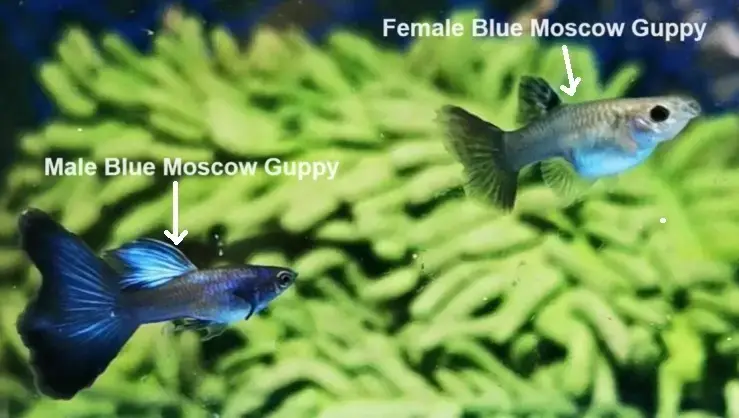
Female Moscow Blue Guppies are considerably less colorful than the males but are larger and more robust. Most females grow between 2 and 2.5 inches (5–6.5 cm) and develop the rounded body shape typical of mature female guppies.
A dark gravid spot becomes visible near the anal fin as pregnancy progresses, making it relatively easy to identify gravid females. Depending on quality, bloodline, and breeder, female Moscow Blue Guppies generally cost between $11 and $25.
The Science Behind Electric Blue Coloration
The brilliant metallic blue seen in Electric Blue Guppies is more than just an attractive color—it results from the interaction between specialized pigment cells and microscopic reflective structures within the skin. Rather than relying on a single blue pigment, the fish’s appearance is created by several biological mechanisms working together.
One of the most important contributors is a layer of reflective cells called iridophores. These cells contain tiny guanine crystals that reflect and scatter light, producing the metallic shimmer that changes as the fish swims or as the viewing angle changes. This is why an Electric Blue Guppy often appears much brighter under good aquarium lighting than in a photograph.
The reflective blue is then enhanced by darker pigment cells known as melanophores, which create the black markings that make the metallic blue appear even more vibrant through contrast. The balance between these pigment cells varies from one fish to another, explaining why some Electric Blue Guppies develop deeper coloration than others.
Like many ornamental guppy traits, electric blue coloration is influenced by multiple genes rather than a single “blue gene.” Selective breeding over many generations has gradually strengthened these traits, allowing breeders to produce fish with richer metallic coloration, better coverage, and more consistent patterns.
Did You Know?
The metallic blue of an Electric Blue Guppy often looks different under different lighting. Bright full-spectrum LEDs usually make the blue appear much more vivid than warm household lighting because the reflective iridophores scatter light differently.
Other Blue Guppy Varieties
Although the Electric Blue Guppy is one of the best-known blue strains, it is far from the only one. Over decades of selective breeding, hobbyists have developed numerous blue guppy varieties, each carrying its own unique genetics, body coloration, and tail patterns. Some are true color strains, while others combine blue coloration with established pattern genes.
Metal Blue Guppy
The Metal Blue Guppy carries an intense metallic finish across much of the body. Depending on the bloodline, the fish may display shades ranging from steel blue to dark sapphire.
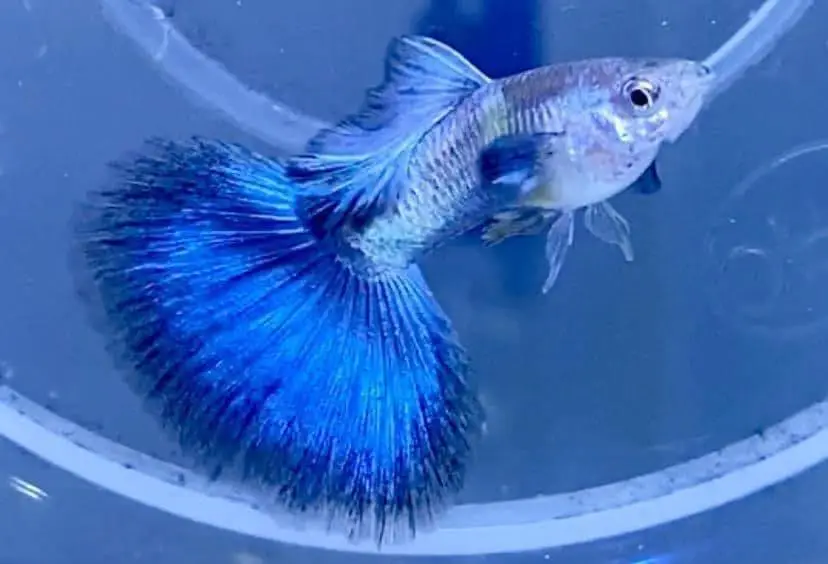
Several related strains have also been developed, including the Metal Blue Dragon Guppy and the Metal Blue Black Guppy, both of which combine metallic blue coloration with additional pattern genes.
Albino Blue Guppy
The Albino Blue Guppy combines blue coloration with the albino gene, producing fish with red eyes and greatly reduced black pigmentation. Instead of the strong black contrast seen in Electric Blue Guppies, Albino Blue Guppies display a much softer, brighter appearance.
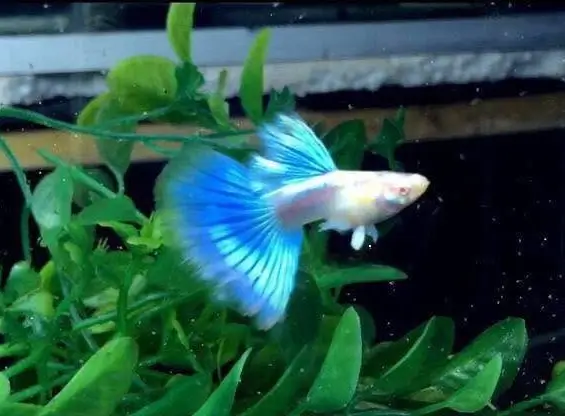
Because melanin is reduced, the blue coloration often appears cleaner and more vivid under aquarium lighting.
Blue Tuxedo Guppy
The Blue Tuxedo Guppy is a separate tuxedo strain characterized by a dark “tuxedo” pattern covering the rear half of the body while the front remains lighter. Depending on the bloodline, the tail may display shades ranging from sky blue to deep metallic blue.
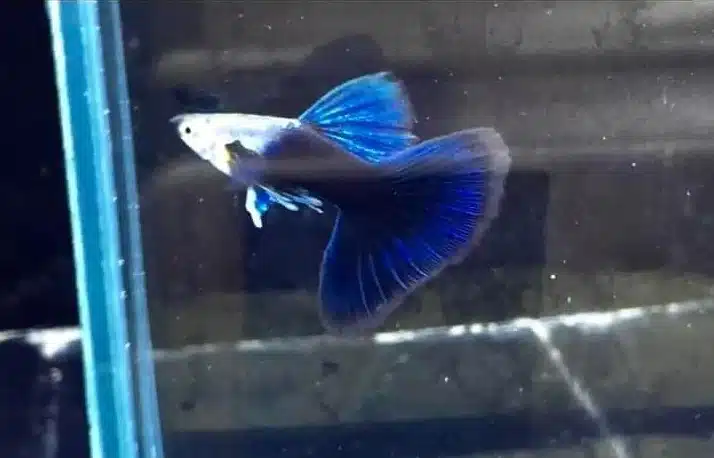
If you’d like to learn more, we’ve covered this variety in detail in our Blue Tuxedo Guppy Guide.
Frequently Asked Questions
How Big Do Electric Blue Guppies Get?
Adult Electric Blue Guppies typically grow between 1.5 and 2 inches (4–5 cm). Females are generally larger than males and may reach up to 2.5 inches (6.5 cm).
How Long Do Electric Blue Guppies Live?
With proper care, Electric Blue Guppies usually live for 2 to 3 years. Excellent water quality, a nutritious diet, and stable aquarium conditions can sometimes extend their lifespan beyond three years.
Are Electric Blue Guppies Good for Beginners?
Yes. Electric Blue Guppies are hardy, peaceful, and easy to care for, making them an excellent choice for beginners. As long as the aquarium is properly cycled and water quality is maintained, they adapt well to community tanks.
Can Electric Blue Guppies Live With Other Fish?
Absolutely. They are peaceful community fish and can be kept with other guppies, mollies, platies, peaceful tetras, Corydoras catfish, and shrimp. Avoid aggressive or fin-nipping species that may damage their flowing fins.
Do Electric Blue Guppies Breed Easily?
Yes. Like all guppies, Electric Blue Guppies are livebearers and breed readily under suitable aquarium conditions. Healthy females can give birth approximately every four to six weeks after mating.
Why Is My Electric Blue Guppy Losing Its Color?
Temporary color loss is commonly caused by stress, illness, poor water quality, or transportation. In some cases, genetics also influence how vibrant the metallic blue appears as the fish matures. Providing clean water, a balanced diet, and stable conditions usually helps healthy fish display their best coloration.
Do Electric Blue Guppies Need a Heater?
Yes. They are tropical fish and thrive in water temperatures between 72°F and 82°F (22–28°C). A reliable aquarium heater helps maintain a stable temperature, particularly in cooler climates.
How Many Electric Blue Guppies Should Be Kept Together?
Electric Blue Guppies are social fish and do best in small groups. If keeping both sexes, maintain more females than males to reduce constant breeding pressure. A ratio of one male to two or three females is generally recommended.
Can Electric Blue Guppies Live With Bettas?
It depends on the individual Betta. Some Bettas ignore guppies completely, while others may attack their colorful fins. Because of this unpredictable behavior, housing them together is generally not recommended.
Are Electric Blue Guppies Rare?
Standard Electric Blue Guppies are widely available, but high-quality specimens with intense metallic coloration, excellent finnage, and strong genetics are considerably rarer and usually sold by specialist breeders.
Final Thoughts
The Electric Blue Guppy is one of the most striking guppy strains available today. Its brilliant metallic blue coloration, peaceful temperament, and beginner-friendly nature have made it a favorite among aquarists around the world.
Whether you’re setting up your very first community aquarium or expanding an established guppy collection, this beautiful strain offers an excellent balance of color, activity, and ease of care. With clean water, quality food, and proper tank mates, Electric Blue Guppies will reward you with vibrant colors and fascinating behavior for years.
Explore More Guppy Varieties
➜ Blue Guppy Varieties
➜ Blue Tuxedo Guppy
➜ Fancy Guppy Types
➜ Pregnant Guppy Guide