
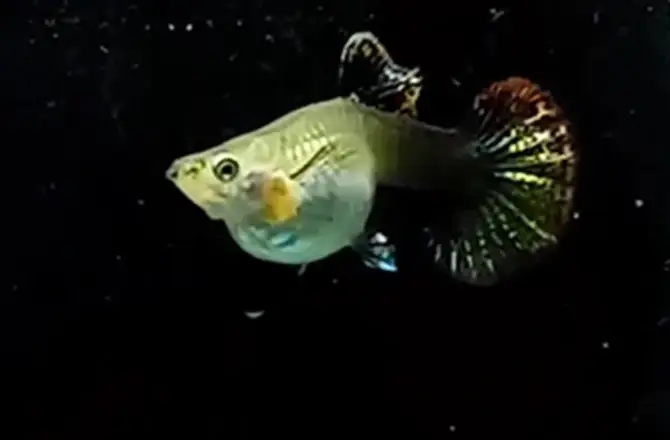
A pregnant guppy usually develops a larger belly, dark gravid spot, slower swimming behavior, and increased hiding as the pregnancy progresses. If your female guppy suddenly looks swollen or starts isolating herself near plants or decorations, there’s a good chance she may be pregnant.
Guppies are livebearers, meaning they give birth to fully formed fry instead of laying eggs. Because guppies breed so easily, many beginner fishkeepers are surprised when they suddenly notice baby guppy fish swimming around their aquarium.
The challenge is that many people struggle to identify:
➜ whether a guppy is truly pregnant
➜ how long guppy pregnancy lasts
➜ signs of labor
➜ when to separate the female
➜ how to protect newborn fry
Quick Navigation:
➜ How to Tell if a Guppy Is Pregnant: Signs of Pregnancy
➜ Pregnant guppy stages: week-by-week Pregnancy
➜ Pregnant Guppy Signs of Delivery: How to Know Birth Is Close
➜ How long guppies stay pregnant
➜ Pregnant guppy vs fat guppy
➜ When to separate a pregnant guppy
➜ Best tank setup for pregnant guppies
➜ What to feed a pregnant guppy
➜ How many fry guppies have
➜ Frequently asked questions
How to Tell if a Guppy Is Pregnant: Signs of Pregnancy
The easiest way to tell if a guppy is pregnant is to look for a combination of physical and behavioral changes. A pregnant guppy usually develops a larger belly, a darker gravid spot, slower swimming behavior, increased hiding, and changes in appetite. These signs become much easier to recognize as the pregnancy progresses, particularly during the final week before birth— though not every female will show all of them.
Enlarged belly: The most obvious physical change is a swelling abdomen. Early on, it looks subtly rounded. As the fry grow, the belly expands further and eventually takes on a distinctly boxy, squared-off shape — a reliable sign that birth is close.
The guppy gravid spot: Look for a dark patch near the anal fin. This is the gravid spot, and it darkens progressively as pregnancy advances. In the final stages, you may even be able to see the tiny eyes of the developing fry through the skin if your female guppy is very light in color. See our guppy gravid spot guide for the full color breakdown and what each shade means.
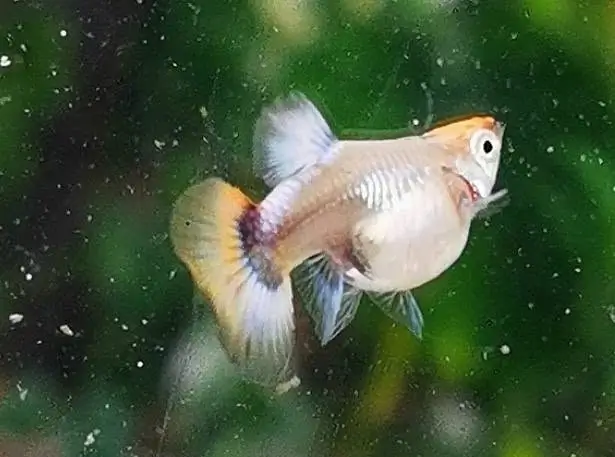
Behavioral changes: Pregnant females tend to slow down. They swim less energetically, rest more often, and tend to avoid the more active chasing males in the tank in the advanced stage of pregnancy. As labor approaches, they’ll seek out quiet hiding places — tucking themselves behind plants, decorations, or near the heater. This is normal, instinctive behavior to protect themselves and their young ones.
Appetite shifts: Many pregnant guppies eat more than usual during the middle stages of pregnancy. However, appetite often drops noticeably in the days just before giving birth.
Pregnant Guppy Stages: Week-by-Week Pregnancy
A guppy pregnancy typically lasts between 21 and 30 days, moving through four rough stages. Knowing what to expect each week can help you tell whether your female guppy is newly pregnant, approaching delivery, or in the later stages of pregnancy.
Week 1: Little visible change yet.
Week 2: Belly fills out and the gravid spot darkens.
Week 3: Fry eyes may become visible in light-colored females.
Week 4: Belly turns boxy, labor signs appear.
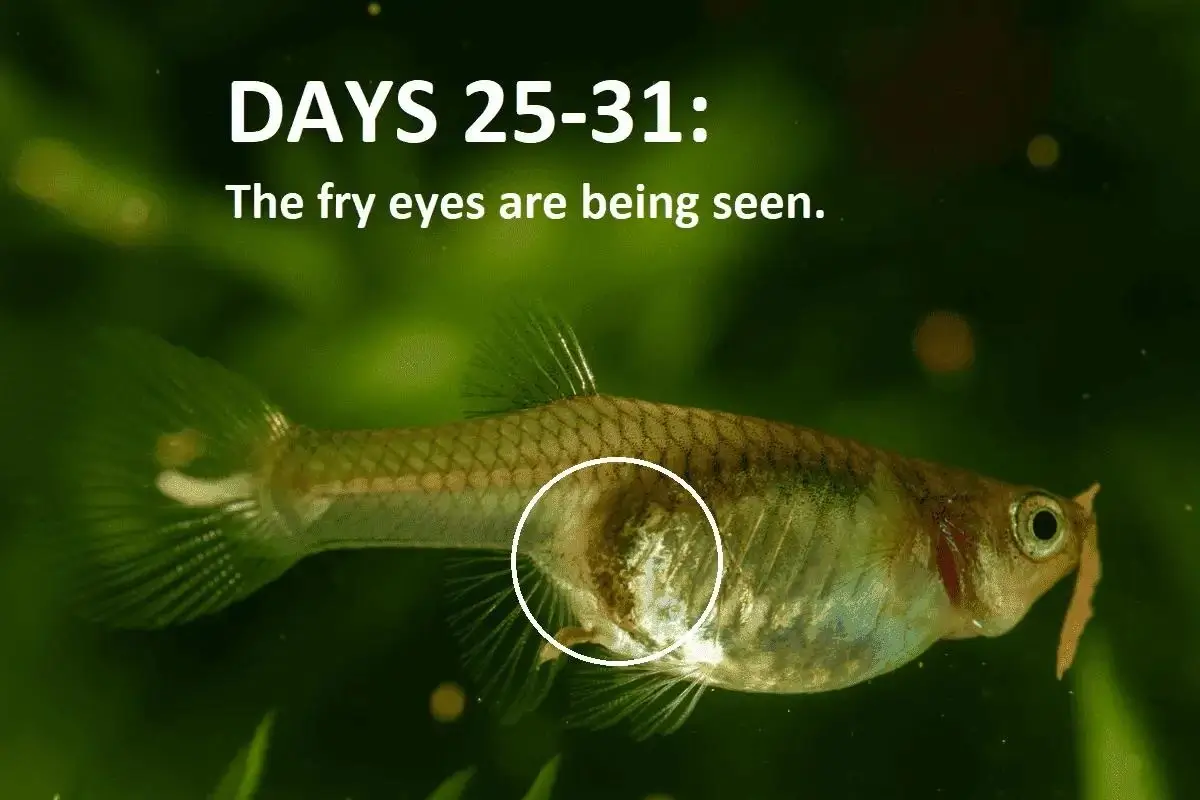
See our guppy gestation period guide for the full week-by-week breakdown, including a day-by-day chart and what affects how long it takes.
Pregnant Guppy Signs of Delivery: How to Know Birth Is Close
The clearest pregnant guppy signs of delivery usually appear during the final days before birth. Watch for several changes occurring together rather than relying on a single sign.
➜ Belly shifted from round to a distinctly boxy or squared shape
➜ Gravid spot turned very dark
➜ Hiding behavior
➜ Faster breathing
➜ Shivering or twitching as contractions begin
See our guppy giving birth guide for the full breakdown of pre-labor versus active labor signs and what to do once birth starts.
How Long Are Guppies Pregnant? Guppy Gestation Period
Most guppies remain pregnant for 21–30 days. This is the typical guppy gestation period, although the exact length can vary depending on temperature, the female’s age and health, and other conditions in the aquarium.
• She can become pregnant again very quickly. Healthy adult female guppies can produce a new batch of fry roughly every month.
• A new mating isn’t always necessary. Female guppies can store sperm from a single mating and use it to fertilize multiple successive pregnancies. This means a female can give birth several times without being near a male again.
• A female bought from a pet store may already be pregnant. Females are often kept in mixed-sex tanks before sale, so she may have already mated before you bring her home. Stored sperm can remain viable for months and produce additional batches of fry long after her last contact with a male.
Pregnant Guppy vs Fat Guppy
Is my guppy pregnant or fat? This is one of the most common questions new guppy keepers ask. Pregnancy, bloating, overfeeding, and certain health problems can all make a female guppy’s abdomen look larger, but there are several clues that can help you tell the difference with a little observation.
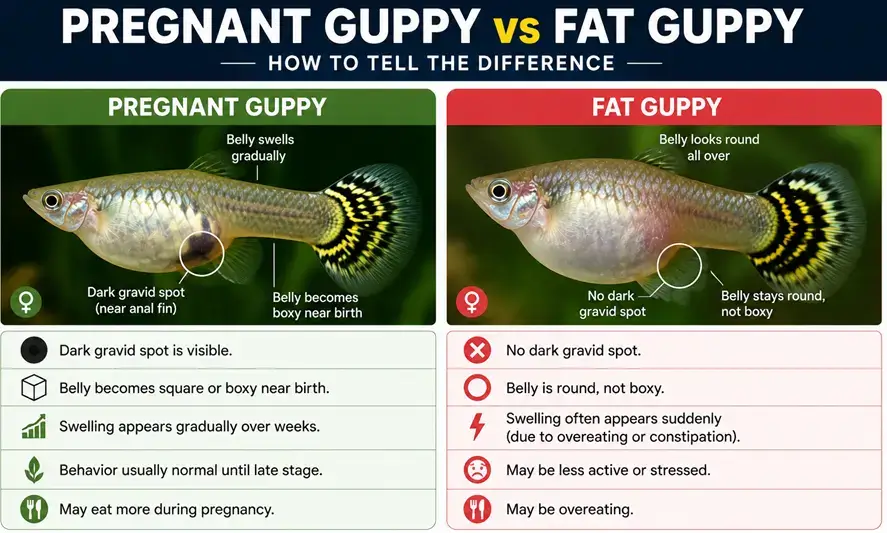
Signs of a Pregnant Female Guppy:
➜ Belly develops gradually over several weeks rather than swelling suddenly
➜ Gravid spot near the anal fin is almost always visible, darkening progressively
➜ Scales lie flat or normal
➜ Swims normally for most of the pregnancy
➜ Belly turns boxy or squared as birth approaches, rather than staying round
Signs of a Fat or Bloated Guppy:
➜ Swells more suddenly, without any visible gravid spot
➜ Belly stays uniformly round and never becomes boxy
➜ In serious cases (dropsy), scales may lift and protrude, giving a pinecone-like appearance
➜ May swim awkwardly, struggle to maintain balance, or appear lethargic and stressed
If the swelling appeared quickly, there is no gravid spot, and the fish seems unwell, it is worth investigating a health issue rather than assuming pregnancy. If your fish shows swelling and difficulty swimming, read our bloated guppy guide.
When to Separate a Pregnant Guppy
Many breeders separate pregnant females to protect the fry after birth. In a community tank, the adult fish, including the mother herself, will readily eat the fry the moment they’re born, so having a plan in place beforehand makes a real difference to survival rates.
➜ Don’t move her too early. Moving the fish too soon increases stress, which can complicate or even delay labor.
➜ Best timing: 3 to 5 days before the expected birth. Once the belly has taken on a boxy or squared shape and she’s begun hiding more frequently, that’s the window most experienced breeders wait for.
➜ Act sooner if she shivers, twitches intermittently, and breathes rapidly. These are signs labor is closer than the timeline above suggests.
How to separate her: a breeder box, a dedicated fry tank, or a heavily planted aquarium all work well. Breeder boxes are a popular choice, since they let the female stay in the same water while keeping the fry safely separated after birth. Whichever method you choose, keep the environment calm, well-planted, and free from aggressive tankmates to reduce her stress in those final days.
Best Tank Setup for Pregnant Guppies
Stable water conditions are extremely important during pregnancy. It’s worth having a breeder box ready too, so the fry aren’t eaten by the female herself right after birth. But make sure you introduce the Pragant Guppy at the later stages of Pregnancy so that it doesnot get stressed.
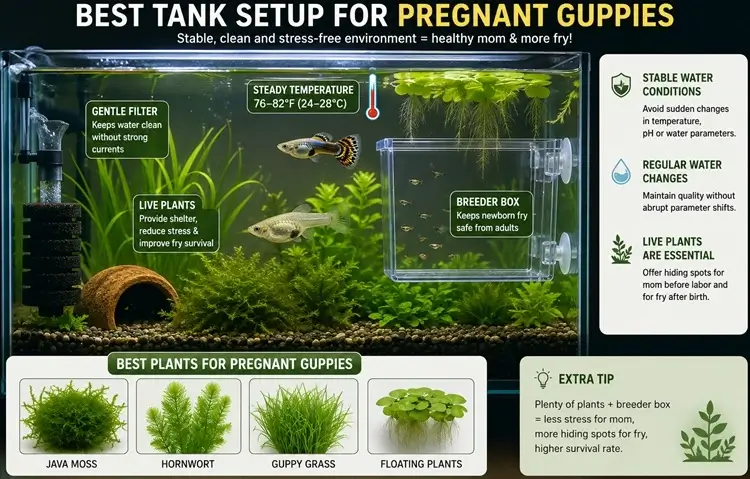
➜ Temperature. Keep it steady within 76–82°F (24–28°C) — see our temperature for guppies guide for heater sizing and the full safe range.
➜ Filtration. Use a gentle filter that keeps the water clean without creating strong currents that tire the female out.
➜ Water changes. Keep them regular but gradual, to avoid abrupt parameter shifts — see our why guppies die after water changes guide for the most common mistakes to avoid.
➜ Live plants. One of the most valuable additions to her tank. They give her quiet hiding spots before labor, and immediately after birth they give newborn fry somewhere to retreat before they can be eaten.
Good plant choices: java moss, hornwort, guppy grass, floating plants.
For more setup advice, read our guppy tank setup guide.
What to Feed a Pregnant Guppy
Pregnant guppies need high-quality protein-rich foods. A well-fed female is more likely to carry her fry to full term, recover quickly after birth, and produce healthier, stronger babies.
➜ Protein is the priority. Live and frozen foods like brine shrimp, daphnia, and bloodworms closely mimic a guppy’s natural diet and support developing fry.
➜ Flakes and pellets as the daily base. High-quality flakes or micro pellets form the everyday staple, with live or frozen food offered as a regular supplement, not just an occasional treat.
➜ Feed small portions, 2–3 times a day. This keeps her consistently nourished without polluting the water with uneaten food, which can affect water quality and add stress.
For detailed feeding advice, read our best guppy food guide.
How Many Fry Do Guppies Have?
The number of fry a guppy produces in a single birth can vary quite a bit, anywhere from 10 to 100, depending on several factors.
➜ Age, size, genetics, and health all play a role. Larger, older, well-nourished females tend to produce bigger batches; younger or smaller fish typically have fewer fry per birth.
➜ First-time mothers deliver smaller batches. Completely normal — batch sizes generally increase as she matures and goes through subsequent pregnancies.
➜ Not every fry survives. Especially in a community tank without adequate plant cover or separation. Dense hiding spaces and good water quality are the two most impactful things you can do to improve survival odds.
If you’re raising fry for the first time, our guppy fry care guide covers everything you need to know, and our guppy fry growth guide covers how quickly they develop once they survive those first days.
Frequently Asked Questions
Can I keep 2 pregnant guppies together?
Yes, as long as the tank is peaceful and not overcrowded.
Do guppies eat their babies?
Yes. Adult guppies may eat newborn fry if there are not enough hiding spaces available.
How Can You Tell if a Guppy Is Pregnant?
The most reliable way to tell if a guppy is pregnant is to look for several signs together. A gradually enlarging belly, a darkening gravid spot near the anal fin, increased hiding, slower swimming, and a boxier belly toward the end of pregnancy are common signs. A single dark gravid spot or large belly alone does not always confirm pregnancy.
Why is my pregnant guppy staying at the bottom?
Pregnant guppies may rest near the bottom because of stress, exhaustion, poor water quality, or approaching labor. Monitor the fish closely for additional symptoms.
You can also read our guppy staying at the bottom guide.
Can pregnant guppies eat normally?
Yes. Most pregnant guppies eat normally or even more than usual during pregnancy. However, appetite may decrease shortly before giving birth.
Can guppies give birth overnight?
Yes. Many guppies prefer giving birth at night or early morning when the aquarium environment is calmer and quieter.
What temperature is best for pregnant guppies?
Pregnant guppies usually do best in water temperatures between 76–82°F (24–28°C). Stable temperatures help reduce stress and support healthy fry development.
Can pregnant guppies live with males?
Yes, but constant chasing from males may stress pregnant females. Many breeders temporarily separate males during late pregnancy.
How often do guppies get pregnant?
Healthy female guppies may become pregnant almost continuously if males are present in the tank.
How can I protect newborn guppy fry?
To improve fry survival:
➜ add dense plants
➜ use breeding boxes carefully
➜ remove aggressive fish
➜ maintain stable water quality
➜ feed fry small nutritious foods frequently
Final Thoughts
Pregnant guppies usually show several clear signs before giving birth, including an enlarging belly, a darkening gravid spot, and behavioral changes like increased hiding and slower swimming. Learning to recognize these signs early gives you the time to prepare properly.
Understanding the different stages of pregnancy helps you reduce stress on the female, anticipate labor, protect the newborn fry, and ultimately improve how many survive. With stable water conditions, proper nutrition, and enough plant cover for fry to hide, most pregnant guppies give birth successfully and bounce back quickly afterward.