
Guppy giving birth is usually fast once labor actually starts — most females deliver their entire litter in two to six hours, releasing fry one at a time rather than all at once. The hard part isn’t the birth itself, it’s knowing when it’s about to happen, what’s normal versus what’s a problem, and what to do in the hours before and after.
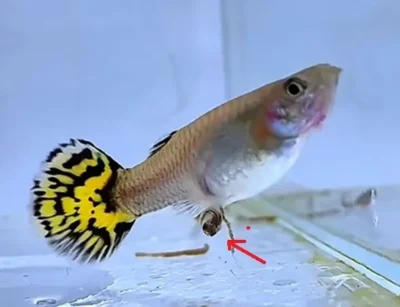
Quick Answer: A guppy about to give birth hides or isolating herself, hovering near heaters, or hiding in plants, breathes rapidly, shivers or trembles, and develops a square, boxy belly with a nearly black gravid spot. Labor itself typically takes 2–6 hours, and a single female can drop anywhere from 4 to 100 fry depending or age, size and genetics, though 20–50 is typical.
Quick navigation:
➜ How Guppies Give Birth
➜ Guppy Giving Birth Signs
➜ Pregnant Guppy Giving Birth: What Happens During Labor
➜ What to Do After a Guppy Gives Birth
➜ How to Care for Newborn Guppy Fry
➜ Common Guppy Birth Problems
➜ Why Isn’t My Guppy Giving Birth?
➜ Why Is My Guppy Giving Birth to Dead Fry?
➜ Guppy Giving Birth to Yellow Balls
➜ The Biology of Guppy Birth
➜ Frequently Asked Questions
How Guppies Give Birth
It starts with mating. Males chase females persistently, and when a female allows it, the male uses his gonopodium, a modified anal fin, to transfer a packet of sperm directly into her body — see our male vs female guppy guide if you’re not confident telling them apart yet. Fertilization happens internally, not in the open water, which is why guppies are livebearers rather than egg-layers — see our do guppies lay eggs guide for the full explanation of why this matters.
Once fertilized, the female carries the developing fry inside her for roughly 21 to 30 days, covered in detail in our pregnant guppy guide. At the end of that gestation period, she gives birth to fully-formed, free-swimming fry.
Guppy Giving Birth Signs
There are two distinct phases here, and mixing them up is one of the most common mistakes in guides on this topic. The boxy belly and dark gravid spot show up days before anything else — they’re pre-labor signs, not labor itself. The behaviors below them are what actually happen once labor pain has started.
Guppy Pre-Labor Signs (Days Before Birth)
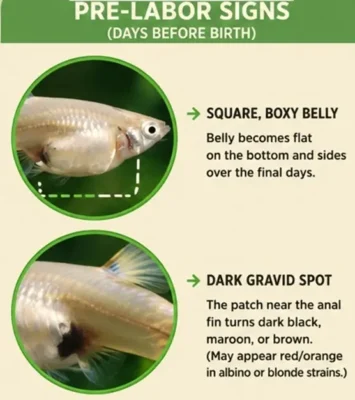
➜ Square, boxy belly. As the fry grow, her belly loses its round, bloated shape and goes flat on the bottom and sides, rather than staying uniformly round. This develops gradually over the final days of pregnancy, not right before birth.
➜ A dark gravid spot. The patch near her anal fin turns intensely black, maroon, or dark brown as pregnancy advances — on albino or blonde-strain females, it may show as red, orange or pink instead, since they lack the dark pigment other strains have.
From Experience: The boxy belly and dark gravid spot are the two signs to watch for days in advance — they tell you birth is coming soon, not that it’s happening right now. The signs below are the ones that actually mean she’s in labor.
Guppy Labor Signs (Labor Pain Itself)
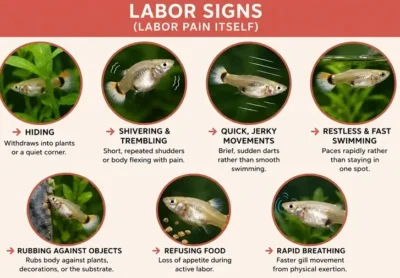
➜ Hiding. She’ll withdraw from the group entirely into plants, decorations, or a quiet corner as contractions begin.
➜ Shivering and trembling. This is the labor pain itself — short, repeated shudders or body flexing as each fry moves into position. See our guppy shaking guide if this is the specific behavior you’re seeing.
➜ Quick, jerky movements. Brief, sudden darts rather than her normal smooth swimming.
➜ Restlessness and frequent fast swimming. Some females pace rapidly rather than settling in one spot — this is a different pattern from the calm hiding above, and both are normal during labor.
➜ Rubbing against objects. Some females rub their body against plants, decorations, or the substrate, which appears to help ease the fry out.
➜ Refusing food. A pregnant guppy eating normally right up until labor is common — appetite loss specifically during this active phase is one of the clearest signs that labor pain has actually started, rather than just general pregnancy.
➜ Rapid breathing. Faster gill movement than normal, from the physical exertion of active labor.
Pregnant Guppy Giving Birth: What Happens During Labor
Pregnant guppy giving birth follows a fairly consistent pattern once labor actually starts.
Contractions begin — visible body flexing, sometimes with the shivering described above, as the first fry moves into position.
Fry are released one at a time, not all at once. Each one emerges curled into a tight ball, then unfurls and swims off within moments, usually with a short pause between each birth rather than a continuous stream.
Guppy giving birth duration is typically 2 to 6 hours from the first contraction to the last fry, though smaller litters can finish faster and large broods in older, larger females can run longer.
Recovery follows quickly — her belly visibly deflates, the gravid spot lightens, and she resumes normal swimming and feeding within a day or so.
What to Do After a Guppy Gives Birth
Once birth is finished, the priority shifts entirely to fry survival — adult guppies, including the mother, will eat newborn fry given the chance.
➜ Remove the mother back to the main tank if she gave birth in a breeder box, rather than leaving her in with the fry
➜ Start fry food once they’re free-swimming — powdered fry food or crushed flakes to start, moving to baby brine shrimp as they grow; see our guppy fry guide for the full feeding schedule
Guppy giving birth in a breeding box
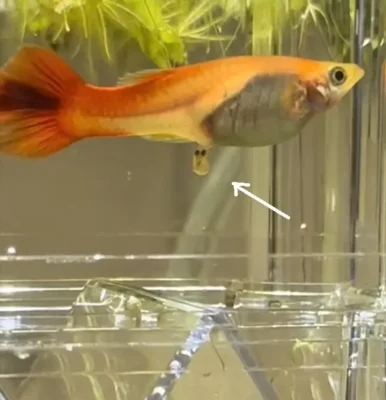
Guppy giving birth in a breeding box makes this easier — the mother stays in the same water while the fry are physically separated once they are born, and she can simply be lifted out afterward or the fry can be moved to a separate tank. Make sure you match the water parameters if you wish to move the fry to a separate fry tank.
Guppy giving birth in community tank
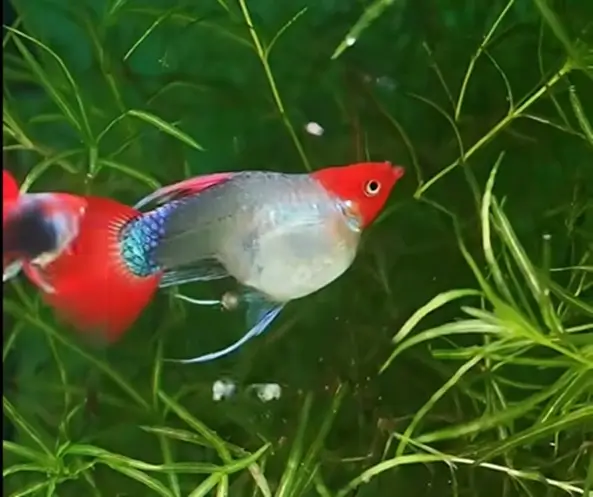
Guppy giving birth in a community tank is riskier without dense cover, and adult tank mates will eat newborn fry if given the chance — check compatibility in our guppy tank mates guide. Java moss, hornwort, guppy grass, floating plants and decorations give fry somewhere to hide immediately, but survival rates are generally lower than in a dedicated fry tank setup.
How to Care for Newborn Guppy Fry
Newborn guppy fry begin swimming within seconds of birth and usually start feeding within the first few hours. During the first week, offer very small foods several times a day to support their rapid growth. Suitable first foods include finely crushed guppy flakes, powdered fry food, baby brine shrimp, microworms, and infusoria for very small fry. Clean water is just as important as proper feeding. Small, regular water changes combined with gentle filtration encourage healthy growth while reducing the risk of disease. For more, read our guppy fry care guide.
Common Guppy Birth Problems
Most guppy births happen without any intervention, but complications can occasionally occur. The key is knowing which situations are perfectly normal and which require closer attention. Below are the most common problems hobbyists encounter during pregnancy and labor.
Why Isn’t My Guppy Giving Birth?
If she looks fully pregnant — boxy belly, dark gravid spot, hiding — but labor doesn’t seem to be starting, a few things are worth checking. She may simply not be as far along as she looks; the boxy shape can appear a few days before actual labor begins.
Stress, cold water, or an unstable environment can also delay labor past the normal window. If she’s shown labor signs for more than a couple of days with no birth, check water parameters and temperature before assuming something’s seriously wrong — see our temperature for guppies guide for the ideal range — genuine complications are the less common explanation.
Why Is My Guppy Giving Birth to Dead Fry?
Stillborn or undeveloped fry are usually a sign of significant stress or poor health during the pregnancy rather than anything wrong with the birth process itself.
The most common causes are poor water quality during gestation, a pregnancy cut short by stress before the fry were fully developed, or an underlying illness in the mother. It’s not something you can fix mid-birth — the focus afterward should be reviewing water parameters and reducing stress before her next pregnancy, covered in our guppy water parameters guide.
Guppy Giving Birth to Yellow Balls
Occasionally a female releases small, yellowish, ball-shaped objects instead of active fry. This usually means one of two things:
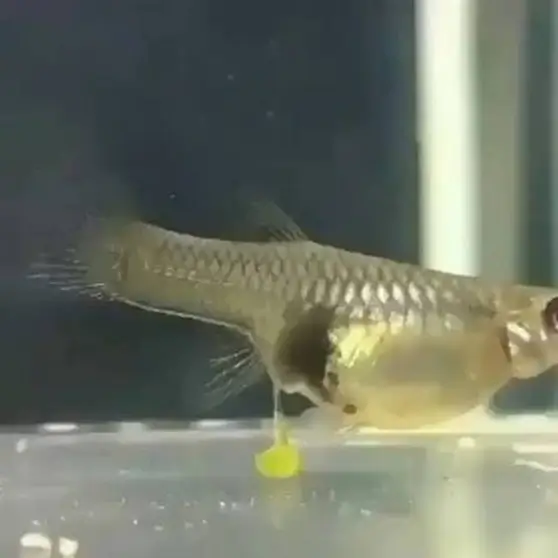
Unfertilized ova that were never fertilized in the first place and were simply expelled,
Aborted embryos from a pregnancy interrupted early by stress, illness, or poor water quality before development finished.
Either way, these won’t hatch or develop further, and the female typically recovers normally afterward as long as the underlying stress or water issue is addressed. This is different from a premature but viable birth, where fry are small and weak but still alive and moving.
The Biology of Guppy Birth
Guppy reproduction happens almost entirely internally, which is what makes birth look so different from egg-laying fish.
After mating, eggs develop inside the female’s ovary rather than being released into the water. Each developing embryo sits inside its own follicle, nourished by a yolk sac that provides everything it needs to grow without the mother having to actively feed it.
Unlike egg-laying species, where hatching happens outside the body in open water, guppy eggs actually hatch while still inside the female — by the time a fry is born, it’s already a fully hatched, fully formed miniature fish rather than a newly hatched larva. This internal hatching is the defining feature of livebearing reproduction, and it’s why guppy fry are born free-swimming and capable of feeding themselves within moments of birth, rather than needing days to develop the way externally hatched fry do.
Frequently Asked Questions
How do you know a guppy is giving birth?
A squared belly and a nearly black gravid spot along with hiding behavior, rapid breathing, and often shivering or contractions in the hours before labor.
How long does guppy labor last?
Typically 2 to 6 hours from the first contraction to the last fry. In some cases it may last for days.
Can guppies give birth at night?
Most often, yes, overnight or early morning when the tank is quietest, though daytime births do happen.
Can a guppy give birth without a male?
Yes. Females store sperm and can give birth to multiple litters over several months from a single mating.
Can guppies give birth in a community tank?
Yes, but survival rates are lower without dense plant cover, since adult tank mates will eat newborn fry. A breeding box or dedicated fry tank gives much better odds.
Should I move a guppy before giving birth?
If you’re using a breeder box or separate tank, move her a few days before the expected birth once her belly has gone boxy, not during active labor — moving her mid-contraction adds stress that can complicate delivery.
How many fry does a guppy have?
Anywhere from 2 to 200 per litter, though 20–50 is typical for a mature, healthy female.
How many times can a guppy give birth?
A healthy female can give birth roughly every 21–30 days if conditions are good, and can continue for months off stored sperm alone, without a male present.
Why is my guppy giving birth to eggs?
She isn’t. Guppies are livebearers and don’t lay eggs at any point — what looks like small yellow “eggs” is almost always unfertilized ova or an aborted embryo from a pregnancy that didn’t develop fully, not real eggs. See Guppy Giving Birth to Yellow Balls above for the full explanation.
Final Thoughts
Guppy birth itself is fast and largely hands-off once it starts — the real preparation happens in the days before, spotting the signs early and having plants or a breeding box ready so the fry have somewhere to hide the moment they’re born. For the full pregnancy timeline leading up to this point, see our pregnant guppy guide above, and for what comes next, our guppy fry guide and guppy fry growth guide.