
The Dalmatian Molly is a hybrid color variation of Poecilia latipinna, the Sailfin Molly. Dalmatian Mollies have a spotted pattern on their bodies, which is similar to the spots found on Dalmatian dogs, hence the name Dalmatian Molly. These spots are black. Dalmatian Mollies are livebearers, and hence instead of laying eggs, the female gives birth to live fry. The most defining characteristic of Dalmatian Mollies is their spotted pattern. The spots can vary in size and density, and they typically contrast against the base color of the fish.
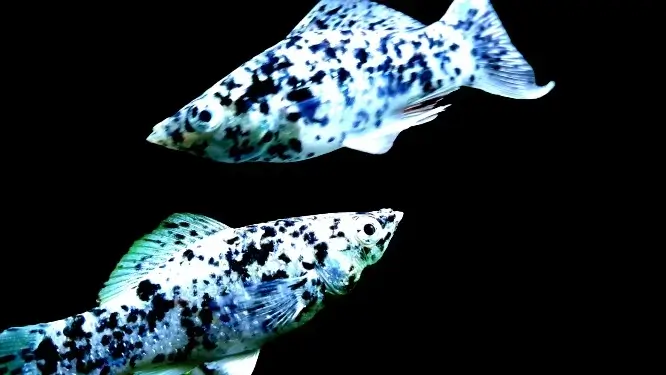
Mollies, in general, are known for their hardiness, which makes them suitable for aquarium hobbyists of various experience levels. They adapt to a range of water conditions, but they need a well-maintained and stable environment. Regular 30% water changes once every 15 days and cleaning of the tank are necessary to maintain a healthy environment. Feeding them a balanced and varied diet is also essential for their well-being.
Quick Navigation
➜ Different Types of Dalmatian Mollies
➜ Sailfin Dalmatian Molly
➜ The Female Dalmatian Molly
➜ Lyretail Dalmatian Molly
➜ Balloon Dalmatian Molly
➜ Balloon Dalmatian Molly Female
➜ Dalmatian Molly Lifespan
➜ Are Dalmatian Mollies Aggressive?
➜ Dalmatian Molly Tank Size and Water Parameters
➜ Dalmatian Molly Tank Mates
➜ Best Food for Dalmatian Mollies
➜ Pregnant Female Dalmatian Molly
➜ Dalmatian Molly Fish Breeding
➜ Dalmatian Molly Fish Diseases
➜ Frequently Asked Questions
➜ Final Thoughts
Different Types of Dalmatian Mollies
Dalmatian Mollies come in different color variations and patterns, and the specific types are based on fin type resulting from selective breeding efforts by fish breeders.
Here are some common types of Dalmatian Mollies based on fin pattern and coloration:
Sailfin Dalmatian Molly
The most common Dalmatian or Marble Molly, with males having a large, sail-like dorsal fin. They are slightly aggressive, especially when kept with other male sailfin Dalmatian mollies, so it would help if you watched out when keeping many males together.
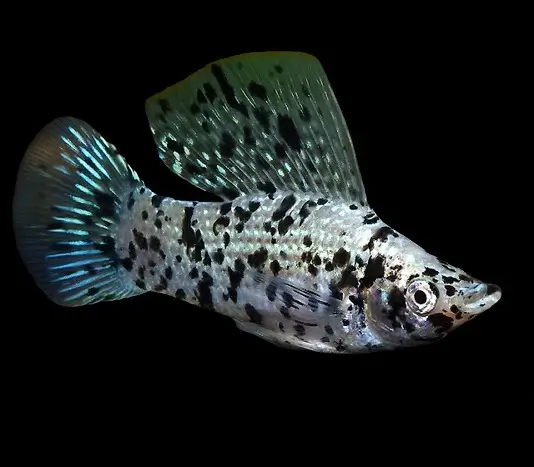
The Female Dalmatian Molly
The female Dalmatian or Marble Molly has a smaller dorsal fin and is more rounded. Female Dalmatian Mollies have a gravid dark spot near the anal fin. The spot becomes more prominent as the female approaches pregnancy.
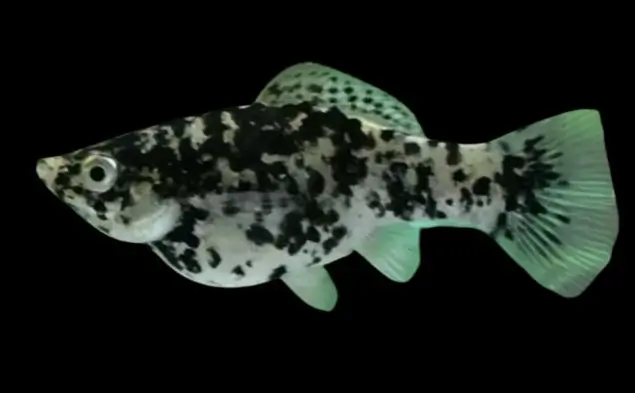
Lyretail Dalmatian Molly
This Lyretail Dalmatian Molly has a longer, flowing tail and fins with pointed tips, resembling a lyre. Lyretail Dalmatian Mollies can come in various colors like black, white, silver, gold, or other mixed colors.
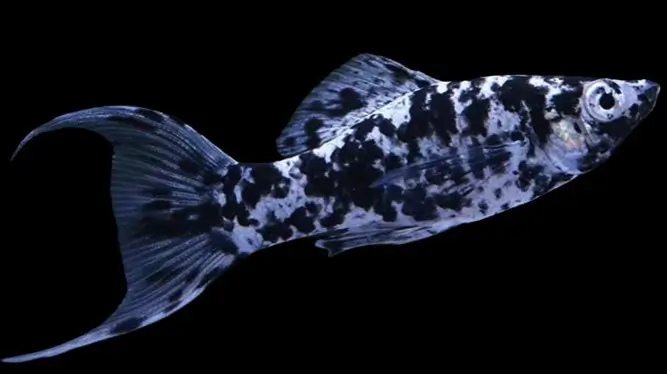
Balloon Dalmatian Molly
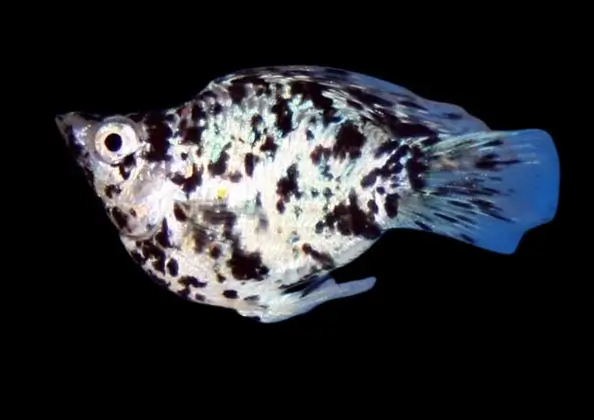
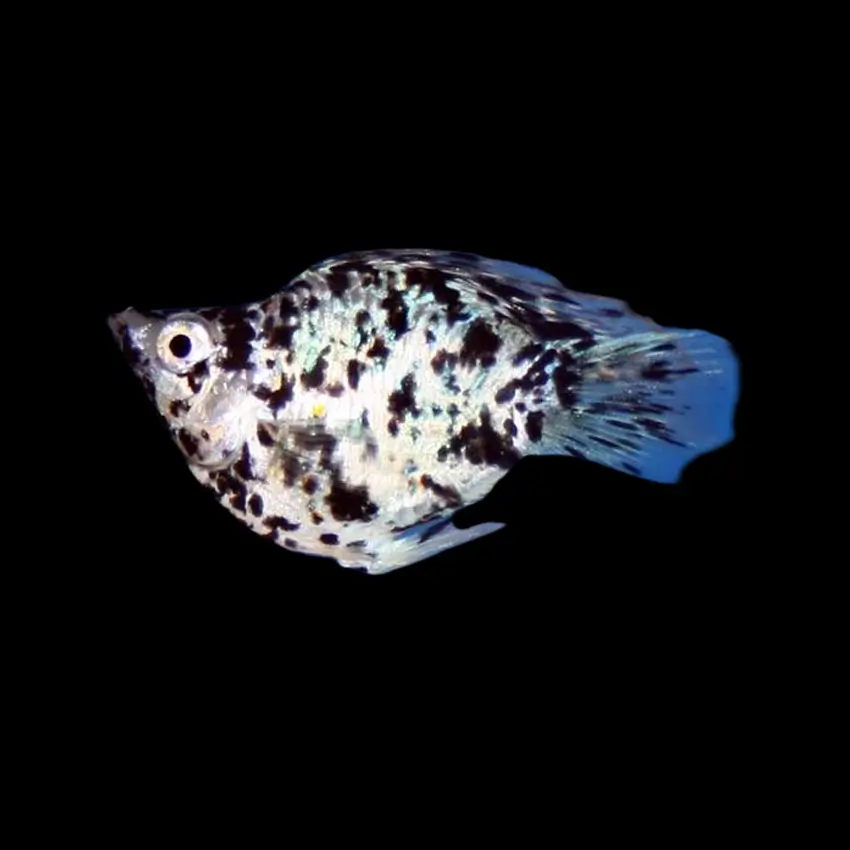
Balloon Dalmatian Mollies have a rounded or ballooned body shape. These mollies are a result of selective breeding. The body of a Balloon Dalmatian Molly is more rounded than that of the standard Molly.
Balloon Dalmatian Molly Female
Female Balloon Dalmatian Mollies share many characteristics with their male counterparts. They are more rounded. Females may exhibit less aggression compared to males. Their fins are not as pronounced as the males’, and you might notice a dark spot near her anal fin.
Dalmatian Molly Lifespan
Dalmatian Mollies typically live 3 to 5 years with good care, and some individuals have been known to reach up to 10 years under excellent water quality and a proper diet. Genetics, water stability, and diet quality are the biggest factors in reaching the higher end of that range, poor water conditions and an inconsistent diet are the most common reasons a Dalmatian Molly falls short of its full potential lifespan.
Are Dalmatian Mollies Aggressive?
Dalmatian Mollies, like other Molly varieties, are generally considered fairly peaceful. However, the behavior of individual fish can vary, and some factors may influence their level of aggression. Here are some factors to take into consideration:
Gender Ratio
Maintaining a proper gender ratio is crucial in a Molly tank. Male Mollies can sometimes exhibit more aggressive behavior, especially if there are too many males compared to females. A recommended ratio is to have more females than males, to divert their attention toward the females.
Dalmatian Molly Tank Size and Water Parameters
Dalmatian Mollies need a 20-gallon tank at the minimum. If you are adding more fish, then you would need a 30 to 40-gallon tank. Crowding too many mollies in a small space would stress them. They need a water pH of around 7 to 8 and a hardness of around 12–24 dGH. They live best at a temperature of around 70–82°F.
Dalmatian Molly Tank Mates
Suitable fish tank mates for Dalmatian Mollies:
• Shubunkins
• Rosy Barbs
• Rasboras
• Dwarf Gouramis
• Guppies
• Platies
Best Food for Dalmatian Mollies
Dalmatian Mollies are omnivorous, and hence they eat both plant and animal matter. These fish also eat small insects, worms, and algae. Provide them with a variety of foods like frozen bloodworms, brine shrimp, and freeze-dried pellets.
Dalmatian Mollies should only be fed twice or thrice per day. Don’t overfeed them, as it can lead to health problems like bloating and constipation.
Pregnant Female Dalmatian Molly
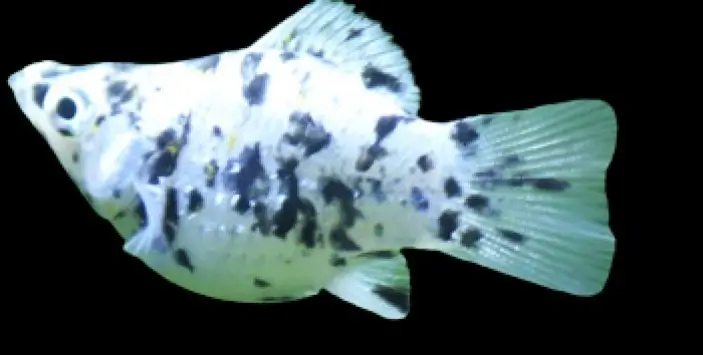
Determining whether a female Dalmatian Molly is pregnant involves observing certain physical and behavioral changes. Here are some signs that can indicate pregnancy in a female Dalmatian Molly:
One of the most reliable indicators is the presence of a pronounced dark spot near the anal fin and a bigger belly than usual.
They display an increased appetite. They might eat more, as they need additional energy for carrying and eventually giving birth to the fry.
The males might show increased interest in the pregnant female. This is a natural behavior as males attempt to mate with the female.
Dalmatian Molly Fish Breeding
Breeding Dalmatian Mollies would be interesting for hobbyists. Some of the steps for breeding Dalmatian Mollies are below:
Set up a Breeding Tank:
Set up a separate breeding tank to provide a clean environment in the tank. The tank should be sized appropriately with clean water conditions. Adding live plants and decorations to the tank would provide hiding spots for the fry, which encourages the females to breed.
Create Ideal Water Conditions:
Maintain optimal water parameters for breeding. Temperatures should be between 75–82°F, slightly alkaline to neutral pH (7.0–7.8), and a moderate hardness.
Gender Ratio:
Ensure that the tank has a proper gender ratio, with more females than males, to reduce the aggressive behavior of males. Having too many males can sometimes lead to females being harassed during the breeding process.
Condition the Fish:
Feed high-quality and varied foods. Fish food should be rich in protein and spirulina. Try live or frozen foods with a combination of spirulina to keep them happy and enhance their reproductive health.
Allow the Fish to Give Natural Birth:
Dalmatian Mollies give birth to live fry without much assistance. Allow the females to go through the breeding process naturally. Once they breed, the fry will swim freely once they are born. After the birth of the fry, remove the parents from the breeding tank so that they don’t end up eating the fry.
Provide Proper Fry Care:
After birth, move the fry to a separate fry tank or remove the parents. Feed the fry with finely crushed food until they are large enough to consume normal food. Keeping the fry in a separate tank for a period of 20 to 25 days would be good enough for them to grow a bit bigger. You can move the fry into the main tank after that 20 to 25 day period.
Dalmatian Molly Fish Diseases
Like any aquarium fish, Dalmatian Mollies are susceptible to various diseases. Maintaining good water quality and providing a balanced diet is key to preventing diseases. Sometimes diseases can come through bacteria or fungi present on live plants, make sure to quarantine plants in a medicated environment for a few hours before adding them to your tank.
Below are some of the most common diseases that affect Dalmatian Mollies:
Ich:
Ich is a common protozoan parasite that causes white cysts or spots on the fish’s skin, fins, and gills. It often occurs due to poor water conditions and an unhealthy diet. Increasing the temperature slightly and adding a few pinches of aquarium salt can help ward off further spread during the initial stages. Adding liquid medication can help treat the ich during the initial stages.
Bacterial Infection:
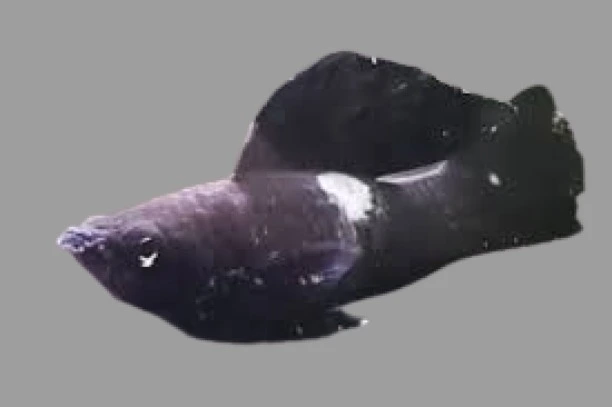
Columnaris is a common bacterial infection that can cause white patches on the skin, fins, or gills. It makes the fish lethargic, and the fish could have difficulty breathing. The fish will often stay isolated when affected by disease. Antibacterial medications can be used to treat it, add antibacterial medication and do a 30 percent water change after 1 or 2 days, then repeat the process once more. If the disease does not clear up, a complete water change is recommended.
Fungal Infections:
Fungal infections look like a cotton-like growth on the skin, fins, or gills. Poor water conditions lead to fungal infections. Treat them with antifungal medication at the earliest sign.
Velvet Disease:
Velvet disease is caused by the protozoan parasite Oodinium. Infected molly fish might display a rusty, dust-like appearance on the skin. Copper-based medications are the most common and effective treatment for velvet disease.
Fin Rot:
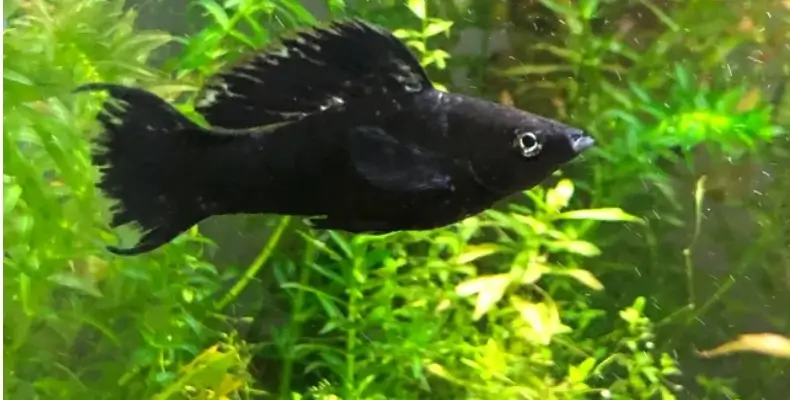
Fin rot is a bacterial infection that causes the deterioration of fins. It often occurs due to poor water quality from ammonia build-up and poor food quality. Antibiotics and improved water conditions can help treat fin rot.
Shimmies:
Shimmies is a condition specifically documented in Dalmatian Mollies where the fish rocks or shivers from side to side without actually swimming forward, as if trembling in place. It’s typically linked to low pH, low temperature, or insufficient mineral content in the water rather than a parasite or infection. Raising the temperature slightly, adding aquarium salt, and correcting GH/KH toward the recommended range usually resolves it, since the underlying cause is water chemistry rather than disease.
Preventive measures and early detection are crucial in maintaining the health of Dalmatian Mollies. Quarantine sick fish so that diseases do not spread to the rest of the tank.
Frequently Asked Questions
Why do Dalmatian Mollies turn black?
It’s usually completely normal. Dalmatian Mollies are often born white or pale grey, and as they mature, black spots develop and gradually spread, sometimes covering most of the body over time. This is a natural, genetic part of their coloration, not a sign of illness. The one exception to watch for: if it’s specifically the fins deteriorating or turning black while fraying, that can indicate fin rot instead, a bacterial infection that needs treatment, not natural pigmentation.
How can I tell a male from a female Dalmatian Molly?
Males have a longer, pointed anal fin called a gonopodium, used for mating, and often a larger, more sail-like dorsal fin. Females are typically larger and rounder-bodied, with a fan-shaped anal fin instead, and develop a dark gravid spot near the anal fin as they mature.
How big do Dalmatian Mollies get?
Most reach 3 to 5 inches at full adult size, with females typically growing slightly larger than males.
Can Dalmatian Mollies live with goldfish?
Not ideally. Goldfish are coldwater fish that do best around 65–75°F, while Dalmatian Mollies need warmer water in the 70–82°F range. The temperature ranges only barely overlap, making it hard to keep both fish comfortable in the same tank long-term.
How can I tell if my Dalmatian Molly is pregnant?
Look for a bigger belly, a more pronounced dark gravid spot near the anal fin, and an increased appetite, covered in the Pregnant Female Dalmatian Molly section above.
Final Thoughts
The Dalmatian Molly is a striking, hardy, and beginner-friendly fish that brings real personality to a community tank. Between its distinctive black-and-white spotted pattern, the variety of fin types available (Sailfin, Lyretail, Balloon), and its easy livebearing nature, it’s easy to see why this fish remains a lasting favorite among aquarium hobbyists.
With stable water parameters, a balanced diet, and a proper gender ratio, Dalmatian Mollies are low-maintenance for the visual impact they bring, and their natural darkening pattern as they age means every fish’s look keeps evolving over time.