
Panda Oranda Goldfish are among the most eye-catching fancy goldfish in the hobby. Their striking black-and-white coloration resembles a giant panda, while the fleshy head growth (wen), deep rounded body, and flowing double tail give them the unmistakable appearance of an Oranda. One characteristic that surprises many new owners, however, is that this distinctive panda pattern often changes as the fish matures. Black markings may gradually fade, shrink, or transform into orange, bronze, or even white over time.
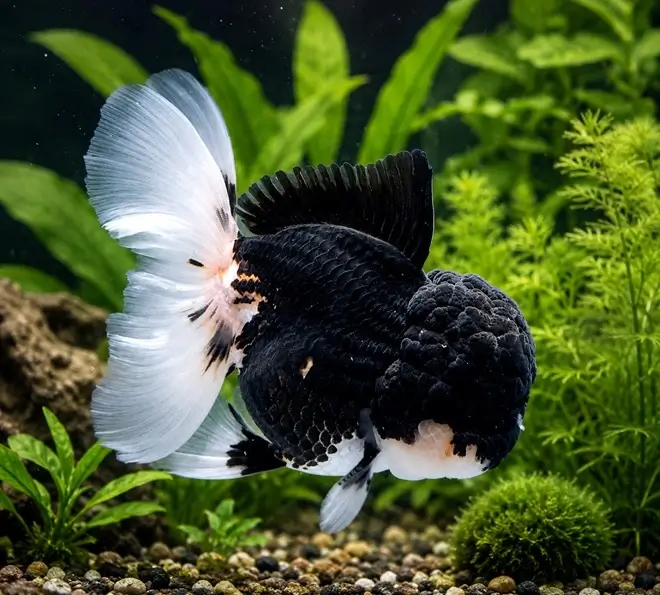
Quick Answer: A Panda Oranda Goldfish is a selectively bred black-and-white variety of the Oranda Goldfish (Carassius auratus). It develops the characteristic fleshy head growth known as a wen, grows around 6 to 10 inches (15–25 cm) in captivity, and can live 10–20 years with proper care. Unlike most other Oranda color varieties, Panda Orandas are well known for changing color as they mature, with many gradually losing part or all of their black pigmentation. They require a minimum 30-gallon aquarium, excellent filtration, stable water conditions, and a nutritious diet to thrive.
Panda Oranda Goldfish: Quick Facts
| Characteristic | Details |
|---|---|
| Scientific Name | Carassius auratus |
| Breed | Fancy Oranda Goldfish |
| Color | Black and white (often changes with age) |
| Adult Size | 6–10 inches (15–25 cm) |
| Lifespan | 10–20 years |
| Difficulty | Moderate |
| Temperament | Peaceful and social |
| Tank Size | 30 gallons minimum for one fish |
| Temperature | 68–79°F (20–26°C), up to 80.6°F (27°C) during treatment |
| Diet | Omnivore |
| Price | Typically $30–200+, depending on size and quality |
| Special Feature | Black pigment frequently fades as the fish matures |
Quick Navigation
➜ Quick Facts
➜ What Is a Panda Oranda Goldfish?
➜ Appearance and Identifying Features
➜ The Genetics Behind Panda Oranda Coloration
➜ Why Do Panda Oranda Goldfish Change Color?
➜ Are Panda Oranda Goldfish Rare?
➜ What Is a Thai Panda Oranda?
➜ Panda Oranda vs Black Oranda
➜ How to Choose a Healthy Panda Oranda Goldfish
➜ How Much Does a Panda Oranda Goldfish Cost?
➜ Panda Oranda Goldfish Care
➜ Frequently Asked Questions
➜ Final Thoughts
What Is a Panda Oranda Goldfish?
The Panda Oranda is a selectively bred color variety of the Oranda Goldfish, prized for its dramatic black-and-white pattern that resembles the markings of a giant panda. Unlike separate breeds such as Ranchu or Ryukin, the Panda Oranda isn’t a different species or even a different breed—it is simply an Oranda displaying a particular color pattern. Our Fancy Goldfish Types guide covers where Oranda and its color varieties fit among the full range of fancy goldfish.
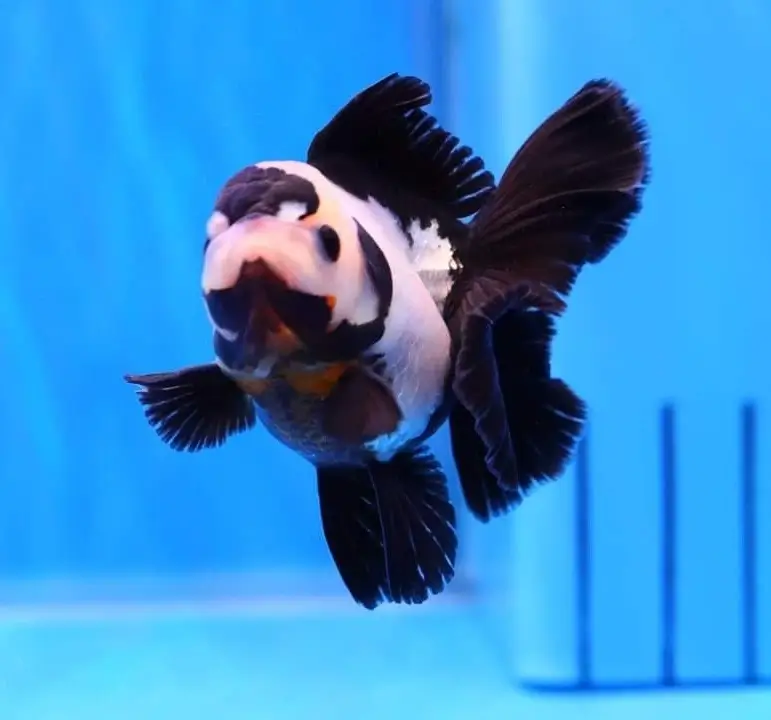
Like every Oranda, it has a deep egg-shaped body, a high dorsal fin, paired anal fins, a flowing double tail, and the signature fleshy head growth known as the wen. The only feature that distinguishes it from other Oranda varieties is its unique coloration.
Ideally, a high-quality Panda Oranda displays a bright white base color with deep jet-black patches distributed symmetrically across the body, head, and fins. The contrast between these colors is what makes the variety so desirable among collectors.
Appearance and Identifying Features
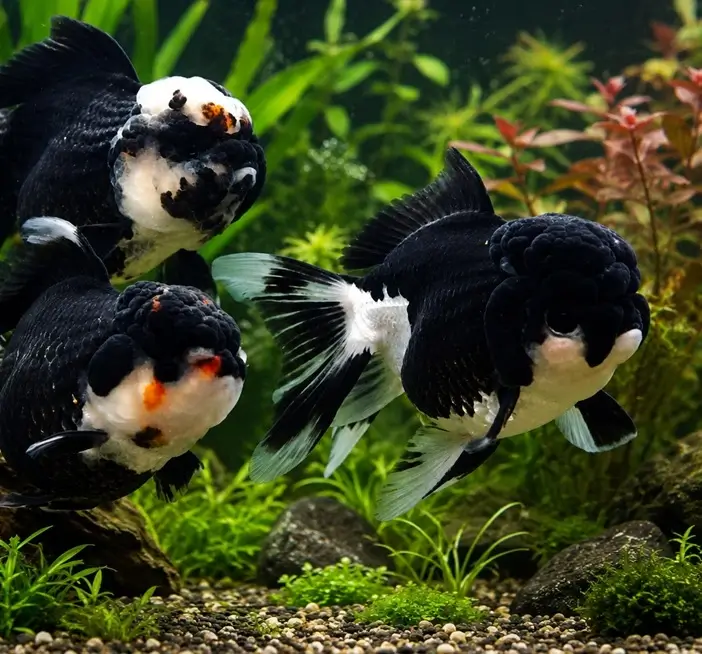
The Panda Oranda is instantly recognizable by its bold black-and-white coloration, rounded body, fleshy head growth (wen), and elegant double tail. While its body structure is identical to every other Oranda Goldfish, the dramatic contrast between the black and white pigmentation gives this variety its unmistakable “panda” appearance.
A high-quality Panda Oranda should look balanced from every angle. Breeders don’t simply look for the darkest fish—they evaluate body shape, fin symmetry, wen development, swimming posture, and how evenly the black markings are distributed across the fish.
Body Shape
Like all Orandas, Panda Orandas have a short, deep-bodied profile with a broad back and rounded abdomen. Viewed from the side, the body should appear compact without looking compressed, while from above it should have a symmetrical egg-like shape.
A healthy Panda Oranda swims effortlessly despite its rounded body. The dorsal fin should remain fully erect while swimming, and the fish should maintain good balance without tilting to one side.
Body: Deep, rounded and egg-shaped
Back: Smooth, gently curved profile
Dorsal Fin: Tall and held upright
Swimming: Slow, graceful and well balanced
The Signature Wen (Head Growth)
The most recognizable feature of every Oranda is the fleshy head growth known as the wen. This raspberry-like tissue gradually develops over the head, cheeks and gill plates as the fish matures, usually becoming noticeable between four months and two years of age.
In Panda Orandas, the wen often carries both black and white pigmentation, creating striking facial patterns that make each fish unique. Some individuals develop an almost entirely black wen, while others display white cheeks, black crowns or irregular patches across the head.
A well-developed wen should appear full and symmetrical without covering the eyes or interfering with breathing.
➜ Develops gradually with age
➜ Can continue growing for several years
➜ Usually mirrors the body’s black-and-white pattern
➜ Should not obstruct the eyes or mouth
Color Pattern
The color pattern is what separates a Panda Oranda from every other Oranda variety. Ideally, the fish has a bright white base color contrasted by deep velvet-black markings distributed across the head, back, fins and tail.
Unlike painted or artificial patterns, these markings are produced naturally by pigment cells within the skin. No two Panda Orandas have identical markings, making every fish unique.
Breeders generally prefer fish with:
➜ High contrast between black and white.
➜ Clearly defined pattern edges.
➜ Balanced markings on both sides of the body.
➜ Black extending onto the fins and wen.
➜ Minimal random speckling.
However, even a perfectly marked juvenile may look very different as an adult because Panda Orandas are famous for changing color throughout their lives.
Tail and Fins
Panda Orandas possess a graceful double tail that spreads like a fan behind the body. High-quality specimens carry their tail open while swimming rather than clamping it tightly together.
The pectoral, pelvic and anal fins should all be paired, evenly shaped and free from twisting or deformities.
The fins themselves often display a mixture of black and white pigmentation, with many fish showing black rays against translucent white membranes.
How Big Do Panda Oranda Goldfish Get?
Panda Orandas usually reach 6 to 8 inches (15–20 cm) in most home aquariums, although exceptional specimens raised in spacious ponds or very large aquariums can exceed 10 inches (25 cm) in total length, including the tail.
Their final size depends largely on genetics, water quality, nutrition and available swimming space. Juveniles grow surprisingly quickly during their first year before their growth gradually slows.
| Age | Average Size |
|---|---|
| 3 Months | 1.5–2 inches |
| 6 Months | 2.5–4 inches |
| 1 Year | 4–6 inches |
| Adult | 6–10 inches |
Good growth isn’t just about feeding more food. Clean water, stable water parameters, proper filtration and adequate swimming space all play a much bigger role than simply increasing feeding frequency.
The Genetics Behind Panda Oranda Coloration
One of the biggest misconceptions about Panda Oranda Goldfish is that their striking black-and-white pattern is a fixed characteristic. In reality, the panda coloration is one of the most genetically complex and unpredictable traits in fancy goldfish. This is why two Panda Orandas that look nearly identical as juveniles may mature into completely different-looking adults.
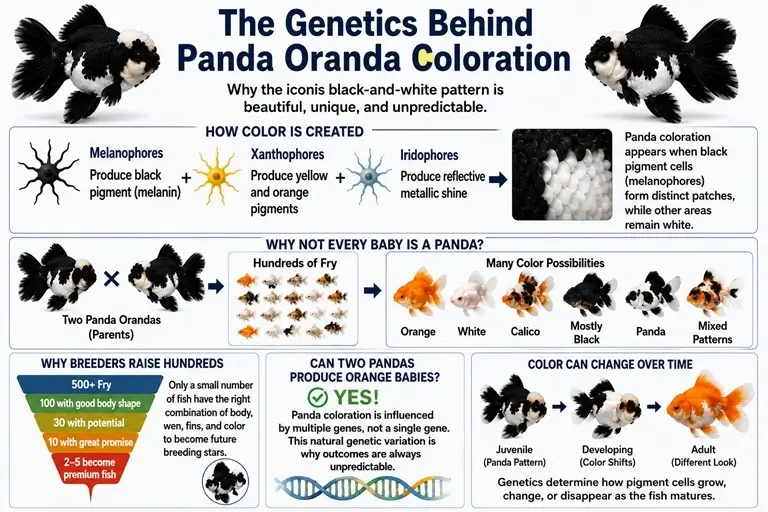
Understanding a little about how goldfish produce color makes it much easier to understand why Panda Orandas are so unique—and why breeders can never guarantee that a young fish will keep its original markings for life.
How Do Panda Orandas Get Their Black-and-White Pattern?
Goldfish colors are produced by specialized pigment cells known as chromatophores. Rather than being painted onto the scales, every color you see comes from different pigment-producing cells located within the skin.
Several types of chromatophores contribute to the appearance of a Panda Oranda.
| Pigment Cell | Produces |
|---|---|
| Melanophores | Black pigment (melanin) |
| Xanthophores | Yellow and orange pigments |
| Iridophores | Reflective metallic shine |
The famous panda appearance develops when melanophores produce bold black patches while surrounding areas contain little or no dark pigment, allowing the white base color to remain visible. The exact placement of these pigment cells is determined during development and varies from fish to fish, making every Panda Oranda unique.
Why Isn’t Every Baby From Two Panda Orandas Also a Panda?
This is one of the most common questions asked by hobbyists, and the answer lies in genetics.
Panda coloration isn’t controlled by a single “panda gene.” Instead, it’s influenced by multiple genes that affect pigment production, pigment distribution, body coloration and how those pigments change as the fish matures.
As a result, two beautiful Panda Orandas can produce offspring with a surprising range of appearances.
➜ Solid orange fry.
➜ White fry.
➜ Calico-patterned fry.
➜ Mostly black fry.
➜ Traditional Panda-patterned fry.
➜ Mixed or irregular color combinations.
This genetic variation is perfectly normal and is one of the reasons selective breeding requires patience over many generations.
Why Do Breeders Raise Hundreds of Fry?
Producing high-quality Panda Orandas isn’t simply a matter of breeding two attractive parents together. A single spawning can produce hundreds or even thousands of fry, but only a small percentage eventually develop the combination of characteristics breeders are looking for. Breeders also need to distinguish male and female goldfish when selecting potential breeding pairs, as sex can influence pairing decisions and the timing of spawning.
As the young fish grow, breeders carefully evaluate:
➜ Body shape.
➜ Tail symmetry.
➜ Wen development.
➜ Swimming posture.
➜ Overall health.
➜ Black-and-white pattern quality.
➜ Future breeding potential.
Only a small number of fish combine all of these desirable traits. The remaining fish may still become healthy pets, but they aren’t typically selected for future breeding programs.
Can Breeders Create a Stable Panda Bloodline?
Selective breeding has greatly improved Panda Orandas over the years, but no breeder can completely eliminate the natural tendency for color change. Some bloodlines are known for retaining black pigmentation longer than others, while some lines are more likely to develop bronze or orange coloration with age.
Experienced breeders continually select fish that demonstrate excellent body shape, healthy wen development and stronger color retention. Even so, genetics remains unpredictable, which is part of what makes Panda Orandas such fascinating fish to breed and keep.
Did You Know?
Professional breeders don’t judge Panda Orandas solely by their color. Body shape, swimming ability, tail symmetry and wen development are often considered more important because color can naturally change throughout the fish’s lifetime.
Why Do Panda Oranda Goldfish Change Color?
Perhaps the most fascinating characteristic of a Panda Oranda Goldfish is that the fish you buy today may look completely different a few years from now. Many hobbyists purchase a beautiful juvenile with crisp black-and-white markings, only to discover that the black patches gradually fade into bronze, orange, or disappear altogether as the fish matures.
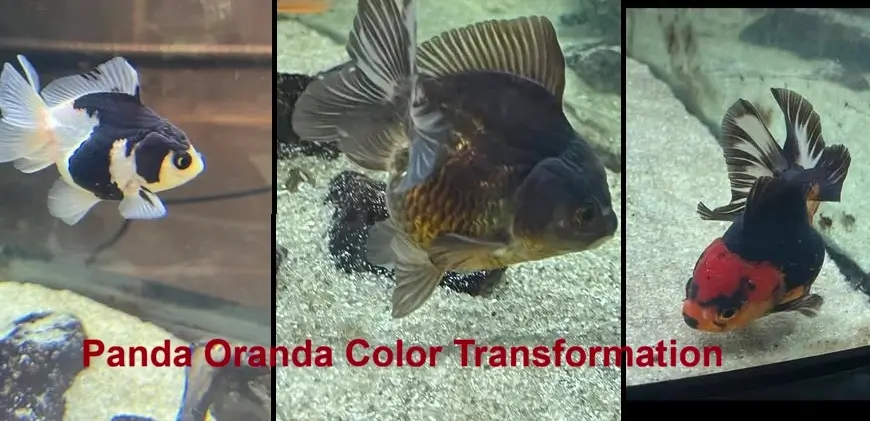
This surprises many first-time owners, but in most cases it isn’t a disease or a sign of poor care. It happens to plenty of experienced keepers too. Watching a fish you fell for slowly turn into a different-looking one is a strange feeling the first time. Color change is a perfectly normal part of development for many Panda Orandas. Some retain their striking panda pattern throughout life, while others slowly transform into almost entirely orange, white, or calico-looking fish.
The biggest reason is genetics. Panda coloration is created by specialized pigment cells in the skin, and these pigment cells don’t always remain active throughout the fish’s lifetime. As the fish grows, the amount and distribution of black pigment can naturally change, making every Panda Oranda unique.
Why Does the Black Color Fade?
The black markings on a Panda Oranda come from pigment-producing cells called melanophores, which contain the dark pigment melanin. These cells are responsible for producing the rich black coloration seen on the body, fins and head.
Unlike metallic orange pigments, black pigmentation in selectively bred goldfish is often genetically unstable. As the fish matures, some melanophores gradually stop producing pigment or disappear altogether. When this happens, the underlying orange, bronze or white coloration becomes visible. Our Goldfish Turning White guide covers this same pigment-loss process in more depth, including how it plays out in other fancy goldfish varieties.
This is why a young Panda Oranda with bold black markings may slowly develop:
➜ Orange patches replacing black.
➜ Bronze or chocolate-colored areas.
➜ Larger white sections.
➜ Completely different facial markings.
➜ A nearly solid orange adult.
Interestingly, the color change usually happens gradually over months or even years rather than overnight.
Can a Panda Oranda Turn Completely Orange?
Yes. Many Panda Orandas gradually lose most or all of their black pigmentation as they mature. Once the black pigment disappears, the fish often develops the familiar orange-and-white appearance seen in many other Oranda varieties.
This transformation doesn’t mean the fish is unhealthy or that something has gone wrong. In fact, many experienced breeders expect at least some degree of color change when raising Panda Orandas.
Some fish retain small black patches throughout life, while others lose every trace of black pigmentation.
Can They Become Completely White?
Although less common than turning orange, some Panda Orandas lose so much pigment that they become predominantly white with only faint traces of black or gray remaining. The exact outcome depends largely on genetics rather than aquarium conditions.
Because every fish inherits a slightly different combination of pigment genes, no breeder can accurately predict what a juvenile Panda Oranda will look like as an adult.
Can the Black Color Come Back?
This is probably the question breeders hear most often.
Usually, no. Once black pigmentation has disappeared because the melanophores have been lost or become inactive, it rarely returns in the same areas.
Some hobbyists report slight seasonal darkening or temporary changes in pigment intensity, but dramatic recovery of lost black markings is uncommon.
For this reason, experienced breeders often judge Panda Orandas by their body shape, wen development and overall quality rather than assuming the juvenile color pattern will remain unchanged forever.
What Causes Panda Orandas to Change Color Faster?
Although genetics is the biggest factor, several environmental conditions may influence how quickly pigment changes become noticeable.
Age — Most color changes occur during the first two to three years while the fish is actively growing.
Genetics — Some breeding lines naturally retain black pigmentation much longer than others.
Diet — A balanced diet helps maintain overall pigmentation, although it cannot permanently prevent genetically programmed color changes.
Water Quality — Chronic stress from poor water conditions may dull existing colors, making fading appear more obvious.
Lighting — Bright lighting affects how colors are perceived, but it doesn’t permanently determine whether black pigment remains.
Stress — Illness or prolonged stress may temporarily reduce color intensity, although this differs from the permanent genetic color changes discussed above.
It’s important to understand that excellent care cannot guarantee that a Panda Oranda will keep its original markings. A healthy fish raised in ideal conditions may still undergo dramatic color changes simply because of its genetic makeup.
Can You Prevent Color Changes?
Unfortunately, no aquarium technique can completely stop a Panda Oranda from changing color if its genetics are programmed to do so.
Some hobbyists believe certain foods, supplements or special lighting can permanently preserve black pigmentation, but there is little evidence to support these claims. While proper nutrition and stable water conditions certainly help the fish display its best possible colors, they cannot override genetics.
The best approach is to focus on raising a healthy fish rather than trying to preserve a particular color pattern. After all, the constantly changing appearance is part of what makes Panda Orandas such fascinating fish to own.
Did You Know?
Many professional breeders actually enjoy watching Panda Orandas develop because no one can accurately predict how an individual fish will look as an adult. Two juveniles with nearly identical markings may mature into completely different-looking fish a few years later.
Are Panda Oranda Goldfish Rare?
Compared to standard orange Orandas or Red Cap Orandas, Panda Orandas are considerably less common in the aquarium trade. They aren’t rare because they’re difficult to breed—instead, they’re uncommon because producing a high-quality panda pattern is surprisingly unpredictable.
A breeder may hatch hundreds or even thousands of fry from the same spawning, yet only a small percentage will develop the crisp black-and-white markings hobbyists are looking for. Even among those selected fish, there’s no guarantee the markings will remain stable as they mature.
This is why experienced breeders spend months, sometimes years, raising young Panda Orandas before deciding which fish are suitable for sale or future breeding programs.
The best specimens combine several desirable characteristics:
➜ Bold black-and-white contrast
➜ Symmetrical markings on both sides of the body
➜ Healthy, evenly developed wen
➜ Strong body structure
➜ Graceful swimming posture
➜ High-quality double tail
Because so few fish meet all of these standards, premium Panda Orandas often command significantly higher prices than more common Oranda color varieties.
What Is a Thai Panda Oranda?
If you’ve searched for Panda Orandas online, you’ve probably noticed many retailers advertising Thai Panda Orandas. These fish aren’t a separate breed. Instead, they’re Panda Orandas that have been selectively bred by specialist farms in Thailand, a country widely regarded as one of the world’s leading producers of large, premium fancy goldfish.
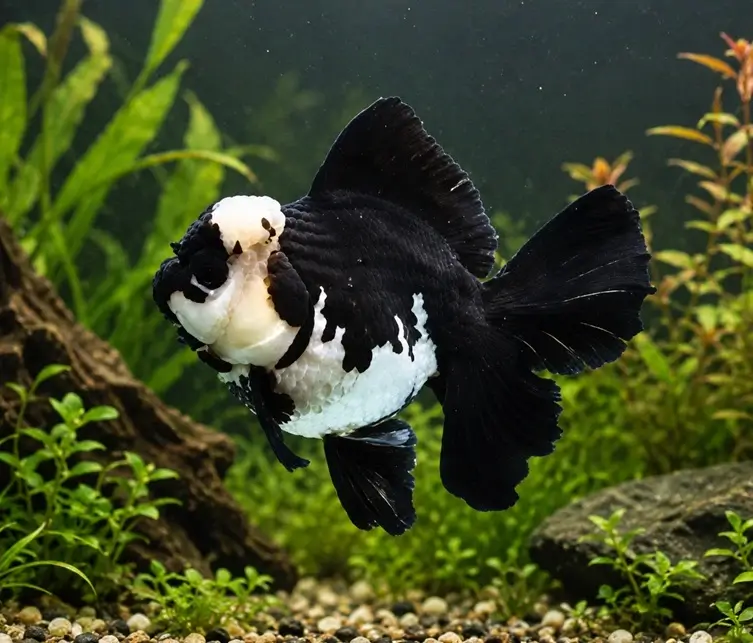
Thai breeders have spent decades refining body shape, wen development, tail structure and color quality through careful selective breeding. As a result, many imported Thai Panda Orandas display exceptional symmetry and impressive head growth even at a young age. Thai Oranda goldfish typically reach an adult size of 8 to 12 inches (20 to 31 cm) in length and can live up to 20 years.
Depending on the breeder, you may also encounter terms such as:
➜ Premium Thai Panda Oranda
➜ Giant Thai Panda Oranda
➜ Rosetail Panda Oranda
➜ Butterfly Panda Oranda
➜ Show Grade Panda Oranda
These names usually describe either the fish’s bloodline, tail type, body shape or overall quality rather than representing different species.
Thai Panda Oranda vs Standard Panda Oranda
| Feature | Standard Panda Oranda | Thai Panda Oranda |
|---|---|---|
| Origin | Various breeders worldwide | Specialist Thai goldfish farms |
| Wen Development | Moderate to excellent | Often larger and more symmetrical |
| Body Shape | Varies by breeder | Usually very deep and rounded |
| Price | Generally lower | Usually more expensive |
It’s important to remember that not every Thai Panda Oranda is automatically superior. The reputation of the breeder, the health of the fish and its individual quality matter far more than the country it was imported from.
Panda Oranda vs Black Oranda
At first glance these two varieties appear very similar because both display black coloration, but they’re actually quite different.
A Black Oranda is bred to be almost entirely black across the body, fins and wen, while a Panda Oranda is specifically selected for its contrasting black-and-white pattern.
| Characteristic | Panda Oranda | Black Oranda |
|---|---|---|
| Primary Color | Black & White | Solid Black |
| Pattern | Contrasting patches | Uniform coloration |
| Color Stability | Often changes with age | May also fade, but usually aims for solid black |
| Appearance | High contrast | Dramatic solid-black look |
If your goal is maximum contrast and a unique appearance, the Panda Oranda is usually the better choice. If you prefer a sleek, elegant fish with a uniform dark body, the Black Oranda may be more appealing.
How to Choose a Healthy Panda Oranda Goldfish
Buying a Panda Oranda isn’t as simple as choosing the fish with the darkest markings. While the striking black-and-white pattern usually catches everyone’s attention first, experienced hobbyists and breeders look far beyond color alone. A beautiful juvenile may lose much of its black pigmentation as it matures, but a fish with excellent body structure, strong genetics, and good health will remain a quality Oranda for many years.
If you’re buying your first Panda Oranda, spend a few minutes observing the fish before making a purchase. Healthy fish are active, alert, and swim confidently around the aquarium. Avoid making a decision based solely on photographs, especially when buying online.
1. Observe the Swimming Behavior
A healthy Panda Oranda should swim slowly and gracefully while remaining well balanced in the water. Although Orandas aren’t fast swimmers, they should never struggle to stay upright or continuously float, sink, or roll to one side.
➜ Look for smooth, controlled swimming.
➜ The dorsal fin should remain fully upright.
➜ The fish should respond quickly when food is offered.
➜ Avoid fish resting on the bottom for long periods without reason, our Goldfish at the Bottom of the Tank guide covers what this can mean.
Poor swimming may indicate swim bladder problems, stress, or underlying illness.
2. Examine the Wen Carefully
The fleshy head growth, or wen, is one of the defining features of every Oranda. It should appear evenly developed, clean, and free from injuries or cotton-like fungal growth.
Pay close attention to the folds of the wen because debris and bacteria can accumulate there if the fish has been kept in poor water conditions.
➜ Symmetrical head growth.
➜ No open wounds or ulcers.
➜ No white cottony patches.
➜ Eyes should remain clearly visible.
3. Inspect the Eyes and Gills
Healthy Panda Orandas have bright, clear eyes and breathe calmly through both gill covers. Cloudy eyes, swollen gills, excessive mucus, or rapid breathing may indicate stress or disease.
Watch the fish for a minute or two before buying. Labored breathing or constantly gasping near the surface should always be considered warning signs, our Goldfish at the Top of the Tank guide explains what usually causes this.
4. Check the Body Shape
A quality Panda Oranda should have a rounded, egg-shaped body without obvious deformities. The back should curve smoothly from the head toward the tail, and both sides of the body should appear symmetrical.
Avoid fish with:
➜ Curved spine.
➜ Sunken belly.
➜ Visible injuries.
➜ Missing scales.
➜ Red sores or ulcers.
Remember that body shape is far more important than color because body structure cannot be improved later, while coloration naturally changes throughout life.
5. Look Beyond the Color Pattern
Many beginners automatically choose the Panda Oranda with the most dramatic black markings, and it’s an easy trap to fall into, since that fish just looks like the obvious winner. While an attractive pattern certainly adds value, it shouldn’t be the deciding factor.
Because Panda Orandas frequently change color as they mature, today’s perfect pattern may look completely different in just a few years. Instead, prioritize overall health, body symmetry, and swimming ability.
If you find two equally healthy fish, then choosing the one with the pattern you like best makes perfect sense.
6. Inspect the Fins
The fins should be fully spread, intact, and free from tears or frayed edges.
➜ Tail held open while swimming.
➜ No torn fin rays.
➜ No white edges or signs of fin rot.
➜ Both pectoral fins moving evenly.
Damaged fins often heal, but severe fin deterioration may indicate poor water quality or previous disease.
7. Ask About Its Origin
If you’re purchasing a premium Panda Oranda, don’t hesitate to ask the seller where the fish originated. Many high-end specimens are imported from specialist farms in Thailand, China, Indonesia, or Japan.
Knowing the breeder or bloodline can sometimes provide valuable information about expected body shape, wen development, and overall quality.
However, remember that a healthy domestically bred fish is often a better purchase than a stressed imported fish that has only recently completed shipping.
How Much Does a Panda Oranda Goldfish Cost?
The Panda Oranda price is generally more expensive than common Oranda varieties because producing high-quality black-and-white specimens requires years of selective breeding. Price depends on much more than size alone.
| Fish Quality | Typical Price (USD) |
|---|---|
| Juvenile (2–3 inches) | $30–50 |
| Young Adult (3–5 inches) | $60–120 |
| Premium Thai Panda Oranda | $120–250+ |
| Show Quality Specimens | $250–500+ |
Several factors influence the final price:
➜ Age and size.
➜ Body symmetry.
➜ Wen development.
➜ Color contrast.
➜ Bloodline and breeder reputation.
➜ Imported or domestically bred.
➜ Overall health.
Keep in mind that paying a little more for a healthy, well-bred Panda Oranda is usually cheaper in the long run than purchasing a weaker fish that later develops health problems.
Buying Tip
If possible, choose your Panda Oranda in person rather than relying solely on online photographs. Videos are even better than still images because they allow you to evaluate swimming posture, body balance, and overall health before making a purchase.
Panda Oranda Goldfish Care
Panda Orandas don’t require radically different care from other Oranda Goldfish, but their large wen, rounded body, and delicate fins mean they benefit from clean, stable water and a peaceful aquarium. Most health problems seen in Panda Orandas aren’t caused by the color variety itself—they’re usually the result of poor water quality, overcrowding, or unsuitable tank mates.
If you’re already familiar with keeping fancy goldfish, you’ll find Panda Orandas fairly easy to care for. Beginners can also keep them successfully, provided they understand that these fish produce a considerable amount of waste and require much better filtration than many tropical aquarium fish.
Quick Care Summary
• Difficulty: Moderate
• Minimum Tank Size: 30 gallons (115 L) for one fish
• Temperature: 68–79°F (20–26°C), up to 80.6°F (27°C) during treatment
• pH: 6.8–7.8
• Diet: High-quality sinking pellets, gel food, vegetables and occasional protein treats
• Temperament: Peaceful
• Best Tank Mates: Other slow-swimming fancy goldfish
• Lifespan: 10–20 years
Tank Size
A single Panda Oranda should have at least 30 gallons (115 liters) of aquarium space. While juvenile fish sold in stores may only measure a few inches long, healthy adults can easily reach 6 to 8 inches, with exceptional specimens growing even larger.
The larger concern isn’t simply swimming space—it’s water quality. Fancy goldfish are heavy waste producers, and small aquariums quickly accumulate ammonia and nitrate if they aren’t adequately filtered.
➜ One Panda Oranda: 30 gallons minimum
➜ Two Panda Orandas: 50–55 gallons
➜ Each additional fancy goldfish: Add around 10–15 gallons
Water Quality
If there’s one factor that determines whether a Panda Oranda thrives or struggles, it’s water quality. Their large body, heavy feeding habits and elaborate wen make them particularly sensitive to poor aquarium conditions.
Maintain stable water parameters by using an efficient filter, avoiding overstocking and performing regular partial water changes. Good water quality not only reduces disease but also encourages healthy growth and vibrant coloration.
➜ Ammonia: 0 ppm
➜ Nitrite: 0 ppm
➜ Nitrate: Preferably below 20–40 ppm
➜ Weekly water changes: 25–50%
Diet
Panda Orandas are omnivores and eagerly accept a wide variety of foods. A balanced diet promotes healthy growth, supports wen development and helps maintain the fish’s overall condition, although no food can permanently prevent the natural color changes discussed earlier.
➜ A varied feeding routine works best.
➜ High-quality sinking goldfish pellets.
➜ Gel food.
➜ Blanched peas.
➜ Spinach.
➜ Zucchini.
➜ Brine shrimp (occasionally).
Feed only what your fish can consume within one to two minutes, once or twice each day. Overfeeding is one of the leading causes of digestive problems in fancy goldfish.
Best Tank Mates
Panda Orandas are gentle, slow-moving fish that do best with companions of similar size and swimming ability. Fast swimmers often outcompete them during feeding, while aggressive species may nip their flowing fins or damage the delicate wen.
Good companions include:
➜ Other Orandas.
➜ Ranchu.
➜ Lionhead.
➜ Fantail.
➜ Pearlscale (in appropriately sized aquariums).
➜ Ryukin (provided they aren’t overly aggressive during feeding).
Avoid keeping Panda Orandas with Common Goldfish, Comets, Koi or aggressive tropical fish that require different water temperatures.
Common Health Problems
Panda Orandas don’t suffer from any diseases unique to their color variety, but their body shape and large wen make them susceptible to several conditions commonly seen in fancy goldfish.
➜ Swim bladder disorder.
➜ Wen infections.
➜ Fin rot.
➜ Ich (White Spot Disease).
➜ Bacterial ulcers.
➜ Fungal infections.
Most of these problems can be prevented by maintaining excellent water quality, providing a nutritious diet and quarantining new fish before introducing them into the main aquarium.
Lifespan
With proper care, Panda Orandas commonly live 10 to 15 years, and it’s not unusual for exceptionally well-maintained specimens to exceed 20 years. Genetics certainly play a role, but long-term success depends far more on stable water quality, proper nutrition and avoiding chronic stress.
Many owners underestimate how long these fish live, only to discover they’re making a commitment similar to caring for a dog or cat. A healthy Panda Oranda isn’t a short-term pet—it’s a long-term companion.
Frequently Asked Questions
Do Panda Oranda Goldfish lose their black color?
Yes, many Panda Orandas gradually lose some or all of their black pigmentation as they mature. This is one of the defining characteristics of the variety and is usually caused by genetics rather than poor care. Some fish retain their panda markings for many years, while others slowly develop orange, bronze or predominantly white coloration.
How big do Panda Oranda Goldfish get?
Most Panda Orandas grow to about 6–8 inches (15–20 cm) in home aquariums, although exceptional specimens raised in spacious ponds or large aquariums may exceed 10 inches (25 cm), including the tail.
How long do Panda Oranda Goldfish live?
With proper care, Panda Orandas typically live 10–15 years, and many healthy individuals reach 20 years or more. Clean water, a nutritious diet and adequate swimming space have a much greater impact on lifespan than color variety.
Are Panda Oranda Goldfish rare?
They are less common than standard Orandas and Red Cap Orandas because producing attractive black-and-white patterns through selective breeding is challenging. High-quality Panda Orandas with symmetrical markings and excellent body shape are considerably rarer than ordinary specimens.
Can Panda Orandas live in a pond?
Yes, Panda Orandas can live in outdoor ponds in regions with suitable climates. However, because of their rounded body, slower swimming speed and elaborate wen, they are generally better suited to dedicated fancy goldfish ponds rather than ponds containing fast-swimming Common Goldfish, Comets or Koi.
Do Panda Oranda Goldfish need a heater?
In most homes, Panda Orandas thrive without a heater as long as the water temperature remains stable between 68–79°F (20–26°C). A heater becomes useful in colder climates where aquarium temperatures fluctuate significantly during winter.
Can Panda Orandas live with Black Moor Goldfish?
Yes. Black Moors and Panda Orandas generally make excellent tank mates because both are slow-swimming fancy goldfish with similar water requirements and peaceful temperaments.
How much does a Panda Oranda Goldfish cost?
Prices vary depending on age, size, bloodline and quality. Juveniles often sell for around $30–50, while premium imported Thai Panda Orandas commonly range between $100 and $250. Exceptional show-quality specimens may cost considerably more.
Can two Panda Orandas produce orange babies?
Yes. Panda coloration isn’t inherited in a simple, predictable way. Even two beautifully marked Panda Orandas can produce offspring displaying orange, white, calico or mixed color patterns. This unpredictability is one reason experienced breeders selectively raise large numbers of fry before choosing future breeding stock.
Are Panda Orandas good for beginners?
They can be, provided beginners understand the basics of goldfish care. Panda Orandas require larger aquariums, efficient filtration and regular water maintenance, but they aren’t significantly more difficult to keep than most other fancy goldfish varieties.
Final Thoughts
The Panda Oranda Goldfish is one of the most captivating fancy goldfish varieties available today. Its bold black-and-white coloration, impressive head growth and graceful swimming style make it a favorite among hobbyists and collectors alike. Yet what truly sets this fish apart is its unpredictability. Unlike many other Oranda varieties, a Panda Oranda continues to evolve throughout its life, with its color pattern often changing dramatically as it matures.
Rather than viewing these changes as a disappointment, many experienced keepers consider them part of the Panda Oranda’s unique appeal. Every fish develops its own individual pattern over time, making no two adults exactly alike.
If you’re prepared to provide a spacious aquarium, excellent water quality and a balanced diet, a Panda Oranda can reward you with well over a decade of companionship. Whether you choose a young juvenile or invest in a premium Thai bloodline, buying a healthy fish from a reputable breeder will always be more important than chasing the perfect color pattern.
And remember, while black markings may fade, good genetics, strong body structure and proper care never go out of style.