
A goldfish floating belly-up at the surface looks alarming and is often mistaken for dead at first glance. However, a fish that’s still breathing and moving its fins is usually dealing with a buoyancy problem rather than something immediately fatal. Why is my goldfish swimming upside down? Goldfish swimming upside down almost always comes down to something interfering with the fish’s ability to control its buoyancy. This is commonly linked to swim bladder dysfunction or digestive problems that create trapped intestinal gas. Both conditions often respond to the same initial treatment. A smaller number of cases are caused by bacterial infections, parasites, tumors, or Dropsy, which require a different approach.
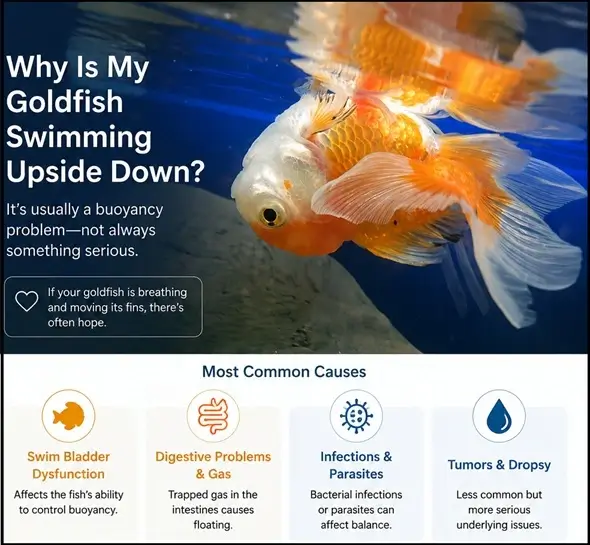
This guide explains the most common reasons a goldfish swims upside down, sideways, backwards, or vertically, how to tell the difference between a simple buoyancy problem and a more serious illness, and the exact steps you can take to help your fish recover. It also covers situations such as floating after feeding, after a water change, and why fancy goldfish like Orandas are especially prone to this problem.
Quick Answer
A goldfish swimming or floating upside down, sideways, backwards, or vertically most often has a buoyancy disorder caused by either a compressed swim bladder or digestive problems that produce trapped intestinal gas. The first step is to fast the fish for 2–3 days, followed by feeding boiled, deshelled peas while checking water quality and switching to high-quality slow-sinking pellets. If you also notice pinecone scales, white spots, ulcers, or red streaks, the problem is more likely caused by disease than diet and should be treated accordingly.
Quick Navigation
➜ Why Is My Goldfish Swimming Upside Down?
➜ When It’s More Than Diet or Buoyancy
➜ Why Is My Goldfish Swimming Upside Down After a Water Change?
➜ Why Is My Goldfish Floating Upside Down but Still Alive?
➜ Why Is My Goldfish Upside Down at the Bottom of the Tank?
➜ Goldfish Swimming Sideways
➜ Goldfish Swimming Backwards
➜ Why Is My Fancy Goldfish Swimming Upside Down More Often?
➜ Why Is My Oranda Goldfish Swimming Upside Down?
➜ Why Is My Fantail Goldfish Swimming Upside Down?
➜ How to Fix Goldfish Swim Bladder Problem, Step by Step
➜ Can Slow-Sinking Pellets Prevent Swim Bladder Problems?
➜ How Long Can a Goldfish Live Upside Down?
➜ Frequently Asked Questions
Why Is My Goldfish Swimming Upside Down?
Most sources describe this as swim bladder disease, a condition that affects the air-filled organ responsible for controlling buoyancy. However, many experienced aquarists believe the swim bladder itself isn’t always the primary problem. In many cases, poor digestion, constipation, or trapped intestinal gas puts pressure on the swim bladder or shifts the fish’s center of gravity, making it difficult to stay upright.
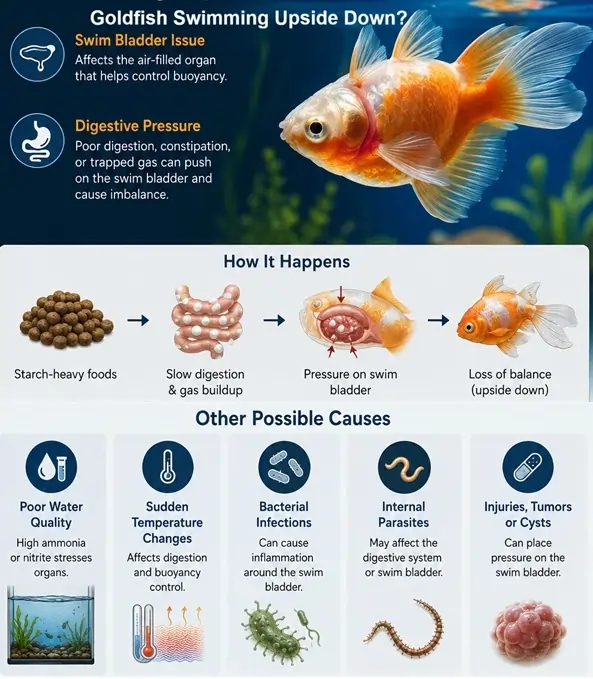
Unlike many other fish, goldfish have a relatively simple digestive system, and food passes through a long intestinal tract. Diets that rely heavily on dry, starch-rich foods can slow digestion in susceptible fish, allowing intestinal gas to build up. This doesn’t necessarily damage the swim bladder, but it can interfere with how it functions and cause the fish to float upside down, sink to the bottom, or struggle to maintain balance.
These two explanations aren’t really contradictory. One focuses on the organ that’s affected (the swim bladder), while the other focuses on the underlying cause (digestive pressure and intestinal gas). Either way, the treatment is usually the same, which is why the steps later in this guide are effective regardless of which mechanism is responsible.
Other possible causes include:
➜ Poor water quality, especially elevated ammonia or nitrite levels, which stress the digestive system and internal organs
➜ Sudden temperature changes that slow digestion and affect buoyancy control
➜ Bacterial infections causing inflammation around the swim bladder
➜ Internal parasites affecting the digestive system or swim bladder
➜ Physical injuries, tumors, or cysts placing pressure on the swim bladder
When It’s More Than Diet or Buoyancy
Most upside-down swimming episodes are caused by digestive issues or water quality problems and improve with fasting, dietary changes, and better aquarium maintenance. However, swimming upside down is only a symptom, not a disease by itself. Sometimes it signals a much more serious underlying condition.
Before assuming it’s simply constipation or trapped gas, check for the following warning signs:
➜ Swollen body with scales sticking outward like a pinecone — this is usually Dropsy, which often indicates organ failure or a serious bacterial infection
➜ White spots — usually caused by Ich (White Spot Disease), a parasitic infection that requires medication
➜ Red streaks, ulcers, or open sores — commonly indicate bacterial infections rather than a simple buoyancy problem
If any of these symptoms occur alongside upside-down swimming, don’t rely on fasting and peas alone. Treat the underlying disease while also maintaining excellent water quality.
Why Is My Goldfish Swimming Upside Down After a Water Change?
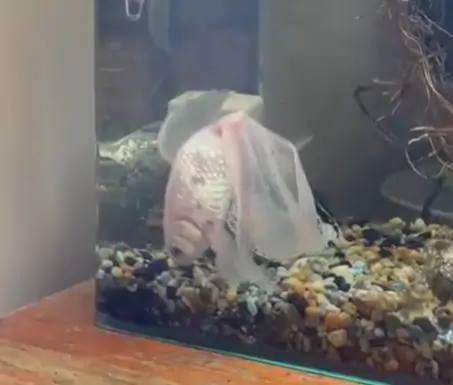
If the problem started immediately after a water change, temperature shock or sudden changes in water chemistry are the most likely causes. Sudden temperature drops or chemical imbalances stress the fish. This physiological stress impairs their nervous system and muscles, preventing their swim bladders from properly regulating air and causing the fish to sink or float uncontrollably.
➜ Always dechlorinate new water before adding it to the aquarium
➜ Match the replacement water temperature as closely as possible to the aquarium
➜ Avoid feeding for the next 24–48 hours because stressed fish often digest food more slowly
➜ Check that the filter isn’t producing excessive current, which can make it harder for a fish already struggling with buoyancy to maintain balance
Why Is My Goldfish Floating Upside Down but Still Alive?
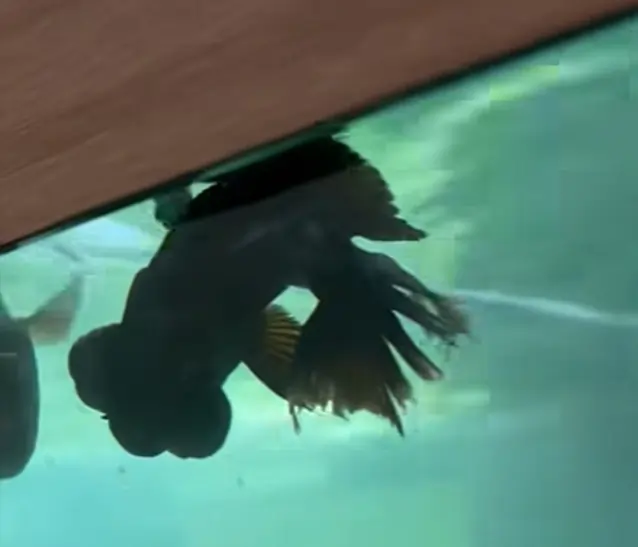
A goldfish that is floating upside down but is still breathing and moving its fins is usually suffering from a buoyancy disorder rather than dying. In many cases, recovery is possible if treatment begins early. This problem is particularly common in fancy goldfish such as Orandas, Ranchus, Fantails, and Pearlscales because their compact body shape leaves less room for the digestive organs and swim bladder.
The standard recovery approach is:
➜ Fast the fish for 2–3 days
➜ Feed boiled vegetable matter like deshelled peas afterward to improve digestion
➜ Gradually raise the water temperature to around 78–80°F (25.5–26.5°C) to improve metabolism
➜ Switch permanently to high-quality slow-sinking pellets or gel food
Why Is My Goldfish Upside Down at the Bottom of the Tank?
If your goldfish is lying upside down on the bottom instead of floating at the surface, it’s usually the same buoyancy problem working in the opposite direction. Instead of excessive buoyancy pulling the fish upward, the fish is unable to maintain normal balance and remains on the substrate.
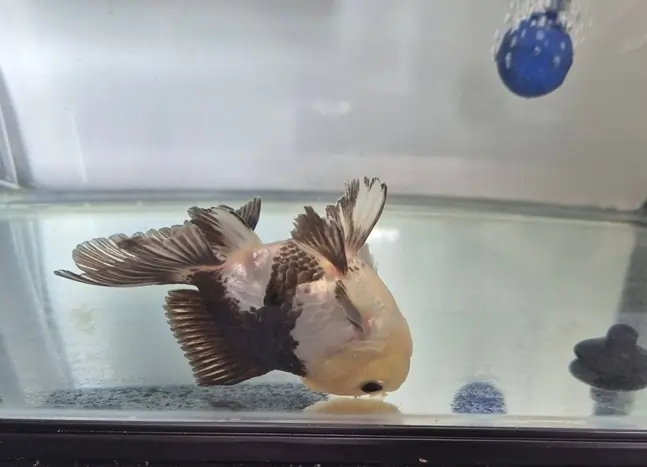
The most common causes include constipation, trapped intestinal gas, poor water quality, bacterial infections, or severe weakness caused by stress. Fancy goldfish with compact body shapes are particularly susceptible because their internal organs have less space than those of single-tailed varieties.
Start by checking the water parameters, then fast the fish for 2–3 days before offering boiled, deshelled peas. If the fish remains upside down for several days or develops additional symptoms such as pinecone scales, ulcers, or severe swelling, investigate bacterial disease rather than assuming it’s simply a digestive problem.
Goldfish Swimming Sideways
A goldfish doesn’t need to be fully upside down for this to be the same underlying issue. Swimming sideways, or “on its side,” is a partial version of the same buoyancy disorder covered above, usually caused by the same gas, constipation, or water quality problems, just less severe or still developing. The same applies to a goldfish floating vertically rather than sideways:
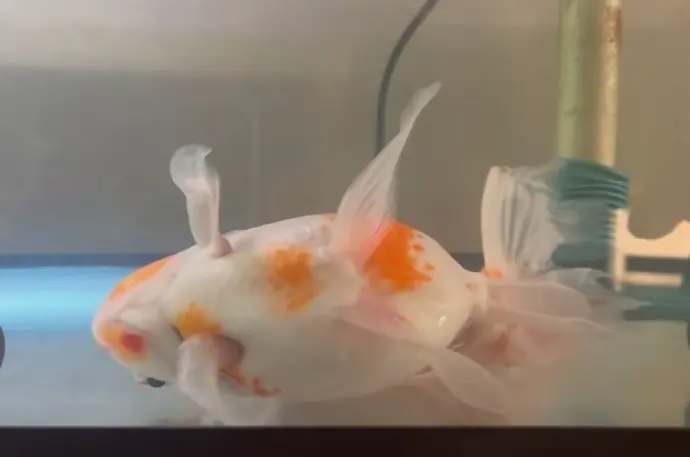
➜ Floating vertically, head-up — typically too much trapped gas or air in the swim bladder relative to the fish’s body
➜ Floating vertically, head-down — usually the reverse, insufficient buoyancy at the front of the body, often from constipation or a swim bladder that isn’t holding enough air
Whichever angle you’re seeing, the same fasting-and-peas approach in this guide applies, since it’s the same underlying disorder, just presenting at a different degree.
Goldfish Swimming Backwards
Swimming backwards points to the same buoyancy disorder as the rest of this guide, the fish is struggling to control forward propulsion while also fighting to stay balanced, rather than a separate issue on its own. It’s less common than upside-down or sideways swimming specifically, but the cause and the fix are identical: rule out water quality, fast the fish, then follow with deshelled peas.
Why Is My Fancy Goldfish Swimming Upside Down More Often?
Swim bladder and buoyancy problems occur far more often in fancy goldfish than in common goldfish, comets, or shubunkins. The reason is largely anatomical.
Common goldfish have long, streamlined bodies that provide plenty of room for the digestive tract and swim bladder. Fancy varieties such as Oranda, Ranchu, Pearlscale, Lionhead, Ryukin, and Fantail have been selectively bred for short, rounded bodies. This compressed body shape leaves less room for internal organs, making these fish much more likely to develop buoyancy problems after overeating, constipation, or digestive upset.
Fancy goldfish are also less tolerant of cold water. As water temperatures fall, digestion slows significantly, allowing food to remain in the digestive tract longer. This increases the likelihood of trapped intestinal gas and constipation, both of which can interfere with normal buoyancy.
Good to Know
This is one reason experienced fancy goldfish keepers often prefer to feed smaller meals several times a day instead of one large meal. Smaller feedings place less stress on the digestive system and may reduce the risk of recurring buoyancy problems.
Why Is My Oranda Goldfish Swimming Upside Down?
Orandas are one of the fancy goldfish varieties most commonly affected by buoyancy problems. Their rounded body shape leaves less room for the digestive tract and swim bladder, making them naturally more susceptible than single-tailed goldfish.
The fleshy head growth, or wen, has nothing to do with the problem. Instead, the combination of a deep body, slower digestion, and a tendency to overeat makes Orandas particularly prone to constipation and trapped intestinal gas.
If your Oranda is swimming upside down, floating at the surface, or lying on the bottom, begin by checking water quality, fasting for 2–3 days, and then offering boiled, deshelled peas. Switching to high-quality slow-sinking pellets instead of floating food may also help reduce future episodes.
If your Oranda has also stopped eating, sits on the bottom most of the day, or shows swelling around the abdomen, read our Goldfish Not Eating Guide for additional troubleshooting.
Why Is My Fantail Goldfish Swimming Upside Down?
Fantails are generally considered one of the hardiest fancy goldfish, but they can still develop buoyancy problems because of their rounded body shape. Fortunately, they usually recover more quickly than highly compressed varieties such as Pearlscales or Ranchus.
In Fantails, the most common triggers are overfeeding, constipation, sudden temperature changes, and poor water quality rather than permanent structural problems. Most cases improve with fasting, peas, warmer water, and switching to a more digestible diet.
Because Fantails are stronger swimmers than many other fancy goldfish, prolonged upside-down swimming or loss of balance should always prompt a water quality check before assuming the problem is purely digestive.
How to Fix Goldfish Swim Bladder Problem, Step by Step
Before reaching for medication, work through the following steps in order. Most diet-related buoyancy problems begin improving within a few days.
➜ Stop feeding completely for 2–3 days
➜ Test ammonia, nitrite, nitrate, and pH to rule out water quality problems
➜ After fasting, feed boiled, deshelled peas, the fiber helps move trapped waste through the digestive tract
➜ Gradually increase the water temperature to around 78–80°F (25.5–26.5°C) if appropriate for your setup
➜ Switch permanently to high-quality slow-sinking pellets or gel food
➜ Soak dry pellets in aquarium water for 2–5 minutes before feeding
➜ If there’s little or no improvement after one to two weeks, or if additional symptoms such as ulcers, pinecone scales, or severe swelling develop, investigate bacterial disease or seek advice from an aquatic veterinarian
➜ A “goldfish wheelchair,” a small support device that helps a fish stay upright can be tried if none of them work.
Can Slow-Sinking Pellets Prevent Swim Bladder Problems?
One of the simplest long-term changes you can make is replacing floating foods with high-quality slow-sinking pellets. Many experienced goldfish keepers find this reduces recurring buoyancy problems, particularly in fancy goldfish such as Orandas, Ranchus, Pearlscales, Lionheads, and Fantails.
When goldfish repeatedly feed from the surface, they often swallow small amounts of air along with their food. Dry floating pellets may also continue absorbing water after they are eaten, which can slow digestion in susceptible fish. Although these factors don’t directly cause swim bladder disease, they can contribute to digestive discomfort and trapped intestinal gas that worsens buoyancy problems.
Slow-sinking pellets provide several benefits:
➜ They encourage goldfish to feed naturally in the middle of the water column instead of repeatedly gulping air at the surface
➜ They begin absorbing water before they are completely eaten, making them softer and easier to digest
➜ They generally produce less waste than floating flakes, helping maintain better water quality over time
My Experience
After keeping fancy goldfish for years, I’ve found that fish with recurring buoyancy problems improved noticeably after switching from floating pellets to high-quality slow-sinking pellets and avoiding overfeeding. While this isn’t a guaranteed cure for every case, it has consistently reduced repeat episodes in my own aquariums and has become part of my long-term feeding routine. With floating pellets the Goldfish gulps more air along with the food causing gastric problems and swim bladder problem.
For even better results, pre-soak dry pellets in aquarium water for 2–5 minutes before feeding. Softening the pellets before they’re eaten may make digestion easier, particularly for fancy goldfish that regularly experience buoyancy problems.
How Long Can a Goldfish Live Upside Down?
A goldfish with a buoyancy disorder can survive for weeks or even months if water quality remains excellent and the fish can still eat. However, living upside down is stressful and shouldn’t be considered harmless.
Fish that spend prolonged periods floating against the surface often damage their protective slime coat, increasing the risk of bacterial infections and skin ulcers. Others become exhausted from constantly trying to correct their position. For that reason, it’s always worth identifying and treating the underlying cause rather than waiting for the problem to resolve on its own.
Frequently Asked Questions
Can goldfish recover from a swim bladder disorder?
Yes, many cases resolve fully within a few days to two weeks once the underlying cause, usually diet or water quality, is addressed. Cases caused by permanent organ damage, cold-water injury, or long-term untreated infection are less likely to fully reverse.
What is the fastest way to cure a swim bladder issue?
Fasting for 2 to 3 days followed by deshelled peas is the fastest widely-recommended first step, since it directly addresses the most common cause, trapped gas from undigested food. Combine it with a water quality check, since skipping that step can mean the actual cause goes untreated.
Can a swim bladder fix itself?
Sometimes, if the cause was a one-off issue like a single instance of gas or mild stress, symptoms can resolve without direct intervention. But if the underlying cause is ongoing, poor diet, bad water quality, or body-shape-related compression in a fancy variety, it won’t fix itself until that root cause changes. If there’s also a pinecone-scale appearance, white spots, or red streaks, that points toward disease rather than simple buoyancy, and it won’t resolve on its own at all.
How do I fix swim bladder in goldfish at home?
Fast the fish, then feed deshelled peas, raise the temperature slightly, and switch to sinking food going forward. This combination resolves the large majority of diet and gas-related cases without needing medication or a vet visit.
How long will a fish last with a swim bladder disorder?
It varies widely depending on the cause. Diet-related cases often resolve within one to two weeks of treatment, while structural or chronic cases can persist for months with proper care, though ongoing monitoring for secondary infection is important either way.
What other foods help besides deshelled peas?
Blanched leafy greens like spinach, lettuce, or kale add roughage that helps clear the digestive tract. Gel diets are widely recommended by experienced keepers as a long-term replacement for dry pellets in swim-bladder-prone fish. Blanched, deshelled zucchini, cucumber, or broccoli florets work as an alternative source of fiber, and thawed daphnia or brine shrimp, with their natural chitin exoskeletons, can help move things through the gut as well. For goldfish and other omnivores or herbivores, small, peeled pieces of boiled zucchini or spinach work well as an easy, everyday source of fiber alongside peas.
Why is my goldfish floating vertically head-up?
This usually means there’s too much trapped gas or air in the swim bladder relative to the fish’s body, pulling the head end upward. It’s the same underlying buoyancy disorder covered throughout this guide, and it responds to the same fasting-and-peas approach.
Why is my goldfish floating vertically head-down?
This is typically the reverse case, not enough buoyancy at the front of the body, often from constipation or a swim bladder that isn’t holding enough air. Same cause family, same treatment steps.
Can water changes cause swim bladder problems?
Yes, if the new water isn’t properly dechlorinated or isn’t close to the tank’s existing temperature, the resulting stress can disrupt a goldfish’s nervous system and muscle control enough to affect buoyancy, sometimes within hours of the change.
Do fancy goldfish get swim bladder problems more than common goldfish?
Yes, noticeably more. Fancy varieties like Oranda, Ranchu, and Pearlscale have been bred into short, rounded bodies that leave less room for the digestive tract and swim bladder. Common, single-tailed goldfish, comets, and shubunkins have long, streamlined bodies and rarely develop this issue at all.
Is a goldfish wheelchair safe to use?
It can be, with caution. The harness material can chafe delicate skin over time and lead to secondary infections, so most guidance recommends short, supervised daily use rather than leaving it on constantly. It’s a last-resort management tool for fish that haven’t improved with fasting, diet, and water quality fixes, not a first option.
Final Thoughts
A goldfish swimming or floating upside down, sideways, or vertically looks like an emergency, and in most cases it’s a treatable buoyancy problem rooted in diet, water quality, or body shape, not something immediately dangerous. Fancy varieties like Oranda are more prone to it simply because of how their bodies have been bred, which is worth knowing before assuming something’s gone seriously wrong. But it’s still worth ruling out the more serious possibilities first, pinecone scales, white spots, or red streaks mean this isn’t a diet problem, and fasting and peas won’t fix it. Once those are ruled out, work through fasting, peas, and a water quality check before reaching for anything more aggressive. For more on Oranda-specific care, see our Oranda goldfish guide. If the behavior looks more like frantic darting or circling than a buoyancy problem, see our Goldfish Swimming Erratically guide, and for a fish gasping at the surface or parked unresponsively at the bottom, our Goldfish at the Top of the Tank and Goldfish at the Bottom of the Tank guides cover those specifically.