
A goldfish suddenly darting around the aquarium, swimming in circles, or repeatedly bumping into the glass can be alarming. Goldfish swimming erratically may be reacting to poor water quality, skin irritation, sudden environmental changes, or an underlying health problem.
Not every burst of unusual swimming indicates illness. The movement pattern and accompanying symptoms can help you distinguish normal activity from something that needs immediate attention.
Why Is My Goldfish Swimming Erratically?
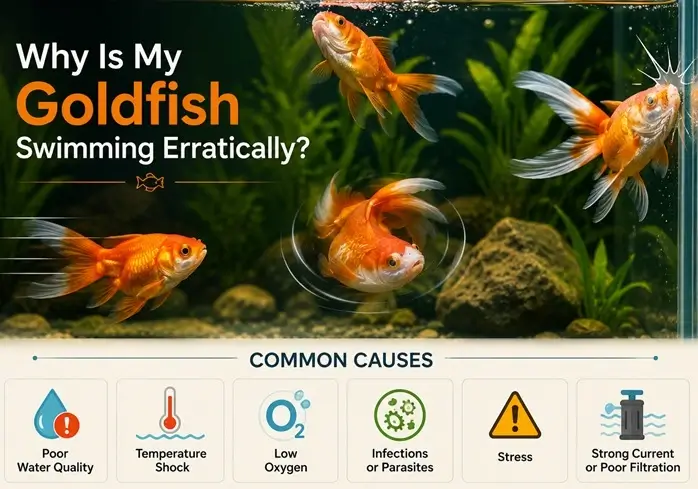
Sudden, frantic swimming in goldfish can indicate poor water quality, low oxygen, parasites, temperature changes, or environmental stress. However, the swimming pattern alone cannot confirm the cause.
Start by testing ammonia, nitrite, pH, and temperature. Ammonia and nitrite should both read 0 ppm. Also observe whether other fish are behaving unusually, particularly if the problem appeared suddenly.
Goldfish Swimming Behavior: What It May Mean
| Swimming Behavior | Possible Clues & What to Check |
|---|---|
| Frantic darting or jerking | Possible water-quality problems, irritation, or sudden stress. Test the water first. |
| Repeated rubbing against objects (flashing) | Possible parasites or skin/gill irritation. Look for white spots, excess mucus, or other changes. |
| Swimming in tight circles | May indicate disorientation, illness, or a balance problem. Check water quality and accompanying symptoms. |
| Repeated swimming along the glass | Possible environmental stress, reflections, or feeding anticipation. Consider when and how often it happens. |
| Floating sideways or upside down | Possible buoyancy disorder. See our Goldfish Swim Bladder Disorder guide. |
| Gasping at the surface, sometimes with frantic swimming | Possible low oxygen, ammonia or nitrite exposure, or gill problems. Increase aeration and test the water immediately. |
| Unusually slow swimming or bottom-resting | Check temperature, water quality, appetite, and other signs of illness. |
| Brief, purposeful bursts of speed | May be normal feeding anticipation, exploration, a startle response, or spawning behavior. Observe whether the fish returns to normal. |
Important: These are clues, not confirmed diagnoses. Swimming behavior alone cannot establish the cause.
Poor Water Quality and Low Oxygen
Elevated ammonia or nitrite can cause goldfish to swim frantically, dart around the aquarium, or show signs of distress. Ammonia can damage the gills, while nitrite interferes with oxygen transport in the blood.
Low dissolved oxygen may also cause unusual swimming, often accompanied by rapid breathing or gasping at the surface.
What to check:
- Ammonia and nitrite should both read 0 ppm.
- Check nitrate, pH, and temperature.
- Make sure the filter is running properly and the water surface has adequate movement.
What to do: If ammonia or nitrite is detected, perform an appropriate partial water change using dechlorinated, temperature-matched water. Increase aeration and continue testing until conditions stabilize.
If your goldfish also develops dark patches, see our Goldfish Turning Black guide for other possible explanations. Black coloration alone does not confirm ammonia poisoning.
Parasites and Flashing
A goldfish that suddenly darts across the aquarium and rubs its body against gravel, decorations, or tank walls may be displaying a behavior known as flashing. This usually indicates irritation of the skin or gills.
Possible causes include:
- Ich (white spot disease): Often accompanied by tiny white spots resembling grains of salt on the body or fins.
- Gill or skin flukes: Microscopic parasites that may cause repeated flashing, excess mucus, clamped fins, or breathing difficulties.
- Fish lice or anchor worms: External parasites that may sometimes be visible on closer inspection.
However, flashing does not automatically mean parasites. Chlorine, ammonia, and other water irritants can produce similar behavior.
What to do: Test the water first and examine your goldfish under good lighting. If parasites are suspected, identify the likely cause before choosing treatment rather than adding medication blindly.
For help identifying common goldfish illnesses, their symptoms, and possible treatments, see our Goldfish Diseases guide.
Sudden Temperature Changes or Chemical Irritation
Goldfish can react to sudden changes in water temperature or chemistry by darting around the aquarium, swimming frantically, or showing signs of distress. This may happen after a water change when the replacement water differs significantly from the tank’s existing conditions.
Chemical irritation can produce similar behavior. Possible triggers include:
- Chlorine or chloramine from untreated tap water.
- Soap, cleaning products, or aerosol sprays accidentally entering the aquarium.
- Sudden pH changes, particularly in tanks with unstable water chemistry.
If several fish begin behaving unusually at the same time, especially immediately after maintenance, suspect an environmental problem before assuming they have developed an infection.
What to do: Check the temperature and water parameters, confirm that the replacement water was properly conditioned, and increase aeration. If contamination is suspected, remove the source and perform an appropriate partial water change using safe, dechlorinated, temperature-matched water.
Avoid making further abrupt changes while trying to correct the problem.
Stress and Environmental Changes
Not all erratic swimming is caused by illness. Goldfish may dart around the aquarium or repeatedly swim along the glass when something in their surroundings is causing stress.
Common triggers include:
- Overcrowding: Limited swimming space and competition for food can contribute to ongoing stress.
- Aggressive tankmates: Chasing, nipping, or competition may cause a goldfish to swim frantically or try to escape.
- Strong water currents: Excessive filter flow can make swimming difficult, particularly for fancy goldfish with rounded bodies and elaborate fins.
- Sudden disturbances: Loud vibrations, abrupt lighting changes, repeated tapping on the glass, or rearranging the aquarium may startle your fish.
What to do: Observe when the unusual swimming occurs. Check whether another fish is chasing it, reduce excessive water flow without stopping filtration, and provide adequate swimming space and a quieter environment.
If the behavior stops once the disturbance is removed and your goldfish otherwise eats and breathes normally, environmental stress may have been the trigger.
Understanding Different Swimming Patterns
Not all unusual swimming behaviors mean the same thing. Observing how your goldfish moves, how long the behavior lasts, and whether other symptoms are present can help narrow down the possible cause.
Why Is My Goldfish Swimming in Circles?
A goldfish swimming repeatedly in tight circles, spinning, or struggling to swim in a straight line may be experiencing disorientation, physical injury, or an underlying health problem. Poor water quality and severe stress can also contribute to abnormal movement.
Occasional circular swimming while exploring the tank is not necessarily concerning. However, persistent, uncontrolled circling, especially with loss of balance, rapid breathing, or difficulty feeding, needs attention.
Test the water first. If conditions are normal but your goldfish continues spinning or appears unable to control its movements, seek advice from an aquatic veterinarian.
If the fish is also floating, sinking, or rolling onto its side, see our Goldfish Swimming Upside Down guide for buoyancy-related problems.
Why Is My Goldfish Swimming Into the Glass?
Goldfish sometimes swim repeatedly up and down or along the aquarium walls. This behavior is commonly called glass surfing.
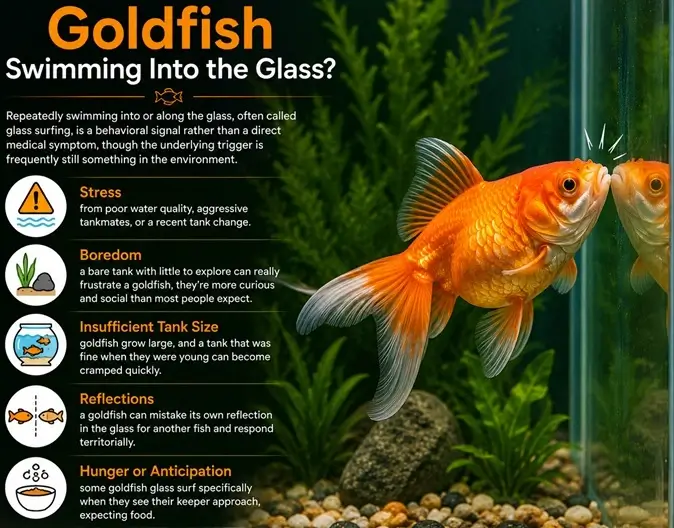
Possible triggers include reflections, environmental stress, limited swimming space, or anticipation of feeding when you approach the tank.
Occasional glass surfing is not necessarily a problem. However, a goldfish that persistently races along the glass or repeatedly collides with it may be distressed or disoriented.
Check the tank conditions, observe interactions with other fish, and look for anything that may be startling it. If reflections appear to be contributing, adjusting the aquarium lighting or adding a background may help.
Why Is My Goldfish Swimming So Fast or Slowly?
Brief bursts of fast swimming can be normal, particularly during feeding, exploration, or spawning. Male goldfish may also chase and nudge females during breeding, which can look unusually frantic.
The concern is sudden, sustained darting with no obvious trigger, especially when accompanied by rapid breathing, flashing, or other signs of distress.
Unusually slow swimming can have different explanations. Goldfish naturally become less active in cooler water and rest periodically. However, persistent sluggishness, particularly with appetite loss, clamped fins, or abnormal breathing, may indicate poor water quality or illness.
The key is a change from your goldfish’s usual behavior. A brief burst of activity is different from a fish that cannot settle, just as normal resting is different from a fish that has become unusually weak or unresponsive.
Is My Goldfish Playing or Showing Signs of Distress?
Not every unusual movement indicates a problem. Healthy goldfish may suddenly become active when they see their keeper, explore their surroundings, or chase one another during spawning.
The important difference is whether the fish remains in control of its movements and returns to its usual behavior.
Signs that deserve closer attention include:
- Repeated, uncontrolled darting or spinning.
- Rapid breathing or persistent gasping at the surface.
- Clamped fins, repeated flashing, or visible injuries.
- Loss of appetite or difficulty maintaining balance.
- Several fish suddenly behaving unusually at the same time.
A goldfish that briefly swims around energetically but continues eating, breathing, and behaving normally is less concerning than one showing persistent distress.
When in doubt, test the water rather than assuming your goldfish is simply playing.
What to Do If Your Goldfish Is Swimming Erratically
If your goldfish suddenly starts swimming uncontrollably, take these steps in order:
1. Check the water: Test ammonia, nitrite, pH, and temperature. Correct any unsafe readings with an appropriate partial water change using conditioned, temperature-matched water.
2. Improve aeration: Increase surface agitation or add an air stone, especially if the fish is breathing rapidly or gasping.
3. Look for possible triggers: Check for chemical contamination, recent maintenance, aggressive tankmates, and visible signs of illness.
4. Avoid unnecessary medication: Identify the likely cause before using salt, antibiotics, or antiparasitic treatments.
Seek prompt veterinary help if your goldfish is spinning uncontrollably, struggling to breathe, unable to maintain balance, or continuing to deteriorate despite correcting the aquarium conditions.
Frequently Asked Questions
Why Is My Goldfish Swimming Erratically After a Water Change?
Sudden temperature or water-chemistry changes, untreated chlorine or chloramine, and disturbed waste can cause unusual swimming after maintenance. Check the temperature, ammonia, nitrite, and pH, and confirm that the replacement water was properly conditioned.
Can a Goldfish Recover From Ammonia Poisoning?
Yes, recovery is possible, particularly when exposure is identified and corrected early. However, severe ammonia exposure can damage the gills, and recovery depends on the extent of the injury. Maintain safe water conditions and monitor the fish closely.
Does Erratic Swimming Mean My Goldfish Has Swim Bladder Disease?
Not necessarily. Swim bladder disorders primarily affect buoyancy, causing problems such as floating, sinking, or difficulty staying upright. Frantic darting, flashing, or glass surfing may have entirely different causes. See our Goldfish Swim Bladder Disorder guide if your fish is struggling to maintain its position in the water.