
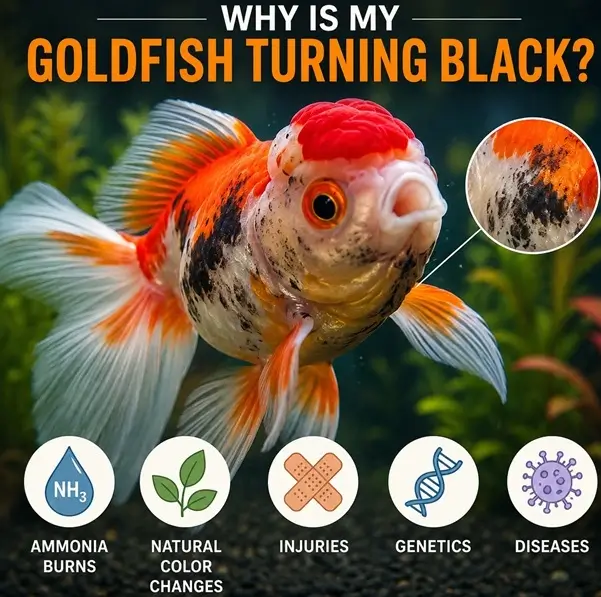
A goldfish turning black may be developing natural pigmentation or dark marks as damaged skin heals after an injury or ammonia exposure. Certain parasites can also cause small black spots. The color alone does not tell you the cause: check the water and look for changes in appetite, breathing, or swimming.
Quick Navigation:
Natural Color Changes and Genetics
Healing After Ammonia Burns
Healing After Physical Injuries
Fin Damage or Infection
Black Spot Disease
2) What to Do If Your Goldfish Is Turning Black
3) Frequently Asked Questions
Why Is My Goldfish Turning Black?
Black coloring comes from melanin, a pigment in the skin. It can develop through natural color changes or appear as damaged skin heals after ammonia exposure or an injury. Small black spots can sometimes have a parasitic cause.
Look at the markings alongside your fish’s behavior and water-test results.
| What You Notice | Possible Explanation | What to Check |
|---|---|---|
| Gradual darkening with normal behavior | Natural pigmentation | Compare photos over time and confirm that water readings are suitable. |
| Irregular black patches | Natural markings or healing after skin damage | Test ammonia and nitrite, and review recent water problems or injuries. |
| Black fin edges | Natural coloring or darkening associated with fin damage | Check whether the edges are intact, healing, or becoming frayed and receding. |
| Tiny, pepper-like black dots | Natural speckling or possible black spot disease | Check whether the spots are new or increasing, particularly in pond fish. |
| Darkening around a known wound | Darkening during healing | Look for the wound closing. Spreading redness, swelling, or tissue loss needs attention. |
If darkening comes with gasping, appetite loss, or unusual swimming, investigate promptly. Black pigmentation alone neither confirms ammonia damage nor proves that an injury has healed.
1. Natural Color Changes and Genetics
Some young goldfish develop stronger black markings as their adult coloring develops. Black Moors and goldfish with red-and-black or panda patterns are examples where genetics influences the dark areas. These markings can also fade with age, particularly in panda-patterned fish.
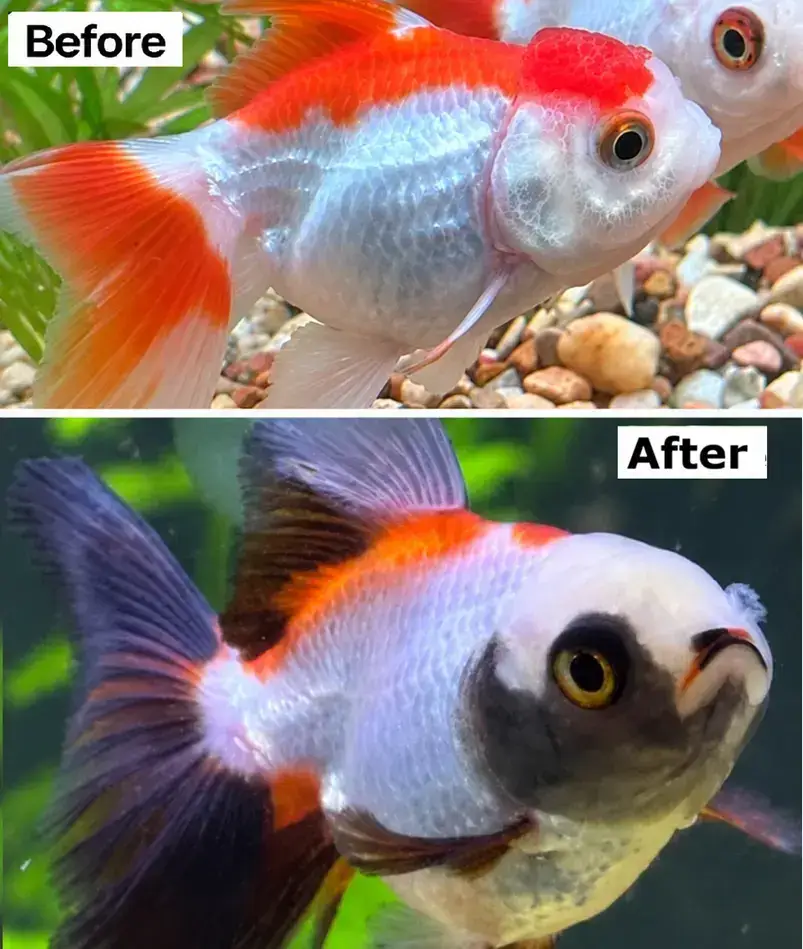
What to do: If your fish is eating, swimming normally, and has healthy skin and fins, compare photographs taken under the same lighting. Check water quality before assuming the change is purely genetic.
2. Healing After Ammonia Burns
Ammonia can damage the skin and gills. Affected areas may initially look red or irritated, then develop dark patches as the skin heals. Blackening can appear after the original exposure, so a normal ammonia reading today does not rule out an earlier problem.
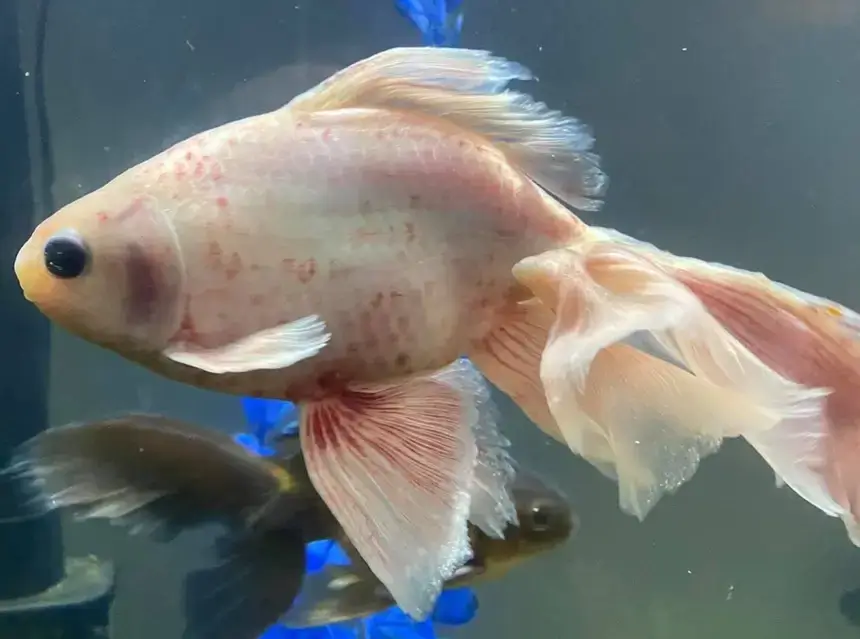
What to do: Test ammonia and nitrite; both should read 0 ppm. If either is detectable, carry out a partial water change using dechlorinated, temperature-matched water, then retest. Keep filtration and aeration running, and investigate overfeeding, excess waste, or a disrupted biological filter.
3. Healing After Physical Injuries
Scrapes from sharp decorations, rough handling, or attacks from tankmates can leave damaged areas that darken during healing. The black patch may follow the outline of a known wound or injured fin.
What to do: Remove the source of injury and maintain clean water. Watch for the wound closing and normal activity returning. Increasing redness, swelling, or tissue loss suggests the injury needs further attention.
4. Fin Damage or Infection
Black fin edges alone do not confirm fin rot. They may be natural markings or appear after damage. Edges that keep fraying, receding, or becoming inflamed are more concerning because they indicate ongoing deterioration.
What to do: Check water quality and watch for fin nipping. If the damage continues to spread, use our goldfish fin rot guide to assess the symptoms and treatment options. Avoid medication based on color alone.
5. Black Spot Disease
Black spot disease can cause small, pepper-like dots where the fish forms dark tissue around encysted parasites. It is more relevant to outdoor ponds, where the parasite’s life cycle can involve aquatic snails and fish-eating birds. Natural speckling can look similar, so dots alone do not confirm an infection.
What to do: Photograph new spots and monitor whether they increase. If a parasite is suspected, seek confirmation before treating; encysted parasites may not respond to ordinary aquarium remedies. Do not scrape or pick the spots off.
What to Do If Your Goldfish Is Turning Black
Treatment depends on the cause. Natural coloring needs no medication, while water-quality problems, injuries, or infections need attention.
- Test the water: Check ammonia, nitrite, nitrate, pH, and temperature. Ammonia and nitrite should both read 0 ppm.
- Correct unsafe readings: If ammonia or nitrite is detectable, perform a partial water change using dechlorinated, temperature-matched water. Retest and repeat as needed. Keep filtration and aeration running.
- Check for injuries: Look for damaged skin or fins, sharp decorations, and chasing or fin nipping.
- Monitor recovery: Watch appetite, breathing, swimming, and wound condition. Black marks may remain after the original problem improves.
- Use medication only when warranted: Black coloring alone does not identify an infection or tell you which medicine to use.
Gasping, open sores, worsening fin damage, or severe swelling need prompt attention. If symptoms persist despite correcting water conditions, seek help from an aquatic veterinarian.
Regular partial water changes, sensible stocking, and avoiding overfeeding help protect water quality. Keep decorations free of sharp edges and quarantine new fish before introducing them. These steps reduce preventable harm, but they cannot stop natural color changes.
Frequently Asked Questions
Why are my goldfish’s fins turning black?
Black fin edges may be natural coloring or develop during healing after ammonia exposure or injury. Check water quality and inspect the edges. Fins that keep fraying, receding, or becoming red need further investigation; see our goldfish fin rot guide.
Why is my goldfish turning black on the head?
Black markings on the head may develop naturally or appear as damaged skin heals. In Orandas, inspect the fleshy head growth (wen) for scrapes, redness, or swelling. Check ammonia and nitrite, particularly if the fish also loses its appetite or breathes rapidly.
Why is only one of my goldfish turning black?
Natural color changes or an injury may affect only one fish. Fish also respond differently to poor water conditions, so unaffected tankmates do not rule out a water-quality problem. Test the water and watch for chasing or fin nipping.
Why is my goldfish turning black after a water change?
Dark patches may appear as skin heals from damage that occurred before the water change. Check that replacement water was dechlorinated and matched the tank’s temperature. Test ammonia and nitrite, especially if you also replaced filter media or washed it in untreated tap water.
How long does the black color last?
Dark marks associated with healing may fade over weeks or months, but there is no fixed timeline. Natural markings may remain or change again as the fish ages. Judge recovery by appetite, breathing, activity, and wound condition rather than whether the black has disappeared.
Can a dark tank background make my goldfish turn black?
A dark background can deepen a goldfish’s overall coloring, but this does not necessarily produce black patches. Dim lighting can also change how existing markings appear. Investigate new black areas rather than assuming the background caused them.
Related Goldfish Health Guides: