
Ranchu Goldfish is also called the “king of Goldfish.” The Ranchu goldfish originated in Japan and is a popular and distinctive variety of fancy goldfish. It is characterized by a short, round body, a hump on its back, and a lack of a dorsal fin. The hump on its back is a key feature that distinguishes it from other goldfish varieties such as Oranda Goldfish and other fancy goldfish varieties.
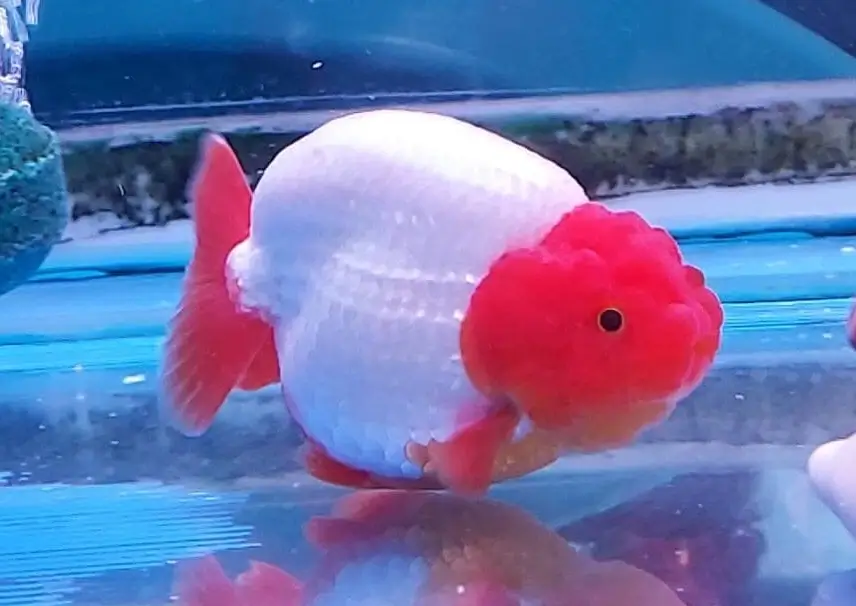
Another prominent feature of Ranchu is the “wen” or head growth, which covers the top of its head and extends to the sides of its face. Ranchu goldfish are not strong swimmers compared to other goldfish types due to their body shape.
Fish enthusiasts highly prize the Ranchu goldfish for their unique appearance and looks. Taking care of Ranchu goldfish requires attention to water quality, proper nutrition, and an appropriate environment to ensure their well-being. If you’re new to keeping fancy goldfish, our male vs female goldfish guide will also help you identify breeding pairs.
Quick Navigation
➜ Ranchu Goldfish Varieties
➜ Black Ranchu Goldfish
➜ Red Ranchu Goldfish
➜ Red and White Ranchu
➜ White Ranchu Goldfish
➜ Calico Ranchu Goldfish
➜ Milk Cow Ranchu
➜ Chocolate Ranchu
➜ Lionhead Ranchu
➜ Jumbo Ranchu
➜ Thai Ranchu
➜ Ranchu Lifespan
➜ Ranchu Goldfish Tank Size
➜ Ranchu Goldfish Water Parameters
➜ Ranchu Diet
➜ Ranchu Tank Mates
➜ Ranchu Breeding
➜ Ranchu Health and Diseases
➜ Buying a Ranchu Goldfish
➜ FAQ – Ranchu Goldfish
Ranchu Goldfish Varieties
Ranchu goldfish come in different varieties, and can be classified based on factors such as color, pattern, head, and fin. Ranchu comes in major base colors like orange, red, white, and black.
Here are some of the most popular Ranchu goldfish varieties, classified by color, pattern, size, breeding origin, and distinctive traits.
Color & Pattern Varieties
Black Ranchu Goldfish
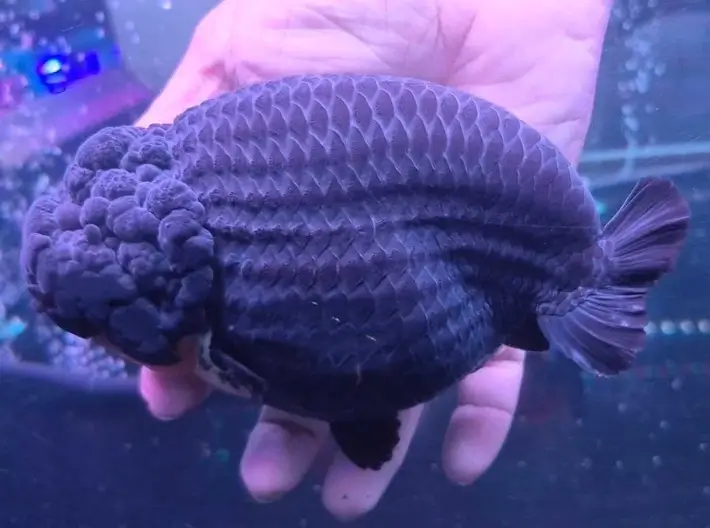
Black Ranchu goldfish have a solid black coloration. The main feature of the Black Ranchu is its deep, solid black color, and the quality and intensity of the black color may vary depending on various factors.
Red Ranchu Goldfish
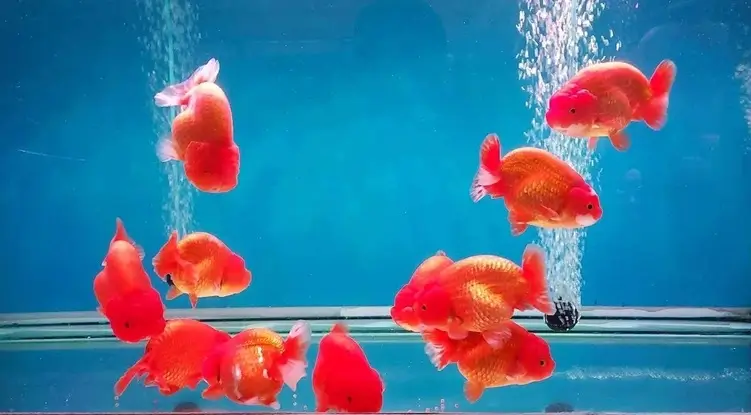
The Red Ranchu variety is known for its vibrant red color. The intensity of the red color can vary, and some Red Ranchus may have other color markings on them. A well-balanced diet is crucial for it to maintain its red coloration.
Red and White Ranchu
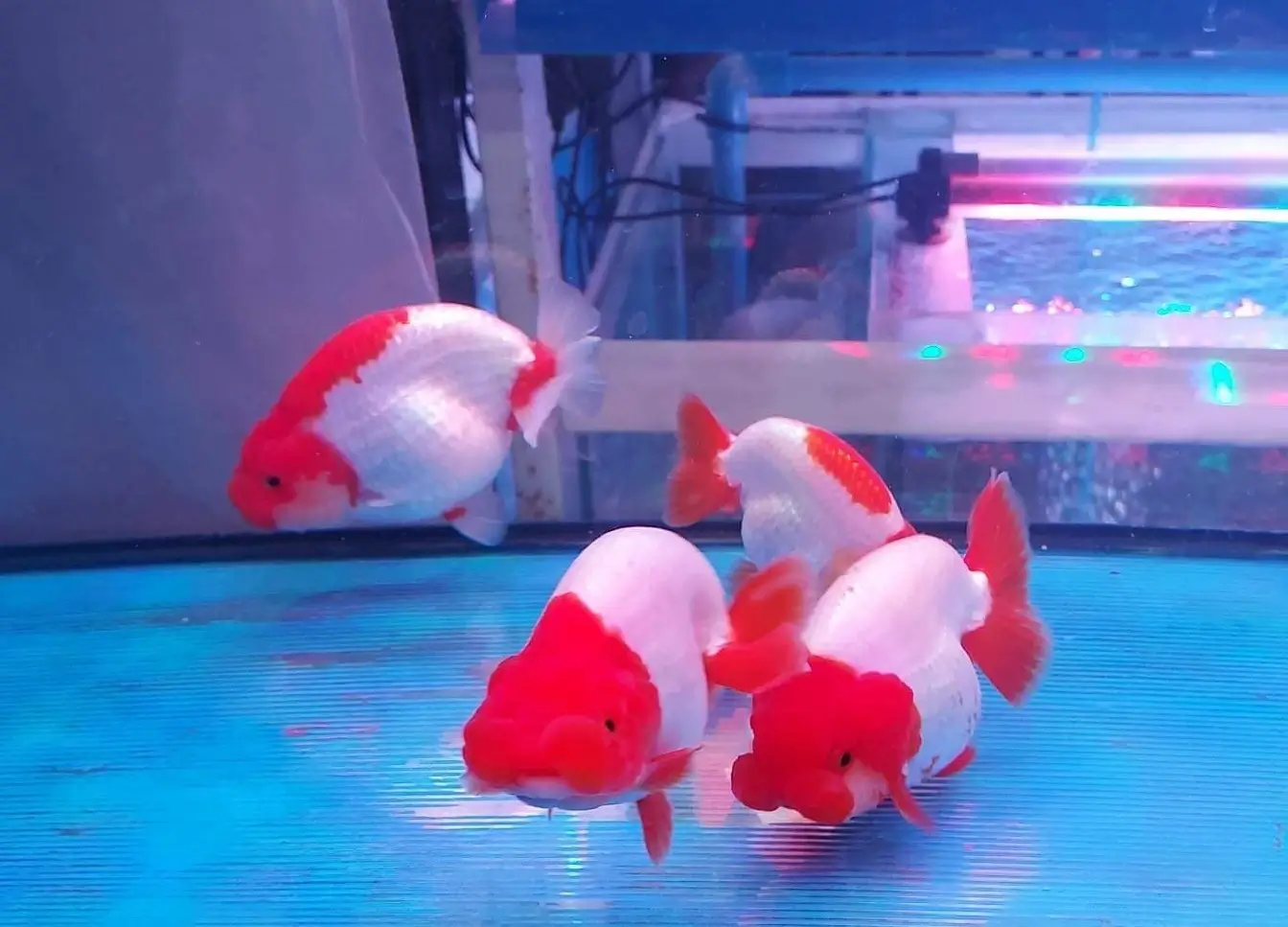
Ranchu is a fancy goldfish breed that originated in Japan. The Red and White coloration is a typical color pattern found in most Ranchu goldfish. These fish are often red and white in color, with variations in the distribution of their colors. Their body may have patches or areas of red, white, and black which create a visual appeal.
White Ranchu Goldfish
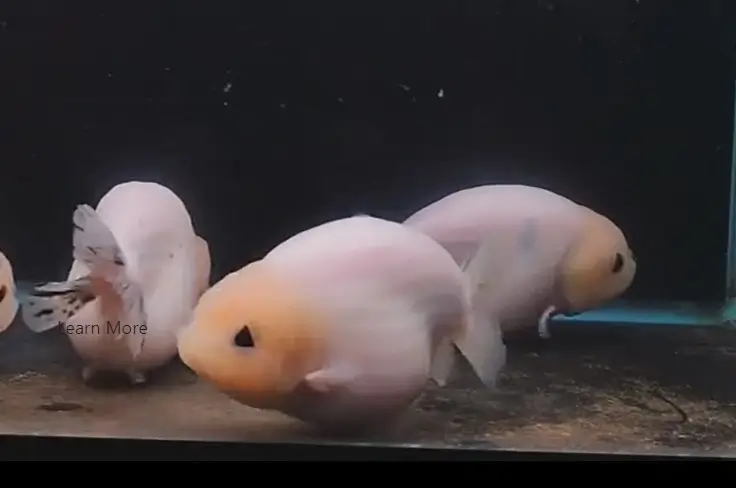
The White Ranchu goldfish predominantly exhibits a white coloration throughout the body and head. The White Ranchu goldfish’s distinctive appearance makes it a great addition, adding beauty to any Ranchu aquarium tank.
Calico Ranchu Goldfish
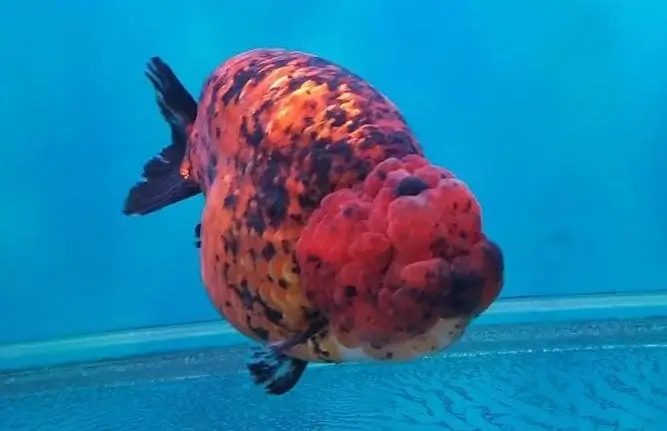
The Calico Ranchu goldfish exhibits a calico color pattern. Calico Ranchu typically have a mix of three colors, such as red, white, and black. The calico pattern appears as spots, patches, or markings on the entire body and fins. Each individual Calico Ranchu can have a unique and visually appealing look, making it a great addition to any Ranchu tank.
Milk Cow Ranchu
The Milk Cow Ranchu is a striking variety named for its bold black-and-white patterning, resembling the markings of a dairy cow. Unlike the finer, more scattered speckling seen in Calico Ranchu, Milk Cow Ranchu typically display larger, blocky black patches against a white base, sometimes covering different degrees of the body. No two Milk Cow Ranchu have exactly the same pattern; each fish’s markings are unique.
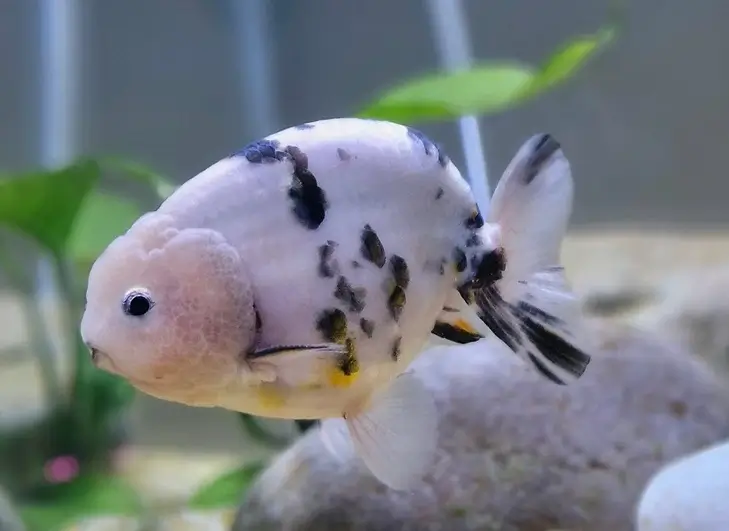
This variety shares the same core Ranchu traits, no dorsal fin, a rounded curved back, and a developing wen, and has the same general care requirements as other Ranchu colors. Because of its striking, hard-to-breed-true pattern, Milk Cow Ranchu is considered a rarer, more sought-after variety than the standard color forms.
Chocolate Ranchu
Chocolate Ranchu share the same body shape, wen development, and care needs as other Ranchu colors. The brown pigmentation is purely a coloration trait and doesn’t affect health, hardiness, or care requirements.
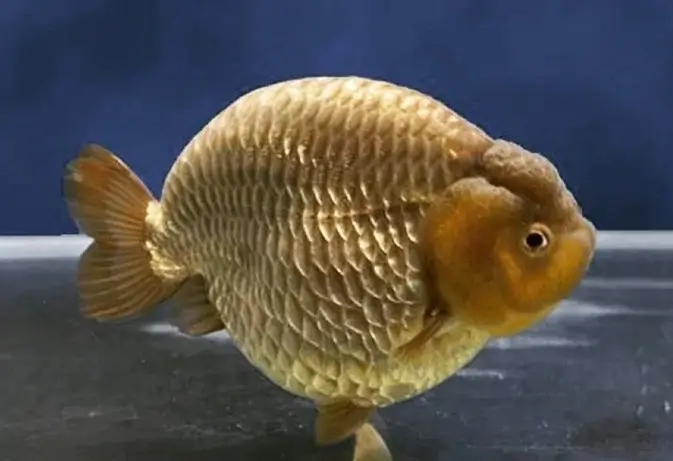
Chocolate Ranchu share the same body shape, wen development, and care needs as other Ranchu colors, the brown pigmentation is purely a coloration trait and doesn’t affect health, hardiness, or care requirements.
Head/Wen Type (Informal Trade Term)
Lionhead Ranchu
A quick clarification before diving in: “Lionhead” and “Ranchu” are actually two distinct goldfish breeds, not the same fish. Lionhead goldfish originated in China, while Ranchu is Japan’s later-developed variant, and the two have real physical differences: Ranchu has a more sharply arched back and wider-spread caudal fins, while Lionhead’s back is flatter with less-spread fins. The true cross between the two breeds actually has its own proper name, the Lionchu.
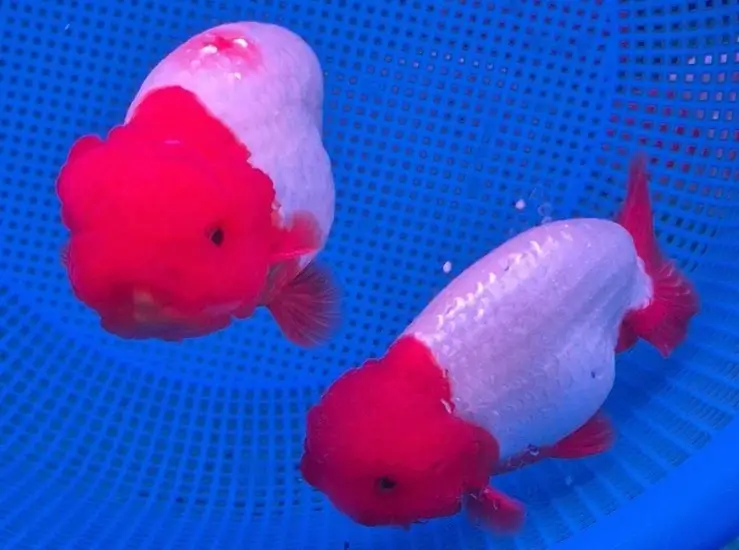
That said, “Lionhead Ranchu” is a real term used informally in the hobby, particularly by Thai breeders and importers, to describe a Ranchu with an especially pronounced, Lionhead-like wen that extends further over the face than is typical for standard Ranchu. It’s a trade description of a trait, not a formally recognized separate breed, so don’t be surprised if you see the term used a little differently from one seller to the next.
Size Classification
Jumbo Ranchu
Jumbo Ranchu refers to a size classification, not a color or origin. While standard Ranchu typically reach around 3–5 inches in length, Jumbo Ranchu are bred and raised to grow significantly larger, often reaching 6–8 inches or more. This impressive size makes them a real standout in any goldfish aquarium, though it also means they need a correspondingly larger tank than a standard-sized Ranchu.
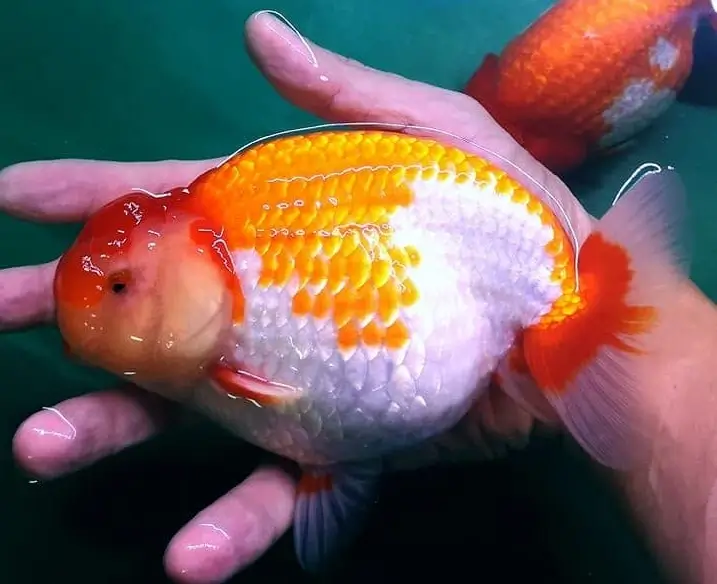
Jumbo Ranchu can appear in any of the standard Ranchu colors and patterns. Size and color are independent traits, so a Jumbo Ranchu could be red, calico, black, or any other variety.
Breeding Origin
Thai Ranchu
Thai Ranchu refers to Ranchu bred specifically in Thailand, a major hub for fancy goldfish breeding. Thai Ranchu are known for their short, compact bodies and a notably large, egg-shaped head, traits that Thai breeding programs have specifically selected for over generations.
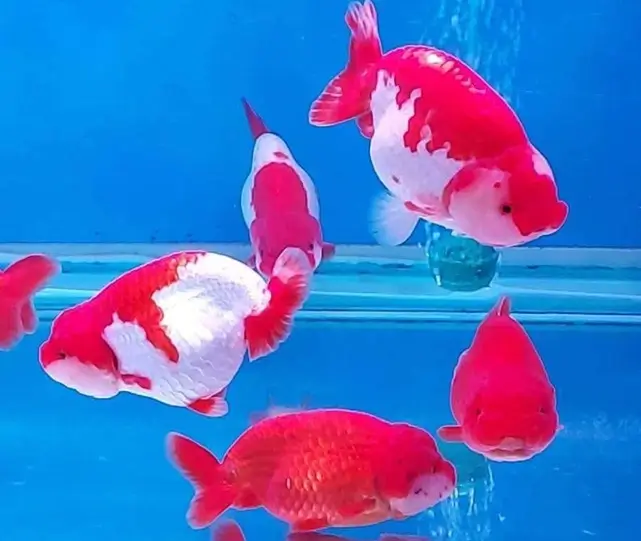
Worth knowing: Jumbo Ranchu and Thai Ranchu are often confused, but they describe different things. Jumbo is a size classification; Thai is a breeding-origin classification. In practice they overlap often, since Thai breeding lines are frequently associated with producing larger, more dramatic specimens, but a fish can be Thai-bred without being jumbo-sized, or jumbo-sized without being Thai-bred.
Ranchu Lifespan
On average, the lifespan of a Ranchu goldfish is between 10 to 15 years. Some exceptional ones can live longer than 15 years. Like many other goldfish varieties, Ranchu lifespan can vary based on several factors such as water quality, living environment, care, and genetic factors.
Providing proper care is key to the longevity of a Ranchu goldfish. Proper care includes maintaining a clean and adequately sized aquarium or pond, providing a balanced and nutritious diet, regularly monitoring water quality, and addressing any health issues promptly.
Ranchu goldfish can live longer than their average lifespan if they receive exceptional care and are kept in good water conditions regarding temperature, pH, and optimal hardness with low nitrate levels. Keeping the water within the stable 65–75°F range, rather than pushing toward the warmer end, generally supports better long-term health. Warmer water actually raises bacterial activity and lowers dissolved oxygen, which adds stress rather than preventing it, so consistency matters more than warmth for keeping infections at bay. Since Ranchus are not great swimmers, their metabolic activity tends to run a little lower than more active goldfish varieties, which is one more reason stable, moderate conditions suit them better than pushing temperatures higher.
Ranchu Goldfish Tank Size
The size of the Ranchu goldfish tank depends on several factors, including the number of Ranchu fish, their size, and your ability to maintain water quality.
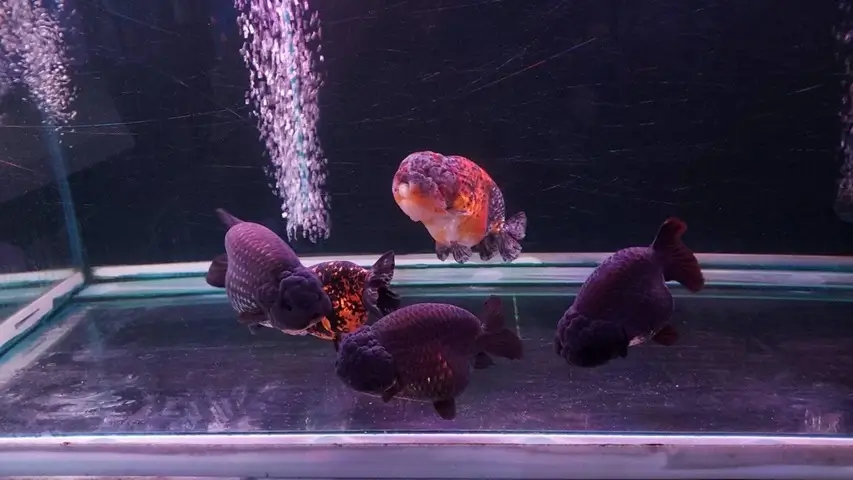
As a general rule of thumb, a single Ranchu goldfish requires a tank size of at least 20 gallons. However, it’s important to note that Ranchu goldfish are social animals, and they thrive better when kept in groups. To keep multiple Ranchu goldfish, you should increase the tank size accordingly.
Here are some recommendations based on the number of Ranchu goldfish:
• Single Ranchu: 20 gallons or more.
• Pair of Ranchu: 30 gallons or more.
• Small Group (5-6): 60 gallons or more.
Additionally, Ranchu goldfish can grow quite large, and their waste production is relatively high. A good filtration mechanism is crucial to maintain good water quality. A canister filter or a powerful aquarium filter is recommended for Ranchu goldfish tanks.
Maintaining proper water parameters, including temperature, pH, and ammonia levels, is essential for the health of your Ranchu goldfish. A 30% water change weekly, or once every 15 days depending on the size of your Ranchu tank, is needed. Adding a few plants to your tank can keep stress levels low for your fish. You can also compare this setup with our complete Oranda Goldfish care guide, as both varieties have very similar aquarium requirements.
Ranchu Goldfish Water Parameters
Ranchu goldfish, like other goldfish varieties, have specific water parameter requirements for optimal health. Here are the recommended water parameters for Ranchu goldfish:
• Temperature: The ideal temperature for Ranchu goldfish is between 65–75°F. Ranchu goldfish can tolerate a range of temperatures depending on where they are raised, but it’s important to avoid sudden fluctuations in temperature.
• pH Level: Maintain a pH level between 6.5 and 8.5. Ranchu goldfish can tolerate a slightly wider alkaline pH range, but keeping it within this range is generally recommended.
• Ammonia and Nitrite: Ammonia and nitrite are harmful to fish, so it’s ideal to keep them near zero. Use a reliable filter and perform regular water changes to help maintain these water parameters.
• Water Hardness: Ranchu goldfish can adapt to a wide range of water hardness levels. Ideally, keep the water hardness between 5–30 dGH.
• Water Stability: Maintaining stable water conditions with very little or negligible water current is essential for the health and well-being of Ranchu goldfish. Make sure that water currents aren’t too strong from aquarium motor pumps and filters. Strong water currents might cause stress to the fish, as they need to swim against the current.
Ranchu Diet
Ranchu goldfish require a balanced and varied diet to stay healthy. Here are diet options for feeding Ranchu goldfish:
• High-Quality Pellets: Choose a high-quality pellet food that is specifically formulated for Ranchu goldfish. Look for a food that provides all essential nutrients and is specially made for fancy goldfish varieties. Feed them in small quantities two to three times a day based on their size. Consider providing them with sinking pellets, since Ranchu goldfish have a body shape that can make it challenging for them to reach the surface for floating food.
• Live or Frozen Foods: Offer occasional treats of live or frozen foods such as brine shrimp, bloodworms, daphnia, or tubifex worms. These foods can add variety and provide additional nutrients.
• Vegetables: Occasionally supplement their diet with fresh vegetables like lettuce, peas, and cucumber. You can cook them if they are too hard, and finely chop them to make them more easily digestible. Vegetables not only provide nutritional value but can also improve their digestive system and help prevent bloating problems.
• Avoid Overfeeding: Ranchus are prone to overeating, which can lead to health issues, and leftover food can create water quality problems. Feed them only what they can consume in a few minutes.
Ranchu Tank Mates
Ranchu goldfish are generally peaceful and slow swimming due to their body shape. This can make them vulnerable to more active and aggressive tank mates. Here are some suitable tank mates for Ranchu goldfish, which are also slow swimmers:
• Orandas
• Ryukins
• Bubble Eye Goldfish
• Celestial Eye Goldfish
Avoid tank mates known to be nippy, aggressive, or fast-swimming, as they may stress or harm the Ranchu goldfish. If you’re exploring other fancy varieties, see our guide to Fancy Goldfish Types.
Ranchu Breeding
Breeding Ranchu goldfish can be a challenging endeavor if you are a new goldfish hobbyist. The breeding process involves the male Ranchus chasing the female ones, the female laying eggs, and the males fertilizing the eggs with their sperm. Here are some tips and steps for breeding Ranchu goldfish:
Set Up a Breeding Tank:
• Use a separate breeding tank with a minimum size of 40–50 gallons that has enough space for the breeding pairs.
• Use a gentle filtration system to avoid sucking up eggs or fry.
• Add a good amount of plants to the tank to keep them stress-free and happy. A happy environment can encourage the mating process.
• Add a few decorations like driftwood and spawning mops for the eggs to stick to.
Selecting Breeding Pairs:
• Ensure the breeding pairs are mature enough, typically around 2–3 years old. Select 3 male Ranchus and 2 female Ranchus.
• Choose the desired Ranchu traits you’re looking for, such as a rounded body, even head growth, and bright colors.
Conditioning:
• Feed the breeding pairs a high-quality diet rich in protein. Live or frozen worms can be included to enhance their nutritional intake.
• Maintain the water temperature between 78–81°F. Gradually increase the water temperature over a week to reach 82–87°F, and hold that stable range to simulate the onset of summer, since Ranchu breed only during hot weather conditions.
Monitoring Behavior: Watch for the Ranchus showing signs of chasing or courtship behavior. If the female Ranchu is receptive, she will respond to the male’s advances.
Spawning:
• Egg Laying: Female Ranchu goldfish scatter their eggs on plants, spawning mops, and tank decorations. The males will immediately fertilize them by releasing their sperm.
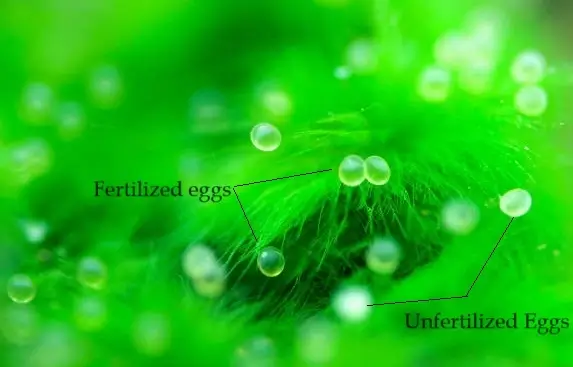
• Egg Collection: If possible, move the eggs to a separate hatching tank or remove the parents to protect the eggs from being eaten. Unfertilized eggs look opaque, while fertilized eggs will look transparent within a day.
Fry Care:
• The eggs will typically hatch within a few days. Once hatched, the fry will consume their yolk sacs initially.
• Provide the fry with powdered fry food. As they grow, you can transition to finely crushed flakes.
• Once the fry become large enough, you can place them into their parent tank.
Breeding Ranchu goldfish requires patience, attention to water quality and parameters, and a good understanding of their specific needs. Additionally, extra care should be provided to the fry until they develop into juveniles.
Ranchu Health and Diseases
Maintaining the health of Ranchu goldfish involves providing proper care and maintaining ideal water conditions.
Signs of Illness:
• Changes in Behavior like lethargy, abnormal swimming patterns, or hiding.
• Physical Changes like abnormal growths on the head, discoloration, fin clamping, or changes in appetite.
• Respiratory Issues like rapid or labored breathing, or gasping at the water surface.
• Flicking or Scratching against objects, indicating irritation or parasites.
If you notice any signs of illness, it’s crucial to isolate the affected fish so the disease does not spread to the other healthy Ranchus. Identify the specific issue, and administer appropriate treatment promptly. We also have dedicated guides for goldfish not eating, goldfish swimming upside down, goldfish at the bottom, goldfish at the top of the tank, and goldfish turning black.
Here are some potential diseases that can affect Ranchu goldfish:
• Ich: A common parasitic infection that causes white cysts on the skin, gills, and fins. Treat with aquarium salt and anti-parasitic medications.
• Fin Rot: A bacterial infection that leads to the deterioration of fins and tail. Maintain clean water and treat with aquarium salt and antibiotics.
• Dropsy: Characterized by a swollen body due to fluid buildup inside the body cavity or tissues, and distended scales. Quarantine the fish and address underlying causes, such as bacterial infections, with appropriate medications.
• Anchor Worms: External parasites that appear as thread-like worms attached to the fish. Remove manually with a plucker and use anti-parasitic treatments.
• Swim Bladder Issues: This can cause buoyancy problems, making the fish float or sink. Address underlying causes such as overfeeding or constipation, stop feeding the Ranchus for a day or two, and feed them vegetable matter such as chopped peas and lettuce for a few days.
• Lice and Flukes: External parasites visible on the skin and gills. Treat with anti-parasitic medications.
Buying a Ranchu Goldfish
The price of Ranchu goldfish varies depending on factors such as the size of the fish, color, markings, pattern, and overall quality. Location and the availability of specific varieties matter too. Here are some general price ranges to give you an idea:
Typical Prices
• Young or Common Varieties: $10 to $30, depending on size and quality
• High-Quality Juveniles or Young Adults: $50 to $150 or more for beautiful, rare traits or show-quality specimens
• Show-Quality Adults: $150 and upward, with some rare or highly sought-after Ranchus commanding even higher prices
These are general estimates. Actual prices vary based on the factors above.
Where to Buy
Ranchus show up through a few different channels, each with its own trade-offs.
• Facebook groups: fancy goldfish and Ranchu-specific groups are often where serious breeders post first, sometimes before fish ever reach a store or website
• A local aquarium store: worth a visit even if they don’t stock Ranchus themselves, since staff at specialty shops often know which local breeders to point you toward
• Breeder websites and online sellers: a good option if you’re after a specific color or wen type that’s hard to find locally, though shipping live fish always carries some risk, so weigh reviews and any live-arrival guarantee before committing
Ask for recent photos or a short video rather than relying on a listing photo alone. Wen development and body shape are the two traits that vary most between individual Ranchus, so seeing the actual fish matters more here than it does with most other goldfish varieties.
FAQ – Ranchu Goldfish
Is Ranchu goldfish good for beginners?
Ranchu goldfish are not the best choice for complete beginners. They are more delicate than common goldfish and require stable water conditions, proper filtration, and regular maintenance. However, with some basic aquarium knowledge and proper care, beginners can successfully keep Ranchu goldfish.
How big do Ranchu goldfish grow?
Standard Ranchu goldfish typically grow between 3 to 5 inches (7.5 to 12.5 cm) when fully mature, with Jumbo Ranchu reaching 6 to 8 inches or more. Their growth depends on factors such as tank size, diet, water quality, and genetics. In spacious tanks or ponds with good care, they can reach their maximum size.
Can Ranchu goldfish live in a tank?
Yes, Ranchu goldfish can live in a tank and are commonly kept in aquariums. They require a minimum of 20 gallons for one fish, with larger tanks recommended for multiple Ranchus. Since they are weak swimmers, tanks with low water flow and good filtration are ideal.
What makes Ranchu different from Oranda?
The main difference between Ranchu and Oranda goldfish is the presence of a dorsal fin. For a detailed comparison of Oranda varieties, see our Thai Oranda, Blue Oranda, Red Cap Oranda, Calico Oranda, Black Oranda, and Panda Oranda guides. Ranchu goldfish do not have a dorsal fin and have a curved back, while Oranda goldfish have a dorsal fin and a more upright body shape. Ranchus are also more delicate swimmers compared to Orandas.