
Watching a bright orange or red goldfish gradually turn pale or white can feel alarming, but it’s also one of the most common color changes goldfish keepers report, and most of the time it’s nowhere near as serious as it looks. Why is my goldfish turning white? Goldfish turning white most often comes down to natural aging and genetics, insufficient lighting, or diet, though a smaller share of cases trace back to poor water quality, low oxygen, or illness, and telling those apart changes how urgently you need to act.
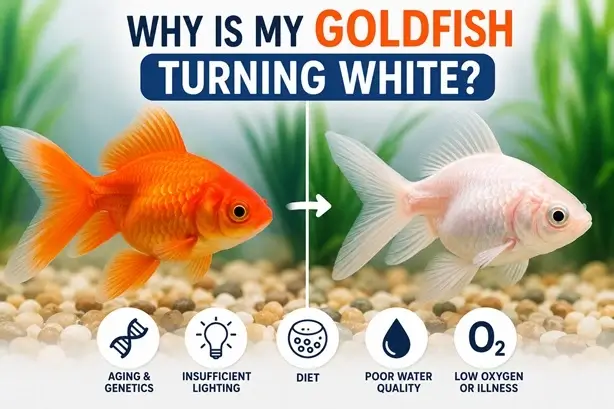
Quick Answer: A goldfish turning white is usually caused by aging, genetics, insufficient light exposure, or a diet lacking color-boosting nutrients, none of which are harmful. A smaller number of cases are caused by low dissolved oxygen, ammonia or pH problems, or illness, especially if the whitening is sudden, patchy, or paired with lethargy, breathing trouble, or loss of appetite. Testing your water is the fastest way to rule the more serious causes in or out.
Quick Navigation
➜ Symptom Pattern, Likely Cause, and Urgency at a Glance
➜ Why Is My Goldfish Turning White?
➜ Goldfish Turning White With Age
➜ Why Is My Black Goldfish Turning White?
➜ Lack of Sunlight and Lighting
➜ Low Oxygen, Chlorine, and Poor Water Quality
➜ Diet and Nutritional Deficiency
➜ Illness: Ich vs. Fungal or Bacterial Infection
➜ Why Is Only One of My Goldfish Turning White?
➜ Goldfish Turning White After a Water Change
➜ Can a Goldfish Turn Back to Its Original Color?
➜ Quick Checklist: Goldfish Turning White
➜ Frequently Asked Questions
Symptom Pattern, Likely Cause, and Urgency at a Glance
A fast way to narrow things down before reading the full breakdown below.
| Symptom Pattern | Most Likely Cause | Urgency |
|---|---|---|
| Gradual whitening over months, still eating and active | Age or genetics | None |
| Fading over months in a dim tank or room | Insufficient lighting | Low |
| Dull, washed-out color across all fish | Dietary deficiency | Low |
| Sudden whitening, gasping at the surface, lethargy | Low dissolved oxygen | High |
| Milky white slime coat after untreated tap water | Chlorine or chloramine burn | High |
| Pale or blotchy patches, ragged scales, ammonia present | Poor water quality | High |
| Raised, salt-grain-sized white specks | Ich (white spot disease) | High |
| Fuzzy, cotton-like or grayish-white patches | Fungal or bacterial infection | High |
| Whitening within days of a water change | pH or temperature shock | Medium |
Why Is My Goldfish Turning White?
Wild goldfish are actually olive-green, not gold, and every bright color variety we know today, orange, red, calico, white, exists because of centuries of selective breeding. Those bred-in colors are genetically unstable compared to the natural olive-green, which is part of why goldfish change color so much more often than most other pet fish.
The most common underlying causes are:
➜ Age and genetics — many goldfish gradually shift color as they mature, and some fade further as they reach their senior years
➜ Insufficient light exposure — goldfish pigment cells respond directly to UV light, and a dim tank or room causes gradual fading
➜ Dietary deficiency — goldfish can’t produce color pigment without carotenoids from food
➜ Low dissolved oxygen — a more urgent cause, paired with lethargy and labored breathing
➜ Poor water quality — ammonia, nitrite, chlorine, or unstable pH stressing the fish
➜ Illness — Ich, fungal, or bacterial infections, usually with other visible symptoms alongside the color change
If it’s one fish among several, individual genetics or health are more likely. If every fish is fading at once, look at the whole tank, lighting, diet, or water quality first.
Goldfish Turning White With Age
This is the single most common, and most harmless, explanation. Many goldfish hatch dark or bronze and gradually shift toward orange, white, or calico as they mature, typically somewhere between 6 months and 2 years old, and some solid-colored adults continue fading further as they reach their later years, goldfish commonly live 10 to 15 years and sometimes decades longer, not unlike hair going gray. This kind of color drift is especially common in fancy varieties bred for unstable color genetics, and it isn’t something to fix, since it’s simply what that particular fish’s genetics were always going to do. Insufficient light and a poor diet don’t cause this kind of fading on their own, but they do make it happen faster and more noticeably, so a fish with weak lighting or a bland diet on top of natural age-related fading will often look paler sooner than one getting both right.
➜ Slow change over months, not days — is the clearest sign this is age or genetics rather than a health problem
➜ The fish stays active, eating, and alert throughout — no other symptoms developing alongside the color shift
➜ Ask about parent stock if you can — genetics from the breeding line often predict how much color drift to expect
Why Is My Black Goldfish Turning White?
This is the reverse of the usual concern, and it’s quite common in Black Moors and other dark varieties specifically, black pigment is one of the least stable colors in goldfish genetics, and many black-colored fish lighten dramatically as they age, sometimes fading toward orange or white over a period of months to years. Warm water temperatures and diet can accelerate this in some fish, but in most cases it’s simply the same age-related color drift covered above, just happening to a fish that started out unusually dark rather than unusually bright.
➜ Gradual, even fading — points toward normal age-related color loss, not illness
➜ The fish otherwise behaves normally — eating, swimming, and responding as usual
➜ This change is usually permanent — unlike some other causes on this page, faded black pigment rarely returns
Lack of Sunlight and Lighting
Goldfish pigment cells respond directly to light, particularly UV-A wavelengths, in much the same way human skin responds to sun exposure. A tank kept in a dim room, lit only by an aging bulb, or positioned somewhere with little natural daylight can gradually lose vibrancy over months as those pigment cells go underused.
➜ Check how old your aquarium bulb is — output can drop well before a bulb looks visibly dimmer, replacing bulbs older than 12 months is a reasonable baseline
➜ Aim for 8 to 12 hours of consistent light daily — using a full-spectrum aquarium light rather than a basic bulb
➜ Some natural daylight helps — without placing the tank in direct, unfiltered sun, which risks overheating instead
What to expect: if lighting was the cause, improved light exposure typically brings noticeably better color back within a few weeks to a couple of months, this is one of the more reliably reversible causes on this page.
Low Oxygen, Chlorine, and Poor Water Quality
This is the cause most worth treating urgently rather than watching for a few days. Goldfish generally need dissolved oxygen in the 5 to 6 ppm range to stay healthy, and levels dropping below roughly 3 ppm are truly dangerous, triggering pale or translucent-looking skin alongside behavioral changes. Chlorine and chloramine in untreated tap water are a separate but related risk, they burn the gills and mucous membranes directly, and the fish responds by overproducing a protective slime coat that can look milky or white across the body, distinct from the paling caused by low oxygen but just as urgent.
➜ Test dissolved oxygen, ammonia, nitrite, and pH — rather than assuming clear water means safe water
➜ Watch for gasping at the surface or lethargy — alongside the paling, a strong sign this is really about oxygen, not just cosmetic
➜ Confirm every water change uses a proper dechlorinator — a product like a standard water conditioner or stress coat neutralizes chlorine and chloramine immediately, untreated tap water is one of the most common overlooked causes here
➜ Perform a 25 to 50 percent water change — with the dechlorinator already added if ammonia, nitrite, or chlorine exposure is suspected
➜ Add an air stone or increase surface agitation — if oxygen specifically is the issue
What to expect: if caught early, improved oxygen and water quality typically bring the fish’s behavior back to normal within hours to a couple of days, faster than the color itself fully recovers, which can take longer. Chlorine-related excess mucus usually clears within a similar window once dechlorinated water is in place and the gills have a chance to recover. Our Goldfish at the Top of the Tank guide covers low-oxygen gasping in more depth if that’s also happening.
Diet and Nutritional Deficiency
Goldfish can’t produce carotenoid pigments on their own, the compounds responsible for bright reds, oranges, and yellows, they depend entirely on getting them from food. A prolonged diet of low-quality flakes or the same single food for months can gradually dull and wash out color in a way that’s easy to mistake for illness.
➜ Review your current feeding routine — a single type of basic flake fed for months is a common, overlooked cause
➜ Switch to a varied, high-quality diet — pellets or foods containing spirulina, krill, or other color-enhancing ingredients
➜ Add live plants to the tank — algae and plant matter are a natural source of the same carotenoids fish can’t produce on their own, and plants also give the fish cover, reducing stress that would otherwise contribute to dull, washed-out color
➜ Monitor over 4 to 6 weeks — rather than expecting an immediate change, pigment rebuilds gradually
Illness: Ich vs. Fungal or Bacterial Infection
Color change from illness is usually accompanied by other clear symptoms, and the texture of the white is the key detail that tells two very different problems apart.
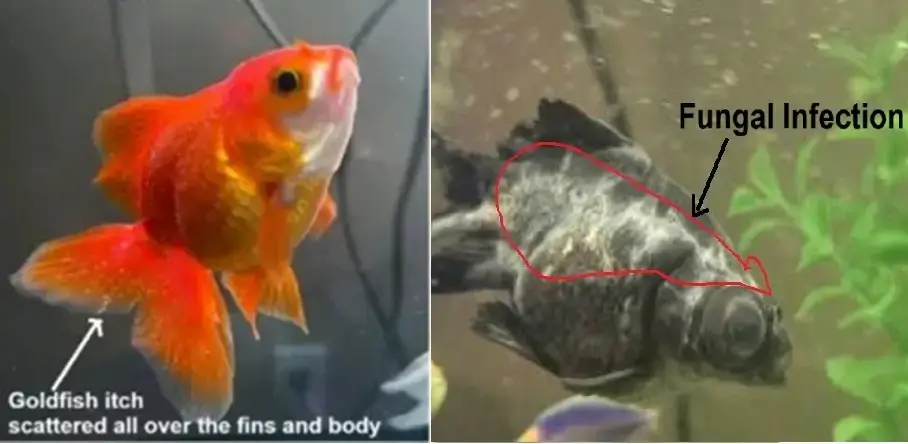
➜ Raised, salt-grain-sized white specks scattered across the body and fins — points toward Ich, a parasitic infection, the fish may also flash or scratch against tank surfaces
➜ Fuzzy, cotton-like, or grayish-white patches — points toward a fungal or bacterial infection rather than a parasite
➜ Lethargy, difficulty swimming, or clamped fins alongside either pattern — confirms this is disease-related rather than cosmetic
What to expect: both conditions generally need direct treatment rather than time alone to resolve, a quarantine tank with an appropriate medication (Ich-specific treatment for parasites, an antifungal or antibacterial treatment for the other), alongside confirming water quality is stable, gives the best odds of recovery.
Why Is Only One of My Goldfish Turning White?
When it’s just one fish among several in an otherwise normal tank, the cause is more likely specific to that individual fish rather than the environment. Genetics is the most common explanation, some fish are simply bred with less stable color than their tankmates, so age-related fading can hit one fish well before (or instead of) another from the same batch. Individual illness, a localized infection, or that one fish’s own aging timeline are the other realistic explanations. Tank-wide causes like lighting, diet, or water quality would typically affect every fish to some degree, not just one, which is the key thing that rules those out here.
Goldfish Turning White After a Water Change
If whitening shows up within days of a water change specifically, sudden pH or temperature shock is the likely trigger, not a coincidence. A meaningful mismatch between your source water and the tank’s existing chemistry stresses the fish enough to visibly affect color, on top of the other stress signs it may show.
➜ Test your tap water’s pH against your tank’s pH — a significant gap is worth knowing about for future changes
➜ Confirm the new water was properly dechlorinated — and closely temperature-matched before it went in
➜ Acclimate gradually for future changes — rather than a sudden full swap, especially if this keeps happening
What to expect: stress-related paling from a water change often improves within days to a couple of weeks as the fish settles, assuming the water itself is otherwise stable and no ammonia or nitrite problem is layered on top.
Can a Goldfish Turn Back to Its Original Color?
It depends heavily on which cause was actually responsible. Whitening from lighting, diet, or short-term stress is often reversible once the underlying issue is corrected. Whitening from genetics or age-related color drift is usually permanent, that fish’s pigment genes have simply shifted for good, and no amount of better lighting or food will reverse it. Illness-related color loss falls somewhere in between, some fish recover full color once treated, others are left with some permanent lightening depending on how much pigment tissue was affected.
Quick Checklist: Goldfish Turning White
➜ Check the speed of the change — gradual over months points toward age, genetics, lighting, or diet, sudden points toward water quality or illness
➜ Test dissolved oxygen, ammonia, nitrite, and pH — the same day if the change was sudden
➜ Look closely at texture — raised salt-grain specks versus fuzzy cotton-like patches point toward different treatments entirely
➜ Review lighting and diet — if the change has been gradual and the fish otherwise seems healthy
➜ Watch for other symptoms — lethargy, gasping, clamped fins, or loss of appetite change the urgency significantly
Frequently Asked Questions
Is it bad if my goldfish turned white?
Not necessarily. Age, genetics, lighting, and diet are all harmless, common causes. It becomes a genuine concern specifically when the whitening is sudden, patchy, or paired with lethargy, gasping, clamped fins, or loss of appetite.
Will my white goldfish turn orange again?
Sometimes, if the cause was lighting, diet, or temporary stress. If the whitening was caused by age or genetics, it’s usually permanent, and that’s simply the fish’s new baseline color rather than something to correct.
Why is my goldfish turning white and not eating?
This combination points toward something more serious than simple age or lighting, most likely illness or a significant water quality problem. Test your water immediately, and if parameters are clean, watch closely for other symptoms of disease.
Why is my pond goldfish turning white?
The same causes apply, but ponds add seasonal factors, algae blooms consuming oxygen overnight, and larger natural light exposure that can actually help color vibrancy in some cases. Test water quality the same way you would for an indoor tank if the change seems sudden rather than gradual.
Why is my black Moor turning white?
Black is one of the least stable pigments in goldfish genetics, and many Black Moors lighten noticeably as they age. If the fish is otherwise behaving normally, this is most likely permanent, natural color drift rather than a health concern.
Final Thoughts
A goldfish turning white is one of the more common color changes in the hobby, and most of the time it traces back to age, genetics, lighting, or diet, none of which need fixing. The exception is when it happens suddenly or comes with other symptoms, gasping, lethargy, clamped fins, or loss of appetite, in which case water quality or illness is the more likely explanation and testing the water is the fastest way to find out. For a fish that’s also gasping at the surface, see our Goldfish at the Top of the Tank guide.