
A goldfish with a swollen belly and scales sticking outward, giving it the look of an open pinecone, is showing the classic signs of goldfish dropsy which is one of the most serious conditions you can encounter in the hobby. Dropsy isn’t actually a disease itself. It’s a sign that the fish is no longer regulating fluids properly, causing fluid to build up inside its body.
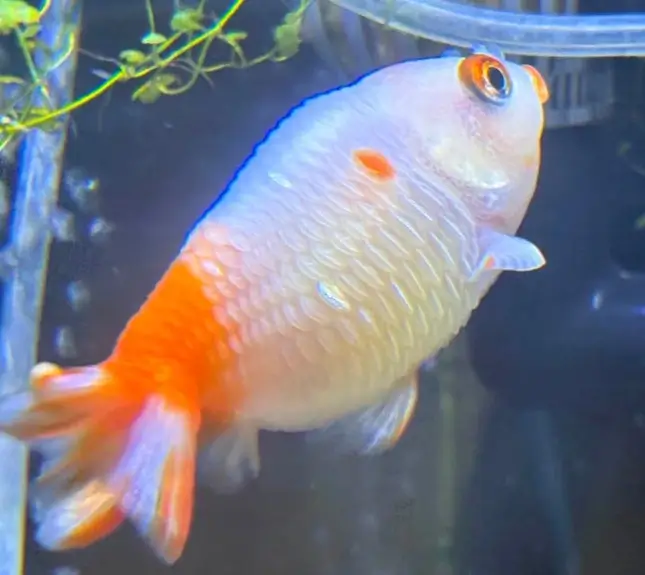
The first time I saw dropsy in one of my goldfish, I thought it was some kind of skin disease because the scales were raised pretty badly. I later learned that dropsy can have several underlying causes, which is one reason it can be so difficult to treat. The earlier you notice the signs and address the underlying problem, the better the chances of recovery. Once the fish develops severe swelling and obvious pineconing, the chances of recovery become much lower.
Quick Navigation
1) What Is Dropsy?
2) Dropsy – Quick Facts
3) Dropsy Symptoms
4) Dropsy Causes
5) Goldfish Dropsy Treatment
6) How to Prevent Goldfish Dropsy
7) Dropsy vs Pregnant Goldfish
8) FAQ
9) Final Thoughts
What Is Dropsy?
Dropsy is not a disease on its own; it is a sign of a serious underlying health problem that causes abnormal fluid buildup inside the fish’s body. A goldfish normally regulates excess water through its kidneys and gills. When this process is disrupted by disease or organ damage, fluid begins accumulating in the tissues and body cavity.
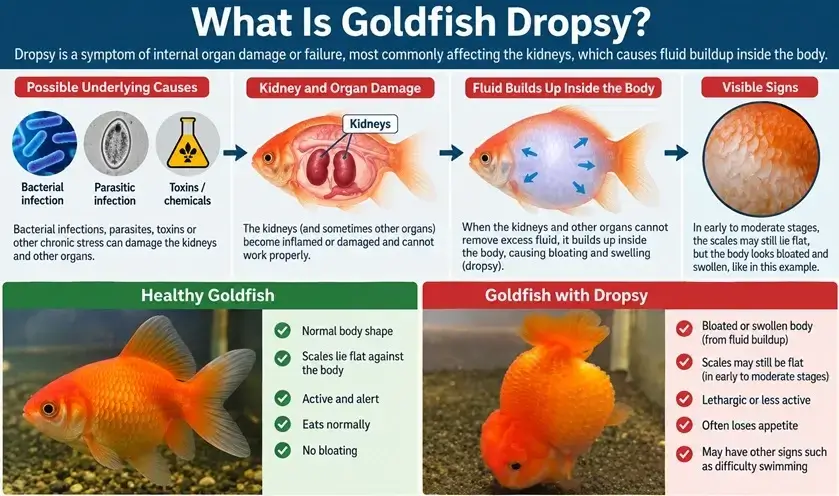
As the fluid builds up, the goldfish becomes visibly swollen. In more advanced cases, the swelling pushes the scales outward, giving it the pinecone appearance that dropsy is known for.
Because dropsy is a symptom rather than one specific disease, treatment is not just about reducing the swelling. It’s more about addressing the underlying problem, whether it’s an infection, a parasite, organ disease, toxin exposure, or another cause.
Dropsy – Quick Facts
| Attribute | Details |
|---|---|
| Type | Not a disease itself but a sign of abnormal fluid buildup caused by an underlying health problem |
| Contagious? | Dropsy itself is not contagious, but some underlying infections may spread between fish. |
| Main Symptoms | Swollen body, bulging eyes, and scales sticking outward (“pinecone” appearance) |
| Possible Causes | Bacterial or parasitic infections, kidney or other organ disease, toxins, and poor water conditions |
| Treatment | Isolate the affected fish, check and correct water parameters, provide supportive care, and treat the underlying cause. |
| Prognosis | Best when treated early. The prognosis becomes much poorer once severe swelling and pineconing develop |
Dropsy Symptoms
Dropsy can produce several recognizable symptoms. Catching the problem early gives the fish a better chance of recovery.
So watch for:
• General bloating — often one of the first noticeable signs. The body may begin to look unusually swollen before obvious pineconing develops.
• Bulging eyes — one or both eyes may protrude as fluid accumulates in the tissues around the eyes.
• Scales sticking outward — as swelling increases, the scales are pushed outward from the body, giving it a “pinecone” appearance.
• Red streaks or redness — some affected fish may develop redness on the body or fins, particularly when infection or inflammation is involved.
• Lethargy — affected fish may become noticeably less active or spend more time near the bottom of the tank.
• Swimming difficulty — as the body becomes swollen, the fish may have trouble maintaining its balance or swim normally.
• Loss of appetite — affected goldfish may eat less than usual or eventually stop eating altogether as the condition becomes more severe.
Treating the fish at the very first sign of bloating gives it a much better chance of recovery than waiting until the pinecone appearance becomes obvious, which usually means the condition has already progressed significantly.
Dropsy Causes
Dropsy can have several underlying causes, and the symptoms can look very similar regardless of what caused the problem. This is also why treating dropsy can be difficult. The swelling and pineconing tell you something is seriously wrong with the fish, but they don’t tell you exactly what caused it.
Bacterial Infections
Internal bacterial infections are one of the possible causes of dropsy. Bacteria such as Aeromonas species are commonly associated with systemic bacterial infections in freshwater fish, but other bacteria can also be involved. As the infection becomes systemic, it can damage the kidneys and other internal organs, interfering with the fish’s ability to regulate fluids.
Poor water quality, injury, overcrowding, and prolonged stress can increase a goldfish’s susceptibility to these bacterial infections.
Parasitic Infections
Certain internal parasites can damage the kidneys and interfere with normal fluid regulation. One example in goldfish is the myxozoan parasite Sphaerospora auratus, which is associated with renal disease and dropsy.
Unlike common external parasites, these infections can be difficult to diagnose and there isn’t a simple, reliably established aquarium treatment for every myxozoan infection.
Kidney and Other Organ Disease
Dropsy can also develop when the kidneys or other internal organs are damaged by disease. Cystic kidney disease, in which fluid-filled cysts develop in the kidneys, can interfere with normal kidney function.
Toxins
Exposure to certain chemicals or toxins can damage the kidneys, gills, liver, or other organs of the fish and can lead to abnormal fluid buildup.
If several of your fish develop similar symptoms around the same time, check for a shared environmental problem such as contaminated water, a chemical exposure, or a serious water-quality problem. Multiple affected fish don’t make dropsy contagious; they may simply have been exposed to the same underlying problem.
Poor Water Quality and Chronic Stress
Poor water quality doesn’t directly “cause dropsy” in every case, but long-term exposure to ammonia, nitrite, high organic waste, overcrowding, or other stressful conditions can impair the fish’s immune response and increase its susceptibility to disease. If the kidneys or other organs become affected, normal fluid regulation can be disrupted, leading to fluid buildup.
Goldfish Dropsy Treatment
Dropsy can have several underlying causes, so there isn’t one medication that will cure every case. Treatment involves supporting the fish and reducing fluid buildup while also trying to address the underlying cause.
1. Move the Goldfish to a Hospital Tank
If possible, move the affected goldfish into a separate hospital tank with clean, dechlorinated water. Match the temperature closely to the main aquarium so the fish isn’t exposed to a sudden temperature change.
A hospital tank can make it easier to monitor the fish, maintain good water quality, and use medication without unnecessarily treating other healthy fish.
2. Check the Water Quality
Test the water for ammonia, nitrite, nitrate, and pH. Ammonia and nitrite should both be 0 ppm.
If either is detectable, perform an appropriate partial water change and correct the underlying water-quality problem. Keep the hospital tank clean throughout treatment.
3. Gradually Raise the Temperature
In my own experience treating dropsy, I gradually raise the hospital tank temperature to around 80°F (27°C). Warmer water increases a goldfish’s metabolism, which is why I use it as part of supportive care rather than as a treatment for the underlying cause itself.
Raise the temperature gradually rather than making a sudden change, and provide strong aeration because warmer water holds less dissolved oxygen.
4. Use Epsom Salt to Help With the Swelling
Use Epsom salt (magnesium sulfate) at 2.5 teaspoons per 10 gallons of hospital-tank water as supportive treatment.
Epsom salt is commonly used to help with swelling and fluid retention. However, Epsom salt doesn’t cure the underlying cause of dropsy. Any infection, organ disease, toxin exposure, or other problem still needs to be addressed.
When making water changes during treatment, only replace the amount of Epsom salt removed with the changed water. Don’t add the full original dose again unless all of the water has been replaced.
5. Add Aquarium Salt
Aquarium salt can also be used as supportive treatment for dropsy. Use a low concentration of around 1 teaspoon of aquarium salt per gallon of water in the hospital tank.
Goldfish constantly take in water through osmosis because their body fluids contain more salts than the surrounding freshwater. Adding salt reduces this difference, so less water enters the fish and excess fluid can gradually be reduced. This can ease some of the workload on the kidneys and gills while the underlying cause of dropsy is being treated.
Aquarium salt is sodium chloride, while Epsom salt is magnesium sulfate, so they are not the same thing. If using both during treatment, measure and use each carefully.
When making water changes, replace only the amount of aquarium salt removed with the changed water. For example, if you change 5 gallons, add the salt dose for those 5 gallons rather than dosing the entire tank again.
6. Treat a Suspected Bacterial Infection
Internal bacterial infections are one possible cause of dropsy. If one is suspected, an antibacterial medication may be needed.
A kanamycin-based medication such as Seachem KanaPlex is one option commonly used for bacterial infections in ornamental fish. Follow the manufacturer’s exact dose and complete the full treatment course.
If the fish is still eating, medicated food can also be useful because it delivers the medication internally rather than relying only on medication added to the water. Follow the medication manufacturer’s instructions for preparing or using medicated food.
If there is no improvement after the treatment course, a different antibiotic may be needed if bacteria are still suspected. However, the lack of response can also mean the dropsy has another cause, such as parasites, toxins, or organ disease.
Don’t combine antibiotics or increase the dosage unless the product instructions specifically allow it.
7. If a Parasitic Infection Is Suspected
Some parasites can damage the kidneys or other internal organs and lead to fluid buildup and dropsy. The treatment depends on the type of parasite involved, so there is no single antiparasitic medication for every case.
Praziquantel is effective against certain flatworms, including tapeworms and flukes, while medications such as levamisole or fenbendazole are used for certain intestinal roundworms.
However, these medications should only be used when you have a reasonable idea of the type of parasite you are treating. Importantly, the myxozoan parasite associated with renal dropsy in goldfish currently has no practical established treatment.
8. Correct Any Toxin or Environmental Cause
If several fish become sick around the same time, consider whether they have been exposed to the same problem. Think about any chemicals, medications, algae-control products, or other substances recently added to the aquarium.
Remove the suspected source of exposure and perform appropriate water changes if necessary. Medication won’t solve the problem if the fish continues to be exposed to the substance causing the damage.
9. Keep the Filter and Aeration Running
Keep normal biological and mechanical filtration running unless the medication instructions specifically say otherwise. Turning the entire filter off for long periods can reduce oxygenation and harm the beneficial bacteria that process ammonia and nitrite.
Activated carbon or other chemical filter media may need to be removed during medication because they can remove some medications from the water. Follow the medication label.
Keep an air stone running during treatment, especially when the temperature has been raised.
10. Feed Only if the Fish Wants to Eat
If the fish is still eating, offer small amounts of good-quality, easily eaten food. Remove anything left uneaten so it doesn’t affect the water quality.
If the goldfish refuses food, don’t keep adding food to the hospital tank. Loss of appetite is common in seriously affected fish.
11. Watch for Signs of Improvement
During treatment, look for:
• Reduced swelling
• Scales beginning to sit flatter against the body
• Improved swimming and activity
• A returning appetite
• Reduced redness or inflammation
Continue testing ammonia and nitrite during treatment.
Severe pineconing, continued swelling, difficulty swimming, persistent refusal of food, or continued deterioration are signs that the condition is advanced and the prognosis is much poorer.
What If the Dropsy Is Caused by Organ Disease?
Dropsy caused by severe kidney or other internal organ disease may not respond to medication. If the organs have been permanently damaged or affected by conditions such as cystic kidney disease, supportive care may help the fish, but there may be no medication that can reverse the underlying damage.
This is one reason advanced dropsy can be so difficult to treat.
After Treatment
Once any medication course is complete, follow the product instructions for water changes. Partial water changes will gradually dilute and remove residual medication and Epsom salt from the hospital tank.
If activated carbon was removed during treatment, fresh carbon can be returned afterward if you normally use it.
Don’t return the fish to the main aquarium as soon as the swelling begins to improve. Wait until the swelling has clearly reduced, the scales are returning toward their normal position, and the fish is consistently swimming and eating normally.
Gradually return the hospital tank to the normal temperature and reduce the salt through partial water changes before moving the fish back. Make sure the main aquarium’s water quality is also suitable.
How to Prevent Goldfish Dropsy
• Maintain good water quality — keep ammonia and nitrite at 0 ppm, test the water regularly, and perform routine water changes.
• Avoid overcrowding and provide adequate filtration — goldfish produce a lot of waste, and overcrowding can increase stress and make water quality even harder to maintain.
• Be cautious with aquarium and pond chemicals — avoid unnecessary medications, algae-control products, or other chemicals that could potentially damage the gills, kidneys, or other internal organs.
• Feed a balanced, species-appropriate diet — good nutrition helps maintain overall health and resistance to disease.
• Quarantine new fish before introducing them — this reduces the chance of bringing bacterial, parasitic, or other infectious diseases into an established aquarium.
• Address illness and injuries early — don’t ignore persistent redness, sores, abnormal swimming, appetite loss, or other signs that a goldfish is unwell.
• Keep water conditions stable — avoid sudden changes in temperature, pH, or other water parameters that can unnecessarily stress the fish.
Dropsy vs Pregnant Goldfish
A female goldfish carrying eggs can sometimes look similar to a goldfish with dropsy, but there are several useful differences:
• Scales: a female carrying eggs should have scales that remain flat against the body. With dropsy, the scales begin to stick outward, giving it a pinecone appearance.
• Body shape: egg-related swelling is mainly concentrated around the abdomen, while dropsy can cause more widespread swelling of the body.
• Behavior: a female carrying eggs will usually continue swimming and eating normally. A goldfish with advanced dropsy often becomes lethargic, loses its appetite, or has difficulty swimming.
• Breeding signs: If males are developing breeding tubercles and actively chasing the female, her enlarged abdomen is more likely to be related to eggs and spawning.
The scales are the biggest clue. A large belly with smooth, flat scales is not the classic appearance of dropsy. A swollen body combined with scales sticking outward is the one to look out for.
FAQ
Is goldfish dropsy contagious?
Dropsy itself is not contagious. However, some underlying bacterial, parasitic, or other infectious diseases may spread between fish. Several fish can also develop dropsy after being exposed to the same water-quality issues or toxins.
Can dropsy be cured?
Sometimes. The chances are better when dropsy is caught early and the underlying cause can be treated. Once severe swelling and obvious pineconing develop, the prognosis becomes much poorer, although recovery is still possible in some cases.
What does dropsy look like in the early stages?
Early dropsy may begin with unusual bloating or swelling before the classic pinecone appearance develops. As the condition progresses, the scales begin sticking outward and the fish may become lethargic, stop eating, or have difficulty swimming.
Should I use aquarium salt, Epsom salt, or both?
They serve different purposes. Epsom salt (magnesium sulfate) is commonly used as supportive treatment for swelling, while aquarium salt (sodium chloride) increases the salinity of the surrounding water and can reduce the osmotic difference between the fish and the water.
I use both at the doses described in the treatment section above, but neither salt treats the underlying cause of dropsy.
Why did my goldfish get dropsy when my water parameters are fine?
Good water quality reduces the risk, but it doesn’t prevent every case. Dropsy can also result from internal infections, parasites, kidney or other organ disease, or toxin exposure.
How long does dropsy treatment take?
There isn’t one fixed treatment period because it depends on the underlying cause and the medication being used. Follow the full course specified for any medication, and continue supportive care while monitoring the fish for reduced swelling, flatter scales, normal swimming, and a returning appetite.
Final Thoughts
Dropsy is one of the more difficult goldfish conditions to deal with because by the time the pinecone appearance becomes obvious, the underlying problem may already be quite advanced. Catching the first signs of unusual bloating gives you a much better chance of treating the fish.
What you can control is good water quality, noticing changes in your fish early, and starting supportive treatment as soon as possible. But because dropsy is a sign of a deeper internal problem, even when you do everything right, not every goldfish will recover.