
Is your guppy bloated around the belly? A swollen abdomen can result from something as ordinary as pregnancy or overfeeding, but it may also indicate digestive problems, internal parasites, or a more serious condition such as dropsy.
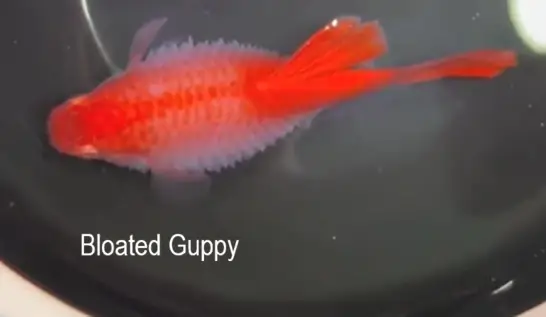
Not every swollen belly is a sign of illness. A female carrying fry can become noticeably round as her pregnancy progresses, while sudden swelling, particularly when accompanied by raised scales or unusual behavior, deserves closer attention.
Why Is My Guppy Bloated?
A guppy’s belly may become enlarged due to overfeeding, digestive problems, pregnancy, internal parasites, or fluid accumulation associated with an underlying illness. The appearance of the swelling and any accompanying symptoms can help narrow down the possible cause.
| Possible Cause | Clues Worth Checking |
|---|---|
| Pregnancy | A female with a gradually enlarging abdomen, often accompanied by a visible gravid spot. |
| Overfeeding | The belly becomes noticeably fuller following a large meal. |
| Digestive Problems | Persistent abdominal fullness or reduced appetite. These signs alone cannot confirm constipation or an intestinal blockage. |
| Poor Water Quality | Stress, abnormal breathing, or several fish showing symptoms. Test ammonia, nitrite, and other water parameters. |
| Internal Parasites | Possible weight loss, reduced appetite, or visible red, thread-like worms protruding from the vent in cases of Camallanus infection. |
| Dropsy / Fluid Retention | Pronounced swelling, possible raised scales (pineconing), lethargy, or loss of appetite. |
Important: These are possible clues, not confirmed diagnoses. Flat scales do not rule out internal illness, while raised, pinecone-like scales are a particularly concerning sign of abnormal fluid accumulation.
Can Overfeeding Cause Guppy Bloating?
Yes. Guppies are enthusiastic feeders, and eating too much can leave them with a temporarily swollen belly. Repeated overfeeding may also contribute to digestive problems and poor water quality as uneaten food breaks down.
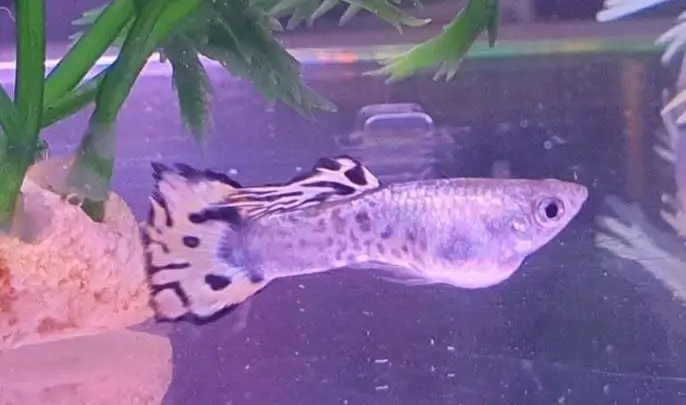
Clues include a noticeably rounded belly shortly after feeding, less interest in the next meal, or temporary sluggishness.
Some dry pellets absorb water and expand after being swallowed; how much depends on the food. Guppies rushing to grab floating food may swallow some air too, although surface feeding is normal and should not automatically be blamed for bloating.
What to do: If your guppy is otherwise active and the swelling appeared after a large meal, reduce or briefly withhold the next feeding and observe whether its belly returns to normal. Then offer smaller portions once or twice daily. If the swelling persists, worsens, or comes with other symptoms, investigate other causes.
From my experience, good-quality, slow-sinking micro pellets work particularly well for guppies. They give the fish time to pick up food as it sinks, reducing the amount that settles uneaten on the substrate. Whatever food you choose, portion size and removing leftovers matter most.
Observe your guppies during feeding. Changes in appetite, swimming behavior, or belly shape are easier to notice when you watch them regularly.
Can Constipation or Digestive Problems Make Guppies Bloated?
Yes. Digestive problems, including slowed intestinal movement or an obstruction, can sometimes contribute to abdominal swelling in guppies. However, not every bloated guppy is constipated, and a swollen belly alone cannot confirm the cause.
If your guppy is otherwise active and the swelling appeared after feeding, briefly reduce or withhold the next meal and observe its condition. When feeding resumes, offer smaller portions and a varied diet. Appropriately sized live or frozen daphnia can be a useful addition.
You can try a tiny amount of blanched, deshelled pea for suspected mild digestive problems. Remove the tough outer skin, mash the softened pea into guppy-sized pieces, and remove anything uneaten. Peas are not a proven cure for constipation and will not treat infections, parasites, dropsy, or other serious causes of abdominal swelling.
If swelling persists, worsens, or is accompanied by raised scales, abnormal breathing, or significant lethargy, investigate other causes rather than extending the fast.
Is My Guppy Bloated or Pregnant?
The easiest clues are the guppy’s sex, how gradually its belly has enlarged, and whether it shows any unusual symptoms.
Only female guppies can become pregnant. A male with an enlarged abdomen should therefore be assessed for overfeeding, digestive problems, or another underlying condition.
A pregnant female typically shows:
- A gradually enlarging abdomen that may become noticeably rounded or box-shaped as delivery approaches.
- A visible gravid spot near the rear of the abdomen, although it may be less noticeable in certain color varieties.
- Relatively normal swimming and feeding behavior through much of the pregnancy.
- Scales that remain flat against the body.
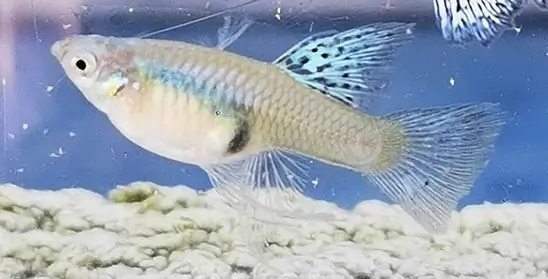
A pregnant guppy can also develop an unrelated illness. Sudden or persistent swelling, particularly alongside raised scales, abnormal breathing, reduced activity, or loss of appetite, deserves closer attention.
Pregnancy itself does not require treatment or a breeding box. A well-planted aquarium with suitable cover can provide shelter for newborn fry without unnecessarily disturbing the female.
For more information about pregnancy stages and signs of approaching delivery, see our pregnant guppy guide.
Can Poor Water Quality Cause Guppy Bloating?
Poor water quality does not usually cause a guppy’s belly to swell directly. However, unsuitable conditions can stress or damage the fish and contribute to illnesses associated with abdominal swelling or fluid retention.
If your guppy develops a swollen belly, test the aquarium water before assuming the problem is digestive. Ammonia and nitrite should be undetectable (0 ppm). Also check nitrate, pH, and temperature.
If ammonia or nitrite is detected, perform an appropriate partial water change using dechlorinated, temperature-matched water. Check the filtration system and continue monitoring the parameters. Avoid overcrowding, which increases the waste the filter must handle.
Correcting poor water quality is essential, but it may not resolve bloating caused by an existing infection, parasites, or internal organ problems. For recommended aquarium conditions, see our guppy water parameters guide.
Can Parasites Cause Guppy Bloating?
Yes. Certain internal parasites can cause abdominal swelling in guppies. One worth watching for is Camallanus, a type of intestinal roundworm that can infect guppies and other aquarium fish.
The most recognizable sign is the appearance of thin, reddish, thread-like worms protruding from the fish’s vent (anal opening).
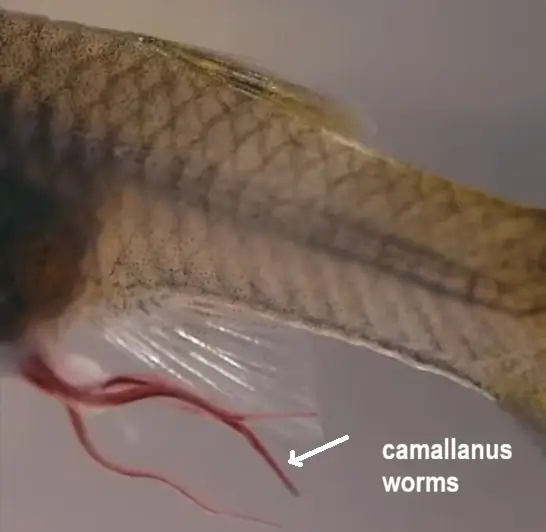
An infected guppy may develop a swollen abdomen, reduced appetite, lethargy, or gradual weight loss. Some fish become noticeably thinner rather than bloated as the infection progresses. White or stringy poop may also occur, but it is not sufficient evidence of parasites on its own.
If Camallanus worms are identified, an appropriate deworming treatment is necessary. Levamisole-based aquarium medications, such as Fritz Expel-P, can be administered through the water according to the manufacturer’s instructions. Fenbendazole is another medication used against certain intestinal worms, but its preparation and treatment method must be followed.
Because Camallanus can spread between aquarium fish, check the other tank inhabitants. Treatment may need to cover the affected aquarium, not just the fish with visible worms. Follow the product’s repeat-treatment schedule and remove expelled worms by siphoning the substrate. Quarantining newly purchased fish can help reduce the risk of introducing parasites.
Can Dropsy Cause Guppy Bloating?
Yes. Dropsy is a serious sign of abnormal fluid accumulation, not a disease on its own. It may develop when infections or other internal disorders interfere with the fish’s ability to regulate fluids.
Common signs include:
- Pronounced body swelling, sometimes with raised, pinecone-like scales
- Lethargy or loss of appetite
- Pale coloration or abnormal breathing
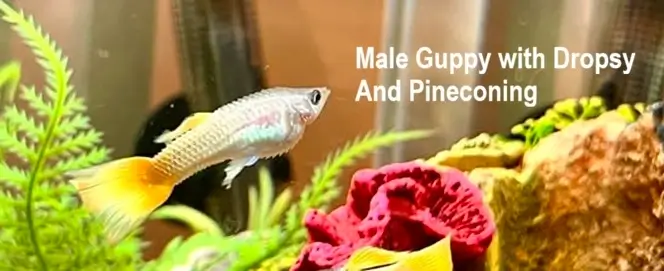
Raised scales are a particularly concerning indication of fluid retention. However, scales can remain flat earlier in an illness, so their appearance alone cannot rule dropsy out.
Check water quality promptly and keep conditions stable and well oxygenated. A suitably equipped hospital tank can help with monitoring or treatment, provided the transfer will not add unnecessary stress. Treatment depends on the cause: antibiotics may be appropriate if a susceptible bacterial infection is suspected or identified, but they are not an automatic treatment for every swollen guppy. Seek advice from an aquatic veterinarian where possible.
Epsom salt may provide supportive care in some cases, but it does not treat the underlying cause of dropsy.
Signs of Dangerous Guppy Bloating
Mild fullness after a large meal may settle when feeding is adjusted. Seek prompt attention if swelling is accompanied by:
- Raised, pinecone-like scales
- Lying motionless at the bottom of the tank
- Major floating or sinking difficulties
- Severe lethargy, refusal to eat, or rapid or labored breathing
Some pregnant females eat less near delivery, but labored breathing should never automatically be dismissed as a normal sign of pregnancy.
For related symptoms, see our guides on why guppies stay at the bottom of the tank and guppies not eating.
Check water conditions without delay and investigate the underlying cause rather than assuming the fish is simply overfed.
Frequently Asked Questions
Why Is My Guppy Bloated but Still Active?
An otherwise active guppy may have temporary fullness after a large meal or, in females, a developing pregnancy. Normal swimming does not completely rule out illness, though. Monitor swelling, appetite, scales, and water conditions, especially if the belly continues to enlarge.
Should I Isolate a Bloated Guppy?
Not automatically. A guppy that has simply eaten too much may not need isolation. A properly equipped hospital tank can help if the fish shows signs of serious illness or needs separate treatment. Maintain stable temperature, aeration, and water quality to avoid additional stress.
Why Is My Guppy Bloated and Swimming at the Surface?
Unusual surface swimming alongside bloating may indicate poor water quality, breathing difficulties, weakness, or buoyancy problems. Test ammonia and nitrite, check the temperature, and observe whether the fish is actively gasping or simply swimming near the surface. Persistent abnormal breathing requires prompt attention.
Why Is My Guppy Bloated Near the Anus?
Swelling near the vent (anal opening) can have several causes, including digestive or reproductive problems. In females, lower-abdomen enlargement may accompany pregnancy. Look for red, thread-like worms protruding from the vent, which can indicate Camallanus infection. Localized swelling alone cannot confirm the cause.
Can a Bloated Guppy Recover?
Yes, depending on the cause. Temporary fullness from overfeeding may improve after feeding is adjusted, while parasites and other illnesses require appropriate treatment. Severe swelling with pineconing, weakness, or breathing difficulties carries a more guarded prognosis and warrants prompt attention.