
Is your guppy not eating? A guppy may occasionally skip a meal, especially after being introduced to a new aquarium. However, persistent appetite loss can indicate unsuitable water conditions, stress, feeding difficulties, or illness.
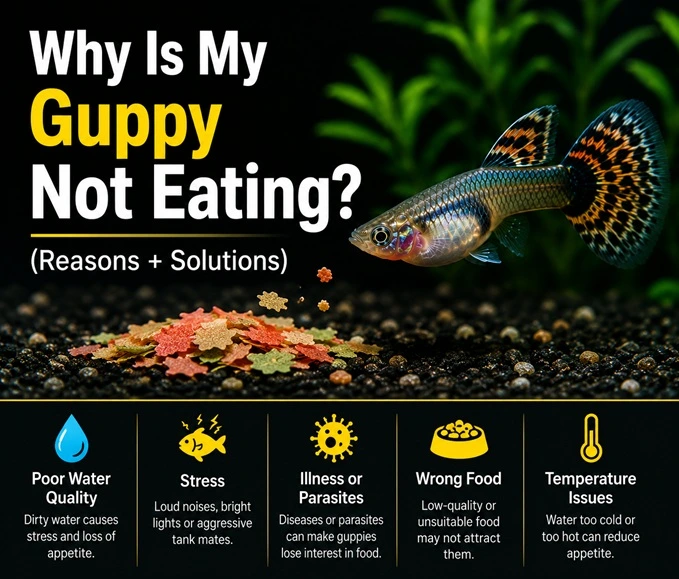
Before deciding what to do, observe how your guppy behaves around food. Does it approach the food but refuse it, take a bite and spit it out, get chased away by other fish, or show no interest in feeding at all?
These differences can help you narrow down the possible cause and decide what to check first.
What Causes Guppies to Stop Eating?
A guppy may refuse food for several reasons, ranging from unfamiliar food or temporary stress to unsuitable water conditions and illness.
1. Poor Water Quality
Ammonia, nitrite, and unstable water conditions can stress guppies and reduce their appetite, sometimes before other obvious symptoms appear.
What to look for: Rapid breathing, clamped fins, lethargy, or several fish losing interest in food around the same time.
What to do: Test ammonia, nitrite, nitrate, and pH. Ammonia and nitrite should be undetectable. If either is present, perform an appropriate partial water change using dechlorinated, temperature-matched water, increase aeration, and check the filtration system.
If appetite loss began after maintenance, see our why guppies die after water change guide. For recommended water conditions, refer to our guppy water parameters guide.
2. Stress or a New Environment
A newly purchased guppy may temporarily refuse food while adjusting to unfamiliar surroundings. Transport, new tank mates, sudden environmental changes, or a lack of suitable hiding places can also affect feeding behavior.
What to do: Check the water conditions, provide a calm environment, and allow the fish to settle without repeatedly disturbing the aquarium. Offer a small amount of food and observe whether its interest returns.
Do not automatically attribute prolonged appetite loss or other signs of illness to adjustment stress.
3. Overfeeding
A guppy that has recently been fed too much may show little interest in its next meal. Uneaten food can also decompose, contributing to poor water quality.
What to do: Remove leftover food and review your feeding portions. For healthy adult guppies, one or two small meals daily is a practical starting point. Feed only what they can consume promptly, adjusting the amount to suit your fish and aquarium.
4. Wrong or Stale Food
Sometimes the problem is the food itself. Guppies may initially reject an unfamiliar diet, while old or improperly stored food can lose freshness and nutritional quality.
A guppy raised on live food may refuse commercial flakes or pellets for a few days while adjusting. Similarly, one accustomed to dry food may initially hesitate when offered unfamiliar live or frozen food.
Food size matters too—a guppy may approach food but struggle to swallow pieces that are too large.
What to do: Check the food’s condition, offer appropriately sized portions, and try a fresh alternative such as frozen brine shrimp or suitably sized live daphnia.
If you prepare homemade food, keep it plain, appropriately softened, and finely sized. Remove anything uneaten promptly.
For suitable feeding options, see our best guppy food guide.
5. Illness or Internal Parasites
Loss of appetite can accompany bacterial infections, parasites, gill problems, and other illnesses.
A guppy that refuses food while becoming noticeably thinner deserves particular attention. Internal parasites are one possibility, but weight loss alone cannot confirm their presence.
What to look for: A shrinking abdomen, clamped fins, visible spots or lesions, abnormal breathing, reduced activity, or persistent isolation from other fish.
What to do: Check water quality and look for additional symptoms before choosing treatment. If a particular infection or parasite is identified, use an appropriate treatment according to its instructions. A properly equipped hospital tank may be useful when separate care is necessary.
Avoid treating appetite loss alone with antibiotics or antiparasitic medication.
See our common guppy diseases guide for more information.
6. Low Water Temperature
Guppies are tropical fish, and unsuitable temperatures can affect their metabolism and feeding activity. A tank that has gradually become too cold may contribute to reduced appetite.
What to do: Check the aquarium thermometer and heater. A stable temperature around 76–78°F (24–26°C) works well for most guppies.
If the temperature is outside the suitable range, correct it gradually rather than making a sudden adjustment.
7. Bullying or Competition for Food
A guppy may appear uninterested in feeding when it is actually being chased away or cannot reach the food before more dominant tank mates consume it.
This can occur in crowded aquariums, unsuitable community setups, or tanks with persistent male harassment.
What to do: Observe the aquarium during feeding. Check whether the affected fish approaches food but retreats when another fish comes near.
Provide suitable cover and swimming space, address aggressive tank mates, and ensure every fish can access food. In a mixed-sex guppy group, keeping approximately two or three females per male, where space and stocking allow, can help distribute male attention.
See our guppy tank mates guide for compatible species.
Why Is My Male, Female, Pregnant, or New Guppy Not Eating?
The circumstances surrounding appetite loss can provide additional clues. The following situations are worth checking alongside the seven causes discussed above.
| Guppy | Possible Cause & What to Check |
|---|---|
| Male guppy not eating | Stress, harassment, unsuitable water conditions, or illness. Check whether he is being chased or prevented from reaching food. |
| Female guppy not eating | Environmental stress, illness, persistent male attention, or pregnancy. Check whether she is hiding, being harassed, or showing other symptoms. |
| Pregnant guppy not eating | Some females temporarily lose their appetite shortly before giving birth. Check whether she is otherwise behaving normally or showing signs of distress. |
| New guppy not eating | Transport stress, unfamiliar surroundings, different food, or unsuitable water conditions. Check the water parameters and find out what food it was previously eating. |
Important: Pregnancy and adjustment to a new tank should not automatically be used to explain persistent appetite loss. If a guppy becomes inactive, loses weight, struggles to breathe, or develops other symptoms, investigate promptly.
For more on behavior around giving birth, see our pregnant guppy guide.
Guppy Not Eating and Showing Other Symptoms
A guppy’s behavior alongside appetite loss can provide important clues about what may be wrong.
Not eating and hiding: May indicate stress, bullying, or illness, particularly if the fish is isolating itself persistently. See our guppy hiding guide.
Not eating and losing color: Check water conditions and look for signs of stress or illness. See our guppy losing color guide.
Not eating and barely moving: This is more concerning, especially if the guppy is sitting at the bottom, breathing abnormally, or barely responding. Check water quality immediately and investigate possible illness. See our guppy staying at the bottom guide.
How Long Can Guppies Survive Without Food?
A healthy adult guppy can generally tolerate around 3–5 days without supplied food, and some may survive a week or longer under favorable conditions. However, survival depends on age, health, water temperature, and access to natural food.
In a mature aquarium, guppies may continue grazing on algae, biofilm, and tiny microorganisms even when regular feeding stops.
Guppy fry are far less tolerant of missed meals. They need several small feedings daily to support their rapid growth. Even a day without adequate nutrition can be concerning, particularly for newly born fry.
Sick, weakened, or pregnant guppies need closer attention and should not be deliberately fasted without a specific reason.
Importantly, a guppy that unexpectedly stops eating should not be left unattended simply because a healthy adult might survive several days without food. Investigate the cause promptly, especially if other symptoms appear.
If you’re planning to be away for several days, consider using an automatic fish feeder rather than leaving extra food in the aquarium. Set it to dispense small, measured portions and test it for several days before your trip to ensure it works reliably. Guppy fry require more frequent attention, so arrange suitable care if necessary.
Frequently Asked Questions
Why Is My Guppy Not Eating but Still Active?
An otherwise active guppy may temporarily refuse food because of stress, unfamiliar food, or recent changes in its environment. Check the water conditions and observe its behavior during feeding. If appetite loss persists or other symptoms develop, investigate further rather than assuming the fish is healthy simply because it remains active.
How Can I Get My Guppy to Eat Again?
First, check the water quality and temperature. If conditions are suitable, try offering a small amount of fresh food, such as frozen brine shrimp or appropriately sized live daphnia. Also observe whether the guppy is being bullied or struggling to eat. The right solution depends on the underlying cause.
Should I Isolate a Guppy That Isn’t Eating?
Not necessarily. If the guppy is otherwise active and simply adjusting to a new environment, isolation may introduce additional stress. However, a properly equipped hospital tank can be useful if the fish is being bullied, needs separate monitoring, or requires treatment for an identified illness.
How Often Should You Feed Guppies?
Healthy adult guppies generally do well with one or two small meals daily, offering only what they can consume promptly. Guppy fry need several smaller meals throughout the day to support their rapid growth. Remove uneaten food to prevent it from affecting water quality.
When Should I Worry About My Guppy Not Eating?
An occasional missed meal isn’t necessarily alarming, but continued food refusal over 24–48 hours warrants investigation. Act sooner if the guppy develops rapid breathing, unusual swimming, visible weight loss, severe lethargy, or other concerning symptoms. Fry and already weakened guppies require particular attention.
Loss of appetite can accompany serious illness, but it does not, by itself, mean a guppy is dying.