
Guppies may die after a water change due to temperature shock, untreated chlorine or chloramine, sudden changes in water chemistry, or a problem known as old tank syndrome. Even a seemingly clean aquarium can become dangerous if the replacement water isn’t prepared correctly.
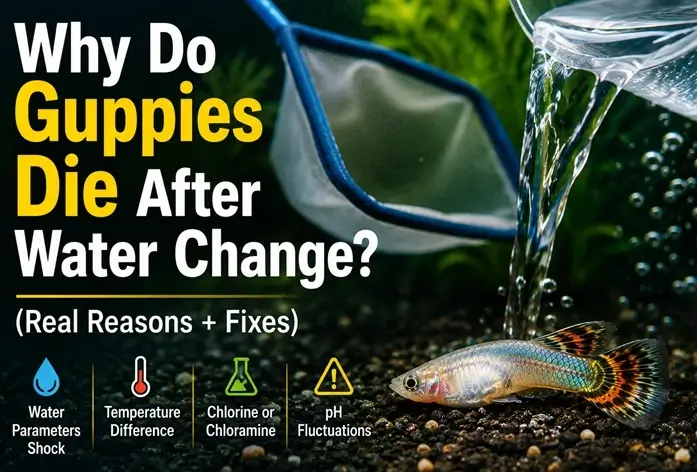
Are your guppies gasping, swimming erratically, or lying at the bottom after a water change? Jump to our Emergency Fix for immediate steps.
Quick Navigation
1) Why Do Guppies Die After a Water Change?
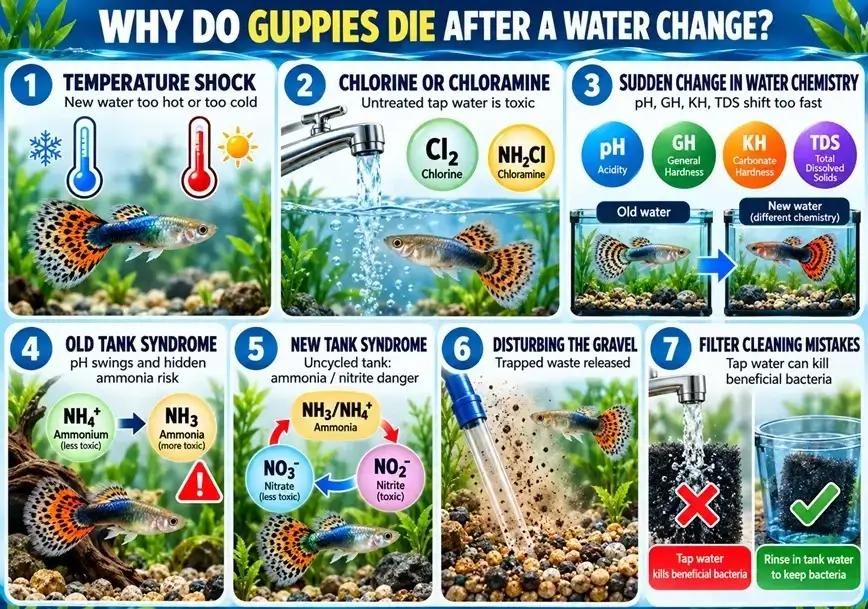
Temperature Shock
Chlorine or Chloramine in Tap Water
Sudden Changes in Water Chemistry
Old Tank Syndrome
New Tank Syndrome and Filter Cleaning Mistakes
Disturbing the Gravel
2) Why Guppies Die Even When Water Parameters Look Fine
3) Signs Your Guppies Are in Stress or Shock
4) Emergency Fix
5) How to Safely Do a Water Change
6) Frequently Asked Questions
Why Do Guppies Die After a Water Change?
The timing of the symptoms, replacement-water conditions, and state of the biological filter can help narrow down what went wrong.
Temperature Shock
Adding significantly colder or warmer water can stress guppies, especially during larger water changes.
Match replacement water to the tank temperature, ideally within 2°F (1°C), using a thermometer rather than guessing by touch.
There’s usually no need to remove the fish. Prepare the water beforehand and add it gently to avoid sudden temperature changes and unnecessary handling.
Chlorine or Chloramine in Tap Water
Untreated chlorine and chloramine in tap water can damage guppy gills and harm beneficial bacteria, particularly when filter media is rinsed under the tap.
Unlike chlorine, chloramine does not reliably dissipate by leaving water standing.
What to do: Treat replacement tap water with a conditioner that neutralizes both, such as Seachem Prime. Follow the manufacturer’s dosage and preferably treat the water before adding it to the aquarium.
Important: Always cycle a new aquarium before adding guppies. Proper water changes preserve the nitrogen cycle, but damaging beneficial bacteria can disrupt it.
Sudden Changes in Water Chemistry
Replacement water that differs significantly in pH, hardness (GH/KH), or dissolved minerals (TDS) can stress guppies by disrupting their ability to regulate water and salt balance, a process called osmoregulation.
Large water changes aren’t inherently dangerous. However, the more water you replace, the greater the impact of any difference between the old and new water.
What to do: For routine maintenance, start with a 20–30% weekly water change, adjusting according to stocking levels and test results. Match the replacement water’s temperature and chemistry as closely as practical, particularly during larger changes.
Old Tank Syndrome
Old Tank Syndrome can develop when an aquarium goes too long without regular water changes. Waste accumulates, buffering capacity (KH) declines, and pH may gradually drop.
A large water change can then cause sudden shifts in pH and mineral levels. If ammonia is already present, a sudden rise in pH can increase the proportion of toxic ammonia, potentially poisoning guppies.
What to do: Test ammonia, pH, and KH. If Old Tank Syndrome is suspected, correct water conditions carefully while monitoring the results. Avoid sudden chemistry changes, but prioritize reducing dangerous ammonia or nitrite levels.
New Tank Syndrome and Filter Cleaning Mistakes
New Tank Syndrome occurs when an aquarium lacks enough beneficial bacteria to process fish waste, allowing toxic ammonia and nitrite to accumulate.
Even established tanks can develop similar problems if filter media is excessively cleaned or replaced, disrupting biological filtration.
What to do: Cycle new aquariums before adding guppies, gently rinse filter media in removed tank water, and avoid replacing all biological media at once. Test ammonia and nitrite (both should be 0 ppm), and perform appropriate partial water changes if either is detected.
Disturbing the Gravel
Over time, gravel can trap fish waste, uneaten food, and decaying organic matter. Aggressively disturbing heavily neglected substrate may release accumulated waste and, in some oxygen-poor pockets, toxic hydrogen sulfide gas, potentially harming guppies.
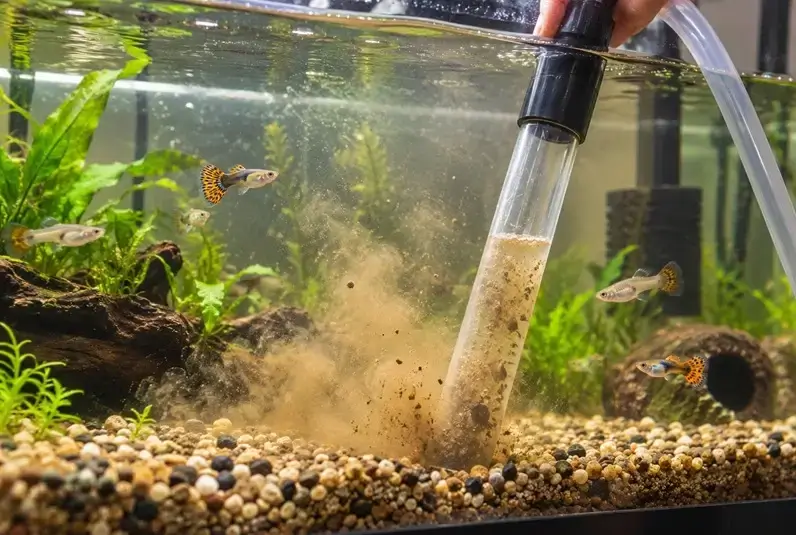
What to do: If waste is stirred up during a water change, siphon it out immediately rather than letting it settle back into the substrate. Simply stirring the gravel without removing the released debris can worsen water quality and contribute to ammonia problems.
Why Do Guppies Die Even When Water Parameters Look Fine?
Normal test results don’t always mean the water change was safe. Basic aquarium kits may miss several important factors:
- Temperature: A sudden mismatch won’t show up in chemical tests.
- Chlorine or chloramine: Many standard aquarium kits don’t test for these.
- GH/KH: A mineral mismatch between replacement water and tank water may go unnoticed.
- pH changes: A single reading won’t reveal how much the pH shifted during the water change.
Ammonia readings also need context. Most standard aquarium ammonia tests measure total ammonia, while its toxicity depends partly on pH and temperature.
What to do: Compare the tank and replacement water before a change. Use a thermometer, treat tap water appropriately, and check ammonia, nitrite, pH, and hardness when investigating unexplained losses.
Signs Your Guppies Are in Stress or Shock
After a water change, watch for guppies gasping at the surface, rapid breathing, erratic swimming, clamped fins, unusual bottom-resting, or loss of appetite. These symptoms may appear immediately or develop over the following hours and shouldn’t be ignored.
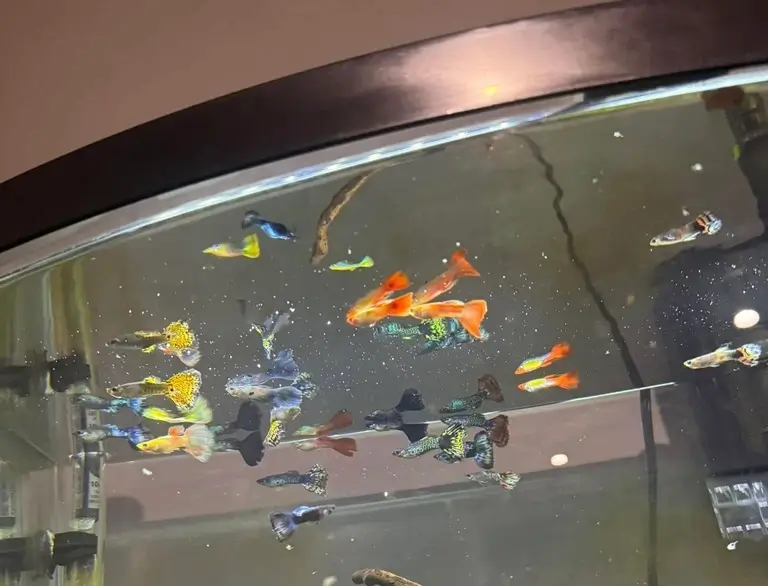
If several guppies show these symptoms, check the water conditions immediately rather than waiting for them to recover on their own.
For specific symptoms, see our guides on guppies staying at the bottom, staying at the top, and not eating. If symptoms persist despite correcting water conditions, consult our common guppy diseases guide.
Emergency Fix: What to Do If Guppies Are Stressed After a Water Change
If your guppies show signs of distress during or shortly after a water change, act promptly.
- Increase aeration using an air stone or stronger surface agitation.
- Check the temperature and correct any significant mismatch gradually.
- Test ammonia, nitrite, and pH to identify possible water-quality problems.
- Check the conditioner: If untreated chlorine or chloramine may have entered the aquarium, immediately add an appropriate water conditioner according to its instructions.
- Reduce additional stress: Dim the lights, avoid unnecessary handling, and temporarily reduce feeding.
If ammonia or nitrite is elevated, perform an appropriate partial water change using properly conditioned, temperature-matched water. If Old Tank Syndrome or a major chemistry mismatch is suspected, also consider pH and hardness before making further changes.
Avoid repeatedly changing large amounts of water without identifying the problem, as this may introduce additional stress.
How to Safely Do a Water Change
A few simple precautions can prevent most water-change-related problems:
- Match the temperature: Keep replacement water within about 2°F (1°C) of the aquarium, using a thermometer.
- Treat tap water: Use a conditioner that neutralizes chlorine and chloramine before adding replacement water.
- Change an appropriate amount: A 20–30% weekly change is a good starting point. Adjust according to stocking levels and water-test results.
- Refill gently: Add replacement water slowly to avoid disturbing the fish or substrate.
- Vacuum the gravel: Siphon out trapped waste rather than simply stirring it into the water.
- Protect the filter: Avoid aggressively cleaning or replacing all biological filter media at once.
- Check your equipment: Restart the filter and heater if switched off, and confirm they’re working properly.
Always use aquarium-only buckets and equipment. Soap, detergent, or other household chemical residues can harm guppies.
Consistency matters more than chasing a single perfect water parameter. For more information, see our guppy tank setup guide and complete guppy care guide.
Frequently Asked Questions
How Long Should Tap Water Sit Before a Water Change?
Leaving tap water standing may allow some chlorine to dissipate, but it won’t reliably remove chloramine. Use an aquarium conditioner that treats both before adding replacement water.
Can Overfeeding Make Water Changes More Dangerous?
Indirectly, yes. Uneaten food and excess waste can increase ammonia levels, particularly in an aquarium with insufficient biological filtration. Avoid overfeeding and remove leftovers before they accumulate.
Should I Turn Off the Filter During a Water Change?
Only if the falling water level would expose the intake or cause the filter to run dry. Switch it back on after refilling and check that water is flowing normally. Turn off the heater too if it could become exposed.
Can Too Much Water Conditioner Harm Guppies?
Yes, excessive overdosing can be harmful, depending on the product. Measure the correct amount for the water being treated and follow the manufacturer’s instructions rather than adding extra conditioner unnecessarily.