
How many guppies in a 10 gallon tank can you safely keep? For most setups, 5–7 guppies is the comfortable range, though the exact number depends on your filtration, tank setup, and whether you’re keeping males only or a mixed group of males and females.
In this guide, we’ll break everything down clearly — from small tanks to larger setups — so you can avoid overcrowding, stress, and sudden fish loss, and improve guppy lifespan.
Quick Answer: How many guppies you can keep depends mainly on tank size and whether you’re keeping males only or a mixed group:
5 gallons — 2–3 guppies, males only recommended
10 gallons — 5–7 guppies, or 6–8 in an all-male group
20 gallons — 10–15 guppies, the easiest size for beginners to manage
Mixed-sex groups — keep a ratio of 1 male per 2–3 females to spread out breeding pressure, and expect regular fry once females are involved
Quick Navigation
➜ How Many Guppies in a 10 Gallon Tank
➜ What Happens If You Add Female Guppies
➜ How Many Guppies in a 5 Gallon Tank
➜ How Many Guppies in a 20 Gallon Tank
➜ Guppies Per Gallon
➜ How Many Should Be Kept Together
➜ Tank Size Chart
➜ Factors That Affect Stocking
➜ 10 Gallon Tank With a Betta
➜ Signs Your Tank Is Overcrowded
➜ Common Mistakes to Avoid
➜ Final Recommendation
➜ Frequently Asked Questions
How Many Guppies in a 10 Gallon Tank
A 10-gallon tank can comfortably hold 5 to 7 guppies.
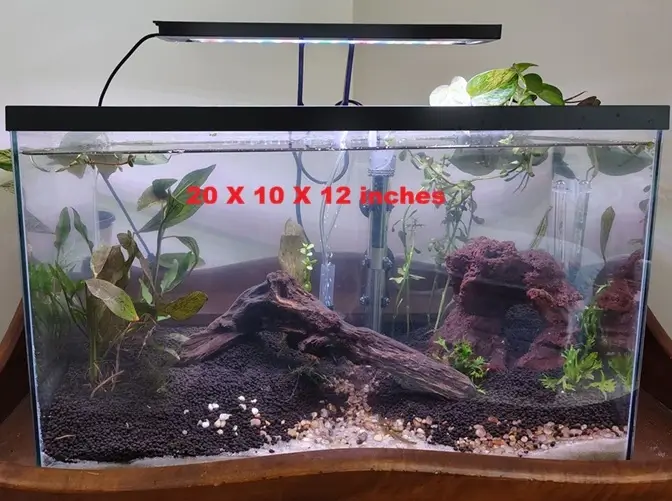
This range works well because:
➜ guppies get enough swimming space
➜ waste doesn’t build up too quickly
➜ water quality stays stable with basic care
Many beginners try to add more fish because guppies are small, but overcrowding is one of the biggest reasons for fish deaths in small tanks. If you’re keeping fancy guppies with larger tails, like electric blue guppies, half-moon tail guppies, or tuxedo guppies, it’s worth staying on the lower end of this range, since bigger fins mean more bioload per fish.
Can You Keep More Than 7 Guppies in a 10 Gallon Tank?
Yes — but only under ideal conditions.
If your tank has:
➜ a good filtration system — ideally one rated for closer to 20 gallons rather than 10, since more fish means more waste for it to process
➜ live plants — they absorb ammonia and nitrate directly as a nutrient source, giving you a second line of defense beyond the filter alone
➜ regular weekly water changes — filters convert ammonia into nitrite and then nitrate, but they don’t remove nitrate from the water; only a water change actually takes it out
Then you might stretch to 8–10 guppies. But anything beyond that quickly increases ammonia buildup, stress, and disease risk.
Male vs Female Guppy Count in a 10 Gallon Tank
This is where many beginners go wrong.
➜ All-male tank: 6–8 guppies, since there’s no breeding to manage and males are smaller and lower-bioload than females to begin with
➜ Mixed tank: 1 male for every 2–3 females, which in a 10-gallon works out closer to 1–2 males and 4–5 females than an even split
The reason all-male tanks can hold a couple more fish comes down to size and waste: male guppies average around 1.5 inches, while females run closer to 2–2.4 inches and produce noticeably more waste. Smaller bodies, less bioload, more room in the same 10 gallons. For help telling them apart, see our male vs female guppy guide.
That said, all-male doesn’t mean conflict-free. Males still establish a pecking order among themselves and will chase or nip at each other without a single female in the tank, so it solves the breeding problem specifically, not aggression in general.
What Happens If You Add Female Guppies in a 10 Gallon Tank?
Guppies are livebearers, meaning they give birth to live fry roughly every 21 to 30 days once a female is mature and mated.
A single female typically produces 10–20 fry in her first brood, 20–60 once mature, and occasionally 80–100+ if she’s large and healthy.
This can lead to:
➜ rapid overcrowding
➜ poor water quality
➜ increased stress and disease
Many beginners start with a few fish and end up with dozens in a short time.
To avoid this:
➜ keep only male guppies, or
➜ be prepared to manage baby fish, including a separate grow-out tank — see our guppy breeding guide and guppy fry guide for the full process
How Many Guppies in a 5 Gallon Tank
A 5-gallon tank can hold 2–3 guppies at most.
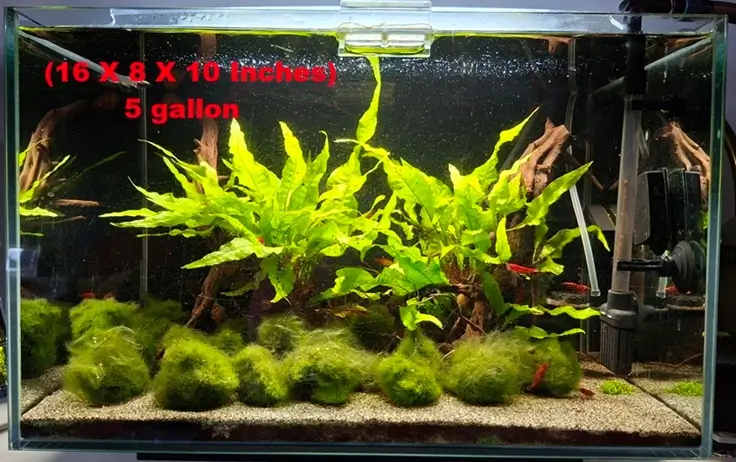
This is because:
➜ water gets polluted quickly — there’s so little volume that the same waste load that’s manageable in a 10-gallon can spike ammonia in a fraction of the time
➜ swimming space is very limited — guppies are active swimmers, and 5 gallons doesn’t give them much room to move before they’re back at the glass
➜ the tank becomes unstable fast — small volumes of water swing in temperature and chemistry much quicker than larger ones, so mistakes that are recoverable in a bigger tank can turn serious within hours here
Best setup: keep only male guppies, use a filter, and do frequent water changes.
Can You Keep More Than 2–3 Guppies in a 5 Gallon Tank?
Yes, to a point. With a quality filter, live plants, and an all-male group specifically, several care guides put the realistic ceiling closer to 4, occasionally 4–5 for males only. The jump isn’t as dramatic as what a 10-gallon allows (5–7 stretching to 8–10), since there’s a lot less water here to absorb a mistake, but it’s not a hard wall at 3 either.
What doesn’t change no matter how good the setup is: mixing males and females at this size. A single pregnant female can produce a brood large enough to double or triple the headcount overnight, and 5 gallons doesn’t have anywhere near enough room or water volume to absorb that. If you want any stretch room at all in a 5-gallon, an all-male group is what makes it possible — adding females is where the math stops working regardless of filtration.
Filter choice matters more at this size too. A filter built for a larger tank can push out more current than 5 gallons of water can absorb comfortably, leaving guppies fighting the flow all day. A sponge filter or anything with adjustable, gentle output is the better choice here, both for the fish and for keeping the water gently circulating without overdoing it.
How Many Guppies in a 20 Gallon Tank
A 20-gallon tank can comfortably hold 10–15 guppies.
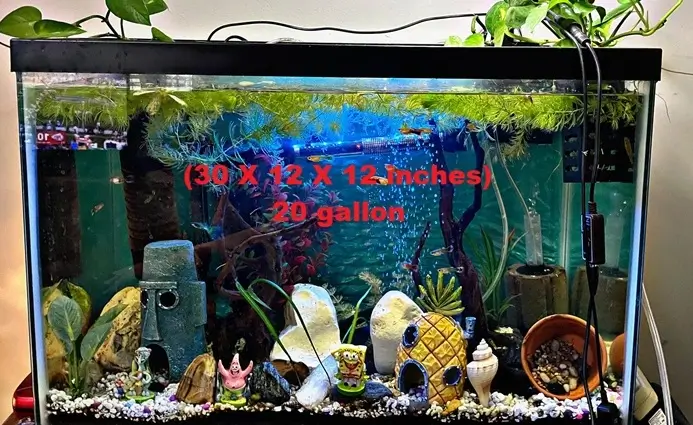
This is a better setup because:
➜ water parameters stay stable
➜ fish have more space
➜ it’s easier for beginners to manage
If possible, this is the ideal tank size for guppies.
More plant cover and open swimming space at 20 gallons gives fry slightly better survival odds than at 5 or 10 gallons, but it’s not a size where breeding becomes hands-off — mixed-sex 20-gallon tanks still get the same population explosion, just with a longer runway before it’s a problem. If you want fry without constant intervention, plan on regular removal regardless of tank size.
How Many Guppies Per Gallon
You may have heard the “1 inch of fish per gallon” rule. For guppies specifically, a better guideline is 1 guppy per 2 gallons, since:
➜ guppies produce a lot of waste relative to their size
➜ they’re active swimmers that need room to move
➜ overcrowding happens quickly once they start breeding
How Many Guppies Should Be Kept Together
Guppies are shoaling fish, not schooling fish like tetras — they don’t swim in tight, coordinated formations, but they do need the presence of others of their own kind to feel secure. This isn’t just a preference: shoaling is specifically an anti-predator strategy. Research on wild guppy populations has found that grouping up when a threat is nearby measurably lowers an individual’s risk of being caught compared to swimming alone.
The minimum group size for this to actually work is 3, with 5 or more considered ideal. A single guppy isn’t likely to die from being alone, but it does run noticeably more stressed and more prone to illness than one kept with company.
This number is a floor, not a ceiling. You could just as easily keep 100 guppies together as 3 — the social minimum doesn’t change with group size. It’s tank size that actually decides how high you can go, which is what the sections above this one are for: a 5-gallon tank caps out around 2–3 fish regardless of how social guppies are, while a 20-gallon comfortably supports 10–15. “3 minimum, 5 ideal” is about not going below a healthy floor, not about how far above it you’re allowed to stretch.
Within that group, the sex ratio still matters: 1 male for every 2–3 females, the same ratio covered in the tank-size sections, to keep breeding pressure manageable no matter how large the group gets.
Guppy Tank Size Chart
| Tank Size | Guppies |
|---|---|
| 3 gallon | 1–2 |
| 5 gallon | 2–3 |
| 10 gallon | 5–7 |
| 20 gallon | 10–15 |
| 30 gallon | 15–20 |
Larger tanks are always easier to maintain and provide a healthier environment.
Factors That Affect How Many Guppies You Can Keep
Filtration System
A good filter removes waste and keeps water clean. With a filter, you can safely keep more fish; without one, reduce the count significantly. Even a simple sponge filter works well for guppies.
Live Plants
Live plants absorb waste, provide hiding spots, and reduce stress. A planted tank can support slightly more guppies than a bare one.
Water Changes
Do a 20–30% water change every week. This keeps water clean and prevents the overcrowding problems that build up between maintenance sessions. For the full breakdown of ammonia, nitrite, and ideal parameters, see our guppy water parameters guide.
Sex Ratio
The headline numbers throughout this guide (5–7 in a 10-gallon, and so on) assume a reasonably balanced group. Skew that ratio and the effective capacity changes even though the tank size doesn’t: too many females and the tank breeds its way into overcrowding well before it hits the numeric ceiling, too many males and you get more chasing and fin damage even though the actual bioload stays low. See Male vs Female Guppy Count above for the ratio that avoids both problems.
Other Fish in the Tank
Every number in this guide assumes a guppy-only tank. Add corydoras, shrimp, or any other tankmate, and the guppy count needs to come down to make room, since everyone in the tank is drawing from the same filtration and oxygen budget — see our guppy tank mates guide for compatible species. The Betta section above is the clearest example of this trade-off in practice: 1 betta plus 3–5 guppies, not 1 betta on top of the full 5–7 you’d keep without one.
How Many Guppies in a 10 Gallon Tank With a Betta
Keeping guppies with a betta is truly risky, and a 10-gallon is close to the smallest tank where this combination is advisable at all — some keepers recommend 20–30 gallons instead for a full-sized guppy group. Bettas can be aggressive, and a guppy’s bright, flowing tail can trigger that aggression even when none was intended toward the guppy specifically. This is really one specific case of the broader tank mates trade-off covered in the Factors section above.
Sex pairing matters more than the guppy count does. A male betta with male guppies is the riskiest combination, since the betta can mistake a colorful male guppy’s fins for a rival betta. A female betta with female guppies is consistently the safer pairing, and short-finned females or the smaller, less flashy Endler’s livebearers are an even lower-risk choice than fancy female guppies if you want to minimize the risk further.
If you decide to try it anyway in a 10-gallon:
➜ keep 1 betta with 3–5 guppies maximum, matched in sex per the pairing above, and avoid mixing males and females since breeding will overstock the tank fast on top of the existing risk
➜ add plants and hiding spots for both — this lowers conflict risk by breaking line of sight, though it doesn’t increase how many fish the tank can safely hold
➜ watch behavior closely in the first few days, since this is when problems usually show up
➜ keep a separate, cycled tank ready as a backup, since betta temperament is unpredictable and some simply won’t tolerate tank mates no matter how well the setup is planned
If you want a full 5–7 guppy group alongside a betta, the better fix is a larger tank rather than pushing past 5 in a 10-gallon.
Signs Your Tank Is Overcrowded
Watch for these warning signs:
➜ fish gasping at the surface of the water
➜ cloudy or dirty water — though clear water isn’t proof you’re in the clear, since ammonia and nitrite can spike before any visible cloudiness shows up
➜ increased aggression, including fin nipping and chasing that wasn’t there before
➜ frequent illness — if you’re seeing this, our common guppy diseases guide covers identification and treatment
➜ stunted growth — guppies that never reach their expected adult size, since competition for food and chronic stress pull energy away from growth
If you notice these, reduce the number of fish or perform a water change immediately. For ammonia and nitrite specifically, testing the water directly is the only way to catch a spike before it shows up as a visible symptom at all.
Common Mistakes to Avoid
➜ adding too many fish at once instead of stocking gradually, especially into a tank that hasn’t fully cycled yet
➜ trusting the generic “1 inch of fish per gallon” rule instead of the guppy-specific guidance above, since guppies produce more waste and breed faster than that rule accounts for
➜ buying juveniles and stocking for their current small size rather than the adult size they’ll actually reach
➜ keeping too many males relative to females, which concentrates breeding pressure and harassment onto too few females
➜ underestimating how fast fry add to the count — females are often already pregnant at purchase, so the population can grow even without buying a single new fish
➜ ignoring filtration capacity relative to fish count
➜ adding other tankmates, like a betta, without reducing the guppy count to make room for them
➜ skipping regular water changes
Final Recommendation
For most beginners, keeping 5–7 guppies in a 10-gallon tank, choosing an all-male group if you want to avoid breeding altogether, and upgrading tank size before adding more fish is the simplest path to a stable, low-stress aquarium.
Frequently Asked Questions
Can I keep 10 guppies in a 10 gallon tank?
Not recommended long-term unless you have strong filtration and a serious maintenance routine, and even then it’s pushing the upper edge of what a 10-gallon can support.
Is a 10 gallon tank enough for guppies?
Yes, for a small group of 5–7 guppies. It’s one of the most common starter sizes for the hobby.
What happens if I overcrowd my tank?
Stress, poor water quality, and a higher risk of disease, all of which compound each other the longer overcrowding continues.
How many male guppies can I keep in a 10 gallon tank?
Around 6–8 male guppies. If you want a few females too, keep a ratio of 1 male per 2–3 females rather than adding females one at a time, since guppies chase and mate persistently.
How many female guppies can I keep in a 10 gallon tank?
Around 4–6, a bit lower than the 5–7 mixed-group number, since an all-female group is the highest-bioload combination covered in this guide — there are no smaller, lower-waste males in the mix to bring the average down. This isn’t ideal for beginners either way: females purchased from a pet store are frequently already pregnant, so the tank can overcrowd fast even without buying a single additional fish.
Can I keep guppies without a filter?
Yes, but it’s risky. Without a filter, waste builds up quickly, water quality drops fast, and fish become stressed and can die. If you want to try it anyway, keep the fish count low and do frequent water changes.
Can I mix guppies with other fish in a 10 gallon tank?
Yes, but the guppy count needs to come down to make room, the same trade-off covered in the Factors and Betta sections above — every tankmate you add is drawing from the same filtration and oxygen budget. Small, peaceful fish and shrimp are good choices, while aggressive or large fish that compete for the same swimming room are best avoided.
What is the best tank size for guppies?
For beginners, a 20-gallon tank is the best choice, since it offers more stable water conditions, easier maintenance, and comfortably more fish than a 10-gallon allows.
Final Thoughts
How many guppies you can keep always comes down to two questions: how much water do you actually have, and are you keeping males only or planning around breeding. Every number in this guide flows from those two things — 2–3 in a 5-gallon stretching to 4 with an all-male group, 5–7 in a 10-gallon stretching to 8–10 under ideal conditions, and 10–15 in a 20-gallon, where the gap between all-male and mixed groups starts to matter less.
The “3 minimum, 5 ideal” group-size guidance is a separate question from all of that. It’s the social floor every group needs regardless of tank size — the tank-size numbers are what actually set the ceiling.
If one fact resolves more confusion here than any other, it’s this: an all-male group will always let you keep more fish in the same water than a mixed group, simply because you’re not managing breeding on top of everything else. Mixed groups aren’t wrong, they just come with a second job attached.
Healthy stocking, regardless of tank size, comes down to:
➜ a fish count that matches your filtration, not just the tank’s gallon number
➜ a male-to-female ratio that avoids both overbreeding and harassment
➜ regular water changes rather than reactive ones
➜ resisting the urge to stock to the top of any range before the tank has run smoothly for a few weeks
When in doubt, the larger tank is almost always the easier path — every section in this guide gets simpler to manage as the gallon count goes up.