
There are dozens of recognized types of fancy guppies, and the variety isn’t random, breeders classify them along several independent traits at once: tail shape, body pattern, color, eye color, and even pectoral fin shape.
A single fish can belong to several categories simultaneously, a Cobra Half-Black Blue Delta Tail Guppy is a body pattern, a secondary pattern, a color, and a tail shape, all in one name. This guide walks through every major category with real examples, so you can actually recognize what you’re looking at the next time you see a guppy with an unfamiliar name.
Quick Navigation
➜ Types of Fancy Guppies by Tail Shape
➜ Types of Fancy Guppies by Body Pattern
➜ Types of Fancy Guppies by Tail and Body Pattern Combined
➜ Types of Fancy Guppies by Color
➜ Types of Fancy Guppies by Eye Color
➜ Types of Fancy Guppies by Pectoral Fin
➜ Endler-Guppy Hybrids
➜ What Are “Mutt” Guppies?
➜ Frequently Asked Questions
Types of Fancy Guppies by Tail Shape
Tail shape is usually the first thing anyone notices, and it’s the most common way fancy guppies get sorted into categories at shows and in pet stores.
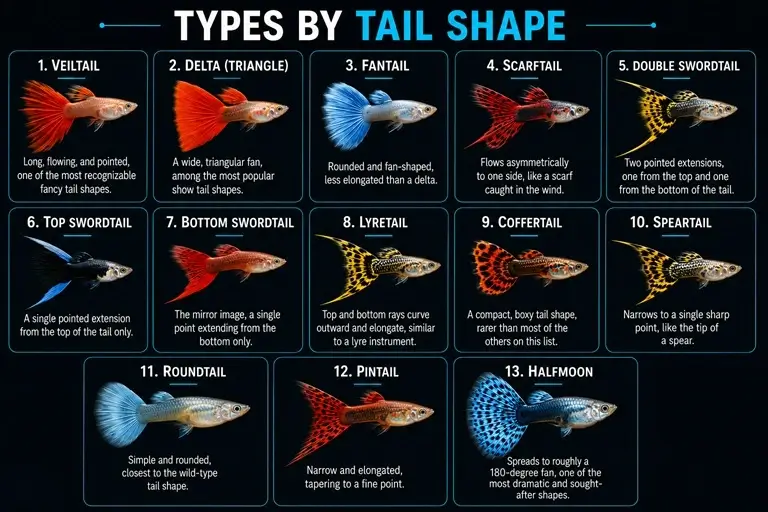
1) Veiltail Guppy
The Veiltail Guppy carries a long, flowing tail that tapers to a soft point, one of the oldest and most recognizable fancy tail shapes in the hobby. The veiltail guppy’s extended fin rays trail gracefully behind the fish as it swims, though the extra length adds drag and can slow the fish down slightly. It’s a common starting point for breeders working with other fancy traits.
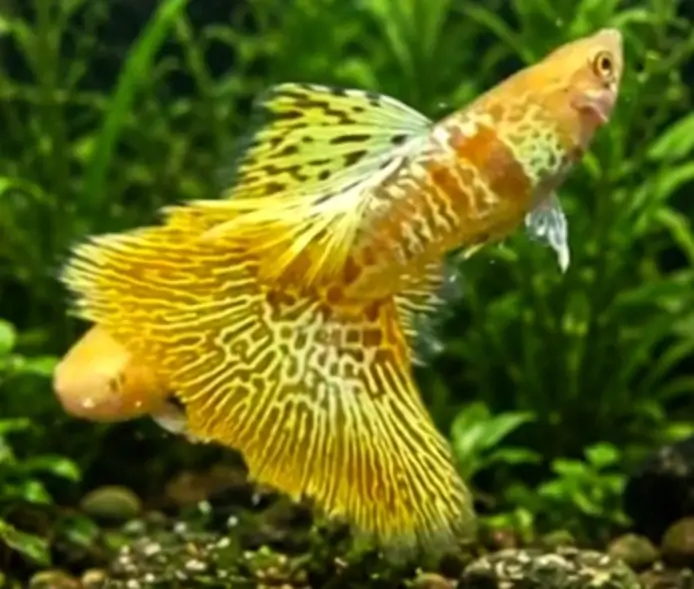
2) Delta Guppy (Triangle)
The Delta Guppy fans out into a wide, triangular shape, making it one of the most popular tail types at guppy shows. The straight edges and broad spread show off body color and pattern especially well, which is part of why it’s a favorite among breeders chasing show points. It sits between the Halfmoon and Fantail in overall spread.
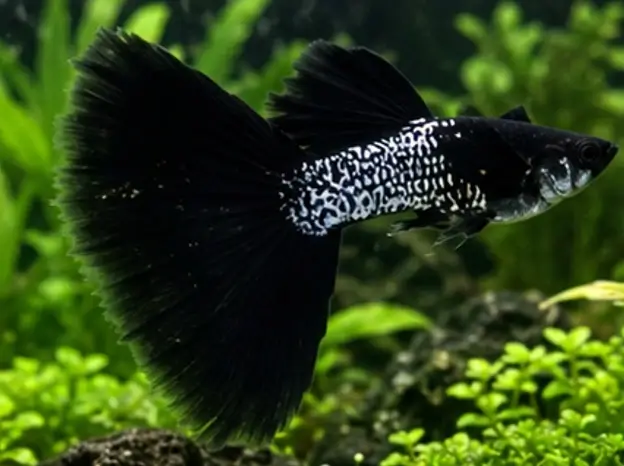
3) Halfmoon Guppy
The Halfmoon Guppy spreads its tail to roughly a 180-degree fan, the widest spread of any fancy tail shape and one of the most sought-after in competitive circles. Achieving a clean, symmetrical half-moon spread takes careful, deliberate line-breeding over several generations, the same trait-focused approach covered in our guppy breeding guide. Body proportions matter here too, a heavy tail on a small body looks unbalanced to judges.
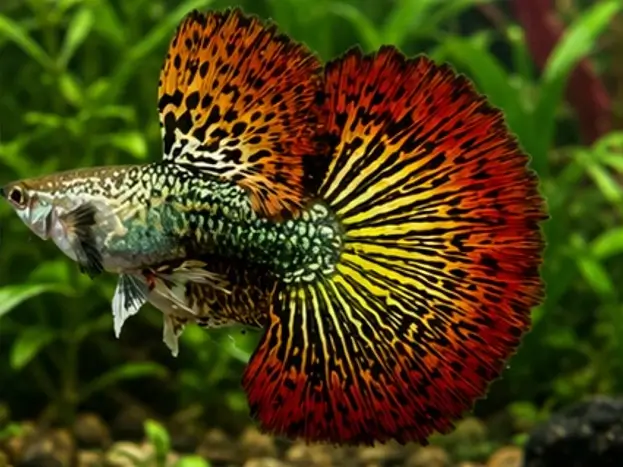
4) Double Swordtail Guppy
The Double Swordtail Guppy grows two pointed extensions, one from the top of the tail and one from the bottom, giving it a distinctive forked silhouette. Both sword rays should ideally match in length for a balanced look, which is harder to achieve consistently than it sounds. This shape is less common in general pet stores than Delta or Veiltail Guppy.
5) Top Swordtail Guppy
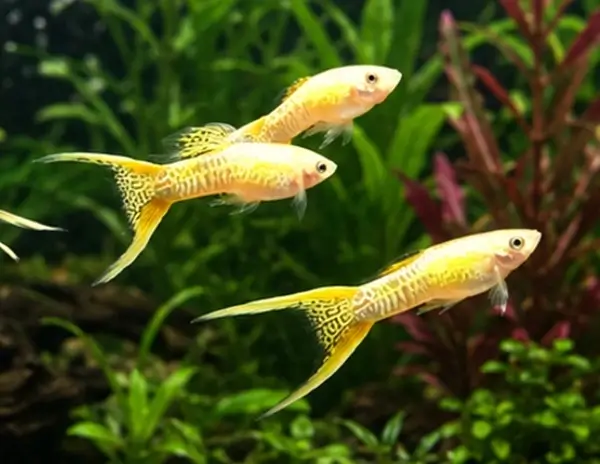
The Top Swordtail Guppy grows a single pointed ray extending from the upper edge of the tail only, leaving the bottom edge rounded or straight. This asymmetry gives it a sleeker, more angular profile than the Double Swordtail Guppy. It’s bred in the same wide range of colors and patterns as other tail types.
6) Bottom Swordtail Guppy
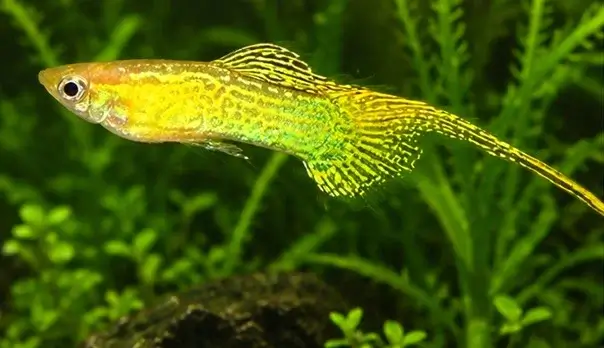
The Bottom Swordtail Guppy is the mirror image of the Top Swordtail, with the single pointed ray extending from the lower edge of the tail instead. It’s one of the rarer guppies in the trade than its top-swordtail guppy counterpart, since fewer breeders maintain the line. The point should stay clean and unbranched to meet show standards.
7) Lyretail Guppy
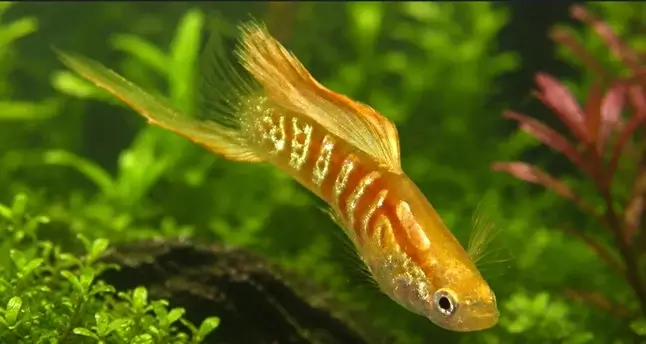
The Lyretail Guppy has top and bottom tail rays that curve outward and elongate, echoing the shape of a lyre instrument. The curved rays give it more visual movement in the water than a straight-edged tail shape. It’s often bred alongside bold color patterns since the open tail structure shows color clearly.
8) Spade Tail Guppy (Coffertail)
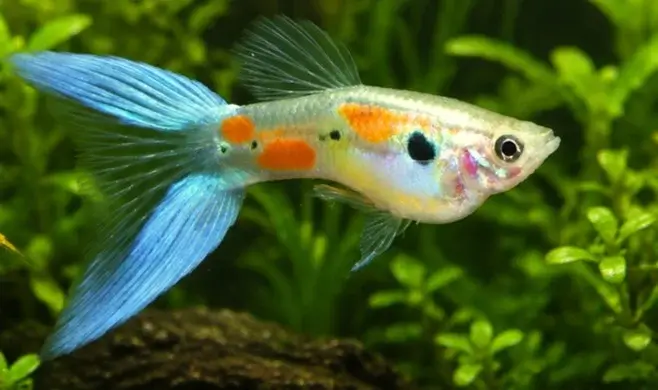
The Spade Tail Guppy, also called Coffertail, has a compact, spade tail shape that stands apart from the fanned or pointed shapes on this list. It’s rarer than most other tail types and less commonly stocked by general pet retailers. The squared-off edge gives the fish a sturdier, more geometric look overall.
9) Speartail Guppy
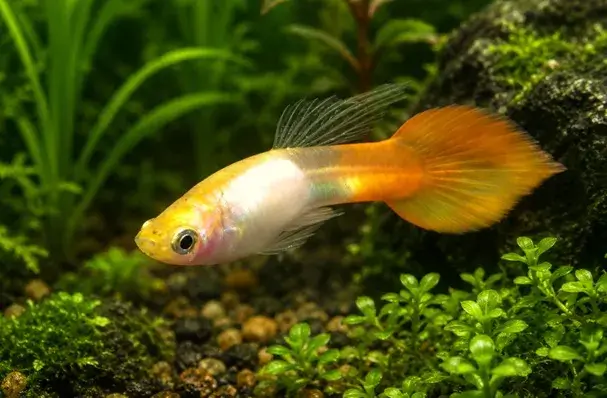
The Speartail Guppy narrows to a single sharp point at the center of the tail, similar in concept to the tip of a spear. The narrow profile is less common in show classes than the wider fan shapes but still turns up in specialty breeder stock. It reads as a streamlined, almost torpedo-shaped tail in the water.
10) Fantail Guppy
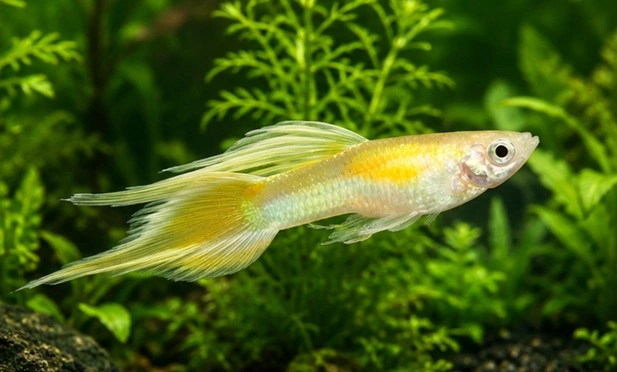
The Fantail Guppy has a rounded, fan-shaped tail that’s less elongated and less angular than a Delta. The softer curve gives it a fuller, more rounded silhouette overall. It’s a common entry point tail shape, often crossed with a wide range of colors and body patterns.
11) Roundtail Guppy
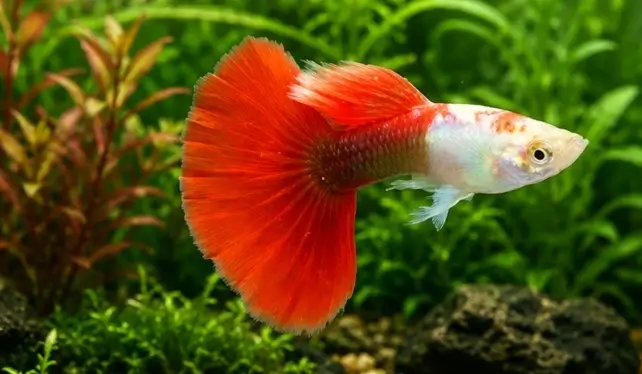
The Roundtail Guppy has a simple, rounded tail shape, the closest fancy classification to the wild-type Poecilia reticulata tail. It lacks the dramatic spread of a Halfmoon or Delta tail guppy, which makes it a practical, lower-maintenance choice for casual keepers. Many beginner-friendly color strains are sold with this tail shape.
12) Pintail Guppy
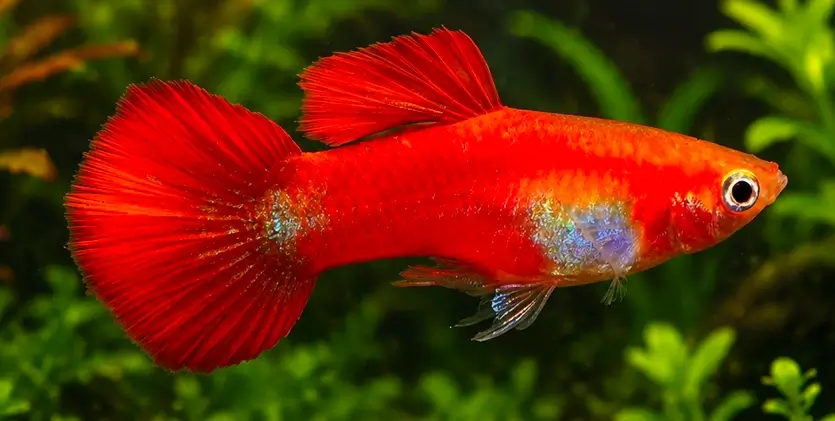
The Pintail Guppy has a narrow, elongated tail that tapers gradually to a fine point, giving the fish a slender, streamlined outline. It’s visually similar to the Speartail but generally longer and less abrupt in its taper. This shape isn’t as widely bred as Delta Guppy or Veiltail Guppy, so it takes some searching to find quality stock.
Types of Fancy Guppies by Body Pattern
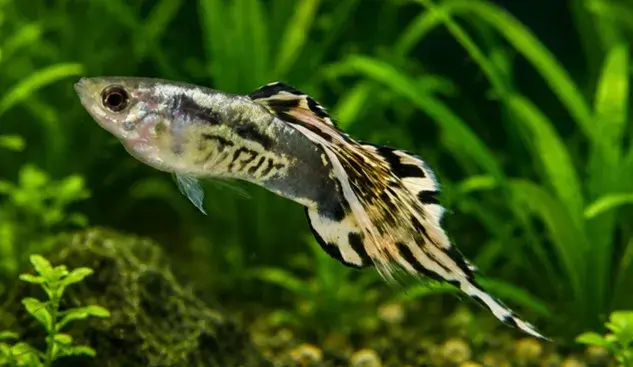
Body pattern describes how color and dark pigment are arranged across the fish’s body, independent of tail shape or color itself.
1) Tuxedo Guppy
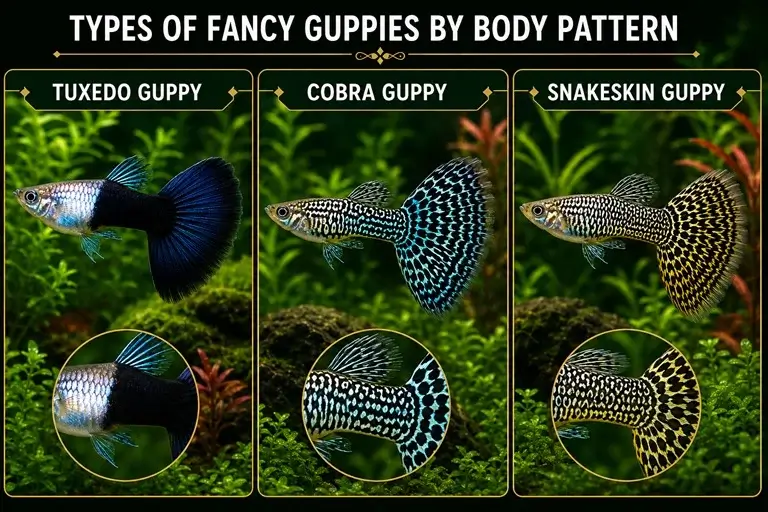
The Tuxedo Guppy has a dark, contrasting band covering the rear half of the body, resembling a tuxedo jacket, while the front half stays a different base color. The sharper and cleaner the dividing line, the more prized the fish is considered among breeders. It’s bred across several named color variants, including the Red Tuxedo Guppy, Yellow Tuxedo Guppy, and Blue Tuxedo Guppy, each covered in more depth on our full Tuxedo Guppy guide.
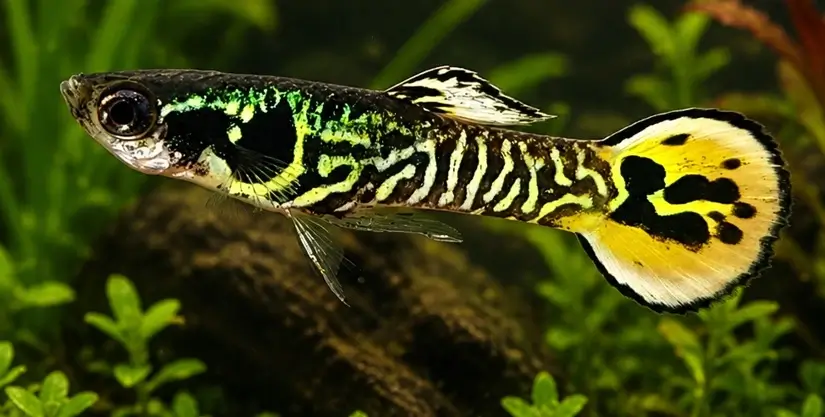
2) Cobra Guppy
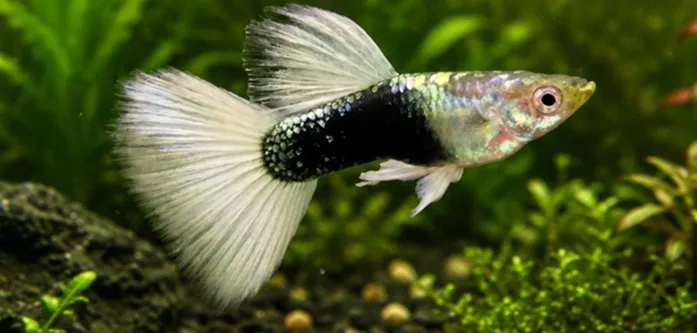
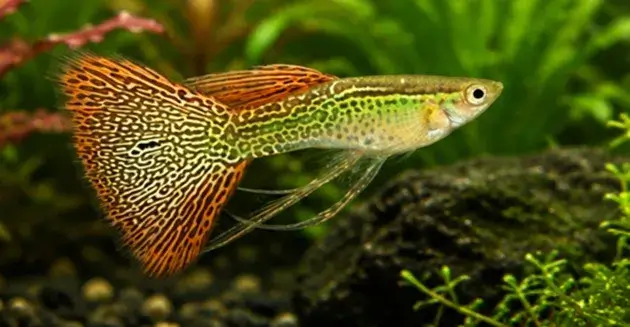
The Cobra Guppy carries an intricate, snake-like webbing pattern across the body, prized for how detailed and clean the pattern can get in a well-bred line. The name comes directly from how closely the fine webbing resembles snake skin markings, a naming pattern common across fancy strains. Breeders select for pattern density and clarity generation after generation.
3) Snakeskin Guppy
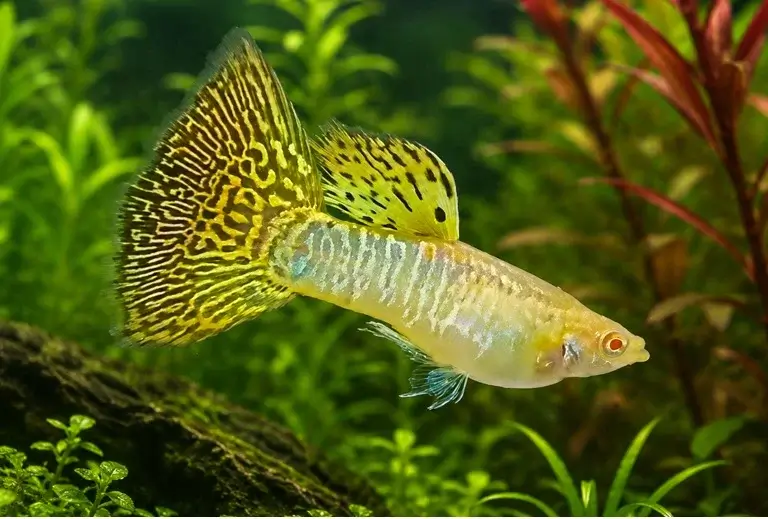
The Snakeskin Guppy carries a fine, scaled webbing pattern very similar in concept to the Cobra Guppy, and the two terms are sometimes used interchangeably by hobbyists. Where breeders do draw a line between them, Cobra usually describes a more intricate, tighter version of the same pattern. Both patterns show up across a wide range of base colors.
Types of Fancy Guppies by Tail and Body Pattern Combined
Some patterns specifically describe how the body pattern extends into, or interacts with, the tail.
1) Glass Guppy (Glassbelly)
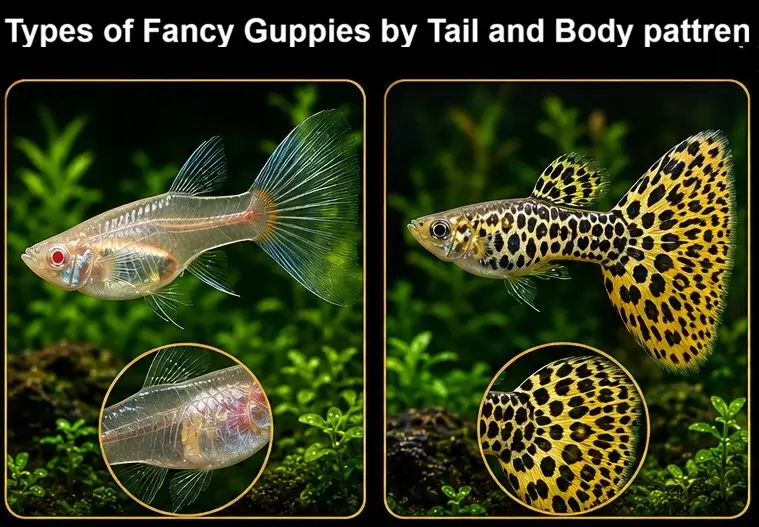
The Glass Guppy carries a real genetic trait, not a marketing name: these fish don’t produce guanine, the silvery pigment that normally reflects light and keeps a fish’s body opaque. Without it, the body becomes noticeably see-through. Glass guppies are commonly bred as albinos, and a true “see-thru” guppy lacking guanine, melanin, and other major pigment cells entirely exists mainly as a research model fish rather than a hobby staple.
2) Leopard Guppy
The Leopard Guppy shows irregular spotting scattered across the body, similar in concept to the markings on a leopard’s coat. No two Leopard Guppies show quite the same spotting arrangement, which gives each fish some individual character. It pairs well with a range of bright base colors that make the spotting stand out.
3) Mosaic Guppy
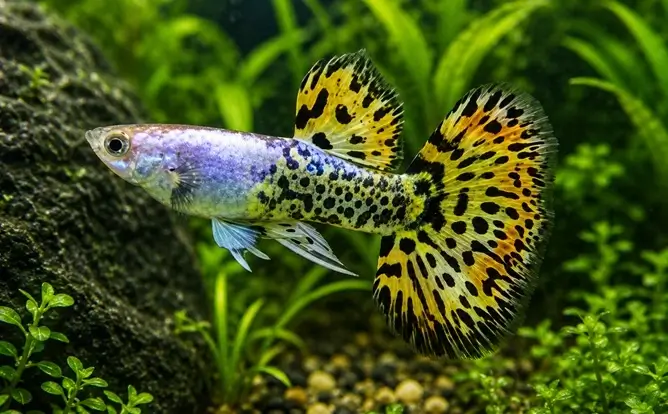
The Mosaic Guppy shows a broken, scattered pattern of color spread across the tail, with no two fish turning out quite identical. The randomness of the pattern is part of the appeal, each fish is effectively one of a kind. It’s most striking in tail shapes with a wide spread, like Delta or Halfmoon, where there’s more surface area to show it off.
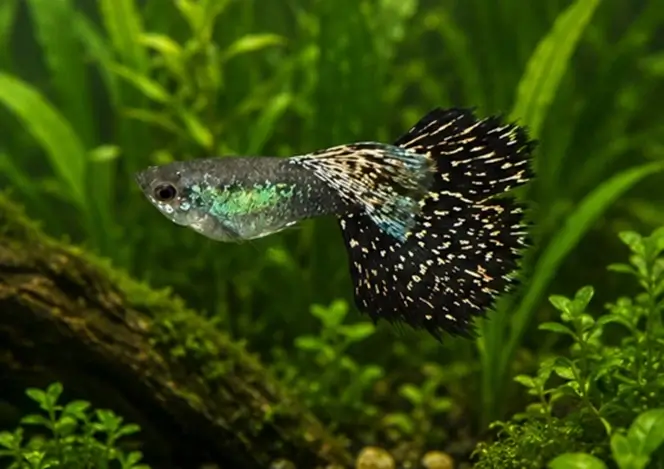
4) Lace Guppy
The Lace Guppy carries a fine, web-like pattern similar in spirit to the Cobra Guppy, but typically finer and more delicate in its detail. The lighter, thinner webbing gives it a softer overall look compared to the bolder Cobra pattern. It’s often bred into pastel or lighter base colors where the fine detail is easiest to see.
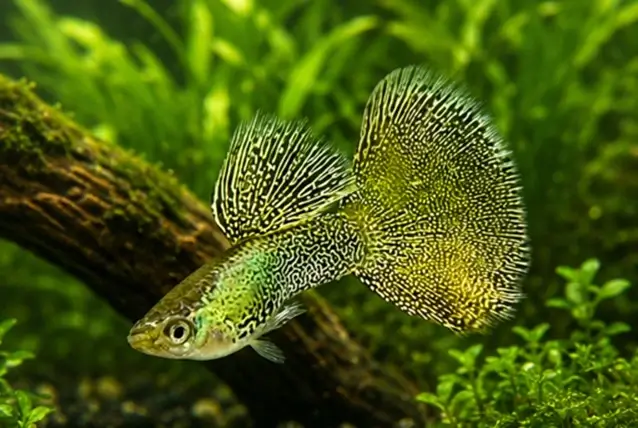
Types of Fancy Guppies by Color
Color is where the largest number of named types live, and where show standards get very specific. Most competitive judging splits color guppies into solid, bi-colored, and multi-colored classes based roughly on how much of the body a secondary color covers, a fish needs a meaningful, consistent secondary color presence to qualify as bi-colored rather than solid, and several distinct colors to qualify as multi-colored. If your guppy’s color looks like it’s fading rather than showing a recognized pattern, our guide to guppies losing color covers the common causes.

1) Albino Guppy
The Albino Guppy lacks melanin, the black pigment, entirely across its body, and is always paired with red or pink eyes as a result. This trait is bred across many different tail shapes and body patterns rather than existing as one fixed look. Albino lines tend to show colors like red, yellow, and orange especially vividly, since there’s no dark pigment competing underneath.
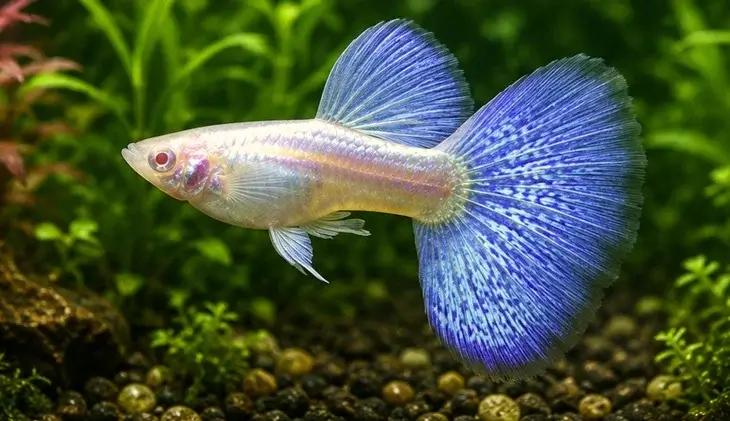
2) White Guppy
The White Guppy has a clean, pale body color, and it sometimes overlaps with what shows classify separately as Platinum. Getting a truly uniform white body, without patches of shimmer or color breaking through, takes careful line selection over generations. It’s a popular base for breeders layering in patterns like Tuxedo or Cobra.
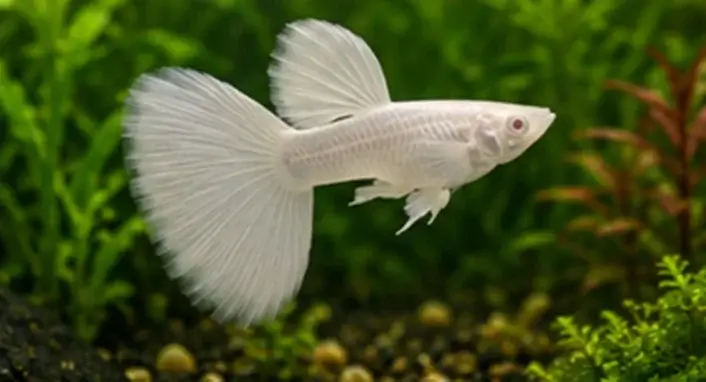
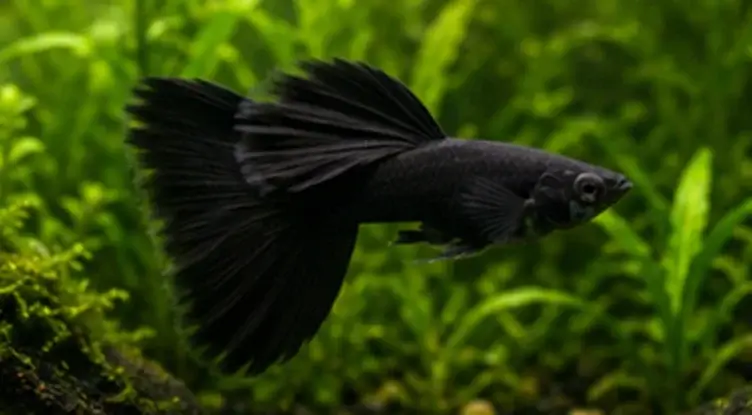
3) Black Guppy
The Black Guppy carries a solid, deep black color across the entire body, with no secondary color breaking through. Achieving a fully solid black, rather than black with hints of another shade underneath, is one of the harder color goals in the hobby. It’s often used as the contrasting half in Half-Black variants.
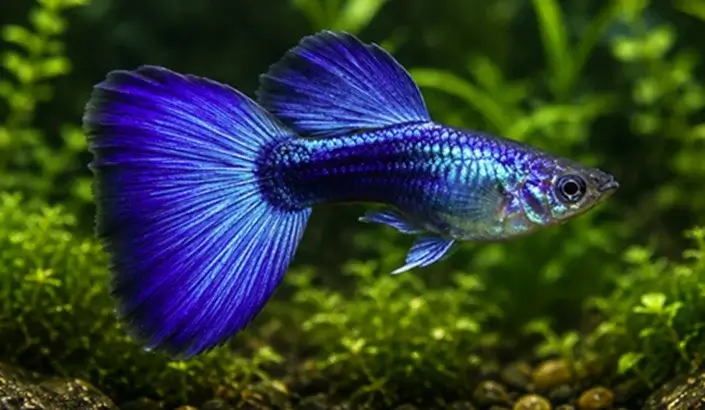
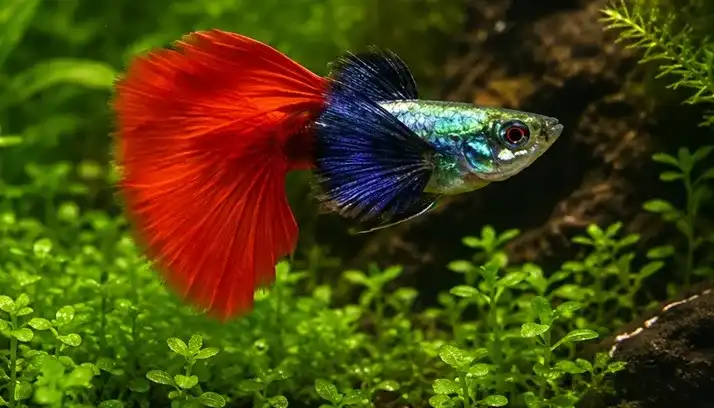
4) Blue Guppy
The Blue Guppy gets its metallic blue sheen from iridophores, light-reflecting cells in the skin, rather than from a true blue pigment. Because the color comes from how light bounces off these cells, the shade can shift slightly depending on lighting and viewing angle. It’s one of the most widely bred and recognized fancy guppy colors.
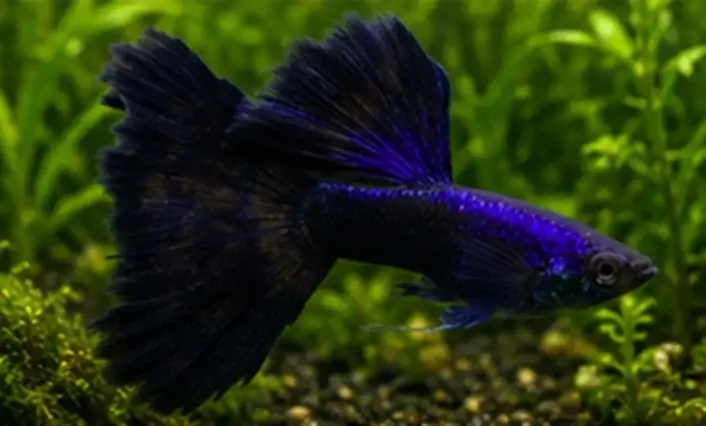
5) Neon Blue Guppy
The Neon Blue Guppy is a brighter, more saturated version of the standard Blue Guppy, with a more intense iridophore concentration behind the color. Under good lighting, the color reads almost fluorescent compared to standard blue lines. It’s frequently paired with Half-Black patterning to sharpen the contrast further.
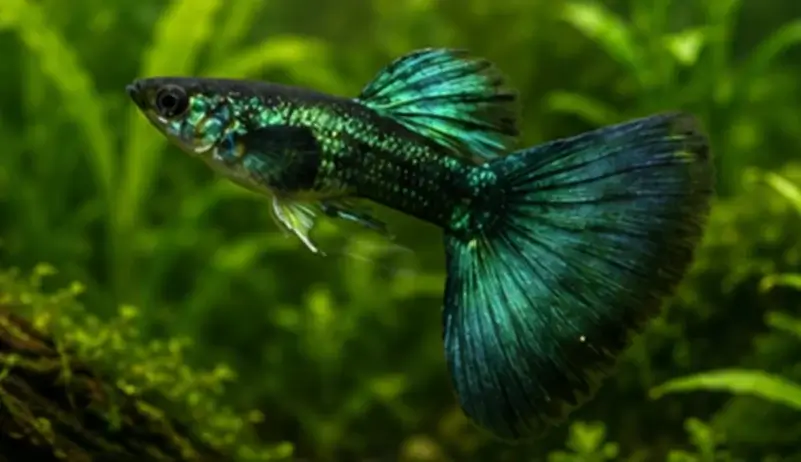
6) Green Guppy
The Green Guppy gets its metallic green shade from the same iridophore-based process as Blue, just with a different light-reflecting arrangement in the skin cells. It’s less commonly bred than blue or red lines, which makes clean, consistent green strains a bit harder to source. The color often shows a slight shift toward gold or blue depending on lighting.
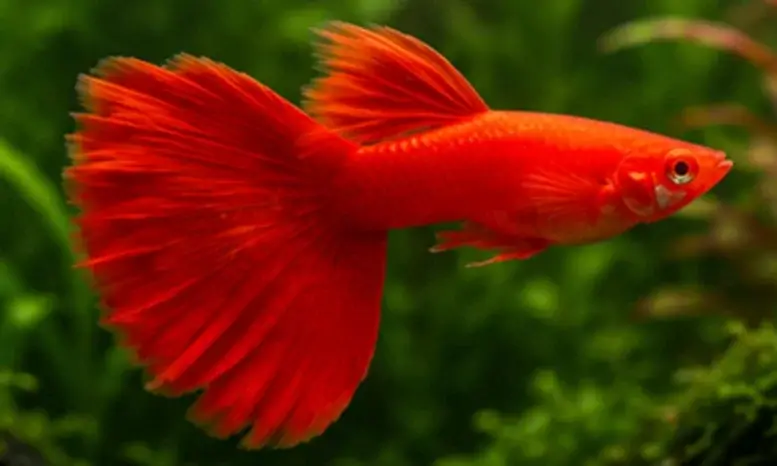
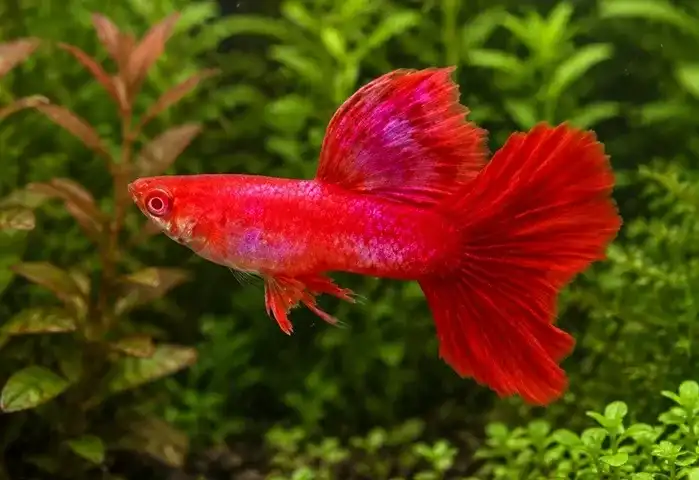
7) Red Guppy
The Red Guppy shows a solid, vivid red across the body, and it’s one of the most popular and widely bred fancy guppy colors. Strong, saturated red lines are relatively easy to find compared to some of the rarer colors on this list. It’s a common base for Cobra, Tuxedo, and Half-Black variants alike, including the dedicated Red Tuxedo Guppy line.
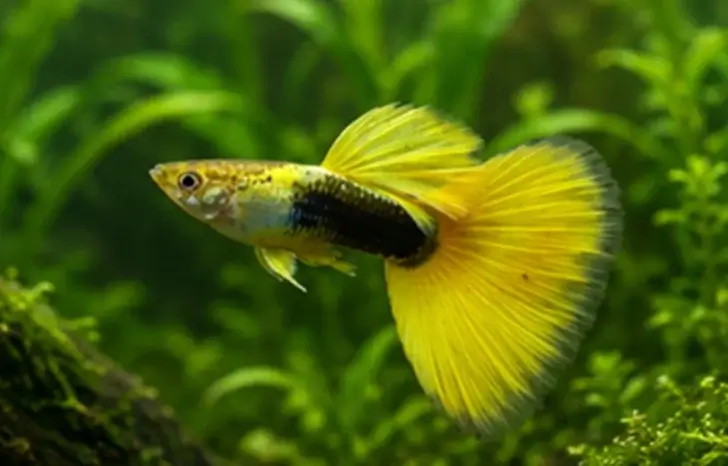
8) Yellow Guppy
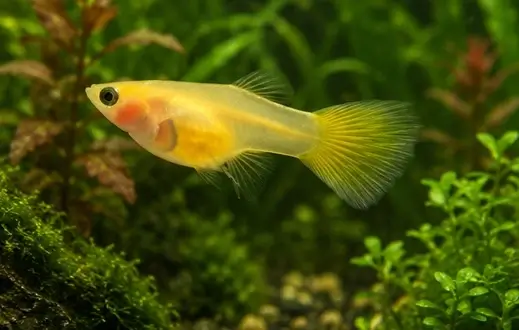
The Yellow Guppy carries a solid yellow body color, a recognized show class but noticeably less common than red or blue lines. Clean, consistent yellow strains take more deliberate breeding to maintain, since the color can fade or mix with other pigments over generations if not selected carefully. It’s also bred into pattern strains like the Yellow Tuxedo Guppy, and stands out well against darker tank substrates and backgrounds.
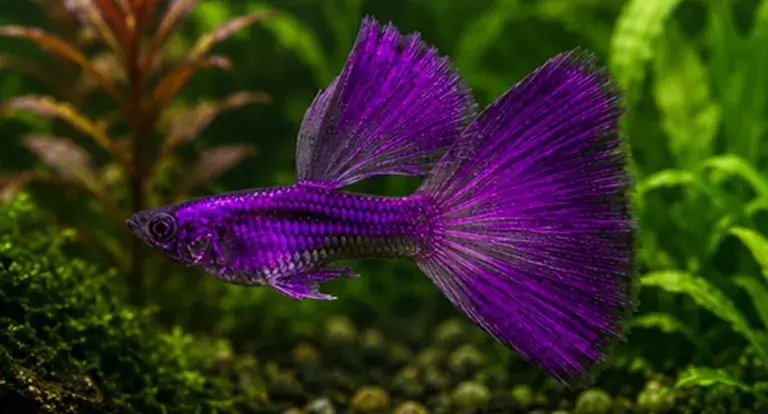
9) Purple Guppy
The Purple Guppy is another iridophore-driven color, producing a metallic purple sheen rather than a true pigment-based purple. It’s rarer than blue or green in most retail stock, since maintaining a consistent purple line takes tighter selective breeding. The shade can lean more pink or more blue depending on the specific strain.
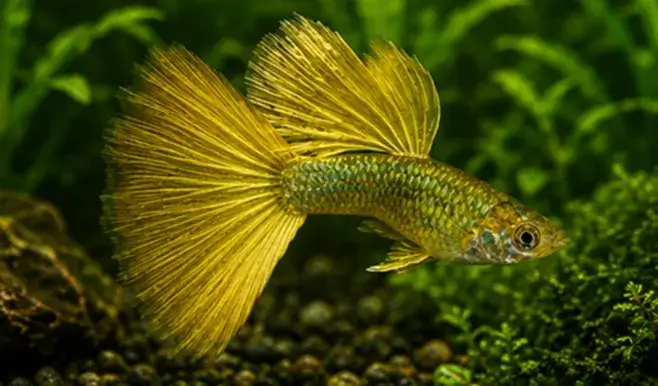
10) Bronze Guppy and Golden Guppy
The Bronze Guppy and Golden Guppy share warm, metallic tones and are mainly distinguished from each other by depth and richness of shade. Bronze tends to run darker and more coppery, while Golden reads lighter and brighter. Both are bred across multiple tail shapes and often combined with patterns like Cobra or Tuxedo.
11) Half-Black Guppy
The Half-Black Guppy has one color across the front half of the body and solid black across the back half, in combinations like Half-Black Blue, Half-Black Red, or Half-Black Yellow. The dividing line between the two halves should stay clean and consistent for show quality. This pattern is one of the most widely bred and recognized in the fancy guppy hobby.
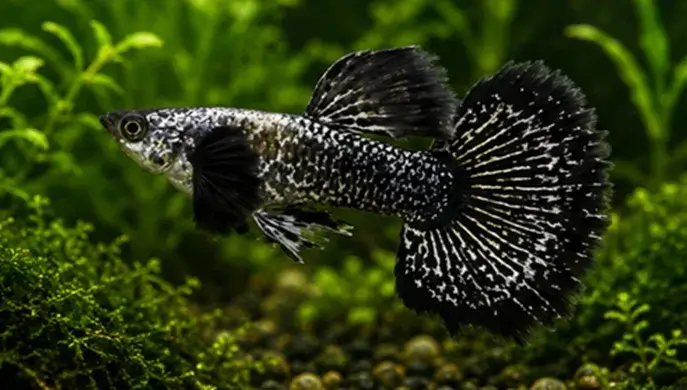
12) Solid Guppy
The Solid Guppy shows a single, uniform color across the entire body with no secondary color or pattern present. It’s the baseline color class in most show systems, against which Bi-Colored and Multi-Colored entries are judged for how much additional color they carry. A clean Solid Guppy still needs even, consistent coverage to score well.
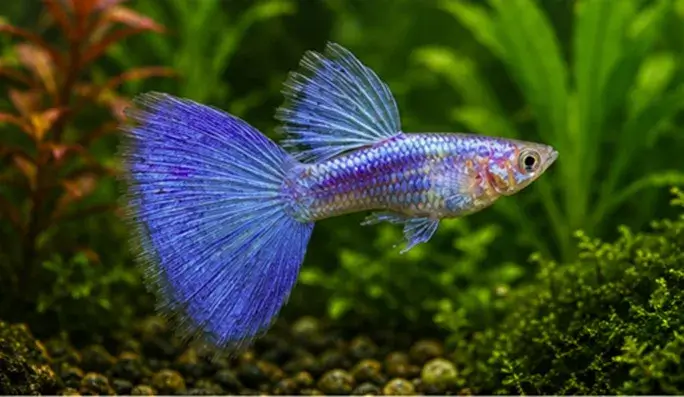
13) Bi-Colored Guppy
The Bi-Colored Guppy carries two distinct colors present in meaningful, consistent amounts across the body, rather than one color with a faint hint of another. Show judges look for a clear, balanced presence of both colors rather than one dominating. It sits between Solid and Multi-Colored in most competitive classification systems.
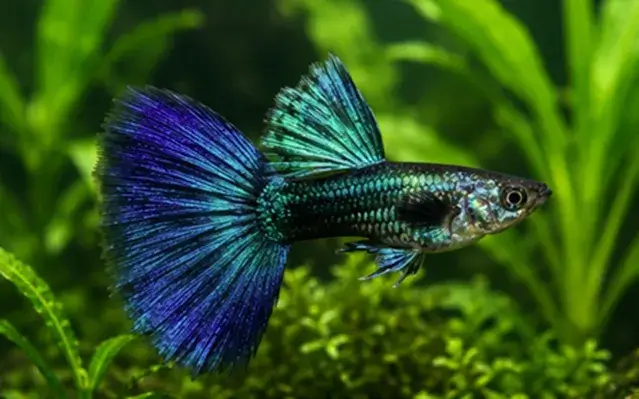
14) Multi-Colored Guppy
The Multi-Colored Guppy shows three or more distinct colors on a single fish, making it one of the more visually striking color classes in the hobby. Breeding consistent multi-color lines is harder than it sounds, since colors can drift or blend unpredictably across generations. These fish are often the standout entries in color-focused show classes.
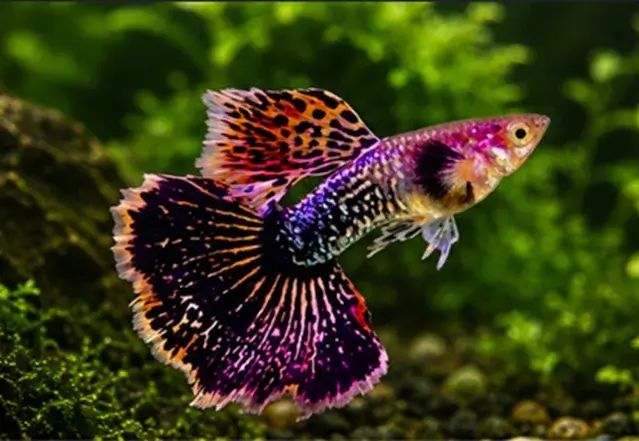
15) Metal Guppy
The Metal Guppy carries a strong metallic sheen produced by a high concentration of iridophores, giving the body a reflective, almost polished look. This isn’t a camouflage trait, it’s purely a pigment-cell density effect that breeders select for visually. It’s often layered with other colors to create a metallic version of an existing strain.
16) Koi Guppy
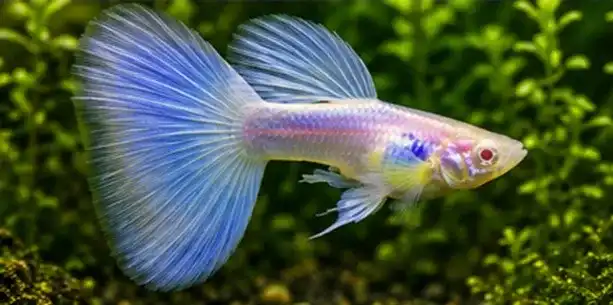
The Koi Guppy shows a red, white, and black or orange pattern styled after ornamental koi fish, another example of breeders naming a strain after a creature it visually resembles. The pattern needs distinct, clean patches of each color to be recognized as true Koi rather than a random mix. It’s a popular choice for keepers who want a pond-fish look in a smaller tank.
17) Panda Guppy
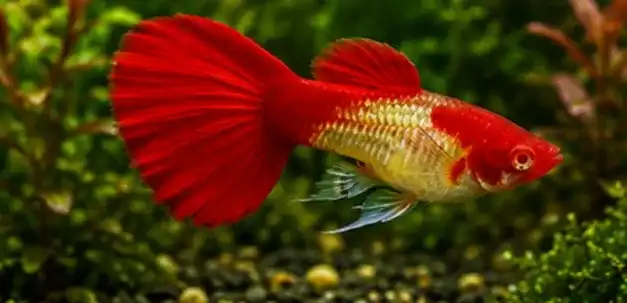
The Panda Guppy carries a striking black-and-white pattern, another strain named after the animal it visually resembles, and the pattern shows up more strongly and more visibly in males than females, part of the broader color-difference pattern covered in our male vs. female guppy guide. Clean, well-separated black and white patches are what breeders select for in this line. It’s still a relatively newer strain compared to long-established colors like Red or Blue.
18) Moscow Guppy
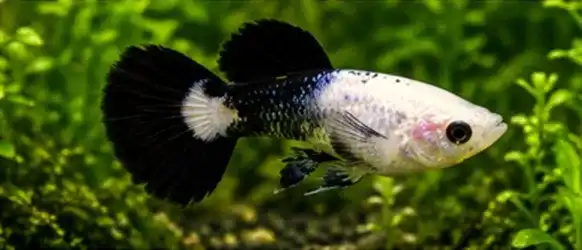
The Moscow Guppy carries a solid, deep metallic color, especially prized in purple, blue, and green variants. The strain traces its name to its development origin, another example of a fancy guppy line named for where or by whom it was first established. Moscow lines are known for dense, saturated color coverage rather than lighter or patterned variants.
19) Platinum Guppy
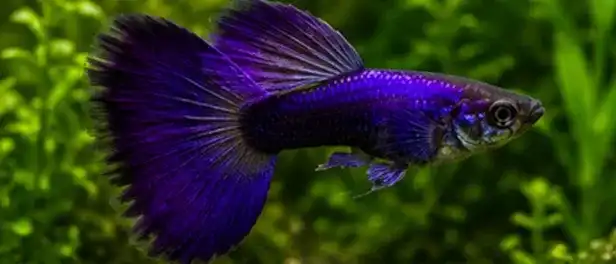
The Platinum Guppy has a bright, pearlescent white or silver body with a distinct shimmer that separates it from a standard White Guppy. The pearlescent effect comes from a dense layer of reflective skin cells rather than pigment alone. It’s often used as a clean, neutral base for breeders layering in patterns like Cobra or Tuxedo.
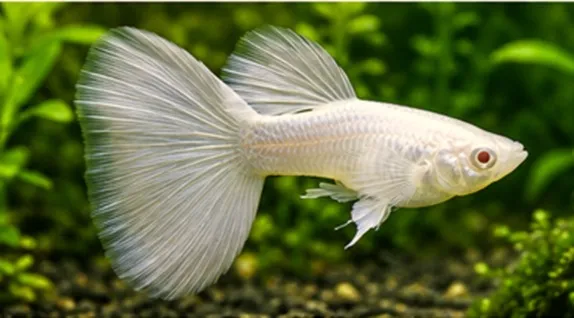
20) Dragon Head Guppy
The Dragon Head Guppy carries a mutation that lets the bright, metallic “Japan Blue” trait show up specifically on the head, rather than just the body or tail. It’s often combined with other color and pattern traits for a more dramatic overall look. The head-specific coloring is what sets this strain apart from standard Blue or Metal lines.
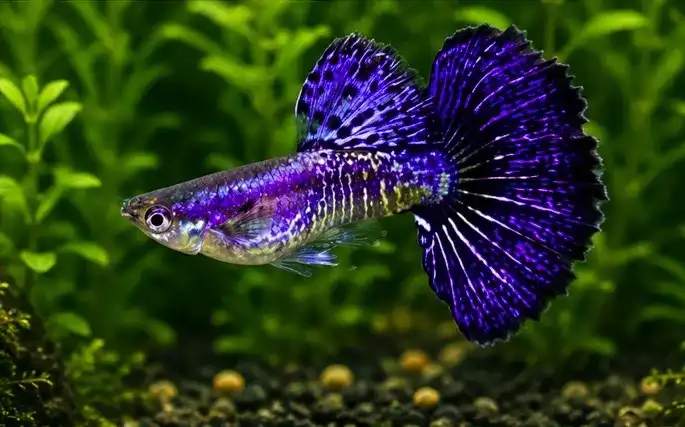
21) Lazuli Guppy
The Lazuli Guppy is a light blue strain mainly developed by Japanese breeders, and the trait is carried on the Y chromosome, meaning it passes from father to son but isn’t reliably visible in females, similar in inheritance logic to the sex-linked differences covered in our male vs. female guppy guide. That inheritance pattern makes it a truly distinct case compared to most other fancy guppy colors, which show up in both sexes. It remains a specialty strain rather than a common pet-store find.
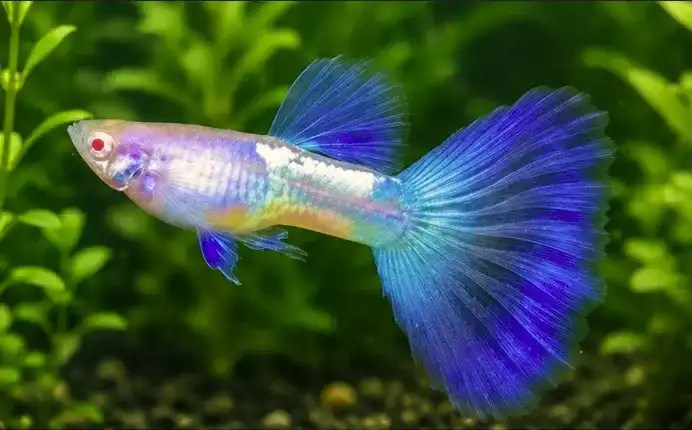
Types of Fancy Guppies by Eye Color
Eye color is its own small classification, separate from body color entirely, and one of the rarer categories to find.
1) Real Red Eye Guppy (RRE)
The Real Red Eye Guppy, or RRE, has vivid red eyes without carrying the albino gene at all, a distinct genetic trait from albinism. RRE guppies trace back to early 20th-century Germany, originally produced by crossing albino guppies with other red-colored strains, and tend to run smaller in body size than most other fancy types. Modern genetic research points to a gene called OCA2 as a likely driver of the red-eyed trait in domestic guppies.
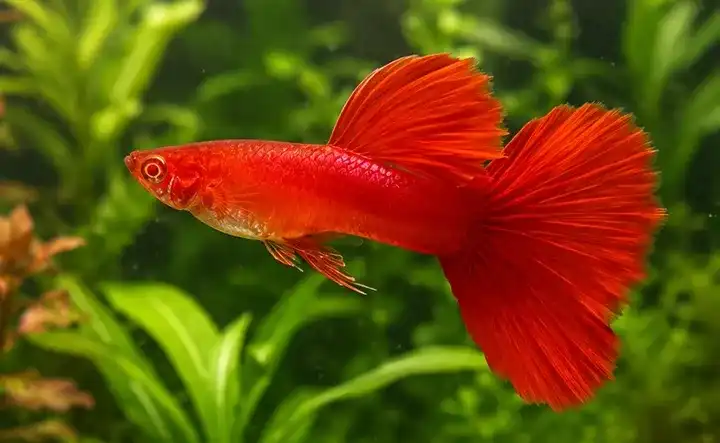
2) Real Red Eye Albino Guppy (RREA)
The Real Red Eye Albino Guppy, or RREA, combines the red-eye trait with true albinism, producing pink eyes alongside a typically pale or softly colored body. It’s often paired with patterns like Snakeskin or Lace to add visual interest to the otherwise pale coloring. RREA is a separate classification from standard RRE, since it stacks two distinct genetic traits together.
Types of Fancy Guppies by Pectoral Fin
A rarer classification based on the side pectoral fins rather than the tail or dorsal fin.
1) Dumbo Ear Guppy
The Dumbo Ear Guppy has enlarged pectoral fins that flare out from the sides of the body, resembling ears, another case of a fancy guppy strain named after the visual it resembles. It’s available across many different colors and patterns but never especially common in general stores, since the large fins are difficult to breed reliably. Specialty breeders are typically the more consistent source for this strain.
Endler-Guppy Hybrids
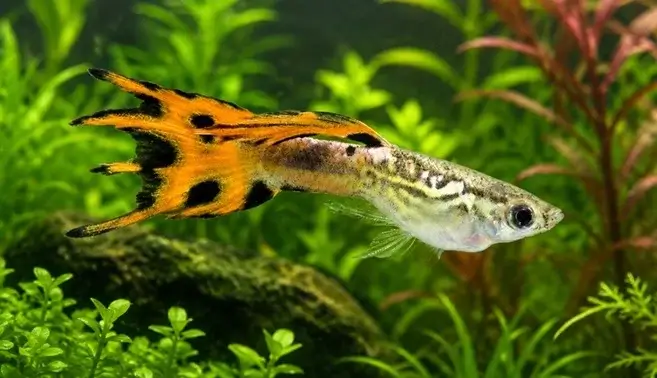
Some fancy-looking fish sold as “Endlers” aren’t pure Endlers at all. Endlers and guppies are close enough genetically to cross and produce fully fertile offspring, and these hybrids are sold under names like Peacock, Tiger, Snake, Paradise, Sword, or Flame Tail Endler. The Tiger Endler, for example, is a documented cross between an Endler and the Galaxy Medusa Guppy strain.
Serious Endler breeders track lineage carefully to avoid diluting pure lines, using a grading system: N Class are documented, pure Endlers; P Class look identical but have no verified pedigree; K Class are confirmed hybrids with guppy ancestry. If you specifically want a true Endler rather than a guppy hybrid sold under an Endler name, buying from a breeder who can document N Class lineage is the only reliable way to know.
What Are “Mutt” Guppies?
“Mutt” is the informal term for fish culled from a breeder’s line because they don’t show the trait the breeder was selecting for. There’s nothing wrong with a Mutt Guppy, it’s healthy and often still attractive, it just doesn’t match a recognized strain closely enough to be sold or shown as one.
Mutts are also exactly what happens when a fancy line is left to breed unmanaged for several generations, colors and patterns gradually mix and drift, which is why maintaining a named strain takes deliberate, ongoing line-breeding rather than just letting fish breed freely. Our guppy breeding guide covers how that management actually works, and our guppy fry guide covers what to expect from the resulting offspring.
Frequently Asked Questions
How many types of fancy guppies are there?
There’s no single fixed number, since breeders are constantly developing new color and pattern combinations, but most classification systems recognize well over 50 named types across tail shape, body pattern, color, eye color, and fin shape. Our fancy guppy guide covers the broader category beyond just classification.
What’s the difference between Cobra and Snakeskin guppies?
They describe a very similar fine, web-like body pattern, and the two terms are sometimes used interchangeably. Where breeders do distinguish them, Cobra typically refers to a more intricate, detailed version of the pattern.
What is a Glass Guppy?
A guppy with a genetic trait that prevents it from producing guanine, the pigment that normally makes a fish’s body reflective and opaque. Without it, the body becomes noticeably see-through. They’re commonly bred as albinos.
Are Dumbo Ear Guppies rare?
They’re uncommon in general pet stores, since the large pectoral fins are difficult to breed reliably, but they’re not the rarest type out there, specialty breeders carry them in multiple colors.
What’s the rarest fancy guppy eye color?
Real Red Eye (RRE) and Real Red Eye Albino (RREA) guppies are the most distinct eye-color categories, and RRE specifically is considered a genuine rarity since it’s a separate genetic trait from albinism rather than a byproduct of it.
Is an Endler the same as a fancy guppy?
No, Endlers are a separate species, though closely related, and the two can crossbreed. Many fish sold in stores as “Endlers” are actually Endler-guppy hybrids rather than pure Endlers.
Final Thoughts
The sheer number of fancy guppy types can look overwhelming at first, but it breaks down cleanly once you separate tail shape, body pattern, color, eye color, and fin shape as independent categories rather than one big list. Most fish you’ll actually encounter combine two or three of these traits at once, which is exactly what gives the hobby its near-endless variety. For the full picture of fancy guppy care beyond classification, see our fancy guppy guide, our fancy guppy lifespan guide, and our general guppy care guide.