Choosing the best tank mates for Guppies can make or break a community aquarium. Guppies are peaceful, social fish, but pair them with the wrong or aggressive species and you will quickly see fin nipping, constant chasing, pale colors, and stressed fish hiding in corners.
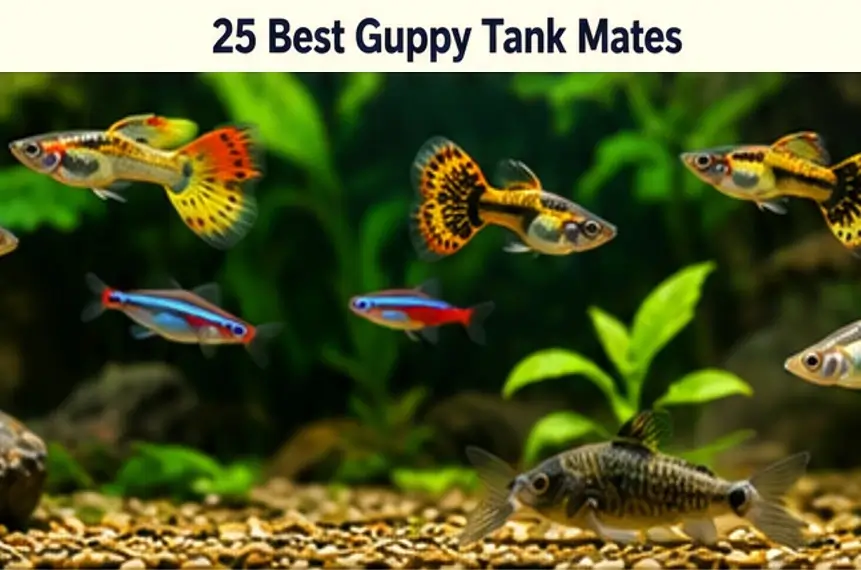
With the right companions, Guppies thrive, display brighter colors, and stay active all day. In this guide, I will explain to you the 25 proven guppy tank mates that work in real aquariums.
Quick Navigation
➜ What Makes a Good Guppy Tank Mate?
➜ Quick Compatibility Chart
➜ 25 Best Guppy Tank Mates
➜ Best Tank Mates for Fancy Guppies
➜ Guppy Tank Mates for 10 Gallon Tanks
➜ Guppy Tank Mates for 20 Gallon Tanks
➜ Do Tank Mates Eat Guppy Fry?
➜ Fish to Avoid with Guppies
➜ Signs Your Tank Mates Are Not Compatible
➜ Frequently Asked Questions
What Makes a Good Guppy Tank Mate?
The best guppy tank mates share many things like a peaceful temperament, a similar preferred temperature range, and a small enough size that they pose no threat to guppies or their fry.
Compatible tank mates should ideally:
1) Peaceful Temperament and non-aggressive
2) No Fin-Nipping
3) Live in 72–82°F water temperature and pH 7.0–8.0
4) Should be able to live in a different water column zone so that they don’t directly compete for top-level space and food
5) Stay smaller in size not to intimidate guppies
6) Dietary Match between them
7) No Crossbreeding as some livebearer combinations risk sterile hybrid fry
Fancy guppies need extra consideration. Their large, flowing tails make them slow swimmers and easy targets for fin nippers. Any fish with a reputation for nipping — even mild cases — should be avoided in fancy guppy tanks.
A well-matched community tank reduces stress, which directly leads to brighter colors, better appetite, and longer lifespans. If your guppies are hiding frequently or behaving nervously, read our guide on why guppies hide.
Quick Compatibility Chart
| Fish | Compatibility | Min. Tank Size | Safe for Fancy Guppies? | Eats Fry? |
|---|---|---|---|---|
| Neon Tetras | Excellent | 10 gallon | Yes | Sometimes |
| Corydoras Catfish | Excellent | 10 gallon | Yes | No |
| Platies | Excellent | 10 gallon | Yes | Sometimes |
| Mollies | Good | 20 gallon | Usually | Yes |
| Endlers | Excellent | 10 gallon | Yes | Sometimes |
| Cherry Barbs | Good | 15 gallon | Usually | Rarely |
| Harlequin Rasboras | Excellent | 15 gallon | Yes | Rarely |
| Honey Gouramis | Good | 15 gallon | Yes | Rarely |
| Kuhli Loaches | Excellent | 20 gallon | Yes | No |
| Otocinclus Catfish | Excellent | 10 gallon | Yes | No |
| Ember Tetras | Excellent | 10 gallon | Yes | Rarely |
| Cardinal Tetras | Excellent | 10 gallon | Yes | Sometimes |
| Zebra Danios | Good | 10 gallon | No | Sometimes |
| Bristlenose Plecos | Good | 20 gallon | Yes | No |
| Amano Shrimp | Excellent | 10 gallon | Yes | No |
| Cherry Shrimp | Excellent | 5 gallon | Yes | No |
| Nerite Snails | Excellent | 5 gallon | Yes | No |
| Mystery Snails | Excellent | 10 gallon | Yes | No |
| Swordtails | Good | 20 gallon | Usually | Sometimes |
| Panda Corydoras | Excellent | 10 gallon | Yes | No |
| Rummy Nose Tetras | Excellent | 20 gallon | Yes | Sometimes |
| White Cloud Mountain Minnows | Fair | 10 gallon | Usually | Rarely |
| Celestial Pearl Danios | Excellent | 10 gallon | Yes | Rarely |
| Ghost Shrimp | Excellent | 5 gallon | Yes | No |
| Ramshorn Snails | Excellent | 5 gallon | Yes | No |
25 Best Guppy Tank Mates
1. Neon Tetras
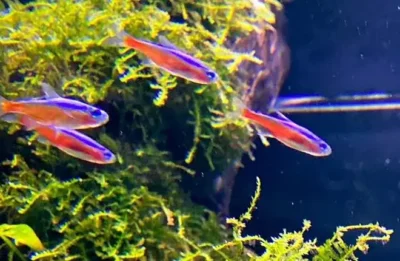
Neon tetras are one of the most popular guppy tank mates, and it’s easy to see why — both fish are peaceful, active at the same time of day, and their colors play off each other beautifully in a planted tank.
What works:
• Confident in a school: In a group of six or more, neon tetras stay busy and self-assured, swimming through the tank and essentially ignoring guppies entirely
• Safe size: Adult neon tetras stay small around 1.5 inches, so there’s no risk of them intimidating guppies
• Shared swimming zone without conflict: Both fish spend most of their time in the middle of the water column, but neon tetras aren’t territorial about it, so the two schools share the space without friction
Tank Setup Notes
• Keep neon tetras in a group of at least 6. A single fish or a pair becomes visibly stressed
• Live plants help neon tetras hold their color and serve as hiding spots for guppy fry and any neon tetra fry that hatch, while also easing the tank’s bioload
This is one of the safest, most beginner-friendly pairings for a Guppy community tank.
2. Corydoras Catfish
Corydoras are one of the best bottom dwellers you can add to a guppy tank. They are completely peaceful, spend their time cleaning up leftover food from the substrate, and never harass guppies at any tank level.
Different tank Zones:
• Guppies stay near the top and middle of the tank while corydoras stay almost exclusively at the bottom, so the two never compete for space or food
Water Conditions:
• Their water needs overlap comfortably too. Most common corydoras species tolerate 70–82°F and a pH of 6.0–8.0, well within guppy range
Peaceful Temperament:
• Both species are calm and non-aggressive.
• Corydoras will not nip at the long, flowing fins of fancy guppies
Size:
Corydoras reach an adult length of 1.5 to 4.5 inches and being complete bottom dwellers they dont intimidate Guppies.
Pygmy Cory : 0.7 to 1 inch (2 to 2.5 cm)
Panda Cory : 1.5 to 2 inches (4 to 5 cm)
Green Cory : 2.5 inches (6 cm)
Larger Species: Up to 3 to 4.5 inches (7.5 to 12 cm)
What to Know Before Adding Them:
• Keep corydoras in a group of 6. They are social species and schooling fish which enjoy being in groups.
• Pygmy, green, and panda corydoras are good picks if your tank is on the smaller side, since they stay especially compact
This is one of the most beginner-friendly pairings on this list, right alongside neon tetras.
3. Platies
Platies and guppies are both peaceful livebearers with nearly identical care needs, which makes them one of the most natural pairings on this list. Platies come in a huge range of colors which make the aquarium look beautiful and are just as hardy as guppies making it easy for beginners to keep.
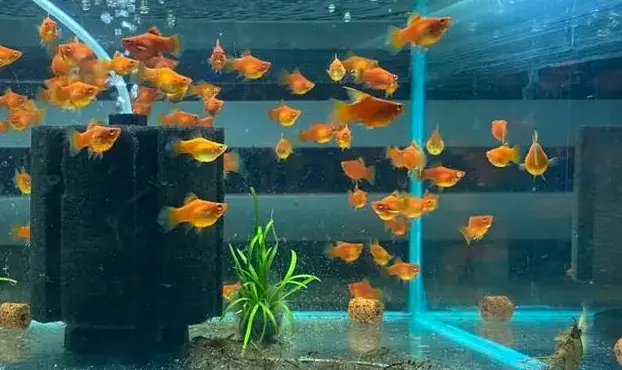
Shared Water and Environment:
• Both species thrive in hard, alkaline water with a pH of 7.0–8.0 and can tolerate a temperature of around 72–82°F (22–27°C)
• Both love plants in aquariums and their fry often use plants as hiding spaces
• Despite both of them being livebearers they cannot crossbreed and negates the risk of giving birth to weak fry.
Size:
• Platy fish grow to an average adult size of 2 to 3 inches and they are not intimidating to guppies
What to Expect:
• Platies are social like to be in groups. They need to be kept in groups of four at least
• Platies breed like Guppies regularly. You will need to keep them in a spacious tank of around 20 gallons.
• Both species will eat newborn fry if given the chance, so dense live plants and hiding spots are needed for fry survival
4. Mollies
Mollies and guppies share similar water parameters and a peaceful temperament, making them generally compatible. However, mollies grow larger than guppies and can become territorial in overcrowded or undersized tanks. Mollies actively graze on tank algae, helping keep the tank environments clean.
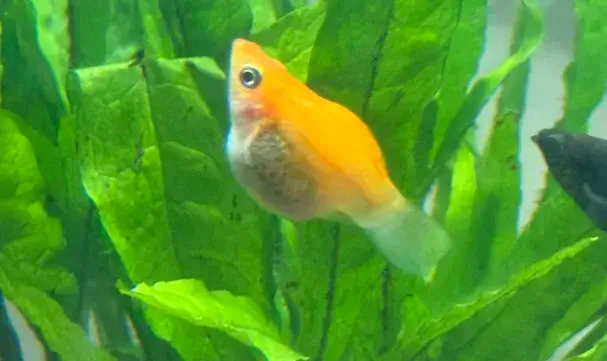
Shared Water and Dietary needs:
• Both species prefer warm tropical temperatures between 72–82°F (22–27°C) and slightly alkaline water with pH 7.0–8.2
• Both readily accept flakes, pellets, frozen foods, and vegetable matter.
Important Considerations:
• Mollies grow larger in size up to 4–6 inches. So ensure that the tank is large enough—at least 20 gallons to prevent over crowding.
• Male mollies can occasionally be aggressive and over active. Maintaining a proper ratio of more females than males helps minimize stress
5. Endlers
Endlers are the closest relatives of guppies and are among the most compatible tank mates possible. They are small, active, peaceful, and thrive in the same water conditions as guppies.
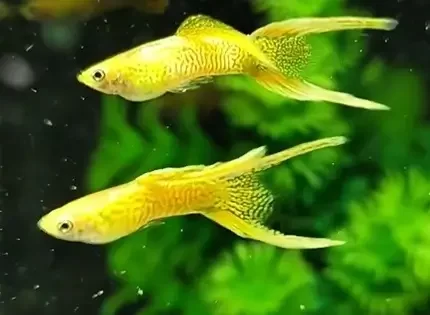
Shared Water and Dietary needs:
• Both thrive in temperatures between 22–27°C (72–82°F), pH of 7.0–8.0, and moderate water hardness.
• Both are omnivores that readily accept crushed flakes, pellets, and frozen or live foods.
Important Considerations:
• Endlers and guppies can crossbreed, which may produce hybrid offspring. If you want to keep guppy strains pure, keep endlers in a separate tank.
• Opinions on mixed-species livebearer tanks vary across communities. Some aquarists report great success combining them, while others prefer single species setups to avoid accidental hybrids.
6. Cherry Barbs
Cherry barbs are one of the few barb species peaceful enough for a guppy community tank. Unlike tiger barbs which are notorious fin nippers, cherry barbs are calm, stay small, and rarely show aggression toward guppies. The brilliant red color of male cherry barbs adds to the beauty of the aquarium.
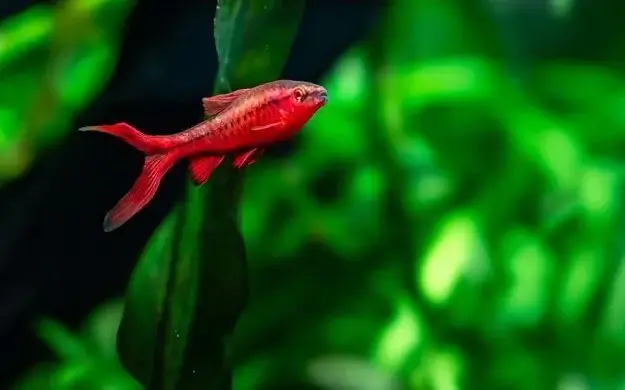
Shared Water and Swimming zones:
• Both thrive in a temperature range of 74–79°F and a neutral to slightly alkaline pH of 7.0–7.5.
• Guppies tend to occupy the top and middle columns of the water, while cherry barbs prefer the middle and lower areas which minimize crowding.
Important Considerations:
• Keep them in groups of 6 or more to reduce any mild fin-nipping behavior. So 15 gallon or larger tank is preferred
7. Harlequin Rasboras
Harlequin rasboras are peaceful schooling fish that share the same mid-water swimming level as guppies, yet there is very little conflict between them. They are hardy, easy to keep, and add beautiful color to any planted aquarium. They grow around 1.5 to 2 inches in size.
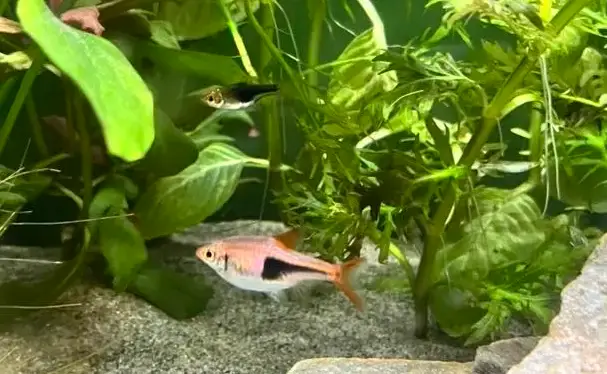
Shared Water and Dietary needs:
• Both thrive in a temperature range of 72–79°F and a neutral to slightly alkaline pH of 7.0–7.5.
• They readily accept flakes, micro pellets, and frozen foods alongside guppies.
Harlequin rasboras rarely eat fry and have no history of fin nipping, making them a very safe choice for fancy guppies too. A 15 gallon or larger planted tank is preferred.
8. Honey Gouramis
Honey gouramis are the most peaceful gourami species available in the hobby. Unlike dwarf gouramis, which can occasionally become territorial, honey gouramis are calm and rarely bother tankmates. they grow around 2 inches in size.
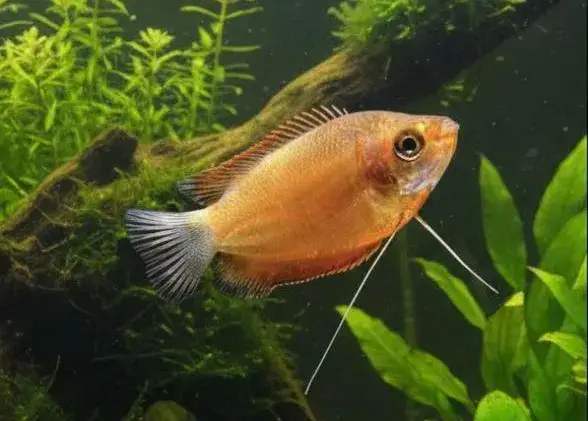
Shared Water and Dietary needs:
• Both thrive in a temperature range of 72–79°F and a neutral to slightly alkaline pH of 7.0–7.5.
• They readily accept guppy food like flakes, pellets and frozen foods.
Honey gouramis rarely eat fry and have no history of fin nipping, making them a very safe choice for fancy guppies too. A 15 gallon or larger planted tank is preferred.
9. Kuhli Loaches
Kuhli loaches are peaceful, eel-like bottom dwellers that spend most of their time hiding under rocks and substrate. They come alive at night, scavenging for food, and they completely ignore guppies. They scavenge the substrate for leftover sinking flakes, pellets, and frozen foods that drop past the guppies.
Shared Water and Dietary needs:
• Both thrive in the same temperature range and a neutral to slightly alkaline pH
• They readily accept leftover food like flakes, pellets and frozen foods.
Important Considerations:
• They prefer soft substrate and at least a few hiding spots. Keep them in groups of 3 or more, as they feel insecure alone. A 20 gallon or larger planted tank with soft substrate is preferred
10. Otocinclus Catfish
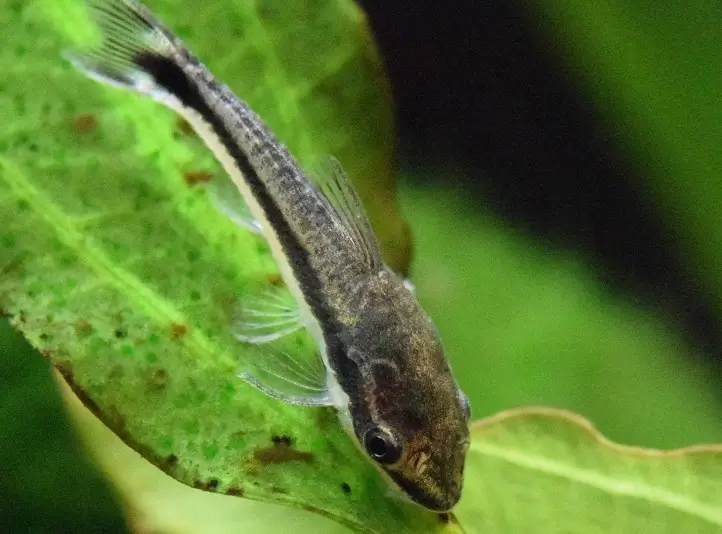
Otocinclus are tiny algae-eating catfish that stay under 2 inches and pose absolutely no threat to guppies. They graze on algae along glass and plant leaves all day, clean the tank and completely mind their own business. They grow to a size around 2 inches.
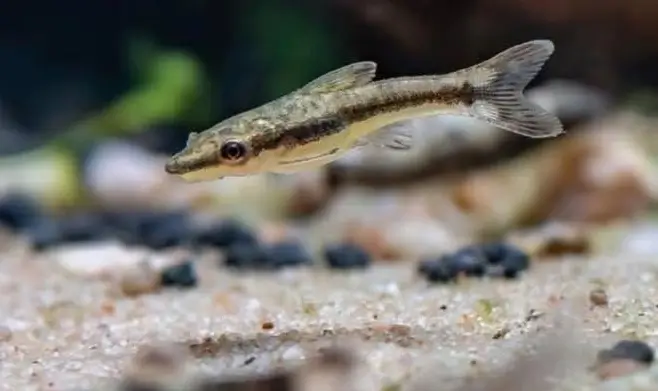
Shared Water and Dietary needs:
• Both thrive in a temperature range of 72–79°F and a neutral to slightly alkaline pH of 7.0–7.5.
• They readily accept leftover food like flakes, pellets and frozen foods and are safe for Fry
Important Considerations:
• Otocinclus need to be kept in groups of at least 4–6 as they are social and schooling.
• They need a well established planted aquarium with natural biofilm or supplemental algae wafers, as they can starve in brand-new setups. A planted tank setup of 10 gallon or more is required.
11. Ember Tetras
Ember tetras are tiny, barely grow from 1 to 1.5 inches — which makes them ideal for nano and planted community tanks with guppies. Their warm orange color contrasts add beauty to the aquarium.
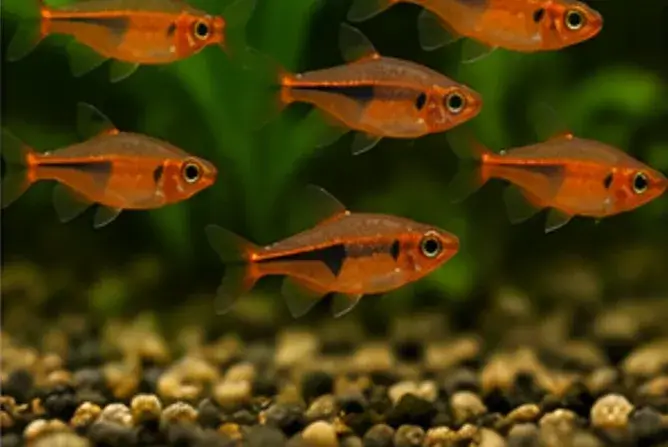
They are completely peaceful and too small to cause any issues with even the most delicate fancy guppies.
Shared Water and Dietary needs:
• Both thrive in a temperature range of 72–79°F and a neutral to slightly alkaline pH of 7.0–7.5.
• They readily accept Guppy food like flakes, pellets and frozen foods
Important Considerations:
• Keep a minimum group of 6 ember as they are schooling and love to live in groups
• Add dense live plants and driftwood to give both species security and distinct territories. A 10 gallon or larger planted tank is preferred.
12. Cardinal Tetras
Cardinal tetras look similar to neon tetras but are slightly larger and, many aquarists feel, even more vibrant. They are calm, schooling fish that coexist peacefully with guppies in stable tropical aquariums. They grow around 2 inches in size.
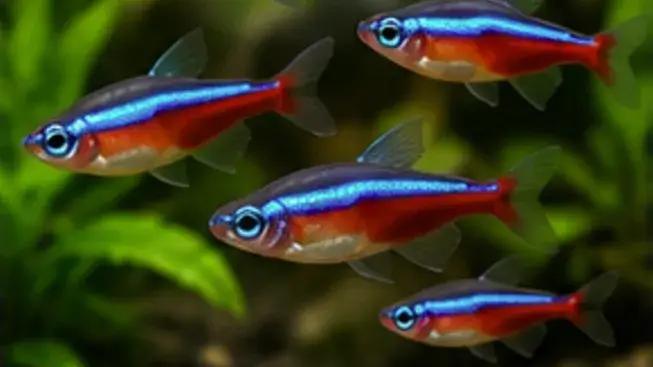
Cardinal tetras prefer slightly softer and warmer water, so check that your parameters overlap with your guppy setup. Keep in schools of 6 or more.
Shared Water and Dietary needs:
• Both thrive in a temperature range of 72–82°F and a slightly neutral pH.
• They readily accept Guppy food like flakes, pellets and frozen foods
Important Considerations:
• Keep a minimum group of 6 cardinal tetras as they are schooling and love to live in groups
• Add live plants to give both species security and distinct territories. They are best for a 10 gallon or larger planted tank.
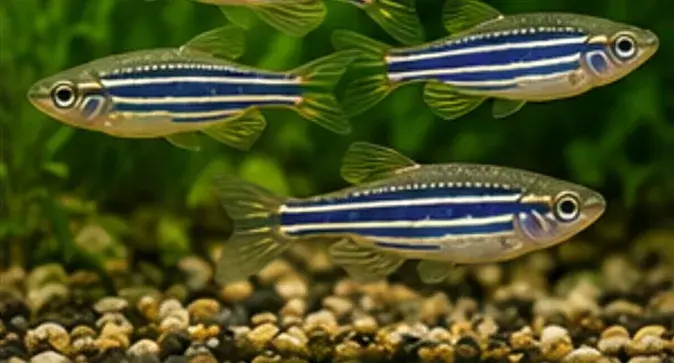
13. Zebra Danios
Zebra danios are hardy, energetic schooling fish that get along well with guppies in most setups. They are fast, active, and easy to care for. They reach a length of 1 to 2 inches in size.
Shared Water and Dietary needs:
• Zebra Danios prefer cooler temperatures. A temperature range of 64–77°F is acceptable and a neutral to slightly alkaline pH of 7.0–7.5.
• They readily accept Guppy food like flakes, pellets and frozen foods
Important Considerations:
• zebra danios are very fast and energetic, which can occasionally be fin nipping in cramped spaces and cause stress to slower fancy guppies with large tails.
• Add dense live plants and decoration to give both species security and distinct territories.
• zebra danios are very social, schooling fish that must live in groups of 5 to 6. A 10 gallon or larger tank is required.
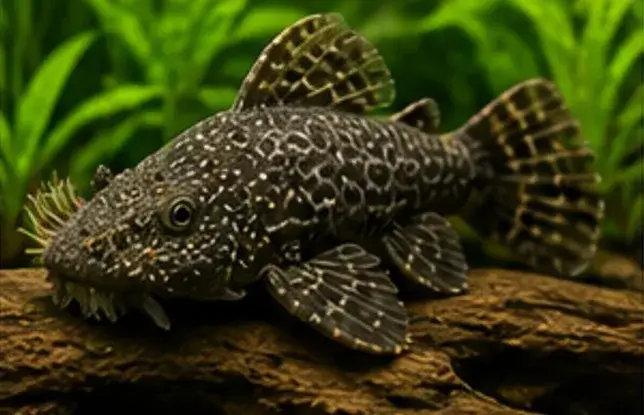
14. Bristlenose Plecos
Bristlenose plecos are small algae-eating bottom fish that work well as tank cleaners in larger guppy aquariums. They stay under 5 inches and are completely peaceful toward guppies. They graze on surfaces to help keep the aquarium clean.
Shared Water and Dietary needs:
• Both thrive in a temperature range of 72–82°F and a slightly neutral to alkaline pH of 7 to 7.5.
• They require sinking algae wafers, leftover Guppy food and algae to feed upon.
Important Considerations:
• Avoid common plecos which grow too large.
• They require hiding spots — driftwood or a cave works well.
• A tank size of 20 gallons or larger with good filtration is preferred.
15. Amano Shrimp
Amano shrimp are one of the most effective algae-eating invertebrates in the hobby. They are peaceful, hardy, and large enough that most adult guppies leave them alone. They grow up to 2 inches in size.
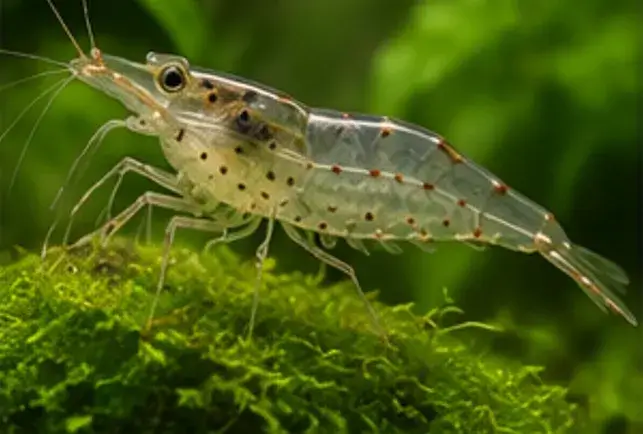
Unlike cherry shrimp, Amano shrimp do not breed in freshwater, so their numbers stay manageable. They are excellent tank cleaners, grazing on soft hair/string algae and microalgae, and make a great low-maintenance addition to any guppy community tank.
Shared Water and Dietary needs:
• Both thrive in a temperature range of 72–82°F and a slightly neutral to alkaline pH of 7 to 7.5.
• They feed on Algae, leftover Guppy food and decomposing debris.
Important Considerations:
• Add dense live plants to give them decaying matter to feed on. Any guppy tank 10 gallons and above will be fine.
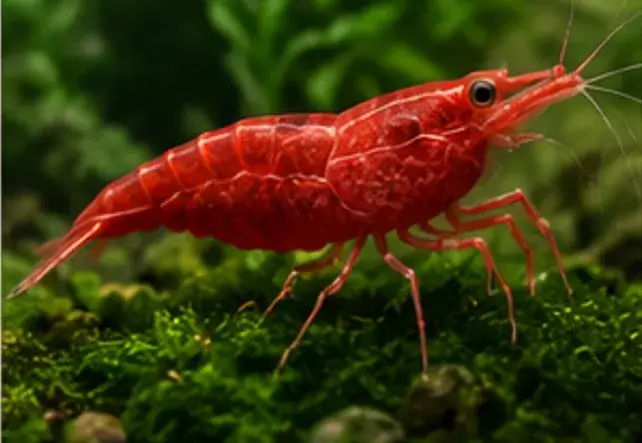
16. Cherry Shrimp
Cherry shrimp are beginner-friendly, peaceful, and add a splash of vivid red to a planted guppy aquarium. They spend their time grazing on algae and biofilm and cause no issues for guppies.
Shared Water and Dietary needs:
• Both thrive in a temperature range of 72–82°F and a pH of 7.0–8.0.
• Cherry shrimp graze on algae, biofilm and leftover Guppy food.
Important Considerations:
• Guppies may eat baby cherry shrimp. Dense plant cover improves shrimp survival. Adult cherry shrimp are generally fast enough to avoid guppies. A 10 gallon and above planted tank is required
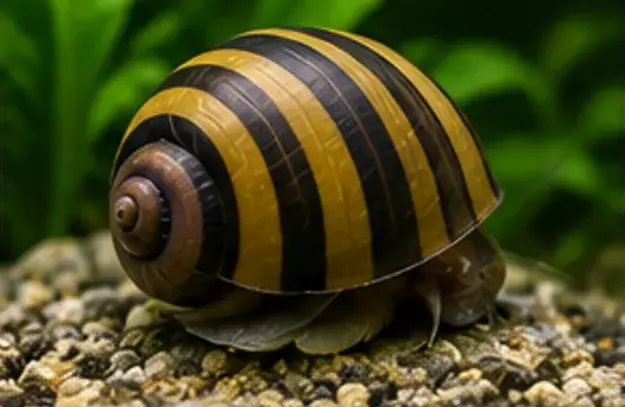
17. Nerite Snails
Nerite snails are among the safest and most reliable tank mates for guppies. They are completely non-aggressive, pose no threat to fish or fry, and spend all their time grazing on algae along glass, rocks, and decorations.
Shared Water and Dietary needs:
• Nerite snails tolerate a wide range of tropical parameters and comfortably share guppy conditions.
• They feed entirely on algae along glass, rocks, and decorations.
Important Considerations:
• Nerite snails do not breed in freshwater, which means they will not overpopulate your tank. They come in several attractive patterns and are an excellent low-effort addition to any guppy setup. Any guppy tank would be fine along with plants and susbtrate
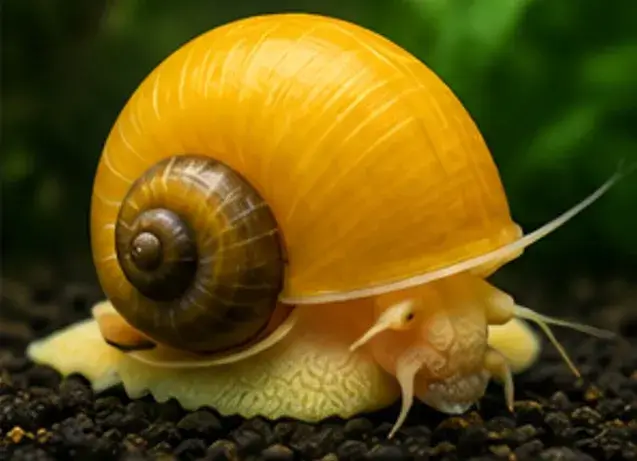
18. Mystery Snails
Mystery snails are peaceful, attractive snails that serve as an efficient cleanup crew in guppy aquariums. They eat algae, uneaten food, and decaying plant matter — helping keep the tank clean naturally.
Shared Water and Dietary needs:
• Mystery snails tolerate the same general tropical parameters as guppies.
• They eat algae, uneaten food, and decaying plant matter.
Important Considerations:
• Mystery snails can grow up to 2 inches and come in several colors including gold, blue, and ivory. They lay eggs above the waterline, so population control is easy. Any guppy tank with plants and substrate will be fine
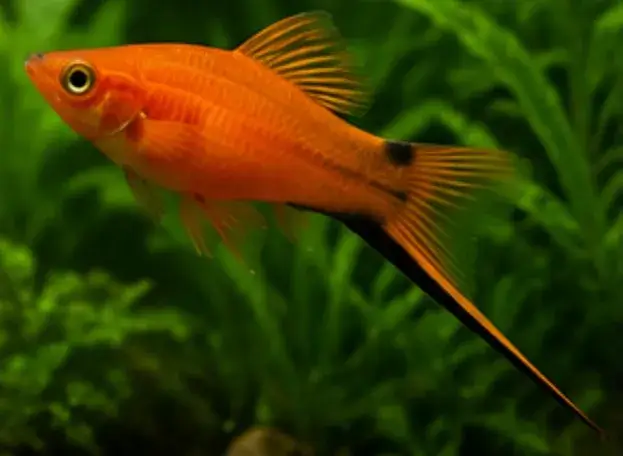
19. Swordtails
Swordtails are peaceful livebearers closely related to guppies and platies. They share similar water requirements and are generally calm community fish in larger tanks.
Shared Water and Dietary needs:
• Both thrive in the same 72–82°F, pH 7.0–8.0 range and accept the same flake, pellet and frozen foods.
Important Considerations:
• Males can occasionally chase each other, and swordtails grow larger than guppies — up to 5 inches — so adequate tank space matters. In a 20 gallon or larger aquarium, they coexist well with guppies. It requires a 20 gallon or larger tanks. Best to have live plants
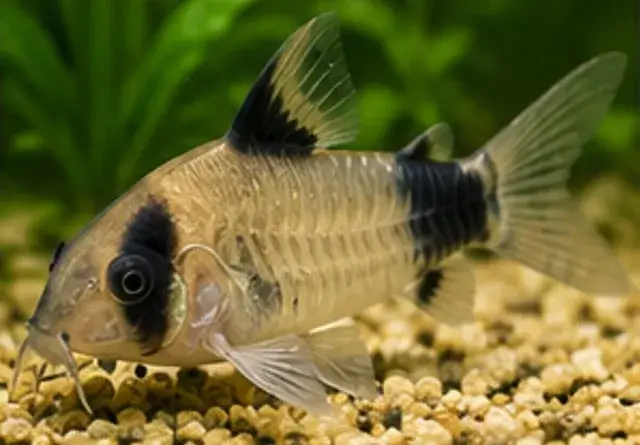
20. Panda Corydoras
Panda corydoras are a smaller corydoras species with a distinctive black-and-white pattern. They share all the qualities of other corydoras — peaceful, bottom-dwelling, and completely harmless to guppies.
Shared Water and Dietary needs:
• Panda corydoras tolerate the same 70–82°F, pH 6.0–8.0 range as other corydoras species.
• They scavenge leftover Guppy food from the substrate
Important Considerations:
• Panda corydoras stay small and work especially well in planted tanks. Keep in groups of 6 for best behavior. A 10 gallon or larger planted tanks is needed
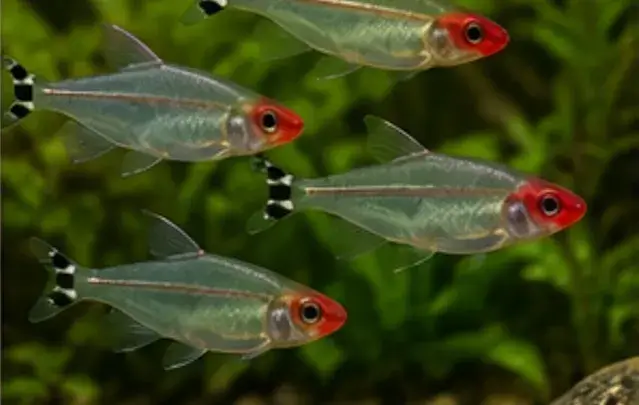
21. Rummy Nose Tetras
Rummy nose tetras are active schooling fish known for their striking red nose and black-and-white tail pattern. They are peaceful toward guppies and thrive in stable, well-maintained tropical aquariums.
Shared Water and Dietary needs:
• Both thrive in the same 72–82°F, pH 7.0–8.0 range and accept the same flake, pellet and frozen foods.
Important Considerations:
• Keep in groups of 8 or more for best results. A 20 gallon or larger well maintained tanks with live plants is required. Rummy nose tetras can become fin nipping if they are cramped for space in the tank.
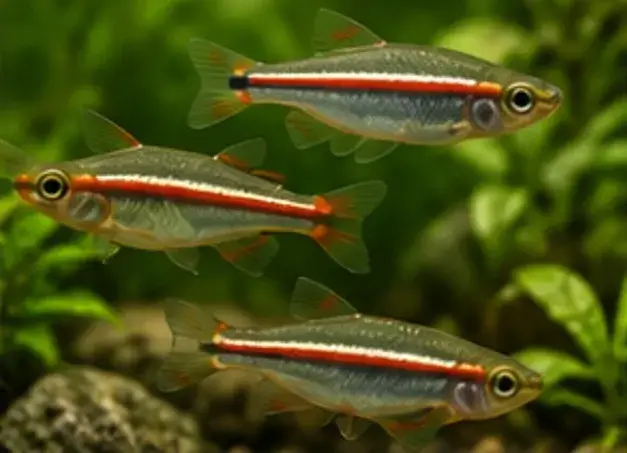
22. White Cloud Mountain Minnows
White cloud mountain minnows are peaceful, hardy fish with a long history in the hobby. They are generally compatible with guppies in terms of temperament.
Shared Water and Dietary needs:
• White cloud minnows prefer slightly cooler water (60°F–72°F) compared to guppies, which need 72°F–82°F. The overlap is narrow, so keep your tank at the lower end of the guppy range if mixing these two species.
• They readily accept the same flakes, pellets and frozen foods as guppies.
Important Considerations:
• Keep white clouds in a group, and avoid running the tank warm with temperature above 72°F would stress them over time. A 10 gallon or larger tank with plants is required
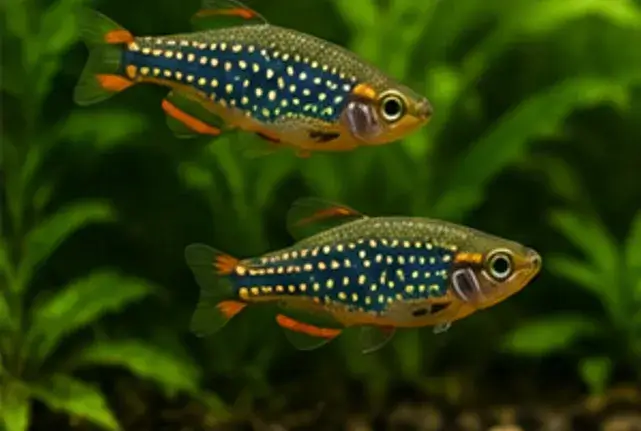
23. Celestial Pearl Danios
Celestial pearl danios — also called galaxy rasboras — are tiny, stunning nano fish covered in pearl-like spots. They are peaceful, slow-moving, and work beautifully in planted guppy aquariums.
Shared Water and Dietary needs:
• Both thrive in the same 72–82°F, pH 7.0–8.0 range and accept fine flakes, micro pellets and small frozen foods.
Important Considerations:
• Their calm pace makes them especially compatible with fancy guppies. Keep in groups of 8 or more. A 10 gallon or larger planted tank would be needed
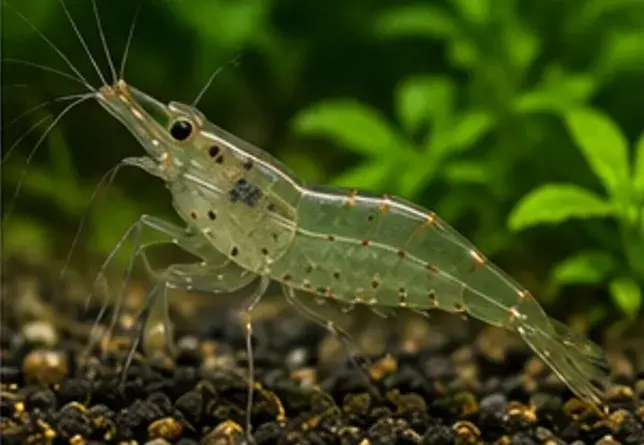
24. Ghost Shrimp
Ghost shrimp are transparent, peaceful invertebrates that help keep the tank floor clean by picking up leftover food. They are inexpensive, easy to care for, and completely harmless to guppies.
Shared Water and Dietary needs:
• Both thrive in the same 72–82°F, pH 7.0–8.0 range.
• Ghost shrimp scavenge leftover food and decomposing matter.
Important Considerations:
• Like cherry shrimp, baby ghost shrimp may be eaten by guppies, so dense plant cover helps protect them. Adults are usually fast enough to avoid guppies. Any guppy tank with plant cover would be fine
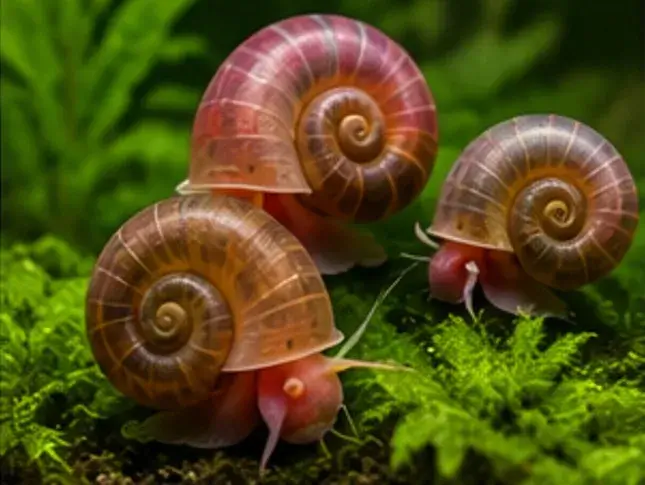
25. Ramshorn Snails
Ramshorn snails are small, spiral-shaped scavengers that consume leftover food, algae, and decaying plant matter. They are completely peaceful and adapt well to any community aquarium.
Shared Water and Dietary needs:
• Ramshorn snails tolerate the same tropical parameters as guppies.
• They eat whatever organic matter is available in the tank.
Important Considerations:
• Unlike nerite snails, ramshorn snails breed readily in freshwater and populations can grow quickly if there is excess food available. Avoid overfeeding to keep numbers manageable. Any guppy tank with some plant cover is good enough
Best Tank Mates for Fancy Guppies
Fancy guppies need extra care when choosing tank mates. Their large, trailing fins slow them down considerably, making them vulnerable to even mildly nippy fish. Even species that are fine with standard guppies may stress fancy strains.
The safest tank mates for fancy guppies include:
➜ Corydoras catfish
➜ Neon tetras
➜ Harlequin rasboras
➜ Celestial pearl danios
➜ Ember tetras
➜ Honey gouramis
➜ Cherry shrimp and Amano shrimp
➜ Nerite and mystery snails
Avoid zebra danios, tiger barbs, and any active fin-nipping species in fancy guppy tanks. For more on keeping fancy guppies healthy, read our fancy guppy guide.
Guppy Tank Mates for 10 Gallon Tanks
Space is limited in a 10 gallon aquarium, so tank mates need to stay truly small and peaceful. Overcrowding a small tank leads to water quality problems quickly, which stresses guppies and makes them vulnerable to disease.
The best guppy tank mates for 10 gallon tanks include:
➜ Pygmy corydoras (stay under 1 inch)
➜ Ember tetras
➜ Endlers
➜ Cherry shrimp
➜ Nerite snails
Avoid mollies, larger gouramis, and bristlenose plecos in 10 gallon tanks — they need more space. If you are planning stocking levels, read our guide on how many guppies fit in a 10 gallon tank.
Guppy Tank Mates for 20 Gallon Tanks
A 20 gallon aquarium gives you significantly more flexibility when building a guppy community tank. Larger tanks are more stable, easier to maintain, and allow you to keep species that need more swimming room.
Good options for 20 gallon guppy tanks include:
➜ Mollies
➜ Honey gouramis
➜ Swordtails
➜ Larger tetra schools (neon, cardinal, rummy nose)
➜ Kuhli loaches
➜ Bristlenose plecos
➜ Harlequin rasboras
For a complete setup guide, read our guppy tank setup guide.
Do Tank Mates Eat Guppy Fry?
Yes. Most community fish are opportunistic feeders and will eat newborn guppy fry if they can catch them. This doesn’t necessarily make them poor tank mates for adult guppies, but it does reduce fry survival in a community aquarium.
Tank mates that commonly eat guppy fry include:
➜ Neon Tetras
➜ Cardinal Tetras
➜ Ember Tetras (larger adults may eat very small fry)
➜ Rummy Nose Tetras
➜ Platies
➜ Mollies
➜ Swordtails
➜ Endlers
➜ Honey Gouramis
➜ Cherry Barbs
➜ Zebra Danios
➜ Harlequin Rasboras (occasionally)
➜ White Cloud Mountain Minnows
➜ Angelfish (highly predatory toward fry)
Tank mates that rarely eat guppy fry:
➜ Corydoras Catfish
➜ Panda Corydoras
➜ Kuhli Loaches
➜ Otocinclus Catfish
➜ Bristlenose Plecos
➜ Celestial Pearl Danios
These species generally ignore healthy guppy fry because they spend most of their time grazing, scavenging, or feeding near the bottom of the aquarium. However, weak, injured, or dead fry may still be scavenged.
Tank mates that are considered fry-safe:
➜ Amano Shrimp
➜ Cherry Shrimp
➜ Ghost Shrimp
➜ Nerite Snails
➜ Mystery Snails
➜ Ramshorn Snails
These invertebrates do not actively hunt or prey on healthy guppy fry, making them excellent companions in breeding and community aquariums.
How to Improve Fry Survival
If you want to raise guppy fry successfully alongside other fish, use one or more of the following strategies:
➜ Add dense Java Moss, Guppy Grass, Hornwort, or other fine-leaved plants for hiding places.
➜ Use floating plants such as Amazon Frogbit or Water Sprite to provide surface cover.
➜ Move pregnant females to a separate breeding tank shortly before giving birth.
➜ Raise fry in a dedicated fry tank or breeding box until they are large enough not to fit into other fishes’ mouths.
➜ Feed the community regularly, as well-fed fish are generally less likely to hunt fry.
For more on protecting newborn guppies, read our guppy fry guide and pregnant guppy signs and stages. If you plan to breed guppies in a community aquarium, our guppy breeding guide and guppy fry growth guide explain how to maximize fry survival from birth to adulthood.
Fish to Avoid with Guppies
Not every tropical fish can live peacefully with guppies. Aggressive, large, or fin-nipping species cause constant stress, torn fins, and in some cases, death.
Fish to avoid with guppies:
➜ Tiger barbs — notorious fin nippers that will relentlessly target guppy tails
➜ Large cichlids — aggressive and territorial; may eat guppies outright
➜ Oscars — predatory; will eat guppies
➜ Aggressive bettas — male bettas may attack guppies for their colorful fins
➜ Jack Dempseys — highly aggressive cichlid species
➜ Cichlids — are aggressive and will eat guppies; not compatible
Even within generally compatible species, individual fish can be aggressive. Always monitor a new addition for the first few days and separate any fish showing persistent aggression.
Signs Your Tank Mates Are Not Compatible
Your guppies will show you early warning signs when something is wrong with their tank mates. Watch closely for:
➜ Torn or ragged fins
➜ One fish being constantly chased
➜ Guppies hiding all day
➜ Loss of color or pale appearance
➜ Gasping at the water surface
➜ Guppies staying at the bottom
➜ Missing fry with no other explanation
Any of these signs should prompt immediate action — separate the aggressor or rehome the incompatible fish before stress leads to disease. For more on behavior signs, read our guides on guppy staying at the bottom and guppy staying at the top of tank.
Frequently Asked Questions
What are the best guppy tank mates?
The most reliably peaceful guppy tank mates are corydoras catfish, neon tetras, harlequin rasboras, platies, endlers, cherry shrimp, and nerite snails. These species share similar water requirements, cause no fin damage, and coexist with guppies in almost any setup.
Can guppies live with bettas?
Sometimes, but it is risky. Male bettas may attack guppies — especially fancy males — because their colorful, flowing fins trigger aggression. If you try this combination, have a backup plan to separate them immediately.
Can guppies live with goldfish?
It depends on the type of goldfish. Regular fast-swimming goldfish, comets, commons, shubunkins, will chase down and eat guppies, and are not compatible. Slow-swimming fancy varieties like Oranda and Ranchu can work, with the right diet, temperature, stocking ratio, and strong filtration. See our can guppies live with goldfish guide for the full breakdown.
Can guppies live with mollies?
Yes, in a 20 gallon or larger aquarium. Mollies and guppies share similar water requirements and are both peaceful livebearers. Avoid keeping them together in smaller tanks where mollies may become territorial.
Can guppies live with angelfish?
Generally not recommended. Angelfish grow large and may nip guppy fins or eat smaller guppies and fry as they mature.
Can guppies live with shrimp?
Yes. Adult Amano shrimp, cherry shrimp, and ghost shrimp are generally safe with guppies. Baby shrimp may be eaten, so provide dense plant cover to improve survival rates.
Can guppies live with snails?
Yes. Nerite snails, mystery snails, and ramshorn snails are all completely safe with guppies and help keep the tank clean.
Can guppies live with tiger barbs?
No. Tiger barbs are fin nippers and will constantly harass guppies, especially fancy males with large tails.
Can guppies live with neon tetras?
Yes. Neon tetras are one of the best and most popular guppy tank mates. They are peaceful, active, and thrive in the same conditions as guppies.
Can guppies live with corydoras catfish?
Yes. Corydoras are among the safest and most recommended guppy tank mates. They are peaceful bottom dwellers that clean up leftover food and never bother guppies.
Can male guppies live together?
Yes. Male-only guppy tanks are common and practical. Some chasing may occur, but a planted tank with adequate space keeps aggression minimal.
Do guppies eat shrimp?
Adult shrimp are usually safe. Guppies may eat very small baby shrimp. Dense planting dramatically improves shrimp survival in a community tank.
What size tank is best for a guppy community?
A 15–20 gallon aquarium gives you the best balance of stability, water quality, and flexibility for adding tank mates. Larger tanks are more forgiving of minor imbalances.
How many guppies should be kept together?
Guppies are social fish and do best in groups of at least 4–6. A species-only tank or a small community setup both work well.
Can guppies live with danios?
Yes, with caution. Zebra danios are very fast and active, which can occasionally stress slower fancy guppies. Celestial pearl danios are a calmer alternative that works better with fancy strains.
Do guppies need hiding places in a community tank?
Yes. Plants, driftwood, and decorations reduce stress for guppies and provide essential cover for fry. A planted community tank almost always produces healthier, more active guppies.
Can guppies live with swordtails?
Yes, in a 20 gallon or larger aquarium. Swordtails and guppies are closely related and share similar water requirements.
Can guppies live with dwarf gouramis?
Sometimes. Peaceful individuals work in larger planted tanks, but some dwarf gouramis can be territorial. Honey gouramis are a safer and more consistently peaceful alternative.
What fish should never be kept with guppies?
Oscars, large cichlids, tiger barbs, and goldfish should never be kept with guppies. These species are either too aggressive, too large, or incompatible in water requirements.
Can overcrowding cause aggression in guppy tanks?
Yes. Overcrowded tanks lead to stress, territory disputes, poor water quality, and increased disease risk across the entire community.
Can guppies live with endlers?
Yes. Endlers are one of the most compatible tank mates for guppies because they are closely related. They share identical water requirements and a peaceful temperament. The only consideration is that endlers and guppies can crossbreed, so keep them separate if you want to maintain pure strains.
What is the ideal male-to-female guppy ratio in a community tank?
A ratio of 1 male to 2–3 females is generally recommended. Too many males in a tank leads to constant chasing of females, which causes stress for both sexes. In a male-only tank, this is not a concern.
How do I protect guppy fry in a community tank?
The most effective methods are dense planting — especially java moss — floating plants for surface cover, and breeding boxes placed inside the main tank. A dedicated fry tank is the safest option if you want high survival rates.
What are good guppy tank mates for a 5 gallon tank?
A 5 gallon tank is tight even for guppies alone, so options are limited to the smallest and least aggresive species. Cherry shrimp, nerite snails, and a small group of ember tetras or endlers if the tank is not overstocked.
What’s a good centerpiece fish for a guppy tank?
Honey gouramis are one of the better centerpiece options. They are calm, visually distinct, and peaceful enough not to bother guppies. A larger school of cardinal or rummy nose tetras can also read as a visual centerpiece without needing a dedicated species. Avoid territorial fishes, since they work against the point of a peaceful guppy community.
Can guppies live with African dwarf frogs?
Sometimes. African dwarf frogs are peaceful and generally too slow to bother adult guppies. However, they may compete for food at the bottom, and they can occasionally eat very small fry. Feed frogs separately if possible and monitor closely after introduction.
Do guppies get stressed when new tank mates are added?
Yes, temporarily. Any change to the tank — new fish, rearranged decorations, a water change — can cause short-term stress in guppies. You may notice slightly paler colors or reduced activity for a day or two. This usually resolves on its own. If stress signs persist beyond a few days, the new tank mate may be the problem.
Final Thoughts
Choosing the right guppy tank mates makes a genuine difference in the health, color, and lifespan of your fish. The best choices — corydoras, neon tetras, rasboras, shrimp, platies, and snails — are peaceful, share similar water requirements, and create a natural, active community that is a pleasure to watch.
Avoid aggressive fish, fin nippers, and species with very different water needs. Give your guppies a well-planted tank with adequate space, clean water, and compatible companions, and they will reward you with bright colors and active behavior for years.
For more on keeping guppies healthy, read our complete guppy care guide and guppy lifespan guide.