
Goldfish eggs are the first stage in the life of every goldfish. When you suddenly find a cluster of tiny, sticky eggs in your aquarium or pond, it can leave you with plenty of questions. Are the eggs fertilized? What should i do with the eggs? Did the male goldfish release any milt? How do you care for goldfish eggs? And when will they hatch?
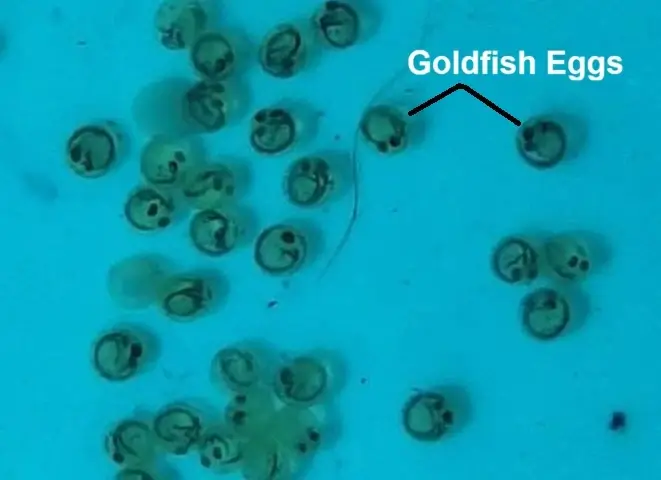
In this article, I will take you through the complete goldfish egg life cycle, from spawning and fertilization to hatching and the first days of newly hatched fry. You can know more by reading our article what do goldfish eggs looks like?
Quick Navigation:
1) Goldfish Eggs at a Glance
2) How Do Goldfish Spawn?
3) How Many Eggs Can a Goldfish Lay?
4) How to Prepare a Tank for Goldfish Spawning
5) How Do I Know If the Male Goldfish Released Milt?
6) How Do Goldfish Eggs Get Fertilized?
7) How Can You Tell If Goldfish Eggs Are Fertilized?
8) How to Protect Goldfish Eggs From Fungus
9) When Should You Remove the Adult Goldfish?
10) How Long Do Goldfish Eggs Take to Hatch?
11) What Happens After Goldfish Eggs Hatch?
Goldfish Eggs at a Glance
Goldfish eggs are tiny, round, and sticky, roughly 1–2 mm in size. When freshly laid, they look clear or pale yellow. The stickiness isn’t an accident — it’s what keeps eggs clinging to plants and surfaces instead of getting floated or washed away in the wild.
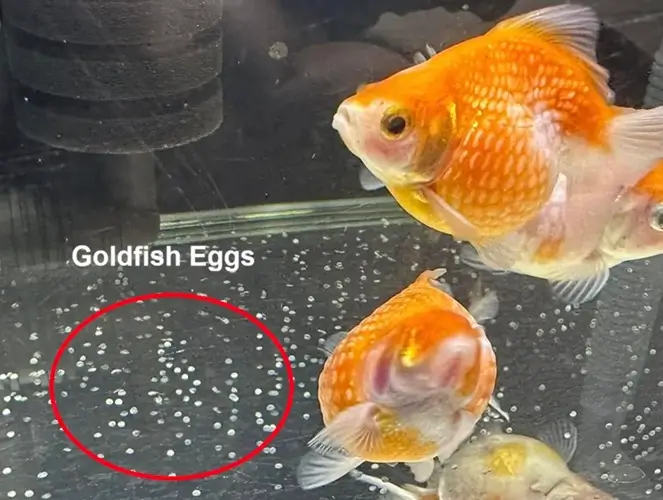
Once a male releases milt over the eggs as the female spawns, fertilization happens immediately — the eggs then take 4 to 7 days to hatch. Early embryo development begins, with a dark spot showing up on day 2, then the body and spine developing on days 3 to 4, and free-swimming fry appearing by days 5 to 7. Read Goldfish Egg Development Stages to learn in-depth details on how the eggs look each day.
How Do Goldfish Spawn?
Spawning is triggered when a matured female comes into breeding condition and starts releasing pheromones. Pheromones are chemical signals a fish releases into the water rather than a sound or a visual cue. When an adult female goldfish is ready to spawn, she releases pheromones in water that signals nearby males, which is what triggers the chasing and nudging that leads up to spawning.
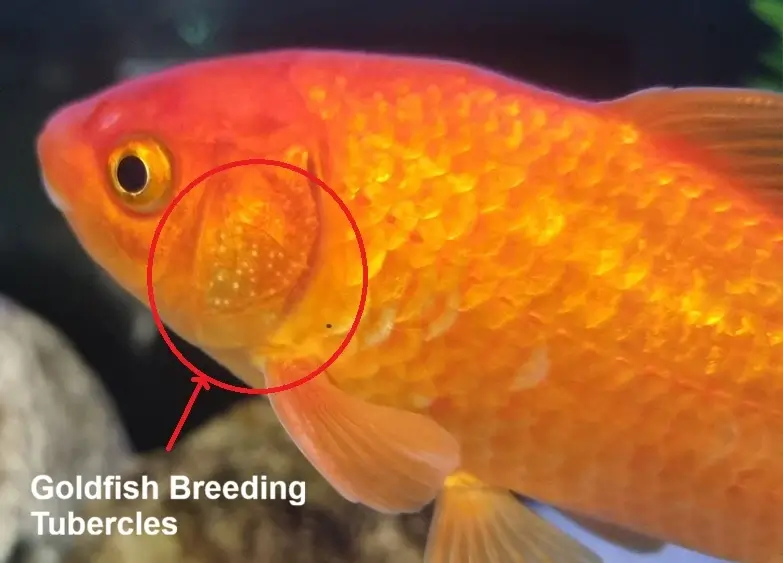
Males typically develop small white spawning tubercles on their gill covers around this time too, a reliable sign breeding season has arrived.
During the breeding season:
1) The matured males begin to chase females, often persistently, sometimes for a long stretch before anything else happens.
2) Males nudge and press against the female sides, which encourages them to start releasing eggs.
3) Females release eggs, and males follow immediately, releasing milt as the eggs land on the surface. Heavy spawning activity can leave the water with a noticeably strong, fishy or earthy smell, since a male releases a large amount of milt directly into it.
4) Goldfish typically spawn early in the morning, so checking the tank early morning gives you the best chance to watch spwaning.
How Many Eggs Can a Goldfish Lay?
A healthy female in good breeding condition can lay well over 1,000 eggs in a single spawning event, with the exact number depending on her age, size, and overall condition. The more mature and larger the female is, the more eggs get laid. During breeding season, goldfish often spawn multiple times, sometimes on a weekly basis, so one missed batch usually isn’t the only chance you will get.
How to Prepare a Tank for Goldfish Spawning
1. Keep the water clean and stable. Poor water quality affects both the adults’ readiness to breed and the eggs’ chances of fertilization afterward.
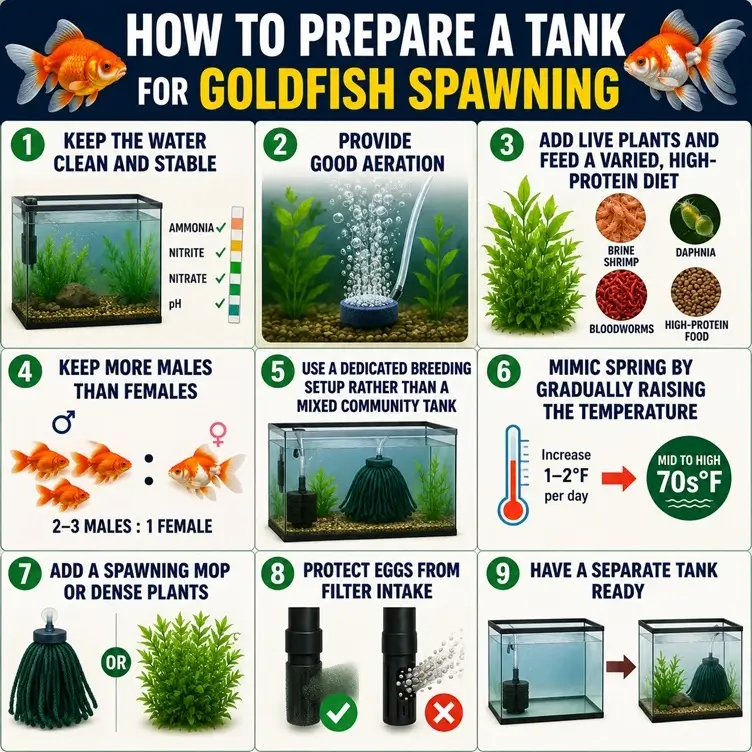
2. Provide good aeration. Spawning adults need to stay stress-free for a period of time to encourage spawning, and good aeration keeps them that way while also benefiting the eggs with well-oxygenated water afterward.
3. Add live plants and feed a varied, high-protein diet. Plants give the female safe surfaces to lay eggs on, lowering stress. Foods like brine shrimp, daphnia, and bloodworms provide the energy needed for healthy eggs and milt, and these rich foods mimic natural spring conditions when food is plentiful, cueing goldfish that it’s time to breed.
4. Keep more males than females. A ratio like two or three males to every female is commonly recommended, since it encourages spawning and improves the odds of eggs getting fertilized.
5. Use a dedicated breeding setup rather than a mixed community tank, especially for fancy varieties, which can be somewhat harder to breed successfully than hardier common or comet goldfish.
6. Mimic spring by gradually raising the temperature. Goldfish naturally spawn as water warms after winter, and many breeders replicate this by slowly increasing the tank temperature by a degree or two per day until it reaches the mid-to-high 70s°F, rather than just placing fish in already-warm water.
7. Add a spawning mop or dense plants. Spawning mops are a breeder favorite because eggs stick to them easily and they’re simple to lift out and place in another fry or breeding tank afterward.
8. Protect eggs from filter intake. Eggs aren’t sticky until they actually touch a surface, so freshly released eggs drifting in open water can get pulled in and destroyed before they ever get the chance to attach. Cover the intake or use a gentle sponge filter during the spawning period.
9. Have a separate tank ready if you plan to move the eggs or the adults, so you’re not scrambling to set one up after spawning has already happened.
How Do I Know If the Male Goldfish Released Milt?
This is one of the more common questions or doubts a first-time goldfish keeper would have. The honest answer is that you often can’t tell for certain just by watching.
• You may notice a very brief milky, whitish cloud released into the water right around where the eggs land. The cloud clears quickly, so it’s entirely possible to miss it even if you’re watching closely.
• Heavy spawning activity can also leave the water with a noticeably strong, fishy or earthy smell, since a male releases a large amount of milt directly into it.
• The male is usually positions itself very close to or just beneath the female at the moment eggs are released, which is when milt release happens too.
• If you want to confirm fertilization worked, the eggs themselves will tell you within a day or two, developing eggs stay relatively clear, while unfertilized ones turn white or cloudy. To know more you can read How Do Goldfish Eggs Get Fertilized
How Do Goldfish Eggs Get Fertilized?
Female releases eggs → Male releases milt → Sperm reaches the eggs → Fertilization occurs externally → Embryo begins developing. The whole process happens in the open water, not inside either fish. Read our full guide on How Do Goldfish Eggs Get Fertilized?
How Can You Tell If Goldfish Eggs Are Fertilized?
• Fertilized eggs stay relatively clear and show visible development over the following days.
• A small dark eye spot becomes visible after about two to three days, the clearest confirmation that an egg is developing.
• Unfertilized eggs turn white or cloudy instead, with no embryo ever forming inside.
Read ourfull guide on Goldfish Egg Development Stages, From Egg to Fry to know more.
How to Protect Goldfish Eggs From Fungus
Fungus is the biggest threat to an otherwise healthy batch of eggs, and it doesn’t stay contained to one egg rather a whole batch of eggs could be lost.
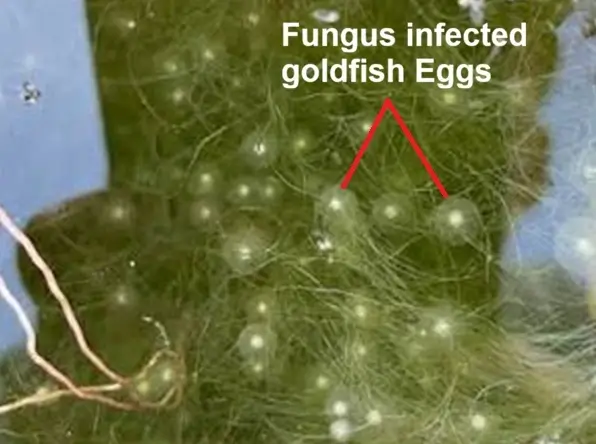
• Dead or unfertilized eggs are the usual starting point. Fungus takes hold on them first, then spreads through direct contact to healthy eggs sitting nearby.
• Remove obviously dead or white eggs promptly, since this is the single most effective way to stop fungus from reaching the rest of the batch.
• Keep the water clean throughout development, since with poor conditions the tank may already contain fungus which catches up to the whole batch of eggs.
• Use methylene blue cautiously, not as a default. Some breeders use it as a preventative treatment, but others report a higher rate of defects in fry from eggs soaked higher concentartion of methylene blue. So it’s worth weighing carefully before using it.
• Some breeders add shrimp or snails like cherry shrimp or ramshorn snails to the tank, since they will pick off dead and fungused eggs without bothering healthy ones.
When Should You Remove the Adult Goldfish?
Goldfish don’t protect their eggs, and they don’t recognize their own fry as offspring. Adults, including the parents themselves, will eat both the eggs and any fry that hatch, often quickly.
Once spawning is done, act fast — either move the eggs to a separate tank, or remove the adults from the tank the eggs are in. The longer you wait, the more eggs you lose.
How Long Do Goldfish Eggs Take to Hatch?
Goldfish eggs generally hatch within 4 to 7 days, with water temperature being the biggest factor in exactly where in that range a given batch falls.
Want to see what happens during those days? Read our Goldfish Egg Development Stages guide
What Happens After Goldfish Eggs Hatch?
• Newly hatched fry stick to nearby surfaces for the first day or two, rather than swimming freely right away.
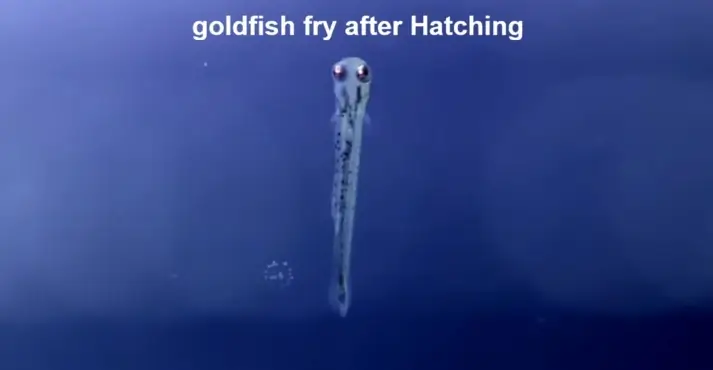
• They live off their yolk sac during this time and don’t need feeding yet.
• Once the yolk sac is used up, they become free-swimming and are ready for their first food.
• A large brood can foul the water quickly. If a big batch hatches at once, keep a closer eye on water quality and be ready for an extra water change.
• Keep fry protected from adult fish, since the same risk that applied to the eggs applies to newly hatched fry too.
Final Thoughts
Goldfish eggs go through a fast, fairly predictable process from spawning to hatching, and most of what determines the success comes down to water quality, protecting the eggs from fungus, and separating them from adult fish in time. Use the guides linked throughout this page for the full detail on each stage.