
So, what do goldfish eggs look like? They’re tiny, round, and sticky, measuring about 1 to 2 millimeters across. They look clear or pale yellow when freshly laid, then turn more golden yellow as they develop. You’ll commonly find them stuck to plants, spawning mops, tank glass, filters, and other tank equipment.
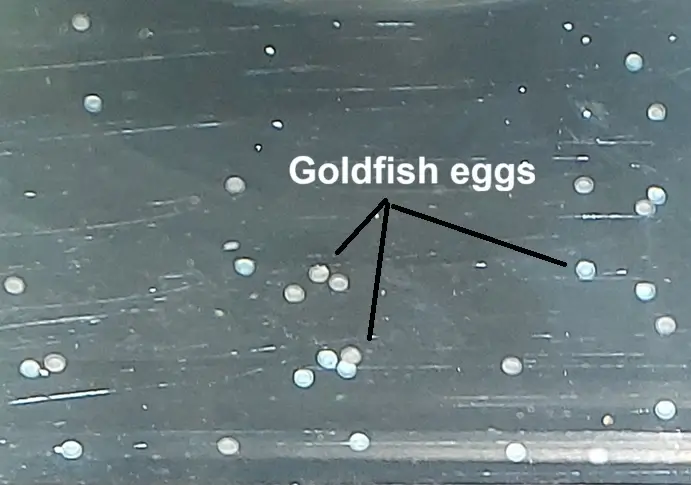
Most people mistake them for debris or something else the first time they spot them. A single female goldfish can lay several hundred eggs at once and sometimes over 1,000, depending on her size, age, and health.
Quick Navigation:
➜ What Do Goldfish Eggs Look Like?
➜ What Do Goldfish Eggs Look Like in a Tank?
➜ What Do Goldfish Eggs Look Like in a Pond?
➜ Goldfish Eggs on Aquarium Plants
➜ Goldfish Eggs Close Up
➜ Are These Goldfish Eggs Fertilized?
➜ How Long Do Goldfish Eggs Take to Hatch?
➜ FAQ
What Do Goldfish Eggs Look Like in a Tank
Goldfish eggs are easy to miss at first when you look at them. Most people assume they are air bubbles or debris until they have a closer look.
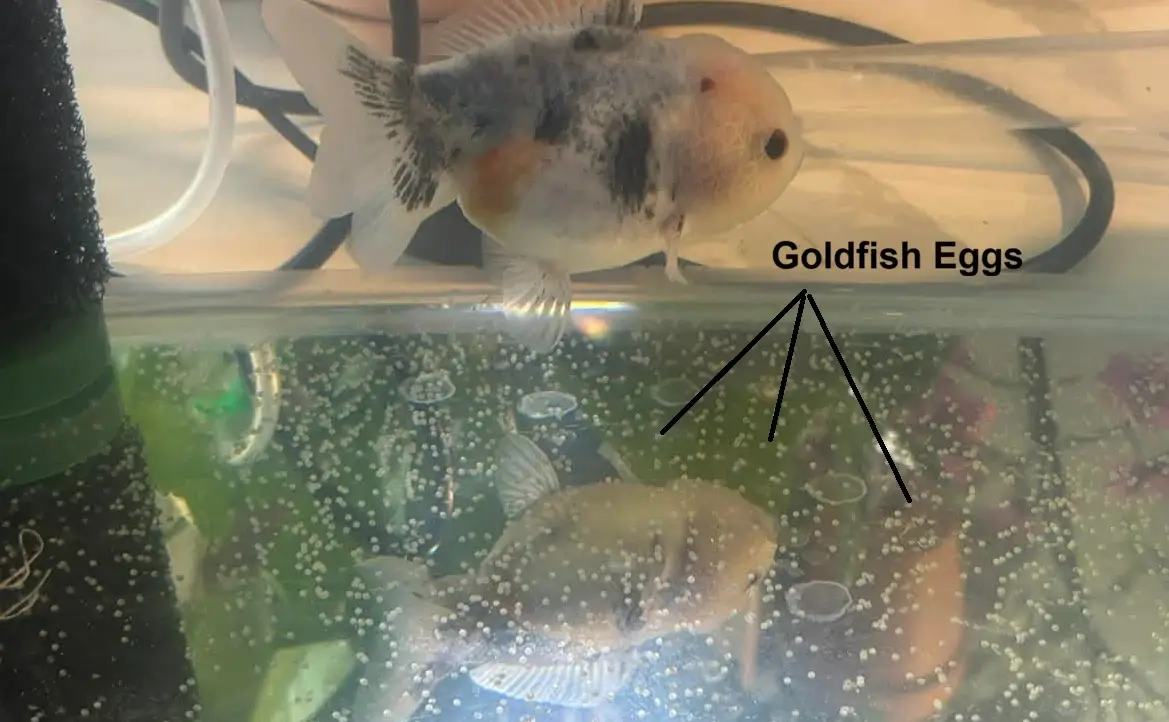
• Size, shape, and color: The Goldfish eggs are about 1–2 mm across, roughly the size of a pinhead. Round to slightly oval, becoming rounder once they’ve soaked up water. The look clear or pale yellow when fresh, turning more golden or yellow as they mature.
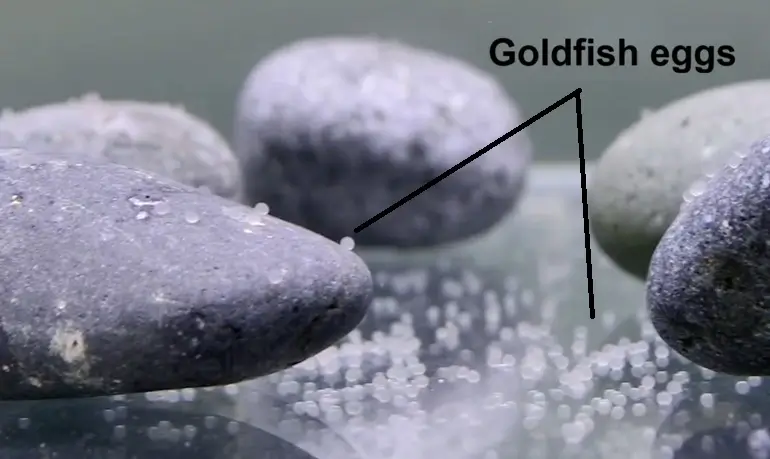
• Texture: The appear soft and gel-like at first, firming up a bit over the first day or two.
• See-through: healthy eggs stay clear enough to see inside once they are a couple of days old.
• Where you’ll actually find them: Goldfish eggs are extremely sticky, they cling flat to whatever surface they land on. You may find them on plant leaves, filter intakes, the glass, or decorations.
• They rarely appear alone. A single spawning event can scatter hundreds of eggs across the tank at once, so if you spot one egg then check nearby surfaces, plants especially — since there are almost certainly more.
What Do Goldfish Eggs Look Like in a Pond?
Pond eggs look the same as tank eggs — tiny, round, and sticky — but they’re much harder to spot. Ponds have more surface area, murkier water, and rougher textures for eggs to blend into.
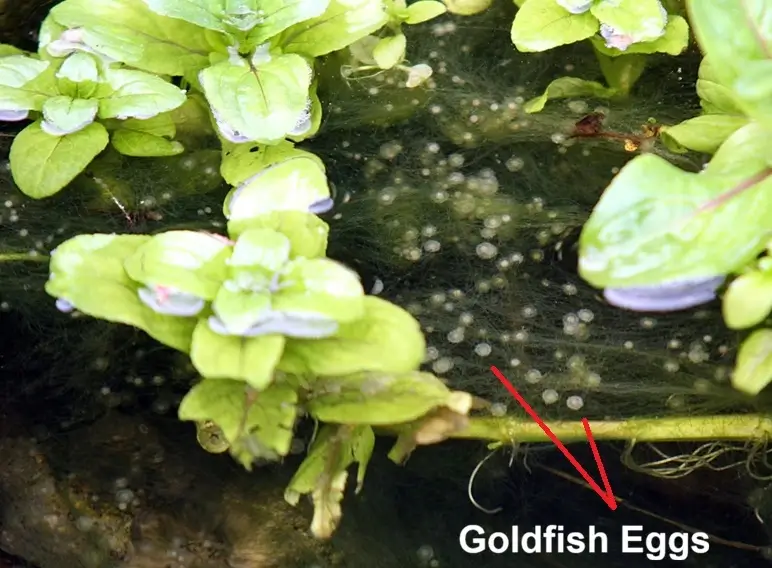
Look for them on:
• Pond plants and floating vegetation
• Rocks and gravel along the shallow edges
• Pond liner, especially near the waterline
• Filter boxes and skimmer intakes
Ponds also come with more competition for the eggs — other fish, insects, and even birds will happily eat them before you ever notice they’re there. If you’re trying to actually raise a pond spawn then the eggs need to be protected From goldfish and other insects.
Goldfish Eggs on Aquarium Plants
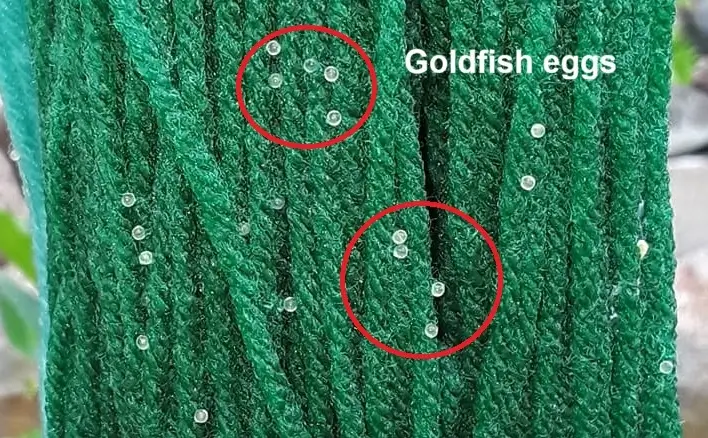
Plants are one of the most common places to find eggs, since goldfish naturally scatter them over vegetation during spawning. Goldfish always feel secure scattering their eggs over plants, spwaning mops, Decorations etc.
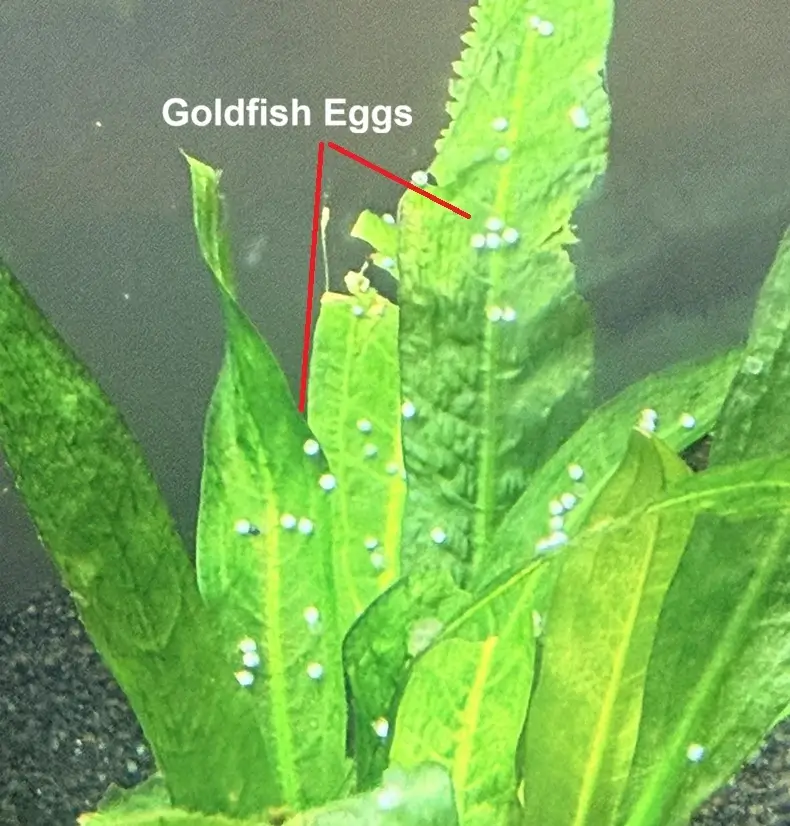
• Live plants — broad, leafy varieties tend to catch the most eggs
• Artificial plants — eggs stick just as readily to plastic or silk leaves
• Moss — java moss and similar dense growth are especially good at trapping eggs, which is why breeders often use it deliberately
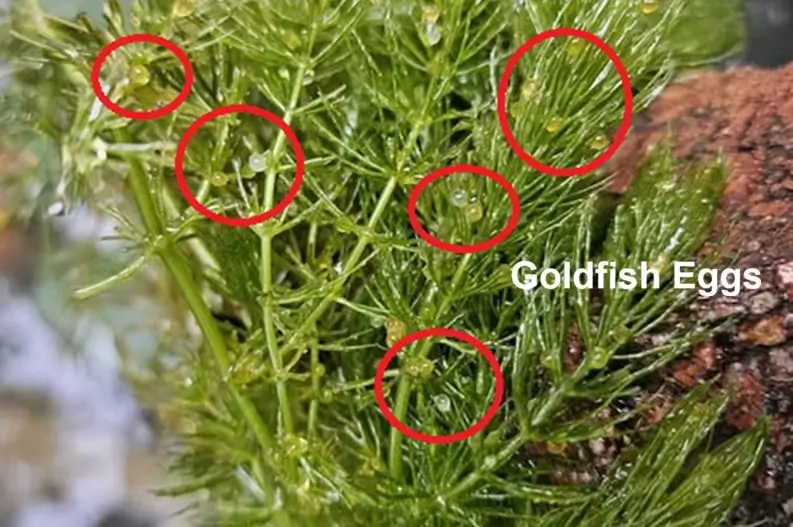
If you’re planning to breed goldfish on purpose, adding extra plant cover (or a dedicated spawning mop) before spawning season gives the eggs more places to land and fewer chances of ending up somewhere else. You can move the plants and mop with eggs safely to another tank with closely matching water parameters.
Goldfish Eggs Close Up
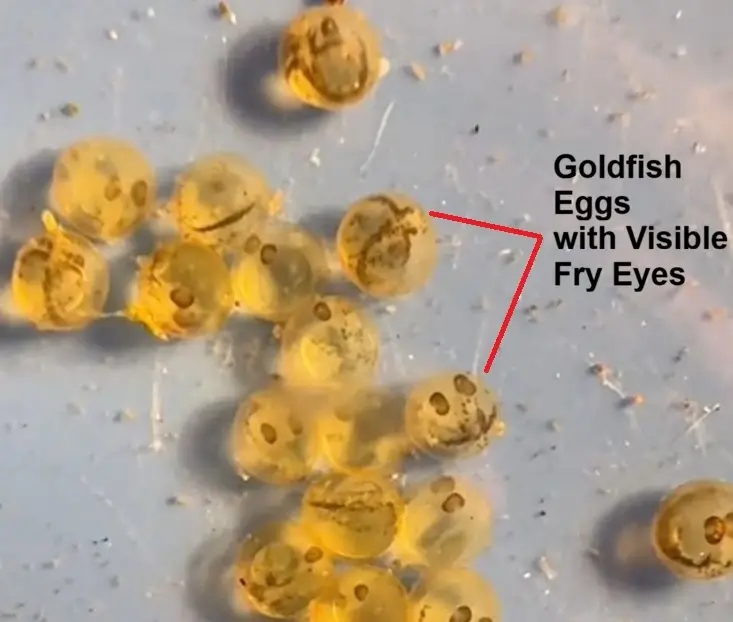
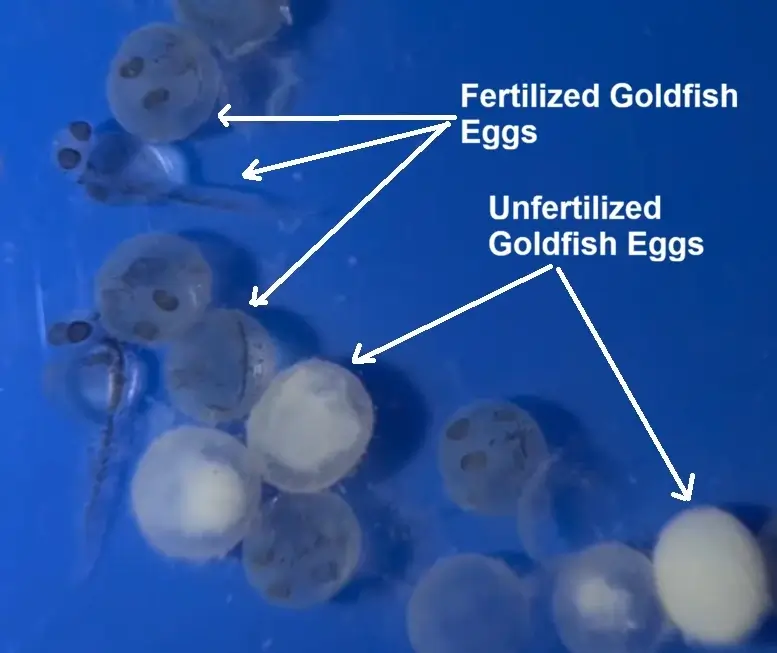
Upon a close up look, a healthy egg looks like a small, glassy sphere with a faint sheen. Around day two or three, a tiny black dot shows up inside which is the fry’s eye. As it grows, you will start to see the curved shape of its body forming around that dot.
Are These Goldfish Eggs Fertilized?
Not every egg you find will develop into a fish. Some eggs never get fertilized, and others stop developing early. The clearest sign is what happens over the first couple of days: fertilized eggs stay clear or golden yellow and eventually show that black eye spot, while unfertilized ones turn solid white or cloudy. Sometimes all the eggs catch up fungus and go unfertilized if there is a fungus problem in the tank.
➜ Read the full guide: How Do Goldfish Eggs Get Fertilized?
How Long Do Goldfish Eggs Take to Hatch?
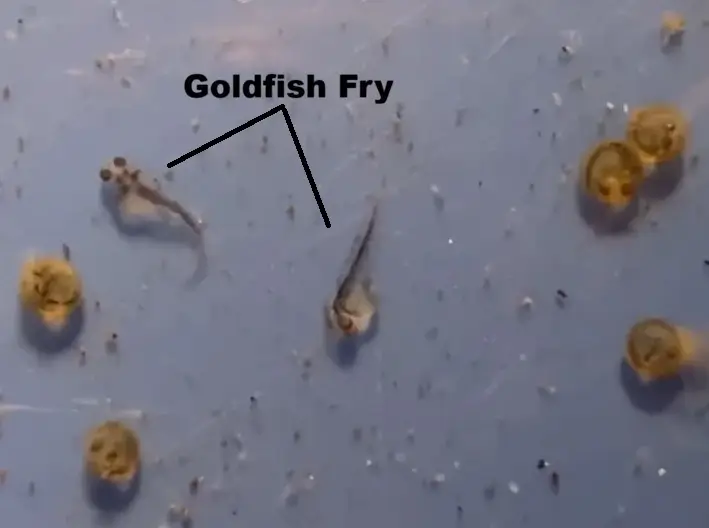
Most goldfish eggs hatch within 4 to 7 days, though warmer water can speed that up things. If eggs haven’t hatched or not shown any development after a week, they’re most likely unfertilized.
➜ Read the full guide: Goldfish Egg Development Stages, From Egg to Fry
FAQ
How do I know if my goldfish laid eggs?
Look for small, sticky, round dots that are clear or pale yellow scattered on plant leaves, decorations, filter intakes, or the glass. You’ll often notice cloudy, milky-looking water first too, that’s the male’s milt released during spawning, and it’s usually your first clue to check nearby surfaces closely.
What do baby goldfish eggs look like?
Freshly laid eggs are tiny, round, sticky bubbles about 1–2 mm across, clear to pale yellow in color. Within a couple of days, fertilized ones develop a small black speck, the start of an eye, while unfertilized ones just turn white or cloudy instead.
How long will goldfish lay eggs?
A single spawning event is usually over within a few hours, though the female may release eggs in short bursts throughout that window rather than all at once. Goldfish typically spawn once or twice a year, most often in spring, sometimes again in autumn if conditions are right.
How many days will goldfish eggs hatch?
Most goldfish eggs hatch within 4 to 7 days, depending mainly on water temperature, warmer water speeds this up. If nothing has hatched by day 7, the remaining eggs were very likely unfertilized and won’t hatch at all.
What do unfertilized goldfish eggs look like?
Unfertilized eggs stay white, opaque, or cloudy rather than clearing up, and they won’t develop the small black eye-spot that fertilized eggs show after 2–3 days. They’re also the ones most likely to grow fuzzy fungus within a day or two, since there’s no developing embryo to protect them. If your eggs haven’t hatched or shown any black spots by day 7, they were unfertilized.
Can goldfish lay eggs without a male?
Yes. Females can release eggs on their own through spawning, with or without a male present. Without fertilization, though, those eggs will never develop into fry, they will simply turn white and eventually need to be removed before they foul the water.
Fertilized vs. unfertilized goldfish eggs: what’s the difference?
Fertilized eggs stay clear to pale yellow and develop a small black speck (the beginning of an eye) within a couple of days, eventually becoming hard to see as the embryo darkens. Unfertilized eggs go the opposite direction, turning solid white or cloudy and often developing fungus, since nothing inside them is actually growing.
Final Thoughts
Once you know what to look for, goldfish eggs are hard to miss — tiny, round, and stuck fast to whatever surface the female was near when she spawned. From here, the next steps are figuring out which eggs are actually going to develop and roughly how long you’ll be waiting to find out.