
A guppy swimming upside down may be experiencing a buoyancy problem, often associated with the swim bladder. However, poor water quality, injury, infection, or other health problems can also affect a guppy’s ability to swim normally.
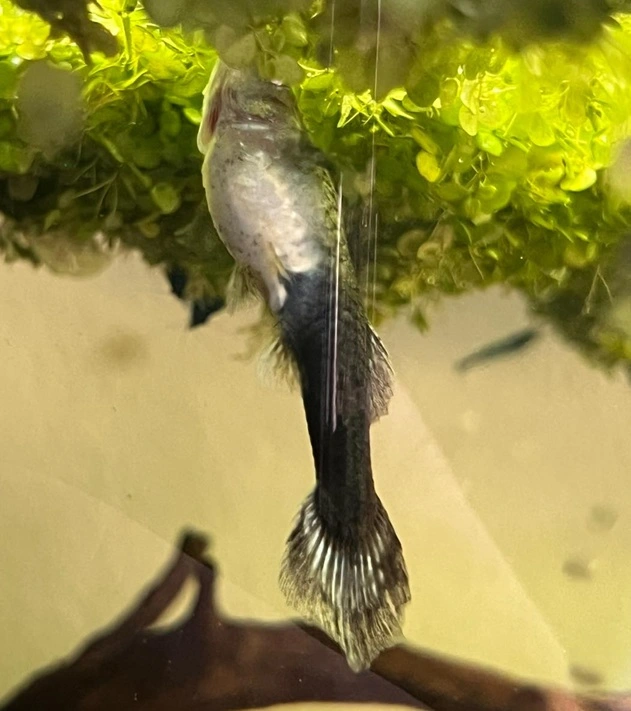
You may notice your guppy floating upside down, tilting sideways, swimming vertically, or struggling to maintain its balance. These swimming patterns can signal a problem, but their underlying causes can vary.
The important thing is to observe whether your guppy can return to its normal swimming position, check the water conditions, and look for other symptoms before deciding on treatment.
Quick Navigation
Why Is My Guppy Swimming Upside Down, Sideways, or Vertically?
The swim bladder is a gas-filled organ that helps guppies control their buoyancy and maintain their position in the water. When its function is affected, a guppy may float, sink, tilt sideways, or struggle to stay upright.
However, not every guppy swimming upside down or vertically has a swim bladder disorder. Injury, illness, poor water conditions, or temporary swimming behavior can also affect its position.
The table below helps distinguish these movements before looking at their possible causes.
Common Guppy Swimming Positions and Possible Causes
| Swimming Behavior | Possible Explanation | What to Check First |
|---|---|---|
| Floating upside down and unable to turn upright | Buoyancy disorder or another serious health problem | Water quality, breathing, and ability to swim normally |
| Swimming sideways or remaining tilted | Buoyancy difficulty, injury, or illness | Whether the tilt persists and other symptoms are present |
| Swimming vertically, head-up or head-down | Buoyancy problem, weakness, or abnormal balance | Whether the fish returns to a horizontal position |
| Floating at the surface and unable to swim down | Excessive buoyancy or an underlying internal problem | Water parameters, abdominal swelling, and swimming control |
| Sinking to the bottom and struggling to rise | Reduced buoyancy, weakness, or illness | Water quality, appetite, and activity |
| Spinning, rolling, or swimming in circles | Possible neurological problem, injury, toxic exposure, or serious illness | Recent changes, other affected fish, and abnormal breathing |
| Briefly bending into an S-shape near a female | Normal male courtship display | Whether normal swimming resumes immediately |
| Swimming rapidly up and down the glass while upright | Glass surfing, feeding anticipation, or environmental stress | Recent changes, reflections, and general behavior |
Remember: The swimming position provides clues, not a confirmed diagnosis. A guppy that repeatedly loses its balance, cannot swim or feed normally, or develops breathing problems needs prompt attention.
1. Overfeeding or Digestive Problems
Overfeeding can cause abdominal swelling and digestive discomfort in guppies. In some cases, digestive problems may contribute to abnormal buoyancy, although swimming upside down does not necessarily mean a guppy is constipated.
What to look for:
A swollen abdomen, reduced appetite, sluggish behavior, or unusual swimming that begins after heavy feeding.
What to do:
Check feeding amounts and look for other signs of bloating. If an otherwise healthy adult guppy has simply been overfed, skip the next feeding and resume with smaller portions of an appropriate diet.
Persistent bloating or swimming difficulties should be investigated rather than automatically treated as constipation.
For digestive problems and abdominal swelling, see our guppy bloated guide.
2. Poor Water Quality
Ammonia, nitrite, and unstable water conditions can affect a guppy’s health and swimming behavior. Severe water-quality problems may cause weakness, disorientation, or abnormal movements that resemble buoyancy trouble.
What to look for:
Clamped fins, rapid breathing, lethargy, loss of appetite, or several fish developing unusual swimming behavior around the same time.
What to do:
Test ammonia, nitrite, nitrate, and pH. Ammonia and nitrite should be undetectable in a properly maintained aquarium.
If either is present, perform an appropriate partial water change using dechlorinated, temperature-matched water. Increase aeration and check that biological filtration is functioning properly.
Continue monitoring the fish and water conditions rather than assuming the swim bladder is the problem.
See our guppy water parameters guide for more information.
3. Temperature Problems
Guppies are tropical fish, and unsuitable or rapidly changing temperatures can affect their activity, metabolism, and normal swimming behavior.
Cold water can slow digestion, while sudden temperature changes may cause significant stress. Neither necessarily indicates a swim bladder disorder.
What to look for:
Reduced activity, unusual swimming after a temperature change, or a thermometer reading outside the normal range.
What to do:
Check the thermometer and heater. A stable temperature around 76–78°F (24–26°C) is suitable for most guppies.
If the water is too cold or too warm, correct it gradually. Avoid raising the temperature above the normal range simply to treat abnormal swimming.
4. Parasites or Infection
Certain bacterial infections, parasites, and other internal health problems may cause inflammation, weakness, or abnormal swimming. In some cases, the swim bladder or surrounding organs may be affected.
However, swimming upside down alone cannot identify an infection or parasite.
What to look for:
Loss of appetite, clamped fins, weight loss, abdominal swelling, unusual feces, visible parasites, or rapid breathing.
What to do:
Test water quality first and examine the guppy for additional symptoms.
If an infection or parasite is identified, use treatment appropriate for that condition and follow the manufacturer’s instructions. A well-aerated hospital tank may help when the affected fish requires separate care.
Avoid treating every swimming problem with antibiotics, antiparasitic medications, or aquarium salt.
See our common guppy diseases guide for more information.
5. Sudden Water Changes or Chemical Exposure
A guppy may develop erratic or disoriented swimming after a water change if the replacement water causes a sudden temperature or chemistry shift.
Chlorine, chloramine, or other chemical contamination can also irritate or damage fish, sometimes leading to severe distress and abnormal swimming.
What to look for:
Unusual movements beginning shortly after maintenance, rapid breathing, darting, or several fish becoming affected simultaneously.
What to do:
Check the temperature, ammonia, nitrite, and pH. Confirm that the replacement water was properly conditioned.
If chlorine or chloramine exposure is suspected, use a suitable water conditioner according to its instructions and increase aeration.
Correct any water-quality problem using safe, temperature-matched water. Severe or continuing symptoms need urgent attention.
For more information, see why guppies die after water changes.
6. Injury or Other Physical Problems
Physical injuries can also affect a guppy’s ability to swim normally. Collisions, aggressive tank mates, rough handling, or injuries during transport may damage fins, the spine, or internal structures involved in swimming and balance.
Less commonly, abnormalities involving internal organs or the nervous system may produce similar symptoms.
What to look for:
A sudden change in swimming position after an injury, difficulty maintaining balance, visible wounds, spinal deformity, or repeated uncontrolled rolling or spinning.
What to do:
Observe the fish for injuries and check whether aggressive tank mates are involved.
Provide clean, stable water and a calm environment with manageable water flow. A separate, properly equipped hospital tank may help protect a badly affected fish from further injury or harassment.
If the guppy cannot maintain its balance or feed normally, or if its condition continues to worsen, seek advice from an aquatic veterinarian. Persistent buoyancy disorders may require a professional examination to identify the underlying cause.
Frequently Asked Questions
Can a Guppy Recover From Swimming Upside Down?
Yes, a guppy may recover if the underlying cause can be identified and corrected. Swimming problems caused by temporary water-quality or temperature stress may improve once conditions stabilize. However, recovery from infections, injuries, or serious internal problems is less predictable.
A guppy that remains upside down, cannot swim normally, or struggles to eat needs prompt attention.
Should I Isolate a Guppy That Is Swimming Upside Down?
Not always. If the problem is related to water quality or temperature, correcting the conditions in the main aquarium should be the first priority.
A separate hospital tank may be helpful if the guppy is being bullied, cannot compete for food, or requires treatment for a suspected infectious condition. Make sure the hospital tank has stable water conditions and adequate aeration.