
Guppy fin rot and tail rot are common bacterial infections that gradually damage a guppy’s delicate fins. If left untreated, the damage can spread, causing significant fin loss.
Not every damaged fin is caused by a bacterial infection. Fin nipping and injuries from sharp decorations can produce similar signs, but they require different treatment approaches. This guide explains how to recognise fin rot or tail rot, identify its causes and choose the right treatment to help your guppy recover. Fin rot is one of several health problems that can affect guppies. For an overview of other common conditions, see our guide to common guppy diseases and their symptoms
1. What Is Fin Rot in Guppies?
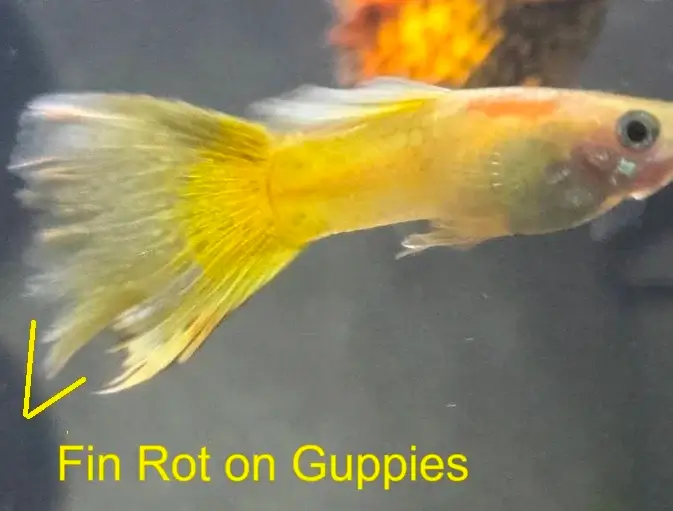
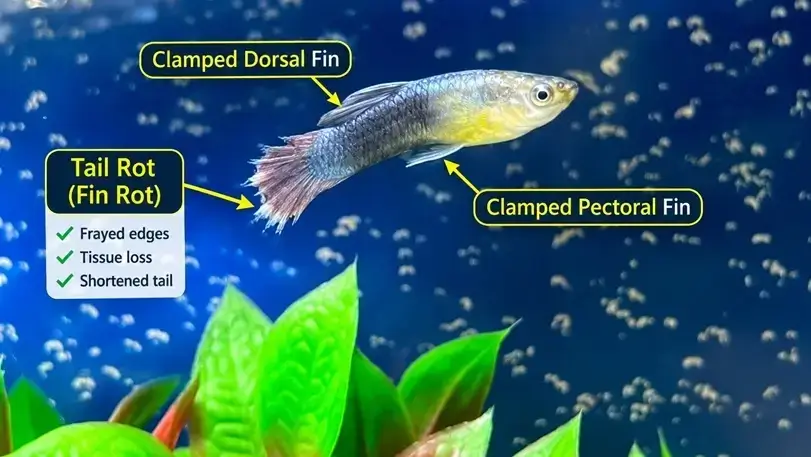
Fin rot is a bacterial infection that gradually breaks down a guppy’s fins and tail. It often starts at the edges, causing the fins to become ragged, frayed or discoloured. As the condition progresses, the affected fins become shorter.
Fin damage can also result from fin nipping or physical injuries. These injuries also need attention as the damaged tissue can become vulnerable to secondary bacterial infection.
Fin rot can affect the tail, dorsal and pectoral fins. In severe cases, the damage can spread towards the body.
Bacteria such as Aeromonas, Pseudomonas and Flavobacterium may be involved. Poor water quality, stress and damaged tissue can make guppies more vulnerable to infection.
2. Fin Rot and Tail Rot
Symptoms
Fin rot often starts with subtle changes along the fin edges, including slight fraying or discolouration. These signs can be easy to miss.
Common symptoms include:
- Ragged, torn or frayed fin edges.
- White, grey or slightly transparent margins around the fins.
- Red or inflamed streaks along the fin edges.
- Fins gradually becoming shorter as tissue deteriorates.
- Darkened or blackened areas along damaged fin edges.
- Clamped fins, with the guppy holding its fins close to the body.
- Reduced activity, hiding or loss of appetite in advanced cases.
One of the most important signs is progressive deterioration. If the
tail becomes increasingly shorter or more ragged over several days, it
may indicate an active infection rather than a simple injury.
3. Fin Rot vs. Fin Nipping and Physical Injury
Not every damaged fin is caused by fin rot. Fin nipping and physical injuries can produce similar damage, but their appearance and progression are different.
| What to Check | Possible Fin Damage | Signs of Fin Rot |
|---|---|---|
| How it starts | A sudden tear or a missing piece of the fin | Damage develops gradually along the fin margin |
| Fin edges | A distinct split or notch with otherwise intact tissue | Uneven, deteriorating edges that look frayed or melted |
| Colour changes | Normal fin colour around the damaged area | Pale, whitish, grey or reddish areas may develop |
| What happens next | The damaged area stops changing once the cause is removed | More fin tissue disappears over the following days |
| Other signs | Guppy may remain active and eat normally | Clamped fins, reduced appetite or lethargy may occur |
Taking a clear photograph of the affected fin and comparing it again after 24–48 hours can help you identify whether the damage is progressing or beginning to heal.
4. Stages of Fin Rot
Recognising the stages of fin rot or tail rot helps you decide when improving water quality may be sufficient and when further treatment is needed.
Early Stage:
The fin edges look slightly ragged, uneven or milky. The guppy may
otherwise behave normally, eat well and swim without difficulty.
This is the easiest stage to address. Improving water quality and
removing stressors may be enough to stop further deterioration.
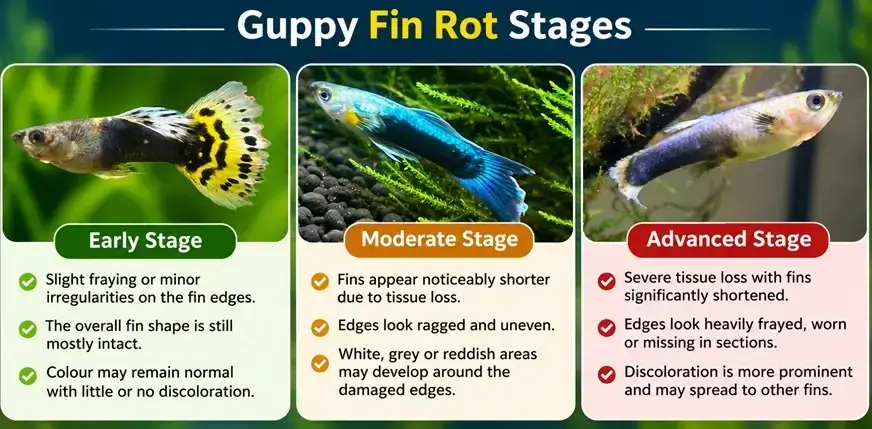
Moderate Stage:
The fins become visibly shorter as tissue loss progresses. White, grey, dark or reddish discoloration may appear, along with inflammation around the damaged edges.
At this stage, begin treatment rather than relying on water changes alone.
Advanced Stage:
Large portions of the fins may disappear, and the deterioration can
reach the fleshy base of the tail or extend to surrounding tissues. Red
streaks, ulcers and other signs of systemic illness may also appear.
This stage is serious and requires appropriate treatment. Do not rely on water changes or aquarium salt alone at this stage.
5. What Causes Fin Rot in Guppies?
Fin rot is usually linked to poor water quality, stress or damaged fins. These conditions weaken a guppy’s natural defences and make bacterial infections more likely.
Poor Water Quality
Poor water quality is one of the main factors associated with fin rot. Ammonia and nitrite should always be at 0 ppm, while nitrate should ideally remain below 20 ppm. Accumulated waste and infrequent water changes can further stress guppies and increase their vulnerability to bacterial infections.
Stress and Overcrowding
Too many fish in a tank increase waste, competition for space and stress. Aggressive tank mates, frequent chasing and unstable water conditions add to the stress.
Physical Injuries
Fin nipping, sharp decorations and rough filter intakes can damage delicate fin tissue. Bacteria can then infect the injured areas.
Temperature Fluctuations
Sudden changes in water temperature can stress guppies and make them more vulnerable to disease. Keep the aquarium temperature stable.
Poor General Health
Inadequate nutrition, transport stress and other illnesses can weaken a guppy’s ability to fight infections.
6. Guppy Fin Rot Treatment
Treating fin rot involves correcting water quality problems, preventing further fin damage and using antibacterial medication when the infection progresses beyond the early stages. Clean water and good aeration support recovery.
Step 1: Test Water Parameters
Check the aquarium water:
Also check pH and temperature. If ammonia or nitrite is detectable, investigate the biological filter, stocking level and feeding routine. Make sure you maintain the recommended guppy water parameters.
Step 2: Improve Water Quality
If ammonia and nitrite are at zero and nitrate is within the recommended range, continue your regular water-change schedule. If ammonia or nitrite is detectable, nitrate is elevated, perform a partial water change using dechlorinated water at a similar temperature.
During water changes, vacuum the substrate to remove uneaten food, fish waste and accumulated debris.
Step 3: Remove Aggressive Fish or Sharp Objects
Check whether other fish are chasing the affected guppy. Separate aggressive tank mates if necessary.
Remove sharp decorations, rough plastic plants and other objects that could damage the fins. Also check that filter intakes are covered and that strong currents are not making it difficult for the guppy to swim.
If possible, move the affected guppy to a properly maintained hospital tank. This makes treatment easier and avoids exposing other aquarium inhabitants to medication unnecessarily.
Step 4: Start Antibacterial Medication
If fin rot has progressed beyond the early stage, antibacterial medication is generally needed alongside good water quality and aeration.
Aquarium medications may contain ingredients such as erythromycin, kanamycin or nitrofuran-based antibacterials. Products such as Seachem KanaPlex and API Fin & Body Cure are examples of aquarium treatments, but their suitability depends on the suspected infection, formulation and product directions.
When using medication:
- Remove activated carbon from the filter before adding medication, as it can absorb some treatments and reduce their effectiveness. Follow the product instructions.
- Select an appropriate aquarium antibacterial medication.
- Calculate the dose using the actual water volume of the tank.
- Follow the manufacturer’s dosing schedule and complete the recommended treatment course.
- Do not combine different antibiotics or use human medications without appropriate professional guidance.
A separate hospital tank is preferable when possible. Some antibacterial treatments can affect beneficial bacteria in the biological filter, so monitor ammonia and nitrite during treatment.
Step 5: Maintain Good Oxygenation
Keep the aquarium well oxygenated throughout treatment. Maintain adequate surface movement and use an additional air stone if necessary.
This is particularly important when guppies are stressed or receiving medication, as some treatments can affect dissolved oxygen levels.
Step 6: Watch for a Secondary Fungal Infection
Fin rot can leave damaged tissue vulnerable to secondary infections. If you notice fluffy, cotton-like growth developing over the affected fin while treating with antibacterial medication, a secondary fungal or water-mould infection may be present.
Antibacterial medication will not treat this infection. See our fungal infection section for the appropriate antifungal treatment.
Step 7: Complete Treatment and Remove Residual Medication
Do not stop treatment as soon as the fins appear better. Continue for at least 3–5 days after the fin stops deteriorating and inflammation clears, provided this is consistent with the medication’s recommended treatment duration. Always follow the manufacturer’s instructions.
After treatment, perform the recommended partial water change to remove residual medication.
Continue monitoring ammonia and nitrite, particularly if the medication may have affected the biological filter.
Step 8: Monitor Fin Recovery
The first sign of recovery is that the fin edges stop deteriorating. New fin tissue may initially appear clear or translucent before gradually developing its normal colour.
Fin regrowth takes time, depending on the severity of the damage. Continue maintaining stable water conditions while the fins regenerate.
What About Aquarium Salt?
Aquarium salt is sometimes used as supportive care for mild fin problems, but it is not a substitute for antibacterial medication when fin rot is progressing.
Salt is not necessary in every case. Use it cautiously in planted aquariums and tanks containing snails, shrimp or other invertebrates, as some inhabitants may be sensitive to it.
7. How Long Does Fin Rot
Take to Heal?
Recovery depends on the severity of fin damage and how quickly the infection is controlled.
Note: These are approximate recovery timelines, not fixed treatment durations. Always complete medication according to the manufacturer’s instructions.
8. Can Guppy Fins Grow Back?
Yes. Guppies can regenerate damaged fin tissue if the infection or
injury is controlled and the base of the fin remains healthy.
New growth often appears transparent at first. As the fin
develops, it may gradually regain its original colour and shape.
However, severe damage reaching the fin base can result in permanent deformity.
Good water quality, proper nutrition and a stress-free environment
are important during recovery.
9. Is Fin Rot Contagious?
Fin rot is not usually directly contagious from one guppy to another. However, the bacteria responsible can be present in aquarium water and infect fish that are vulnerable.
Why Multiple Guppies in the Same Tank May Be Affected
If several guppies develop fin rot its, it is usually because of a shared environment with conditions such as poor water quality, overcrowding, aggressive tank mates and stress.
10. How to Prevent Fin Rot in
Guppies
Good aquarium maintenance, stable water conditions and a stress-free environment help prevent fin rot.
These simple practices help keep guppies healthy and reduce the risk of fin damage and infection.
11. Frequently Asked Questions
1. Can guppy fin rot heal on its own?
Mild fin rot may stop progressing once water quality improves and the underlying cause is removed. However, if the fins continue deteriorating or tissue loss increases, appropriate antibacterial treatment may be necessary.
2. What is the difference between fin rot and tail rot?
Fin rot can affect any fin, including the dorsal and pectoral fins, while tail rot specifically affects the caudal (tail) fin. Both describe the same type of fin tissue deterioration.
3. Why are my guppy’s fins turning white?
White or milky edges can indicate damaged or deteriorating fin tissue. New fin growth during recovery may also appear pale or translucent. Watch whether the affected area continues to deteriorate or gradually grows back.
4. Can aquarium salt cure guppy fin rot?
Aquarium salt may provide supportive care in some situations, but it is not a reliable standalone cure for bacterial fin rot. Correct water quality and use appropriate antibacterial treatment if the infection progresses.
5. Should I isolate a guppy with fin rot?
Isolation can help if the guppy is being bullied, repeatedly injured or needs medication. A separate hospital tank also avoids exposing other aquarium inhabitants to medication unnecessarily.
6. Can guppy fin rot kill a fish?
Yes. Severe fin rot can destroy large portions of the fins and spread into surrounding tissues. Advanced infections can become life-threatening, particularly if ulcers or systemic illness develop.