
Goldfish velvet disease causes a fine, gold or rust-colored dusting across your fish’s skin — almost like it has been coated with a fine metallic powder. Sometimes called rust disease or gold dust disease, it is caused by microscopic parasites called dinoflagellates that can affect the skin and the gills. The disease can be particularly difficult to spot on a gold or orange goldfish because the fine dusty coating may blend in with the fish’s natural coloration.
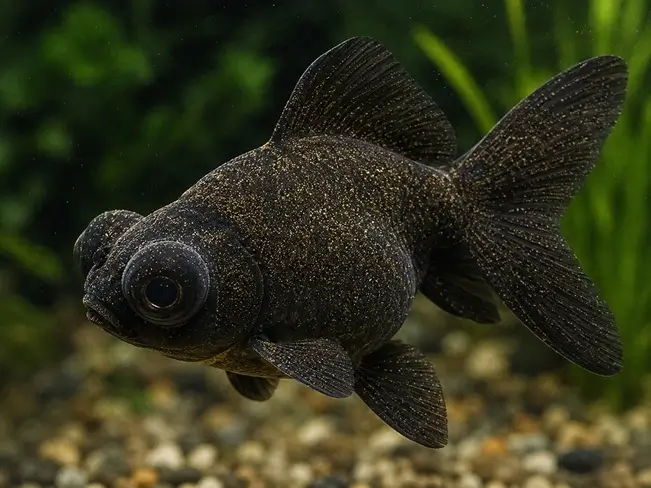
Velvet disease isn’t exclusive to goldfish. It can also affect many other freshwater fish, including guppies, bettas, and mollies.
Table of Contents:
1) What Is Velvet Disease?
2) Velvet Disease – Quick Facts
3) Velvet Disease Symptoms
4) Velvet vs. Ich: How to Tell Them Apart
5) Velvet Disease Causes
6) Velvet Disease Treatment
7) How to Prevent Goldfish Velvet
8) FAQ
9) Final Thoughts
What Is Velvet Disease?
Velvet disease is a parasitic infection caused by parasites called dinoflagellates, commonly referred to in the aquarium hobby as Oodinium. In freshwater fish, the parasite is also known as Piscinoodinium. It can infect the skin and gills, damaging the tissues as it feeds and producing the fine, dusty appearance that gives the disease its name.
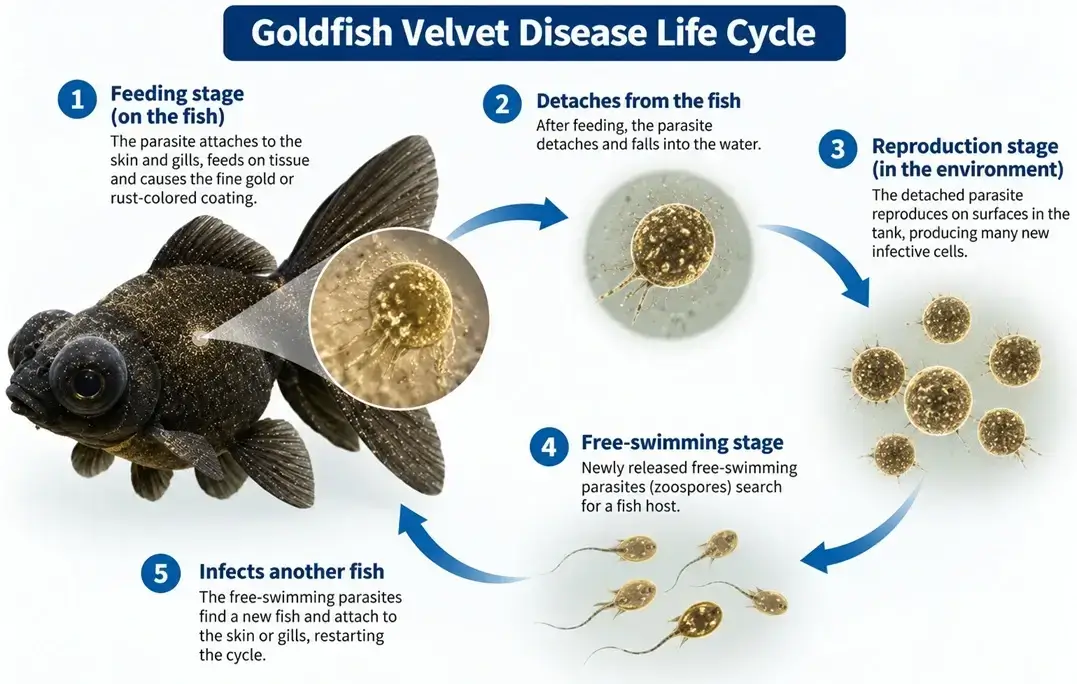
The parasite has several stages in its life cycle. After feeding on the fish, it detaches and reproduces before releasing free-swimming infective stages of the parasite into the water that search for another fish host. This is why velvet can spread through an aquarium once the parasite is introduced.
Velvet Disease – Quick Facts
| Attribute | Details |
|---|---|
| Cause | Piscinoodinium (often called Oodinium in aquarium literature), a parasitic dinoflagellate |
| Common in Goldfish? | Less commonly reported in goldfish than in many tropical aquarium fish |
| Contagious? | Yes — spreads through free-swimming infective stages released into the water |
| Main Symptoms | Fine gold or rust dust-like coating, rapid gill movement, flashing, lethargy |
| Standard Treatment | Copper-based medication; darkness may be used as a supportive measure |
| Treatment Length | Depends on the medication used, water temperature, and parasite life cycle; complete the full treatment stated on the product label |
Velvet Disease Symptoms
Velvet disease can affect both the skin and gills, so symptoms may include visible changes to the fish as well as changes in breathing and behavior.
Physical Symptoms:
• Gold or rust-colored dusting — a fine metallic-looking coating across the skin and fins. It may be easier to see by shining a flashlight from the side in a darkened room.
• Rapid or labored breathing — when the parasite affects the gills, you may notice faster gill movement, difficulty breathing, or gasping near the surface.
• Clamped fins — the fish holds its fins tightly against its body instead of keeping them normally extended.
• Excess mucus — irritation of the skin and gills can cause the fish to produce more protective slime.
• Advanced signs — heavily affected fish may develop a dull or cloudy appearance, darker coloration, weight loss, and peeling or shedding skin.
Behavioral Symptoms:
• Flashing — rubbing or scraping against gravel, decorations, or aquarium glass because of irritation caused by the parasites.
• Lethargy — affected goldfish may become less active, hide, or spend more time near the surface of the tank, particularly when the gills are affected.
• Loss of appetite — infected fish may eat less or stop eating, with weight loss developing in more advanced cases.
Velvet vs. Ich: How to Tell Them Apart
Velvet and ich can look similar at first, especially during the early stages of an infection. Even I had a tough time figuring it out during the initial stages of my hobby. The easiest clue is to look closely at the size and overall appearance of the spots. A simple rule to remember is: gold = velvet, white = ich. However, use this as a quick visual clue rather than a definite diagnosis.
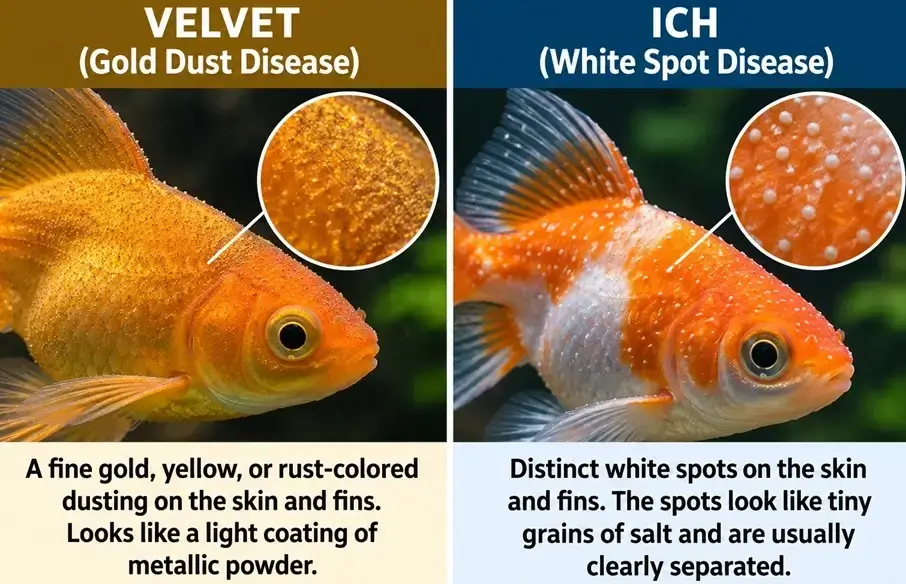
Velvet disease usually creates a very fine gold, yellowish, bronze, or rust-colored dusting over the skin and fins. Instead of individual grains, it can look as though the fish has been lightly coated with metallic powder.
Ich, on the other hand, typically produces more obvious individual white spots that resemble tiny grains of salt scattered across the body and fins.
On a gold or orange goldfish, velvet can be particularly difficult to see because the coating may blend into the fish’s natural color. Shining a flashlight from the side in a darkened room can make the fine coating easier to notice.
Velvet Disease Causes
Velvet disease begins when the parasite is introduced into the aquarium or pond.
Common ways it can enter or spread include:
• An infected new fish — introducing a fish carrying the parasite without quarantining it first is one of the main ways velvet can enter an aquarium.
• Contaminated equipment — wet nets, siphons, containers, or other aquarium equipment shared between tanks can potentially transfer the parasite.
• Contaminated water — moving water from an infected aquarium along with fish or equipment may introduce free-swimming stages of the parasite.
Stress Factors That Can Make an Outbreak Worse:
Stress doesn’t create velvet disease, but it can leave a goldfish less able to cope with an infection.
• Poor water quality — ammonia or nitrite can damage the gills and place additional stress on a fish already dealing with the parasite.
• Sudden temperature changes — rapid changes in water temperature can stress goldfish and add to the effects of an existing infection.
• Overcrowding — crowded conditions increase stress and make it easier for infective stages released into the water to encounter another fish.
Velvet Disease Treatment
Velvet disease can progress quickly, particularly when the gills are heavily affected, so treatment should begin as soon as you reasonably suspect or confirm the disease. The parasite is most vulnerable to medication during its free-swimming stage, which is why treatment needs to continue even when the visible dusty coating begins to disappear.
1. Check the Water and Increase Aeration
Test ammonia, nitrite, nitrate, pH, and temperature before treatment. Correct any water-quality problems, since poor conditions add further stress to a fish whose skin or gills may already be damaged.
Also provide good aeration and surface movement, particularly if the goldfish is breathing rapidly or gasping. Increase the aeration with an air stone if possible.
2. Treat the Infected Aquarium, Not Just the Fish
If velvet disease has appeared in a shared aquarium, assume the other fish have been exposed. Moving only the visibly sick goldfish to a hospital tank does not remove the free-swimming or reproductive stages already present in the original aquarium.
If the main aquarium contains animals that cannot safely tolerate the medication you plan to use, such as shrimp or snails, treatment becomes more complicated and a separate treatment setup may be necessary.
3. Use a Medication Labeled for Velvet
Copper-based medications are commonly used against velvet, particularly the free-swimming stage of the parasite. Follow the manufacturer’s instructions exactly for the concentration and full treatment duration.
Do not estimate a dose yourself. Copper has a relatively narrow safety margin, and its toxicity can be affected by water chemistry. Some fish and invertebrates are also particularly sensitive to it.
4. Remove Activated Carbon if the Medication Requires It
Activated carbon and some other chemical filter media can remove medication from the water. Remove them when instructed by the medication manufacturer, but keep the biological filter and water circulation running unless the product label specifically says otherwise. This also allows the medicated water to circulate through the filter and the rest of the aquarium system, rather than treating only the water in the main tank.
5. Reduce the Aquarium Lighting
Keeping the aquarium dim or dark during treatment may help because the velvet organism can use light during parts of its life cycle. However, darkness should be treated as a supportive measure, not a cure by itself.
6. Add Aquarium Salt and Gradually Increase the Temperature
Aquarium salt can be used alongside the main medication as supportive care. Add about 1 tablespoon of aquarium salt for every 5 gallons of water, dissolving it in some aquarium water before adding it gradually to the tank. Salt alone will not cure velvet disease, so it should not replace the main medication.
You can also gradually raise the water temperature to around 78–80°F (25.5–26.5°C) during treatment. Warmer water speeds up the parasite’s life cycle, helping move it into the vulnerable free-swimming stage where medication can target it. Increase the temperature gradually rather than suddenly, and provide strong aeration, since warmer water holds less dissolved oxygen.
7. Complete the Full Treatment
Don’t stop treatment simply because the gold or rust-colored coating has disappeared. Medication mainly targets the parasite during its vulnerable stages, while other stages may still be developing in the aquarium.
Treatment commonly lasts around 10–14 days, depending on the medication being used and the parasite’s life cycle. Always complete the full treatment period stated on the medication label, even if your goldfish looks better after just a few days. Stopping too early can allow surviving parasites to continue the cycle and cause the infection to return.
8. Gradually Remove the Medication and Salt
Once the full treatment course is complete, begin returning the aquarium to normal with partial water changes. This helps dilute and remove any medication left in the water and gradually lowers the salt concentration rather than changing the water chemistry all at once.
If you used a copper-based medication, follow the product instructions for water changes during treatment, since changing water can reduce the copper concentration below its effective level. If a water change is necessary because of poor water quality, make sure the medication concentration is maintained according to the manufacturer’s directions.
After treatment is finished, perform the water changes recommended by the medication manufacturer. Fresh activated carbon can also be placed back in the filter to help remove residual medication. Copper can be toxic if excessive levels remain in the aquarium, so use a compatible copper test kit if the product recommends monitoring copper levels.
There is no need to add more salt after treatment has finished. Salt does not evaporate from aquarium water, so each water change naturally removes a portion of it. Continue normal partial water changes and the salt concentration will gradually fall.
How to Prevent Goldfish Velvet Disease
• Quarantine new fish — keep every new arrival in a separate quarantine tank for at least 4 weeks and watch closely for unusual breathing, flashing, loss of appetite, or changes in the skin before moving it to your main aquarium.
• Don’t transfer water between tanks — avoid adding water from pet-store bags, quarantine tanks, or other aquariums to your established goldfish tank.
• Use separate equipment when possible — dedicate nets, siphons, buckets, and other wet equipment to each tank. If equipment must be shared, clean and disinfect it properly before using it in another aquarium.
• Maintain good water quality — keep ammonia and nitrite at 0 ppm, perform regular maintenance, and avoid sudden changes in temperature or other water parameters.
• Avoid overcrowding — give your goldfish adequate space and maintain good filtration and aeration to reduce unnecessary stress.
• Feed a balanced diet — good nutrition supports the fish’s overall health and ability to cope with disease.
• Be careful with new aquarium plants — don’t pour store water into your goldfish tank. Rinse new plants thoroughly and quarantine them separately when possible. A suitable plant-safe disinfecting dip can also reduce the risk of introducing unwanted organisms into the aquarium.
FAQ
Can Humans Catch Velvet Disease?
No. The parasite that causes freshwater velvet infects fish and is not known to infect humans.
Can Goldfish Recover Completely From Velvet Disease?
Yes. Goldfish can recover from velvet when the infection is recognized and treated before severe damage occurs. Fish with heavy gill involvement may take longer to recover even after the parasite has been controlled.
Can Velvet Disease Kill Goldfish?
Yes. A severe velvet infection can become life-threatening, particularly when the parasites damage the gills and interfere with normal breathing. This is why rapid breathing, gasping, or severe lethargy should be taken seriously.
Can Goldfish Get Velvet More Than Once?
Yes. Recovering from velvet doesn’t mean a goldfish is permanently protected from future infections. The parasite can be introduced again through infected fish, contaminated water, or wet equipment, which is why quarantine and good aquarium biosecurity remain important.
Can Velvet Live in an Aquarium Without Fish?
Not indefinitely. Velvet needs a fish host to survive and continue its life cycle. Some stages of the parasite can remain in the aquarium temporarily after leaving the fish, but without a suitable host, the parasite eventually dies out.
Final Thoughts
Goldfish velvet disease can be difficult to spot, especially on gold or orange fish. Look for the characteristic fine gold or rust-colored dusting, along with changes in breathing and behavior. Caught early, velvet is treatable with the right medication and a complete treatment course.
Quarantining new fish and preventing cross-contamination between tanks remain the best defenses.