
Goldfish fry are baby goldfish that have recently hatched from eggs. They are only a few millimeters long and need different care from adult goldfish, especially during their first week. Knowing when and what to feed them, how to maintain clean water, what temperature and pH they need, and when to give them more space as they grow can make a big difference to their survival.
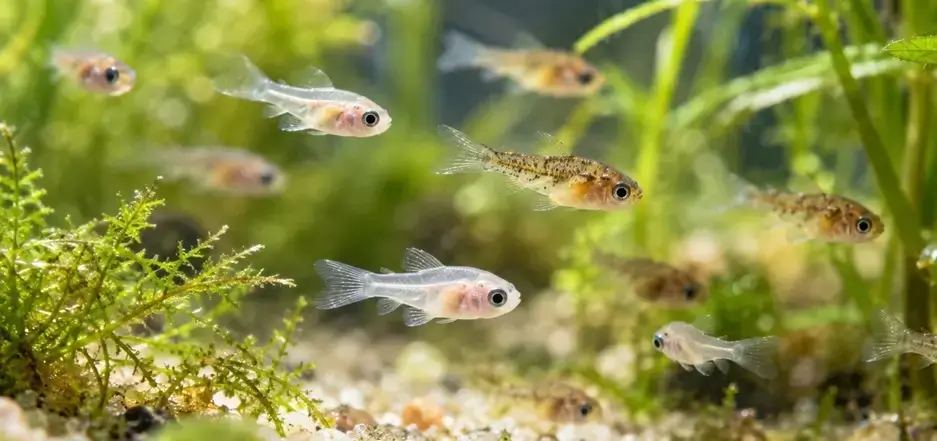
This article covers how to raise goldfish fry from hatching through their early growth, with links to our more detailed guides on food, tank setup, growth, and color changes.
Quick Navigation
Goldfish Fry at a Glance
| Hatching time | Usually around 4–7 days after the eggs are laid, depending on temperature. |
|---|---|
| Newly hatched fry size | About 4–5 mm long. |
| First food | When the fry become free-swimming and have used up their yolk sac |
| Suitable first foods | Hard-boiled egg yolk (sparingly), infusoria, newly hatched baby brine shrimp, and suitable powdered fry food |
| Early rearing temperature | A steady 70–75°F (21–24°C) |
| Water pH | 7.0–8.0 (stable) |
| Filtration | Mature sponge filter with gentle flow |
| Water quality | Ammonia and nitrite: 0 ppm |
| Main early risks | Predation, missed first feeding, unsuitable food, overcrowding, and poor water quality |
These are general guidelines. Hatching and growth rates vary with temperature, genetics, and the conditions in which the fry are raised.
What Do Newly Hatched Goldfish Fry Look Like?
Newly hatched goldfish fry are tiny (4–5 mm long), slender, and almost transparent. You may notice their eyes and a small yolk sac before you can make out much of their body.
They often remain attached to plants, tank glass, or spawning mops for the first day or two rather than swimming around like adult fish.
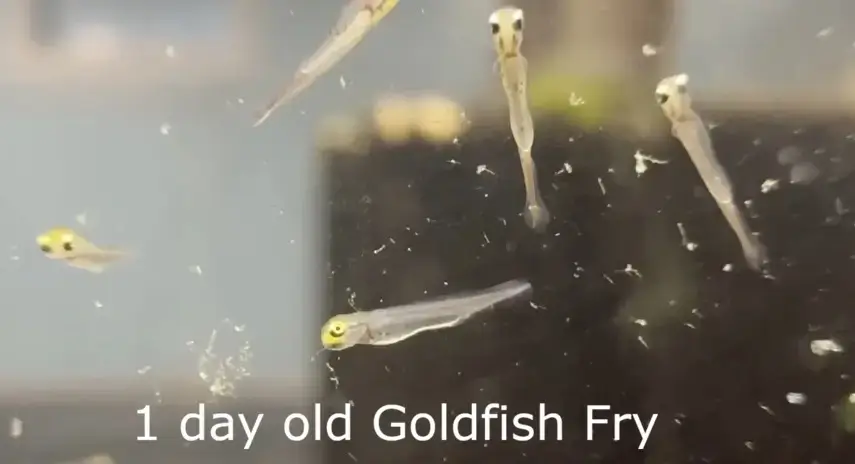
Once the yolk sac is absorbed, they start swimming freely and looking around for food.
As they grow, they develop grey, brown, or bronze coloring long before they show the familiar colors of adult goldfish.
Goldfish start as small, sticky eggs attached to plants and other surfaces. If you are still trying to identify the eggs, see what goldfish eggs look like. For close-up descriptions of the hatchlings, read what baby goldfish look like.
Goldfish Fry Tank Setup and Water Quality
A separate fry tank gives fry a better chance of survival because adult goldfish often eat their own eggs and young. A spawning may also produce hundreds of fry, which are easier to manage in a separate tank.
You do not need any elaborate decoration, but you do need safe filtration and stable water conditions for the fry. For detailed instructions, see our goldfish fry tank setup guide.
Tank size: A 10-gallon tank can be a starting point for a small batch. As fry grow, move them into larger grow-out tanks to prevent overcrowding and waste buildup.
Water depth: Keeping the water around 4–7 inches deep can make it easier for fry to reach the surface and find food during the early weeks, but it is not a strict requirement. Fry can also develop in deeper water.
Filtration: Use a mature sponge filter with gentle flow. If using a power filter, protect its intake with a fine sponge and reduce strong water movement.
Temperature: Aim for a stable 70–75°F (21–24°C), avoiding sudden swings.
Cleaning: A bare-bottom tank makes uneaten food and waste easier to spot. Live plants can provide cover, but should not make cleaning difficult.
Test ammonia and nitrite regularly and keep both at 0 ppm.
Remove leftover food promptly, then adjust partial water changes to the water test results and the number of fry.
Always use dechlorinated replacement water at a similar temperature. A small airline tube helps you clean the tank without accidentally sucking up fry.
For safe filter choices and intake protection, read do goldfish fry need a filter?
How to Raise Goldfish Fry: The First Week
The first week is mainly about recognizing when the fry need their first meal and keeping the water safe while they begin feeding.
First 1–2 Days After Hatching
Fry usually cling to surfaces and live off their remaining yolk sac. They do not need food at this stage. Feeding them too early will only pollute the water.
Keep the water gently aerated and remove any surface scum caused by spawning debris or milt.
Keep the surface clear so the fry can reach it when they begin swimming and inflating their swim bladders.
Around Days 2–4
Watch for fry leaving the glass or plants and swimming around on their own. This is the signal to begin feeding tiny foods such as finely mashed hard-boiled egg yolk, infusoria, or freshly hatched baby brine shrimp.
The exact day varies with temperature and individual development.
Rest of the First Week
Offer small meals several times a day and check whether the fry are actually eating.
Remove leftover food, watch for weak or trapped fry, and test the water as feeding increases. Avoid strong currents and sudden temperature changes.
If you’re starting with eggs rather than hatchlings, our goldfish eggs guide covers what to do before they hatch.
What to Feed Goldfish Fry
Do not feed newly hatched fry while they are still using their yolk sac. Start when they become free-swimming and actively search for food. Their first meals must be small enough to fit their tiny mouths.
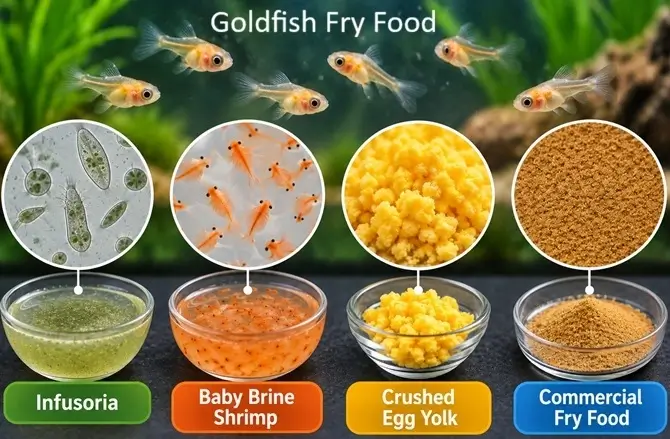
First meals: Hard-boiled egg yolk, infusoria, and freshly hatched baby brine shrimp are useful options. A finely powdered fry food can also work if the fry can eat it.
A little food left uneaten can foul a small fry tank quickly. Hard-boiled egg yolk is sometimes used as an emergency food, but it can cloud the water and should be offered very sparingly.
Feeding frequency: Offer 3–5 small meals a day if possible, adjusting the amount to what the fry actually consume. During the first week, 2–3 small meals may be sufficient.
As they grow: Gradually introduce larger foods, such as finely crushed goldfish flakes or pellets, appropriately sized commercial fry food, and small live or frozen foods like Daphnia, baby shrimp, or microworms.
For food choices by age and a fuller feeding schedule, see what to feed goldfish fry.
Goldfish Fry Growth Stages and Growth Rate
Goldfish grow fastest during their early months, although not every fry in the same batch grows at the same rate.
Good food, clean water, and enough space all influence their development.
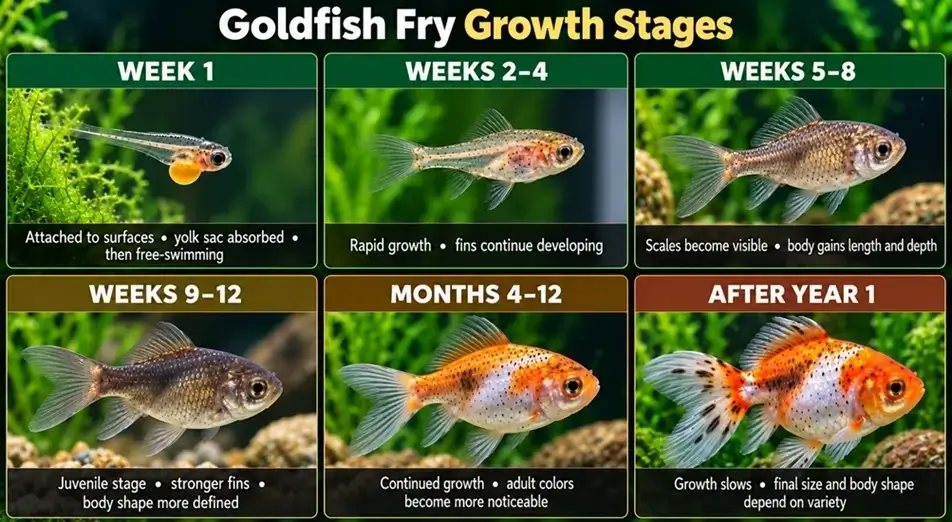
Week 1: The fry begin free-swimming and feeding, but they still look like tiny, slender fish.
Weeks 2–4: The fry’s fins become more noticeable, and their bodies gradually take on a recognizable fish shape.
Weeks 5–8: Well-growing fry may approach about 1 inch, though some will be smaller or larger.
Months 3–12: Fry growth continues, with common and comet goldfish gaining length while fancy varieties develop deeper bodies and distinctive features.
These are approximate milestones, not targets every fry must meet. For more detailed information and measurements, read our goldfish fry growth chart and stages.
When Do Goldfish Fry Change Color?
Goldfish fry do not hatch in their adult colors like orange or gold. They are initially translucent and often develop grey, brown, or bronze coloring as they grow.
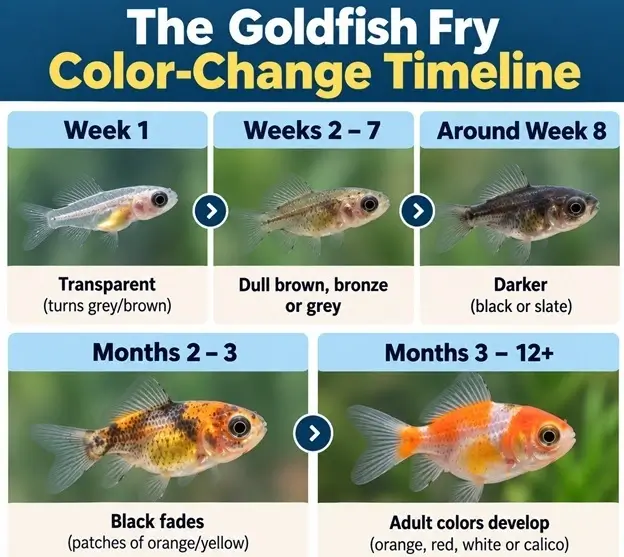
Depending on their genetics, some start showing orange, gold, or white patches after a couple of months, while others take much longer.
Not every goldfish will turn orange. Some retain dark wild-type coloration, and fancy varieties can develop their final patterns at different rates.
For the full timeline, see when goldfish fry get their color.
Why Goldfish Fry Die and How to Improve Survival
Not all goldfish fry from a spawning will survive. Some may hatch weak or have developmental problems, but repeated deaths should not simply be blamed on weak fry.
Here are the common reasons goldfish fry die and how to improve their chances of survival.
Poor water quality: Poor water quality is one of the main reasons goldfish fry are lost. Uneaten food and waste can quickly raise ammonia and nitrite levels, especially in small tanks with a large batch of fry. Test the water regularly, maintain good water quality, and remove leftover food.
Temperature and water change shock: Sudden changes in temperature or pH can seriously stress young fry and may cause sudden deaths. Always use dechlorinated replacement water at a similar temperature and avoid sudden changes in water conditions.
Predation: Adult goldfish and other fish may eat newly hatched fry. Raising them in a separate tank gives them a better chance of survival.
Overcrowding: Too many fry competing for food and space can lead to poor growth and deteriorating water quality. Move growing fry into larger grow-out tanks or divide them into smaller groups.
Strong filtration: Powerful filter intakes can suck in tiny fry, while strong currents may exhaust and stress them, potentially weakening their immune defenses. Use a sponge filter, or protect the intake with a sponge and reduce the water flow.
Starvation or unsuitable food: Newly free-swimming fry need food small enough to swallow. Offer infusoria, freshly hatched baby brine shrimp, or other suitable first foods several times a day, and check that the fry are actually eating.
Diseases and parasites: Gill flukes, white spot disease (Ich), and bacterial infections can cause significant losses among young fry. Identify and separate affected fry promptly, and perform water changes as needed to maintain good tank conditions.
If several fry start dying suddenly, check the water parameters, temperature, and feeding conditions first.
For help identifying symptoms, see our Goldfish Diseases guide. Keep in mind that treatments intended for adult goldfish may not be suitable for newly hatched fry.
Raising Goldfish Fry in a Pond
Goldfish fry can grow naturally in outdoor ponds, even when adult goldfish are present. However, only a small number may survive without protection.
A well-established pond offers several advantages. Algae, biofilm, and tiny aquatic organisms provide a natural food supply.
The biggest risk is predation. Adult goldfish, larger fish, and aquatic insects such as dragonfly larvae may eat the eggs and fry. Sudden temperature changes and poor water quality can also affect survival.
Adding dense plants and large, smooth decorations gives fry more places to hide from larger fish. The extra swimming space can also support healthy growth.
If you want to raise a larger number of fry, move egg-covered plants or spawning mops into a protected nursery pond or separate fry tank. Make sure the nursery has gentle water movement, good water quality, and enough food for the growing fry.
Frequently Asked Questions
How long can goldfish fry go without food?
Goldfish fry may survive around 3–4 days without food, but starvation can weaken them and significantly reduce their chances of survival. If you go away, arrange for someone to feed them daily or use a suitable automatic feeder.
Do goldfish fry need sunlight?
No. Natural light can help plants and algae grow, but fry can be raised indoors under ordinary aquarium lighting. Avoid placing a glass tank in direct sunlight, as it can overheat.
When can goldfish fry join adult goldfish?
Some fast-growing goldfish fry may be ready after 1–2 months, but many need 3–5 months or longer. Introduce them only when they are too large for the adults to swallow, can compete for food, and can handle the adult tank’s filtration and water flow.