So when do goldfish fry get their color? Not right away. Every goldfish fry hatches dark, not gold, with most starting to show gold, orange, or white patches around 8 to 12 weeks old. If your goldfish fry are still black, grey, or brown before that, that’s completely normal and not a sign to worry.
Quick Navigation
1) Why Are Baby Goldfish Black?
2) The Goldfish Fry Color-Change Timeline
3) Why Some Goldfish Fry Never Turn Gold
4) What Affects How Fast Color Comes In Baby Goldfish
5) Frequently Asked Questions
Why Are Baby Goldfish Black?
The dark coloring is camouflage, the same trick many young animals rely on early in life, not something the fry are doing on purpose. It’s simply nature giving them a head start to survive. A bright orange fish stands out sharply against a pond bottom or open water, making it an easy target for birds and other predators. Starting out dark gives young, defenseless fry a much better chance of surviving long enough to grow.
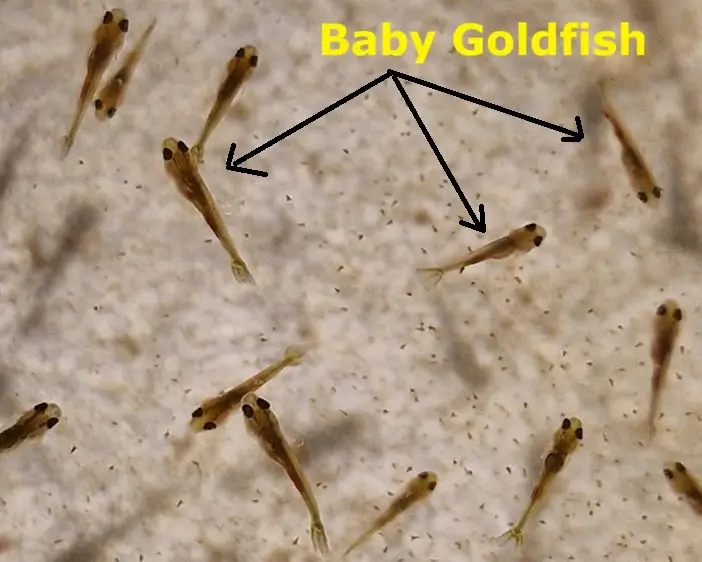
That dark color comes from melanin, the same pigment responsible for dark coloring in most animals, concentrated in the fry’s skin cells at this stage.
The Goldfish Fry Color-Change Timeline
Don’t expect your goldfish fry to look anything like an adult early on. For the first couple of months, they stay grey or brownish for camouflage, and it’s only around the two-month mark that real orange, red, white, or calico coloring starts coming through.
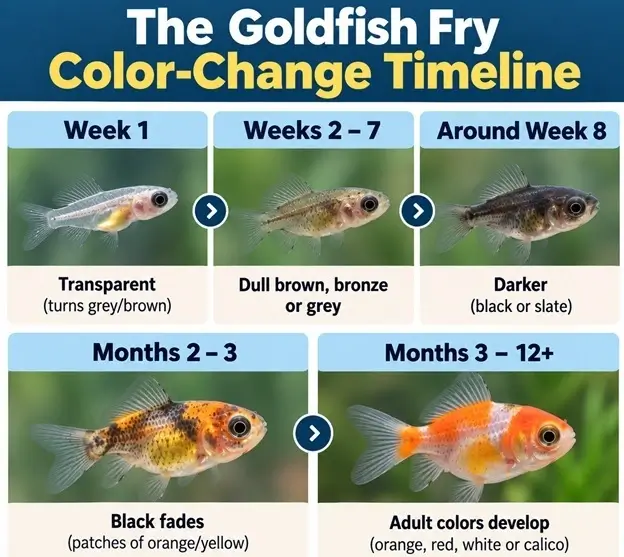
Week 1: Fry hatch transparent, then quickly take on a grey or brownish tone within the first week. They live off their yolk sac at first, becoming free-swimming around day 3
Weeks 2 through 7: Color stays a dull brown, bronze, olive, or dark grey during this stretch, with no real shift happening yet
Around week 8: Some fry darken even further, sometimes toward black or slate, right before the true color change begins underneath
Months 2 to 3: Black pigment starts breaking down and the black color starts to fade, usually beginning around the belly and lower body. It then spreads upward toward the back and fins, leaving the fish with patches of black, bronze, and light orange or yellow. The color depends on both their parents and their diet.
Months 3 to 12 and beyond: The dark color slowly fades, revealing the adult orange, red, white, or patterned colors. Most goldfish develop their adult colors by about 6 months, but some, especially calico goldfish, can take more than a year. A few may keep some of their original brown color for life based on their parents and diet.
Why Some Goldfish Fry Never Turn Gold
Not every fry follows the same path. Some goldfish keep their dark, wild-type coloring permanently, and this comes down to one of two things:
Genetics: Some breed lines, like calicos and certain metallic varieties, carry weak or suppressed color-change genes and simply never have the potential to color up, no matter the conditions. If this is the cause, there is nothing to fix, and the fish is just as healthy as one that colors up fully.
Poor light or diet: A fish genetically capable of only a light or subtle color is more vulnerable to staying grey or dull if it doesn’t get enough light or good nutrition. A fish genetically set for a strong color, like deep red, will generally still come through as a light red color regardless. If light or diet is the cause, it’s worth correcting rather than leaving as is.
What Affects How Fast Color Comes In Baby Goldfish
The timing of the color change is not exactly the same for every goldfish fry. Several factors can affect how quickly it happens:
Genetics: This is the biggest factor. The genes a fry inherits from its parents determine whether it is likely to develop orange, red, white, calico, or remain dark. Genetics also influence when the color change begins.
Water temperature: Temperature affects the fry’s growth and development, which can also influence the timing of its color change. This doesn’t mean that simply raising the temperature will make a fry change color faster.
Light exposure: Light can affect how fish produce and maintain pigment. Fry kept with suitable light, whether from the sun or a proper aquarium light, may develop stronger pigmentation than fry kept in very low light, although sunlight is not required for a goldfish to develop its adult colors.
Diet: Good nutrition gives growing fry the nutrients they need for normal development and pigmentation. Some foods also contain pigments, such as carotenoids, that can help bring out stronger yellow, orange, and red colors.
Frequently Asked Questions
Is it normal for only some fry in a batch to change color?
Yes. Even fry from the same spawning can follow different paths, with some coloring up quickly, some slowly, and others staying dark permanently. This is a normal variation, and it’s common for fry in the same batch to end up with slightly different color patterns.
Can a goldfish’s color change again after it’s fully colored?
Some goldfish continue to shift color subtly throughout their lives, particularly with major changes in diet, lighting, or water conditions, though this is separate from the initial black-to-gold change fry go through and is far less dramatic.
Does stress affect how goldfish fry color up?
Yes. Stressed fry tend to develop paler or duller color than fry that are kept in good conditions. Overcrowding, aggressive tank mates, and poor water quality are the usual culprits, so a stable, low-stress setup with proper light and a nutritious diet helps color come in properly.
Can I do anything to help my fry color up better?
A bit, within limits. Good lighting, a nutritious diet with varied minerals, and clean, stable water all support stronger color in fry that already have the genetic potential for it. None of this can push a genetically dark fish toward gold, but it can be the difference between a dull orange and a vibrant one.
Does tank or substrate color make a difference?
A little, but not quite the way it might seem. Dark substrate can trigger a real but temporary response where a fish’s pigment cells adjust for better camouflage, which reverses if the background changes again. It doesn’t affect their actual, lasting color. A spacious tank matters more for real development, since less crowding means less stress, and calmer fry tend to develop their true color more fully than stressed ones do.