
If your goldfish looks bloated, is floating or sinking oddly, or has not pooped in a while, “constipation” is probably the word you have landed on. Goldfish constipation or digestive blockage usually occurs from dry flake or pellet food with low fiber. It is also one of the most misused words in the whole hobby.
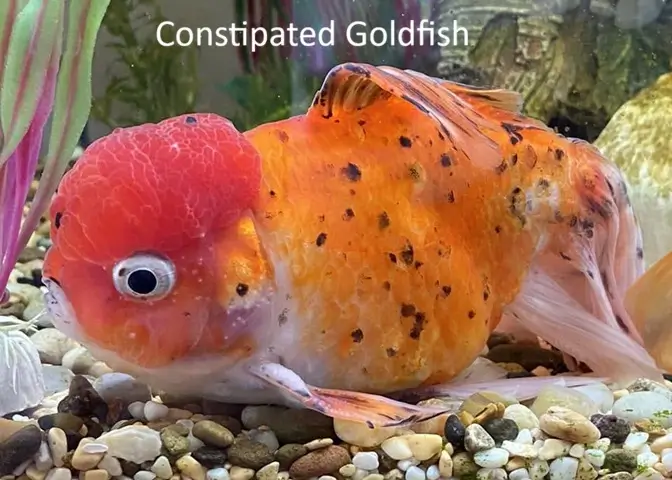
The popular advice and what is actually happening inside a goldfish don’t fully line up, and this guide walks through both sides honestly and details on causes, symptoms, and treatment for goldfish constipation.
Quick Navigation:
1) Is Goldfish Constipation Real or a Myth?
2) Goldfish Constipation Symptoms
3) What Causes “Constipation” in Goldfish?
4) What Goldfish Actually Need in Their Diet
5) How to Fix Goldfish Constipation
6) Should You Fast a Goldfish for 24 Hours?
7) Are Peas Good for Goldfish Constipation?
8) Epsom Salt for Goldfish Constipation: Does It Work?
9) Goldfish Constipation and Swim Bladder Problems
10) How to Prevent Goldfish Digestive Problems
11) FAQ
Is Goldfish Constipation Real or a Myth?
This question is worth settling before anything else, because it changes how you should actually respond.
• Freshwater fish live in a hypoosmotic environment, meaning water is constantly being drawn into their body through osmosis. Their kidneys work continuously to remove that excess water, which keeps the digestive tract naturally well-hydrated. A dry, hard, compacted blockage from dehydration, the kind “constipation” usually described in humans, doesn’t fit that physiology well.
• A goldfish fed a diet that’s mostly protein with too little fiber can end up with dense, compacted waste, not from dehydration, since that’s not physically possible for a fish living in water, but simply from not getting enough fiber in the diet. In the wild, goldfish eat mostly plant matter and algae, with insects and small crustaceans making up a smaller part of their diet, a very different balance from a diet built mostly around protein-heavy pellets.
So the honest answer is: partly a myth, partly real. The dehydration-based blockage does not really happen in goldfish. But real problems do cause the same symptoms, dry food expanding and producing gas inside the gut, and a diet with too much protein and not enough fiber, both genuinely slow digestion and produce the bloating, buoyancy issues, and dense waste people call “constipation.” The word survives because the symptoms are real, even if the popular explanation for them usually isn’t.
Goldfish Constipation Symptoms
• Goldfish with a swollen or bloated belly, sometimes with a stretched, tight appearance
• Goldfish floating at the surface or sinking to the bottom when the fish would normally swim at a normal depth
• Difficulty maintaining balance, tilting to one side, or struggling to swim level
• Reduced appetite or refusing food it would normally eat
• Reduced or absent poop over a day or two, or straining without producing much
• Not every one of these means constipation. A bloated belly with raised, pinecone-like scales points to Dropsy instead, a more serious organ-related condition.
What Causes “Constipation” in Goldfish?
• Dry food expanding after it’s swallowed. Dry pellets absorb water and swell inside the gut, and if the fish gulped it down dry, that expansion happens after the food has reached the gut.
• Overfeeding, simply giving more food than the fish’s short digestive tract can comfortably process in one go.
• A diet too high in protein and too low in fiber relative to what a goldfish actually needs, covered in detail in the next section.
• Intestinal gas produced as poorly suited food is digested, which can press on nearby organs including the swim bladder.
• Air-gulping at the surface, especially with floating flakes or pellets. Goldfish are physostomous, meaning their swim bladder connects directly to the esophagus, so swallowed air can end up affecting buoyancy.
• Cold water slowing digestion. Goldfish metabolism runs slow in cold water. The food can sit in the gut far longer than normal simply because the fish can’t process it quickly enough.
• Poor water quality generally stresses a fish and can slow down normal digestion and appetite as a side effect.
What Goldfish Actually Need in Their Diet
This is the part most articles on this topic skip, and it’s genuinely useful for understanding why some commercial food can contribute to digestive problems.
| Nutrient | Recommended Range |
|---|---|
| Protein (adult) | 30–35% |
| Protein (juvenile/growing) | 35–45% |
| Fiber | 5–10%, ideally not exceeding 10% |
| Lipids (fat) | 5–10% |
| Carbohydrates/starch | Under 10% |
Some popular commercial foods run outside these ranges, too high in protein and too low in fiber, sometimes relying on cheap fillers like corn or wheat chaff instead of real fiber sources. A consistent diet of this kind is a real, common contributor to what gets called constipation in goldfish.
How to Fix Goldfish Constipation
The right response depends on what’s actually causing the symptoms, so treat this as a starting checklist rather than an absolute fixed cure.
• Test your water first. Poor water quality can slow digestion and cause similar symptoms on its own, and it’s worth ruling out before assuming the problem is purely dietary.
• Fast the fish briefly to give the gut time to clear, covered in detail in the next section.
• Offer peas or fibrous vegetables once the fast ends, covered in the section below.
• Switch to a sinking food going forward, to cut down on surface air-gulping.
• Reassess the food itself. If this keeps happening, the underlying food may simply be a poor match for what a goldfish’s digestion actually needs, see the diet section above.
• If nothing improves within a few days, or the fish is showing more serious signs like persistent lethargy, appetite loss, or swelling that keeps growing — it is worth ruling out something more serious than diet, like Dropsy or another underlying illness.
Should You Fast a Goldfish for 24 Hours?
Yes, as a starting point, though the real picture is a bit more flexible than a single fixed number.
• 24 hours is a reasonable starting point, and it’s worth actually sticking to it rather than starving the fish for longer. Only extend the fast if the symptoms genuinely call for it, otherwise the fish may start eating tank deposits and risk disease.
• Extend this to 48 hours only if the fish is visibly affected and is floating or sinking abnormally rather than just slightly bloated.
• For a more severe case, up to about 3 days is sometimes recommended, though this is toward the upper end of what is typically needed.
Don’t overdo the fasting routine and starve the fish. Do it only when it is needed.
Are Peas Good for Goldfish Constipation?
Peas genuinely help, but for a different reason than most people assume, and understanding the real reason will change how you should use them.
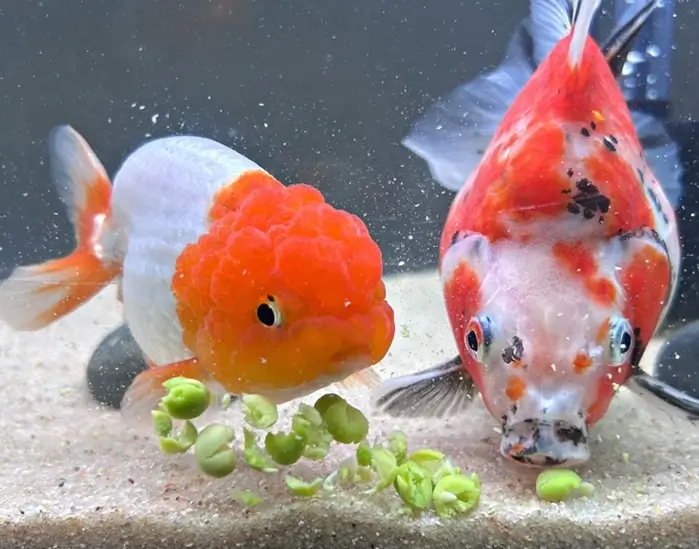
• Peas aren’t a special high-fiber food. Boiled peas run at roughly 5% fiber, which is nearly identical to commercial goldfish pellets. What actually works is that peas are less dense than high-protein food, making them a lighter meal that’s easier for the goldfish to pass.
• Peas should be boiled, skin removed, and thawed. Boiled and deshelled peas sink in water, and as a sinking food, help remove the surface air-gulping that contributes to floating and buoyancy issues in the first place. Also make sure to use plain frozen peas, not canned ones.
Epsom Salt for Goldfish Constipation: Does It Work?
This one deserves a more careful answer than “yes, add some salt.”
• Epsom salt’s real, well-established mechanism is drawing fluid out of swollen tissue through osmosis, the same reason it’s used for genuine fluid-retention conditions like early Dropsy or Popeye.
• For constipation, feeding Epsom salt works better than a bath alone. A bath only reaches the gut if the fish happens to swallow some water while breathing, which is unreliable at best, though it’s still worth doing. Soaking peas or regular food in a dissolved Epsom salt mixture gets it into the gut with certainty, and acts as a laxative to relieve constipation.
• For a short epsom salt bath in a separate container (15–30 minutes), use 1 tablespoon per gallon. For dosing directly in the main tank on an ongoing basis, use the much weaker 1 tablespoon per 5 gallons instead, since the fish will be sitting in it far longer. For soaking food, dissolve about ¼ teaspoon in 2 tablespoons of tank water before mixing it with peas or regular food.
Goldfish Constipation and Swim Bladder Problems
These are two separate conditions, but they get confused constantly because one so often triggers the other. Constipation-type bloating can physically press on the swim bladder, which sits right next to the gut, and that pressure is what causes the buoyancy problems people associate with “constipation.”
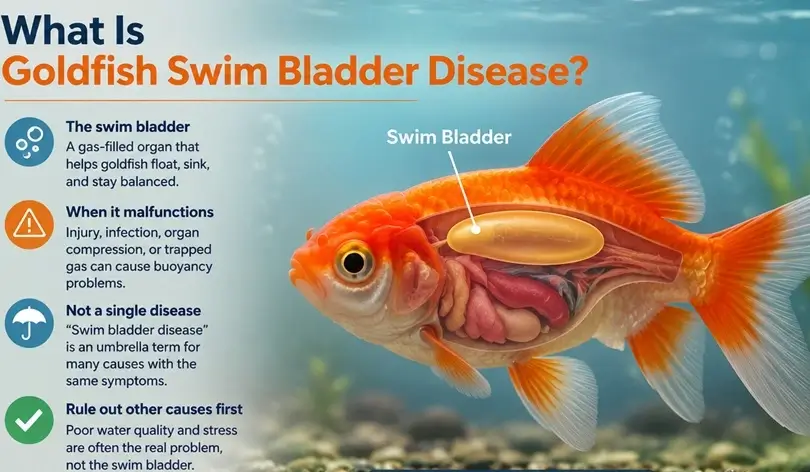
• Constipation is slow or backed-up digestion, usually caused by a low-fiber diet, dry food that expands after it’s swallowed, overfeeding, or cold water slowing things down.
• Swim bladder problems are a malfunction of the gas-filled organ that controls buoyancy, which can come from pressure caused by a bloated gut, but can also come from a genuine structural issue, an infection, or air-gulping at the surface, none of which have anything to do with digestion.
How to Prevent Goldfish Digestive Problems
• Switch to sinking pellets or gel food instead of floating flakes, to cut down on air-gulping at the surface.
• Soak dry food briefly before feeding it, so it expands before the fish eats it rather than after.
• Include suitable vegetables regularly, peas, blanched spinach, or broccoli florets, not just as an occasional treat but as part of a genuinely varied diet.
• Avoid overfeeding. Smaller, more frequent portions are easier for a goldfish’s short digestive tract to handle than one large feeding.
• Keep water temperature stable and appropriate. Cold water slows digestion significantly, so a heater in colder climates or seasons genuinely supports normal digestion, not just comfort.
• Maintain good water quality overall, since stress from poor water can slow digestion and appetite as a side effect on its own.
• Choose a recognized food brand with a properly balanced protein-to-fiber ratio, rather than assuming any goldfish-labeled food is formulated the same way. See the diet section above for the actual numbers to look for.
FAQ
Can you squeeze a constipated goldfish to help it pass waste?
No, and this can genuinely hurt the fish. A goldfish’s internal organs are delicate and tightly packed, and squeezing the belly risks real internal damage, in serious cases, this can be fatal. Fasting, peas, and a proper Epsom salt bath are the safe ways to help.
Can poor water quality alone cause constipation-like symptoms?
Yes. Stressed fish in poor water often eat less, digest more slowly, and become lethargic, symptoms that look a lot like constipation even without any dietary cause. Testing your water is always worth doing first, regardless of what else you suspect.
Do young or baby goldfish get constipated the same way adults do?
The underlying mechanism is the same, but the diet balance that causes it differs. Young, growing goldfish actually need more protein than adults, up to 35-45%, so what counts as “too much protein” for an adult isn’t the same for a juvenile goldfish. Fast-growing fry are also more prone to long, trailing waste simply from eating so frequently, which isn’t automatically a sign of a problem.
Is goldfish constipation contagious to other fish in the tank?
No. It’s a digestive and dietary issue, not an infection, so there’s no risk of it spreading to tank mates. If multiple fish are showing the same symptoms at once, that usually points to something shared, like water quality or a diet everyone is eating.
What if my goldfish won’t eat peas?
Try blanched spinach, broccoli florets, or shelled zucchini instead, goldfish don’t all respond to the same food the same way. The specific vegetable matters less than getting some low-protein, fibrous food into the fish after a fast.
Final Thoughts
“Goldfish constipation” is a genuinely useful term to search, even if the popular explanation behind it isn’t quite accurate. The real picture is more specific and, honestly, more useful: a diet mismatched to what a goldfish actually needs, sometimes combined with overfeeding, cold water, or air-gulping, produces symptoms that look like constipation without being a true blockage. Fixing the underlying diet does more for long-term prevention than any single treatment.
For more on keeping your goldfish healthy, see our complete guides to goldfish poop, goldfish swim bladder disease, and goldfish diseases.