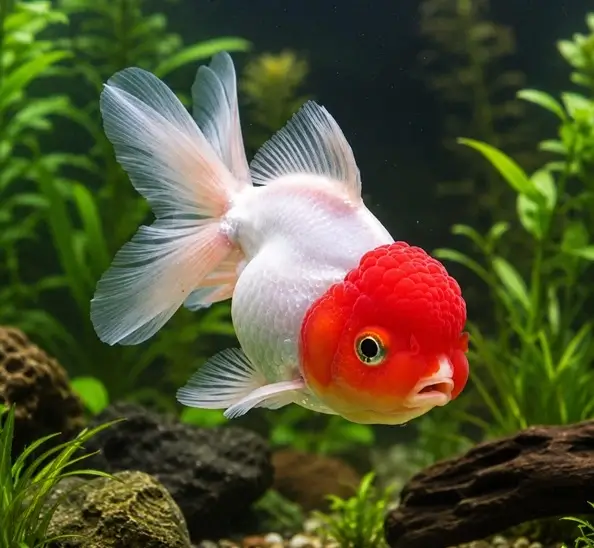
A snow-white body with a single, vivid red cap sitting on top of the head, the Red Cap Oranda is one of the most recognizable fancy goldfish color patterns in the hobby, and one of the most photographed. Like every other Oranda variety, it’s not a separate breed, it’s the same fleshy-headed, rounded-body Oranda everyone knows, wearing one specific, striking color combination.
Quick Answer: A Red Cap Oranda is a color variety of the Oranda Goldfish (Carassius auratus), identified by its solid white body and a bright red wen on top of the head. They typically grow 6 to 8 inches, sometimes up to 12 inches in a pond or very large tank, and live 10 to 15 years, occasionally 20 with excellent care. They’re moderately difficult to keep, more delicate than common goldfish because of their compact body and wen, and generally cost between $30 and $150 depending on size and quality.
Red Cap Oranda: Quick Facts
| Characteristic | Details |
|---|---|
| Scientific Name | Carassius auratus |
| Breed | Oranda Goldfish (color variety) |
| Color | White body, red wen |
| Adult Size | 6–8 inches, up to 12 in a pond |
| Lifespan | 10–15 years, up to 20 with excellent care |
| Difficulty | Moderate |
| Temperament | Peaceful |
| Tank Size | 30 gallons minimum for one fish |
| Temperature | 68–79°F (20–26°C), up to 80.6°F (27°C) during treatment |
| Diet | Omnivore |
| Price | $30–150+, depending on size and quality |
Quick Navigation
➜ Quick Facts
➜ What Is a Red Cap Oranda?
➜ Where Does the Red Cap Oranda Come From?
➜ Red Cap Oranda Size: How Big Do They Get?
➜ Male or Female? How to Tell Them Apart
➜ Why Does Only the Head Turn Red?
➜ Does a Red Cap Oranda Ever Lose Its Red Cap?
➜The Science Behind the Red Wen
➜ Black Red Cap Oranda
➜ Red Cap Black Oranda
➜ Lionhead Red Cap Oranda
➜ Care Guide
➜ Common Health Issues
➜ Breeding Red Cap Orandas
➜ How to Choose a Healthy Red Cap Oranda
➜ Red Cap Oranda Price
➜ Frequently Asked Questions
What Is a Red Cap Oranda?
The Red Cap Oranda is a color variety of the Oranda Goldfish, not a separate breed. Every physical trait, the deep, rounded body, the fleshy head growth called a wen, the flowing double tail, is identical to any other Oranda. The only thing that sets it apart is coloration: a solid white body paired with a bright red wen, giving the appearance of a single red cap sitting on an otherwise all-white fish. Our Fancy Goldfish Types guide covers where Oranda and its color varieties fit among the wider range of fancy goldfish.
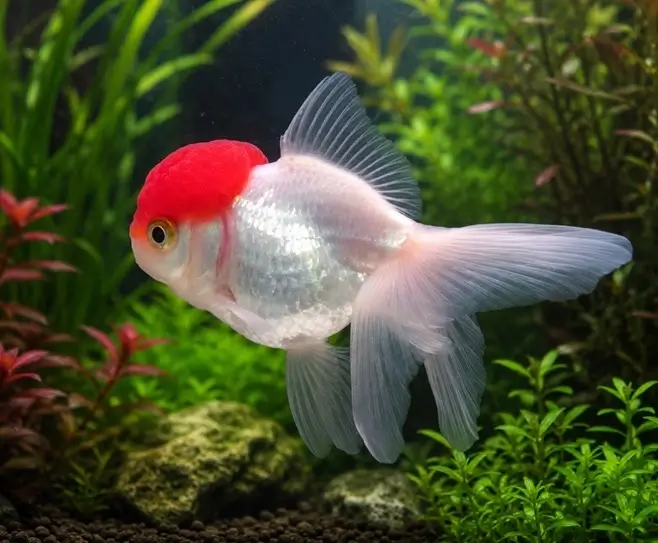
The body’s scales can be metallic or matte, and the split double tail should flow into a broad fan shape when the fish is at rest. Every fin besides the dorsal is paired and symmetrical.
Where Does the Red Cap Oranda Come From?
The Oranda itself dates back to the late 1500s, developed through selective breeding in China and later refined in Japan. In Japan, it’s known as Oranda Shishigashira, meaning “Dutch Lionhead,” a name that comes from a case of mistaken identity, the fish was assumed to have arrived via Dutch traders when it was brought over from China, even though it isn’t actually Dutch at all.
Red Cap is simply one of the color patterns that emerged from that broader Oranda lineage as breeders continued refining color and pattern over the following centuries, alongside other well-known Oranda colors like solid orange, black, chocolate, and calico varieties such as Azuma Nishiki, a specific pale blue-violet calico pattern created in 1931 by breeder Katou Kinzou in Yokohama, not a general term for Oranda itself.
Red Cap Oranda Size: How Big Do They Get?
A full grown Red Cap Oranda typically reaches 6 to 8 inches in a home aquarium. In a spacious pond or a very large tank, some individuals grow considerably larger, up to 12 inches, depending on genetics, diet, and how much swimming space they’ve had throughout their life.
➜ Genetics sets the ceiling — some bloodlines are simply bred to grow larger than others
➜ Tank size matters more than most people expect — a cramped tank can really stunt growth, not just make the fish look bigger than its space
➜ Growth is fastest in the first year — then gradually slows as the fish approaches its adult size
Male or Female? How to Tell Them Apart
Red Cap Orandas look essentially identical regardless of sex until breeding season arrives. Males develop small white breeding tubercles scattered across the gill covers and head, while a female carrying eggs looks noticeably plumper when viewed from above. Our Male vs Female Goldfish guide covers every reliable sign in depth, including a gentle firmness check and how to avoid confusing tubercles with Ich.
Why Does Only the Head Turn Red?
The red color itself comes from erythrophores, specialized pigment cells that store carotenoid pigments, the same category of pigment responsible for red and orange coloring across many fish species. These are actually different cells from the melanophores that produce black pigment elsewhere in goldfish genetics.
What’s less certain, and worth being honest about, is exactly why that red coloring concentrates specifically in the wen while the body stays white. There isn’t clear published research pinning down a wen-specific biological mechanism for this. The more likely explanation is selective breeding itself, generations of breeders selecting specifically for fish that showed this pattern, red confined to the head, white everywhere else, gradually fixed it as a stable, reproducible trait, the same way breeders fix any other consistent color pattern in domesticated animals. It’s a product of deliberate selection more than some unique property of wen tissue specifically.
Does a Red Cap Oranda Ever Lose Its Red Cap?
Yes, and it’s common enough to be worth expecting rather than treating as alarming. The red wen can fade toward orange, pale pink, or even disappear entirely over a fish’s lifetime, for several different reasons.
➜ Aging — carotenoid-based colors like this one are generally less stable than melanin-based colors, and gradual fading over years is a normal part of many Oranda color patterns, our Goldfish Turning White guide covers this same instability across fancy goldfish generally
➜ Poor nutrition — since the fish can’t produce carotenoid pigment on its own, a diet lacking color-enhancing ingredients like spirulina or krill can dull the red over time
➜ Insufficient lighting — pigment cells respond to light exposure, and a dimly lit tank can contribute to fading alongside diet
➜ Illness or stress — a sudden, rather than gradual, loss of color is more likely tied to a health or water quality problem than simple aging
➜ Genetics — some individual fish are simply bred with less stable red pigmentation than others, and will fade faster regardless of care
A slow fade over months to years with the fish otherwise healthy is normal color drift. A sudden change over days, especially alongside lethargy or appetite loss, is worth treating as a health check rather than assumed genetics.
The Science Behind the Red Wen
Most Red Cap content, including general care guides, covers what the wen looks like without explaining why it grows, why it’s specifically red rather than orange, or what actually separates a show-quality specimen from an average one. This section covers that ground properly.
Why the Wen Grows
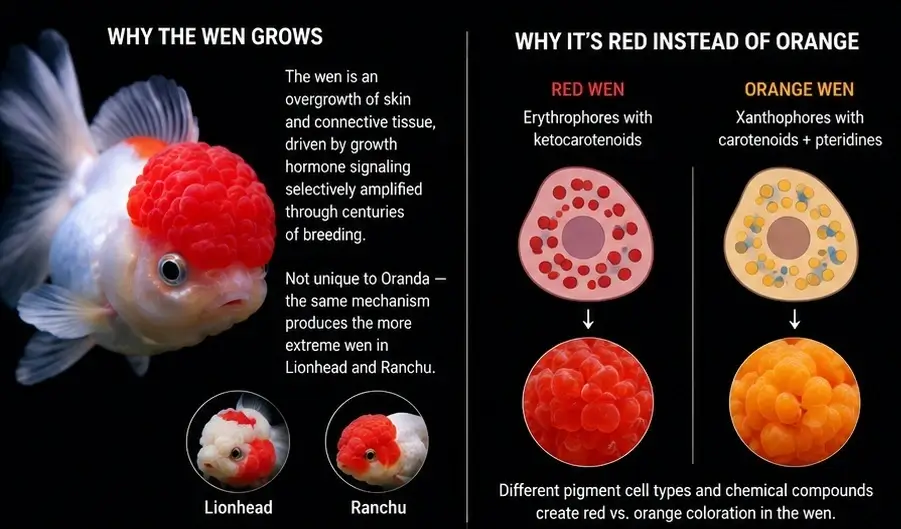
The wen is a genuine overgrowth of skin and connective tissue, not a tumor or abnormal defect, driven by growth hormone signaling that’s been selectively amplified through centuries of breeding for this exact trait. It isn’t unique to Oranda, the same underlying growth mechanism produces the more extreme wen seen in Lionhead and Ranchu, just expressed to different degrees depending on the breed and individual bloodline. There isn’t a single identified “wen gene” in the published research, it behaves as a polygenic trait, shaped by multiple genes working together, similar to how many physical traits in domesticated animals resist being traced to one clean genetic switch.
Why It’s Red Instead of Orange
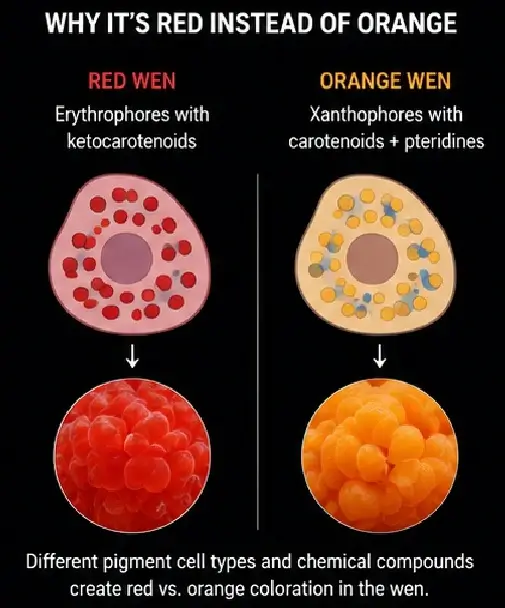
This comes down to actual pigment chemistry, not just color intensity. The red comes from erythrophores, pigment cells that store carotenoid compounds called ketocarotenoids specifically, while more orange or yellow tones come from xanthophores storing different carotenoid types, and from pteridine compounds layered alongside them. A Red Cap with a true, vivid red wen has a higher concentration of these specific red-producing carotenoids in that tissue, while a fish that leans more orange is producing a different pigment mix in the same cell types. Published research on related fish species has also linked testosterone to coordinating this kind of carotenoid-based red coloration across the body, which lines up with breeding tubercles and other testosterone-driven traits already covered elsewhere on this site.
Why Some Fish Develop Huge Wens
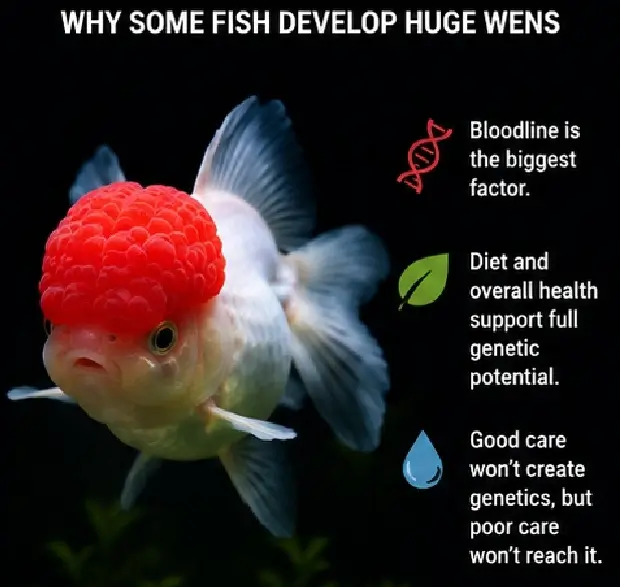
Bloodline is the biggest factor, some breeding lines are simply selected generation after generation for larger, more dramatic wen growth, the same way any exaggerated trait gets fixed through deliberate selection. Diet and overall health play a secondary role, a poorly fed or unhealthy fish won’t develop its full genetic wen potential, but no amount of feeding will make a fish’s wen grow beyond what its genetics allow.
Wen Growth Stages
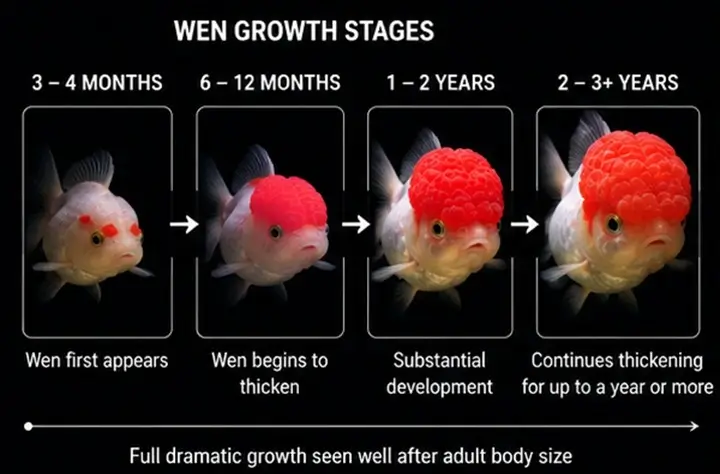
The wen follows a fairly predictable timeline. It first appears around 3 to 4 months of age, develops substantially by 1 to 2 years old, and can continue thickening for a year or so after that, meaning a Red Cap Oranda’s most dramatic wen growth often isn’t visible until well after the fish reaches its adult body size.
Wen Overgrowth
A wen that grows enough to cover the eyes or mouth can seriously impair vision and feeding, and this is a genuine welfare concern, not just a cosmetic one. In rare, severe cases, a vet may need to trim it surgically. Keeping water quality high reduces the risk of infection in the folds, where debris tends to collect as the tissue grows more complex.
Genetics of Wen Development
As noted above, there’s no single mapped gene responsible for wen size or shape, current research treats it as a polygenic trait influenced by multiple genes acting together. Two Red Cap Orandas from different bloodlines, raised identically, can end up with meaningfully different wen size and shape purely from genetic differences, which is exactly why serious breeders track bloodlines carefully rather than relying on a single generation’s results.
Does a Bigger Wen Mean a Better Fish?
Not automatically. Show judging values symmetry, proportion, and how well the wen frames the fish’s features over sheer size, an oversized wen that obstructs the eyes or mouth is treated as a fault, not an asset. A smaller, well-proportioned, symmetrical wen can outscore a larger but lopsided or obstructive one.
Black Cap Oranda
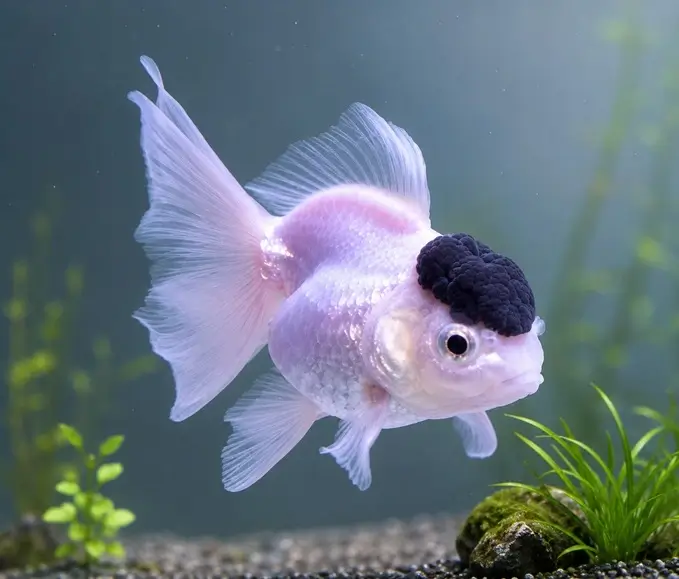
Some Red Cap Orandas develop black patches or markings alongside the classic red-and-white pattern rather than staying purely white-bodied. This isn’t a separate, formally recognized variety, it’s the same color instability that runs through Oranda genetics generally, the same reason a Black Moor can fade toward orange or white with age, just showing up here as extra dark pigment rather than pigment loss. It’s a color variation to expect and appreciate rather than a sign anything is wrong with the fish.
Red Cap Black Oranda
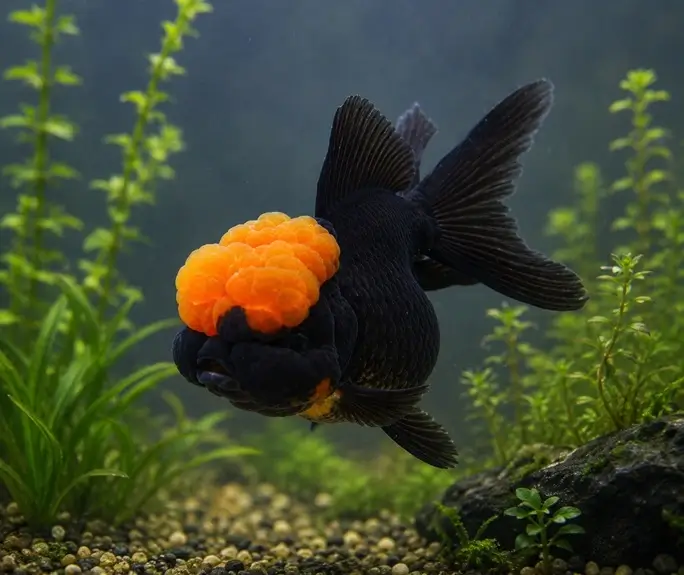
Worth distinguishing from the point above: a Red Cap Black Oranda is a genuine, recognized variety in its own right, not just scattered dark patches. Rather than the classic white body, this variety has a fully black body paired with the same bright red wen, the reverse pairing of colors from a standard Red Cap. It’s essentially a Black Oranda carrying the red-cap trait instead of the usual solid black head.
Lionhead Red Cap Oranda
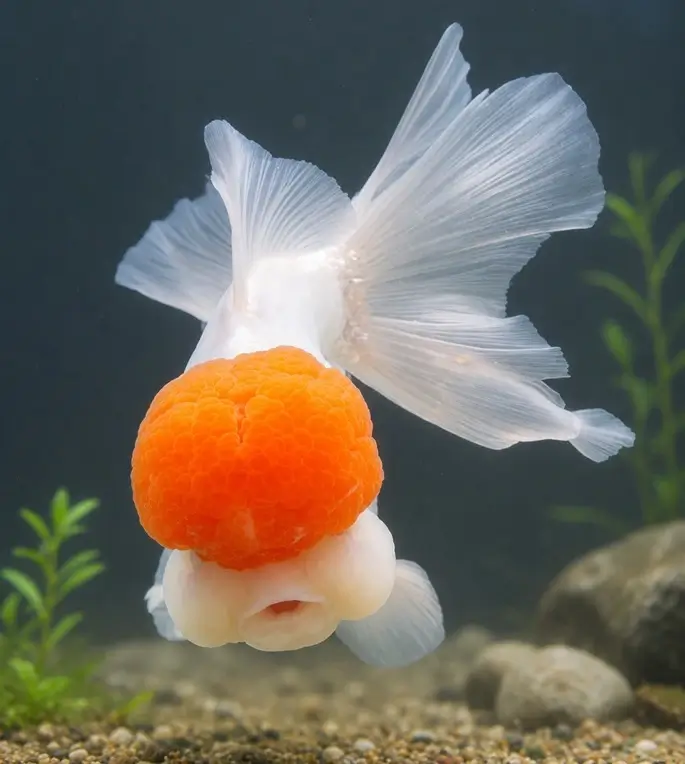
This one is a genuine hybrid cross rather than a color variety, combining Lionhead and Oranda traits on the same fish, the same pattern already established with the Lionhead Black Oranda cross. A true Lionhead has a wen that fully covers the head, while a standard Oranda keeps a wen that only partially covers the top. A Lionhead Red Cap Oranda blends those two body plans while keeping the white body and red wen coloring that defines the Red Cap pattern, so expect more variation in wen coverage from one fish to the next than you’d see in a standard Red Cap Oranda.
Care Guide
Tank Size
➜ Minimum — 30 gallons for one fish
➜ Ideal — 40 to 75 gallons for a pair or small group, plus 10 to 15 gallons per additional fish
➜ Shape matters — a wide, rectangular footprint gives more surface area for oxygen exchange than a tall, narrow tank of the same volume
Water Parameters
➜ Temperature — 68–79°F (20–26°C)
➜ pH — 6.5–7.5
➜ Hardness — 5–20 dGH
➜ Filtration — strong biological and mechanical filtration with low to moderate current, since Red Cap Orandas aren’t strong swimmers and struggle against heavy flow
➜ Aeration — essential, goldfish are truly oxygen-demanding, our Goldfish at the Top of the Tank guide covers what happens when oxygen runs short
Substrate and Décor
➜ Soft sand or smooth gravel, to prevent injury while foraging
➜ Live or silk plants rather than sharp plastic décor
➜ Keep swimming space open, minimal decorations reduce the risk of wen or fin injuries
Tankmates
➜ Good matches — other fancy goldfish like Ranchu, Ryukin, and Telescope, plus peaceful bottom-dwellers such as dojo loaches
➜ Avoid — fast, competitive swimmers like Comets or Koi, fin-nippers, and any tropical species needing warmer water than a goldfish tolerates
Diet
➜ Staple — high-quality sinking pellets or gel food
➜ Treats — bloodworms, brine shrimp, and daphnia, frozen rather than live to avoid parasites
➜ Vegetables — blanched spinach, deshelled peas, zucchini
➜ Feed 2 to 3 small meals daily — and remove uneaten food to protect water quality
➜ Avoid floating flakes — they encourage air-gulping and contribute to buoyancy problems
Wen Care
➜ Keep water pristine, the wen is living tissue and prone to bacterial or fungal infection if water quality slips
➜ Avoid sharp or rough décor that could injure it
➜ Monitor for overgrowth, in rare cases a vet may need to trim an overgrown wen surgically
➜ Watch for fungus, swelling, or injury around the folds specifically, debris tends to collect there
Common Health Issues
Red Cap Orandas are more delicate than common, single-tailed goldfish, largely because of their compact body shape and the wen.
➜ Swim bladder disorder — floating or sinking rather than swimming normally, our Goldfish Swimming Upside Down guide covers this in full, including the fasting-and-peas approach that resolves most cases
➜ Wen infections — white patches or excess slime on the head growth specifically
➜ Ich or fin rot — usually stress-related or linked to declining water quality
➜ Ammonia poisoning — from overfeeding or inadequate filtration, our Goldfish Turning White guide covers how chlorine and ammonia exposure can affect a white-bodied fish’s coloration specifically
➜ Weekly water changes of 30 to 40 percent
➜ Regular water testing rather than waiting for visible symptoms
➜ A varied, high-quality diet
Breeding Red Cap Orandas
Breeding is possible in a home aquarium, though it’s easier in a large tank or pond with more room to work with.
➜ Spawning is typically triggered by rising temperatures in spring
➜ Males develop white breeding tubercles on the gill covers as they come into condition
➜ Provide spawning mops or fine-leaved plants for the eggs to stick to
➜ Eggs hatch in 3 to 5 days
➜ Remove the parents after spawning, they’ll readily eat their own eggs given the chance
➜ Fry need infusoria or commercial fry food until they’re large enough for baby brine shrimp
Red Cap Oranda Price
Red Cap Orandas are widely available, both from local fish stores and online sellers, with price largely driven by size, wen development, and how clean the color contrast is between the white body and red cap.
| Grade | Typical Price |
|---|---|
| Juvenile | $15–$30 |
| Standard adult | $30–$60 |
| Imported (Thailand, Japan) | $50–$120 |
| Show quality | $100–$300+ |
How to Choose a Healthy Red Cap Oranda
➜ Look for a clean, evenly white body — with no unexpected patches unless you’re specifically after the Black Red Cap variation
➜ Check for a symmetrical, well-formed red cap — an uneven or lopsided wen is a cosmetic flaw, not usually a health issue on its own
➜ Watch for red bleeding into the body — a small amount is normal and can develop with age, but heavy bleeding suggests the color pattern isn’t stable in that particular fish
➜ Inspect the wen closely — it should look firm and healthy, not swollen, discolored, or covered in fuzzy growths
➜ Watch the fish swim for a minute before buying — normal, active movement rules out an obvious swim bladder or breathing problem on the spot
Frequently Asked Questions
How big do Red Cap Oranda goldfish get?
Most reach 6 to 8 inches in a home aquarium, with exceptional pond-raised specimens reaching up to 12 inches. Genetics, diet, and tank size all play a role in how large a specific fish ends up.
How long do Red Cap Orandas live?
Typically 10 to 15 years with proper care, and some individuals live 20 years or more in an excellently maintained tank.
Are Red Cap Orandas easy to care for?
They’re moderately difficult, more delicate than common goldfish because of their rounded body and wen, both of which are more sensitive to poor water quality than a streamlined single-tailed goldfish.
What size tank does a Red Cap Oranda need?
A minimum of 30 gallons for one fish, with 40 to 75 gallons recommended for a pair or small group, plus 10 to 15 gallons for each additional fish.
How much does a Red Cap Oranda cost?
Generally $30 to $150 or more, depending on size, body quality, and wen development, with show-quality specimens commanding the highest prices.
What is a Black Red Cap Oranda?
It’s a Red Cap Oranda that’s developed extra black markings alongside the usual red-and-white pattern, not a separate, formally named variety, just the same color instability that runs through Oranda genetics generally.
What’s the difference between a Black Red Cap Oranda and a Red Cap Black Oranda?
They’re not the same thing. A Black Red Cap Oranda is a standard white-bodied Red Cap that’s picked up some extra dark patches. A Red Cap Black Oranda is a distinct, recognized variety with a fully black body and a red wen, the reverse color pairing.
What is a Lionhead Red Cap Oranda?
It’s a hybrid cross between Lionhead and Oranda, combining the classic white-body, red-wen Red Cap coloring with Lionhead traits like reduced or absent dorsal fin and a wen that covers more of the head than a standard Oranda’s does.
Final Thoughts
The Red Cap Oranda earns its popularity fairly, that single, vivid red wen against a pure white body is one of the most striking looks in the fancy goldfish world, and it comes on the same peaceful, personable Oranda body that makes the whole breed so popular. It asks for more care than a common goldfish, mainly clean, stable water and a bit of attention to the wen, but rewards that effort with a long-lived, characterful pet. For more on the wider Oranda color family, see our Oranda goldfish guide.