
Guppy Columnaris, commonly known as mouth fungus or mouth rot in the hobby, is a contagious bacterial disease that affects the mouth, skin, fins and gills of guppies.
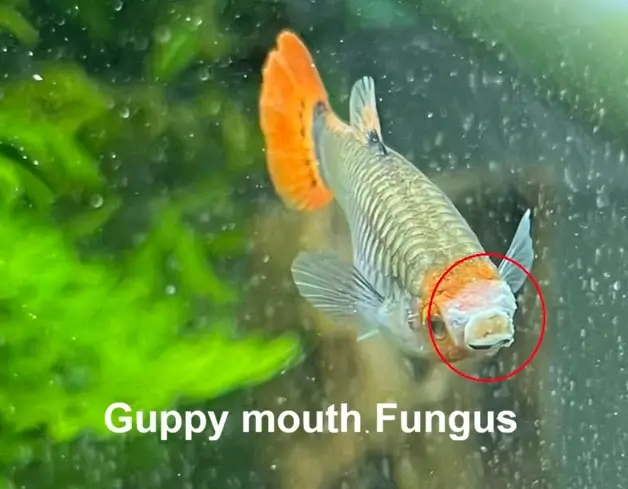
Despite its common name, mouth fungus is not a fungal infection. The white or gray cotton-like patches it produces often lead fishkeepers to mistake it for fungus and use the wrong medication.
Columnaris can progress rapidly, particularly in warm water, making early identification and treatment important. This guide explains how to recognize Columnaris in guppies, identify its causes and treat the infection before it becomes severe.
Quick Navigation
1) Guppy Columnaris: Quick Facts
2) What Is Columnaris in Guppies?
3) Guppy Columnaris Symptoms
4) Columnaris vs Fungal Infection
5) What Causes Columnaris in Guppies?
6) Is Columnaris Contagious?
7) Guppy Columnaris Treatment
8) How to Prevent Columnaris in Guppies
9) Frequently Asked Questions
1) Guppy Columnaris: Quick Facts
| Feature | Details |
|---|---|
| Disease type | Bacterial infection |
| Common names | Mouth fungus, mouth rot, cottonmouth disease, saddleback disease |
| Causative bacteria | Flavobacterium columnare and related bacteria |
| Affected areas | Mouth, skin, fins and gills |
| Contagious | Yes |
| Common symptoms | White or gray patches, mouth erosion, fin deterioration and rapid breathing |
| Disease progression | Slow or rapid, depending on the severity and bacterial strain |
| Main treatment | Appropriate antibacterial medication and supportive care |
| Recovery | Possible, especially when treated early |
2) What Is Columnaris in Guppies?
Columnaris is a bacterial disease associated with Flavobacterium columnare. It is commonly seen in freshwater fish, including guppies and other livebearers.
The disease is often called guppy mouth fungus or mouth rot because the infection can produce white, cotton-like growth around the mouth. When it affects the back near the dorsal fin, it is also known as saddleback disease.
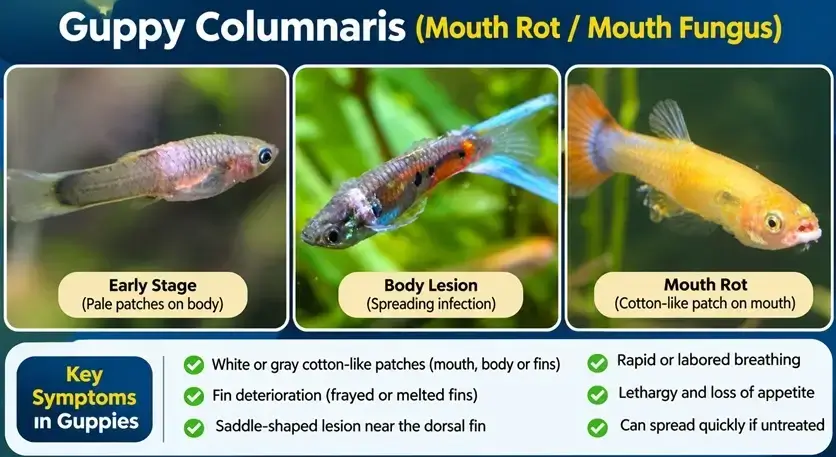
Columnaris Severity:
Acute Columnaris: The infection progresses rapidly and can kill guppies within 1–3 days. In severe cases, particularly when the gills are affected, death can occur within hours.
Chronic Columnaris: The infection develops more slowly, with visible lesions and gradual tissue deterioration over several days.
Columnaris can progressively destroy healthy fish tissue and spread to other fish in the aquarium.
Gill infections are particularly dangerous because Columnaris can damage the gill tissue, reducing the fish’s ability to absorb oxygen. In severe cases involving the gills, guppies may die before obvious external symptoms show up.
3) Guppy Columnaris Symptoms
The symptoms of Columnaris vary depending on which part of the guppy’s body is affected.
Common symptoms include:
-
White or gray cotton-like patches around the mouth.
-
Erosion of the lips and surrounding mouth tissue.
-
Irregular white or gray patches on the body.
-
Saddle-shaped lesions across the back near the dorsal fin.
-
Rapid fin deterioration, with fins appearing frayed or melted.
-
Redness, open sores or ulcers.
-
Gasping at the water surface.
-
Clamped fins, lethargy and weakness.
-
Loss of appetite and difficulty eating.
-
Sudden death in severe cases.
Guppies affected by mouth rot often struggle to eat because sores and erosion around the mouth make it difficult to pick up and swallow food. As the infection progresses, breathing difficulties and weakness can further reduce their appetite.
4) Columnaris vs Fungal Infection
Columnaris is often mistaken for a fungal infection because of the white cotton-like patches it produces. Distinguishing between the two is important because they require different treatments.
|
Feature |
Columnaris |
Fungal Infection |
|---|---|---|
|
Cause |
Bacterial infection |
Fungal or water mold infection |
|
Appearance |
Flat, slimy or short cotton-like patches. |
Fluffy, cotton wool-like growth. |
|
Common location |
Mouth, back, fins and gills |
Often develops on injured or damaged tissue |
|
Color |
White, gray or yellowish |
Usually white or gray |
|
Progression |
Can spread rapidly |
Often develops more gradually |
|
Tissue damage |
Mouth erosion, ulcers and fin deterioration |
Growth over damaged tissue that may extend deeper |
|
Treatment |
Antibacterial medication |
Appropriate antifungal medication |
Although these differences help identify Columnaris, appearance alone may not confirm the infection. Microscopic examination may be necessary when the diagnosis is uncertain.
5) What Causes Columnaris in Guppies?
Poor water quality, stress and unfavorable aquarium conditions can weaken the guppy’s immune system, making it easier for Columnaris bacteria to infect the fish.
Poor water quality: High ammonia, nitrite and accumulated organic waste increase the risk of infection.
High water temperature: Warmer water favors bacterial growth and accelerates the Columnaris infection.
Overcrowding and stress: Overcrowding, aggressive tank mates and sudden changes in water parameters weaken the fish’s immune system.
Physical injuries: Damaged skin and fins create entry points for bacteria to infect the fish.
Introducing infected fish: Adding new fish without quarantine can introduce Columnaris into the aquarium.
Poor nutrition: An unbalanced diet weakens the guppy’s natural defenses against infection.
6) Is Columnaris Contagious?
Yes. Columnaris is highly contagious and can spread through aquarium water, infected fish and contaminated equipment.
Nets, siphons and containers used in an infected aquarium can also transfer the bacteria to other tanks.
Isolate affected guppies as soon as possible, use separate equipment for the quarantine tank and closely monitor the remaining fish for early signs of infection.
7) Guppy Columnaris Treatment
Early treatment is crucial for Columnaris. The infection can grow rapidly, particularly when the gills are involved. Treatment involves improving water quality and using appropriate antibacterial medication to control the spread of infection.
Step 1: Isolate the Infected Guppy
Move the infected guppy to a hospital tank with gentle filtration, aeration and water parameters that match those of the main tank.
Isolation helps reduce the risk of exposing other healthy fish to the bacteria and allows you to medicate the sick fish without unnecessarily treating the entire aquarium.
If several guppies show symptoms, treatment of all affected fish may be necessary.
Step 2: Test and Improve Water Quality
Test the water in both the main aquarium and the hospital tank.
Ammonia: 0 ppm
Nitrite: 0 ppm
Nitrate: Ideally below 20 ppm
pH: Stable and within the recommended range for guppies.
If water quality is poor or waste has accumulated, perform a partial water change using dechlorinated, temperature-matched water.
Vacuum the substrate to remove accumulated waste and promptly remove any dead fish or decaying organic matter.
For more information on guppy water parameters, read our guppy water parameters guide.
Step 3: Maintain a Suitable Water Temperature
Unlike in some treatments for ich, raising the water temperature is not recommended for Columnaris. Warmer water can accelerate the infection and reduce dissolved oxygen levels.
If the aquarium is running at a high temperature, gradually bring it toward the lower end of the normal guppy temperature range, around 75–79°F (24–26°C). Lower the temperature gradually.
Step 4: Increase Aeration
Good oxygenation is particularly important when treating Columnaris because the infection can damage the gills and interfere with oxygen absorption.
Add an air stone to improve oxygen exchange. Maintain good aeration throughout the treatment period.
Step 5: Start Antibacterial Medication
Despite being commonly called mouth fungus, Columnaris is a bacterial infection that requires appropriate antibacterial treatment rather than antifungal medication.
Antibacterial medications used to treat Columnaris include:
|
Medication |
Use in Columnaris Treatment |
|---|---|
|
Kanamycin |
Used against susceptible bacterial infections, including Columnaris. |
|
Nitrofurazone |
Used for certain external bacterial infections, including skin and fin lesions. |
|
Oxytetracycline |
An antibiotic used in fish medicine for susceptible Columnaris infections. |
|
Florfenicol |
A veterinary antibiotic used to treat Columnaris in freshwater fish. |
Seachem KanaPlex is one commercially available kanamycin-based aquarium medication marketed for Columnaris treatment.
Kanamycin and nitrofurazone have also been used together by experienced fishkeepers. However, antibiotic combinations should only be used when their compatibility and dosing requirements have been established.
Before Adding Medication:
-
Remove activated carbon as carbon adsorbs medication.
-
Keep the biological filter media in place.
-
Calculate the dosage of medication based on the actual water volume.
-
Follow the recommended dosage, treatment duration and redosing schedule according to the manufacturer’s label.
If the infection continues to spread despite treatment, seek advice from an aquatic veterinarian. Bacterial resistance or an incorrect diagnosis may also be the cause.
Step 6: Use Aquarium Salt as Supportive Treatment (Optional)
Columnaris damages the skin and protective slime coat, making it difficult for guppies to maintain their natural water and salt balance. Adding aquarium salt can help reduce this stress and support recovery.
Guppies generally tolerate moderate amounts of salt well. A conservative supportive dose is approximately 1 teaspoon per gallon of water, provided it is compatible with the medication being used.
Dissolve the salt in aquarium water before adding it gradually to the hospital tank. During water changes, add salt only for the amount of water replaced, not the entire tank volume.
Aquarium salt is a supportive treatment and should not be used as a substitute for appropriate antibacterial medication. Exercise caution in aquariums containing salt-sensitive fish, plants, shrimp or snails.
Step 7: Complete the Treatment Course
Follow the recommended dosage and complete the full treatment course, even if the symptoms begin to disappear. Do not extend treatment beyond the manufacturer’s instructions without veterinary guidance.
Once treatment is complete, perform a water change as recommended. Fresh activated carbon can also be used to remove any remaining medication, if appropriate.
Step 8: Monitor Recovery
Signs that your guppy is responding to treatment include:
-
White or gray patches stop spreading.
-
Mouth and skin lesions begin to heal.
-
Breathing returns to normal.
-
Fin deterioration stops.
-
Appetite and swimming activity improve.
Continue observing the guppy in the hospital tank before returning it to the main aquarium. Recovery is more likely when treatment begins before extensive damage occurs to the mouth, gills and tissues of the fish.
8) How to Prevent Columnaris in Guppies
Providing good water quality and reducing stress are important steps in preventing Columnaris.
Maintain water quality: Keep ammonia and nitrite at zero and nitrate under control.
Clean the substrate: Remove fish waste, uneaten food and decaying organic matter during water changes.
Avoid overcrowding: Maintain appropriate stocking levels and sufficient swimming space.
Maintain stable temperatures: Avoid excessive heat and sudden temperature fluctuations.
Provide good aeration: Maintain adequate oxygen levels, particularly during warmer months.
Quarantine new fish: Keep newly purchased guppies in a separate tank for at least 2–4 weeks and observe them for signs of disease.
Provide a balanced diet: Feed quality guppy food to support their immune system.
Prevent physical injuries: Avoid aggressive tank mates, sharp decorations and rough handling.
Disinfect aquarium equipment: Clean and disinfect nets, siphons and containers before using them in another aquarium following a disease outbreak.
These practices help reduce the risk of Columnaris and other common guppy diseases.
9) Frequently Asked Questions
How long does Columnaris take to kill a guppy?
Acute Columnaris can kill guppies within hours to a few days, particularly when the gills are severely affected. Chronic infections may progress over several days or weeks. Early treatment improves the chances of recovery.
Can guppy mouth rot heal on its own?
Very mild infections may improve after correcting water quality and reducing stress. However, Columnaris can progress rapidly, so waiting for it to heal on its own is not recommended when the infection is spreading.
Can a guppy survive Columnaris?
Yes. Guppies can recover when the disease is identified early and treated appropriately. The chances of recovery decrease when the infection causes extensive damage to the mouth, gills and other tissues.
Can I use MELAFIX to treat guppy Columnaris?
MELAFIX should not be relied upon as the primary treatment for Columnaris. There is insufficient evidence that it reliably cures an established Columnaris infection. Appropriate antibacterial medication is recommended.
Can potassium permanganate treat Columnaris?
Potassium permanganate can be effective against some early external Columnaris infections. However, incorrect dosing can damage the skin and gills of the fish. It should be used under experienced guidance and is not a substitute for appropriate antibacterial medication in advanced infections.