
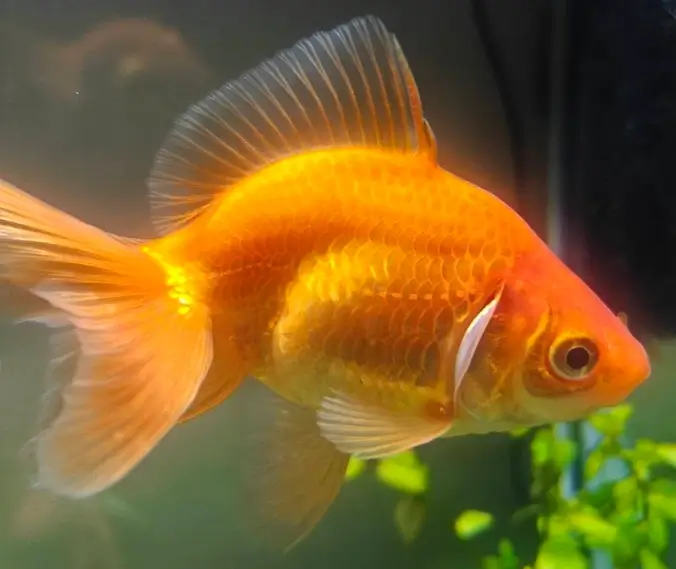
If your goldfish bent spine has developed a visible curve — a C-shape, an S-shape, or just looks noticeably crooked compared to how it used to swim — you’re most likely dealing with what’s often called scoliosis in the hobby. Why is my goldfish bent? is one of the most asked questions in the hobby. Unlike most conditions covered on this site, this isn’t an infection, and the outlook depends heavily on what actually caused it.
Some causes are permanent and untreatable. Others — including one that’s often overlooked — are genuinely fixable if caught in time. This guide walks through both, so you know which situation you’re actually dealing with.
Quick Navigation
➜ What Is a Bent Spine in Goldfish?
➜ Goldfish Bent Spine Quick Facts
➜ Goldfish Bent Spine Symptoms
➜ What Causes a Bent Spine in Goldfish?
➜ Goldfish Bent Spine Treatment
➜ Living With a Permanent Bent Spine
➜ How to Prevent Bent Spine in Goldfish
➜ Goldfish Bent Spine FAQ
➜ Final Thoughts
What Is a Bent Spine in Goldfish?
A bent spine is exactly what it sounds like — a visible curvature of the backbone, usually forming a C or S shape when viewed from above.
• It’s a structural problem, not an infection, which means it can’t spread to other fish, but it also means antibiotics or antiparasitic medication won’t fix it.
• The term “scoliosis” is used loosely in the hobby to cover any visible spinal curvature, even though it technically refers to a specific type of sideways curve. In practice, most keepers use it interchangeably with “bent spine” or “curved spine.”
• Some cases are permanent, and some genuinely aren’t. This is the single most important thing to establish before deciding how to respond, since it changes everything about what happens next.
Goldfish Bent Spine Quick Facts
| Attribute | Details |
|---|---|
| Type | Structural spinal deformity, not an infection |
| Contagious? | No — cannot spread to other fish |
| Reversible? | Depends entirely on the cause — sometimes yes, often no |
| Most Treatable Cause | Vitamin C deficiency, if caught before permanent damage sets in |
| Most Common Untreatable Cause | Genetic/inbreeding, present from birth |
| Confirmed Diagnosis | X-ray, by an aquatic veterinarian |
Goldfish Bent Spine Symptoms
• A visible C or S-shaped curve in the backbone, sometimes subtle at first and more pronounced later.
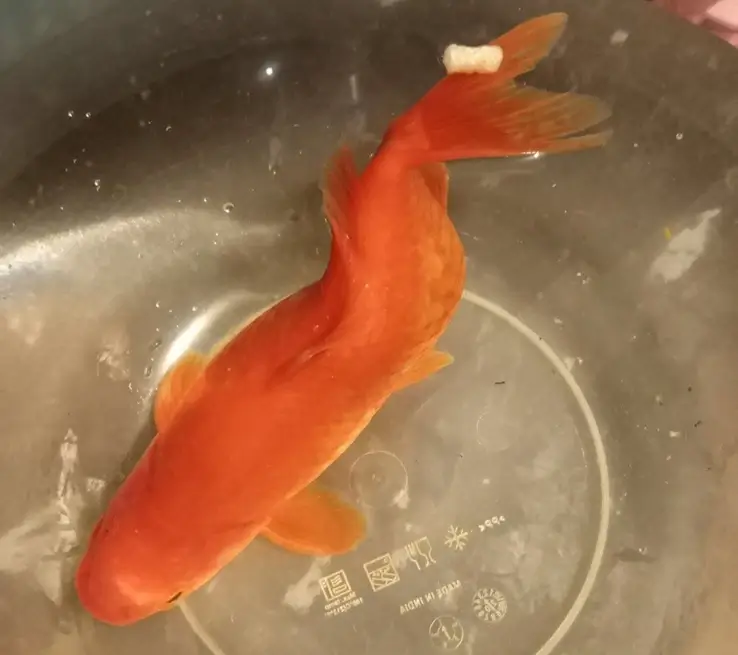
• Difficulty swimming in a straight line, or swimming at a visible angle rather than level.
• Struggling to reach the surface or maintain normal buoyancy in more severe cases, since the curvature can affect swim bladder function.
• Reduced activity compared to tank mates, often because swimming simply takes more effort with a compromised spine.
• If the curve appeared suddenly alongside other symptoms — hemorrhaging, lethargy, loss of appetite — this points toward an active underlying cause rather than a fixed, congenital deformity, and is worth investigating further rather than assuming it’s permanent.
What Causes a Bent Spine in Goldfish?
• Genetics and inbreeding — the most common cause, present from birth due to poor breeding selection. This is permanent and can’t be corrected.
• Vitamin C deficiency — a genuinely treatable cause, and one that’s often overlooked. Old or degraded fish food loses its vitamin C content over time, and a prolonged deficiency weakens collagen formation in the spine, leading to curvature. Caught early, before permanent structural damage sets in, this can be reversed with proper nutrition.
• Physical injury or trauma — from rough netting, a fall, jumping out of the tank, or getting stuck somewhere. Depending on severity, this can range from a temporary issue to permanent damage.
• Disease or infection — most notably fish tuberculosis (mycobacteriosis), a bacterial infection that can cause spinal deformity as one of its symptoms. Severe internal parasites can also contribute. See our guides on goldfish camallanus worms and goldfish hexamita for more on internal parasites specifically.
• Poor water quality during growth — chronically high nitrates or generally poor conditions while a young fish’s skeleton is still developing can contribute to permanent deformity.
Goldfish Bent Spine Treatment
• Rule out Vitamin C deficiency first, since it’s the one cause on this list that’s realistically fixable. Switch to fresh, high-quality flakes or pellets — old, degraded food is often the culprit — and supplement with blanched vegetables like peas, spinach, or zucchini, which provide additional vitamin content.
• Improve water quality immediately. Keep ammonia and nitrite at zero and nitrate as low as practical, since ongoing poor water can worsen the situation regardless of the original cause.
• If a bacterial infection like fish TB is suspected, this requires a very different approach and carries a low but real risk to humans through open cuts — see our FAQ below for what to know before handling a suspected case.
• Give it time before assuming the worst. If the curve appeared recently and the cause might be nutritional, several weeks of proper diet and clean water is a reasonable trial before concluding it’s permanent.
• If the spine doesn’t improve after a genuine nutritional and water quality correction, the deformity is most likely structural and permanent — genetic, from old trauma, or from earlier damage that’s already done. At that point, the focus shifts to quality of life rather than reversing the curve itself.
Living With a Permanent Bent Spine
A permanent curve doesn’t automatically mean a poor quality of life. Many goldfish with a bent spine live long, otherwise normal lives with a few adjustments.
• The real question is function, not appearance. If the fish can still swim, eat, and reach food without excessive struggle, it can generally live a full and reasonably comfortable life despite the visible curve.
• Make sure it can actually compete for food. A fish with impaired swimming may lose out to faster tank mates at feeding time — target feeding with a pipette or syringe can help if this becomes a problem.
• Keep water quality especially clean. A fish with any structural weakness has less margin for error than a fully healthy tank mate.
• Avoid housing with aggressive tank mates, since a fish with compromised swimming and balance is an easier target for bullying.
• If the fish is clearly struggling — unable to swim well enough to eat, constantly stuck at the bottom or surface, or showing signs of ongoing distress — that’s a genuine quality-of-life concern worth discussing with an experienced fishkeeper or aquatic vet, including, in the most severe cases, whether humane euthanasia is the kinder option.
How to Prevent Bent Spine in Goldfish
• Feed fresh food and replace it regularly. Flakes and pellets lose vitamin C content over time, especially once opened, so buying smaller quantities more often helps avoid feeding degraded food long-term.
• Include vegetables in the diet — blanched peas, spinach, or zucchini — as a regular supplement rather than an occasional treat.
• Maintain good water quality consistently, particularly for growing juveniles, whose developing skeletons are more vulnerable to poor conditions.
• Handle fish gently and avoid rough netting, which is a real source of physical trauma that can contribute to spinal injury.
• Buy from a reputable breeder or seller if you’re specifically trying to avoid genetic spinal issues, since inbreeding in some commercial breeding lines is a real, if hard to control for, risk factor.
FAQ
Can a bent spine in goldfish be fixed?
Sometimes, but not always. If the cause is Vitamin C deficiency caught early, improving diet can genuinely reverse it. If the cause is genetic, old trauma, or advanced structural damage, it’s permanent, and treatment shifts to supporting the fish’s quality of life rather than correcting the curve.
Why is my goldfish bent in the middle?
A bend concentrated in the middle of the body, rather than a gradual curve along the whole spine, can still stem from any of the causes above, but is also sometimes seen with acute physical injury. If it appeared suddenly, consider whether the fish was recently netted roughly, jumped, or got stuck somewhere.
Why is my goldfish bent in half?
A severe, sharp bend is usually a sign of significant spinal damage, whether from long-term deformity that’s progressed, a serious injury, or advanced disease. This level of curvature often does affect swimming and feeding ability, so it’s worth assessing the fish’s actual function closely rather than just the visual severity.
Is a bent spine in goldfish contagious to other fish?
No, the structural deformity itself cannot spread. If the underlying cause is an infection like fish tuberculosis, that specific infection can potentially spread to other fish, which is a separate concern from the spinal curve itself.
Is goldfish bent spine dangerous to humans?
The deformity itself poses no risk. If the underlying cause is fish tuberculosis, that infection carries a small but real risk to humans through open cuts on the skin, so wash your hands after handling the fish or its water, and wear gloves if you suspect TB specifically.
Should I euthanize a goldfish with a bent spine?
Not automatically. Many goldfish with a permanent curve live full, comfortable lives as long as they can still swim, eat, and reach the surface without excessive struggle. Euthanasia is worth discussing with an experienced fishkeeper or vet only if the fish is genuinely unable to function — can’t eat, can’t maintain position in the water, or shows ongoing signs of distress despite good care.
Final Thoughts
A bent spine looks alarming, but the right response depends entirely on the cause, and it’s worth ruling out the fixable ones before assuming the worst. Fresh food, real vitamin content, and clean water address the one genuinely treatable cause; for everything else, the goal becomes making sure the fish can still eat, swim, and live comfortably despite the curve, not forcing a fix that isn’t available.
For more on keeping your goldfish healthy, see our complete guide to goldfish diseases, and our guides on goldfish hexamita and goldfish camallanus worms for other internal conditions that can affect goldfish.