
If your goldfish has developed red streaks, patches, or red spots on its body or fins, Goldfish Red Pest Disease, commonly associated with bacterial hemorrhagic septicemia, is one possible cause. Despite the name used by goldfish keepers, this condition is not specific to goldfish and can affect other freshwater fish as well. It can become serious if the infection progresses, so early attention is important.
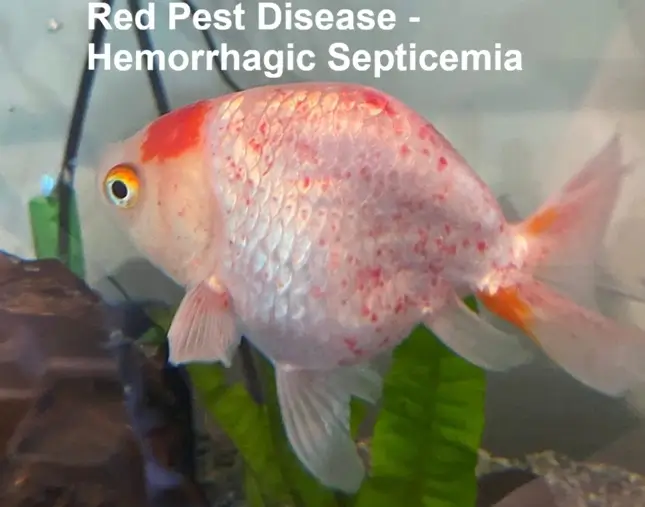
Red marks alone, however, don’t always mean Red Pest Disease. Poor water quality, physical injuries, parasites, and other infections can cause similar symptoms, so it’s important to look at the other signs and test the water before starting treatment.
In this guide, I am going to cover Goldfish Red Pest Disease, commonly called Pond Pest in the hobby, including its symptoms, causes, treatment, and how to distinguish it from ammonia poisoning and other conditions that can cause red spots on goldfish.
Table of Contents:
1) What Is Goldfish Red Pest Disease (Hemorrhagic Septicemia)?
2) Red Pest Disease (Hemorrhagic Septicemia) – Quick Facts
3) Goldfish Red Pest Disease (Hemorrhagic Septicemia) Symptoms
4) What Causes Red Pest Disease in Goldfish?
5) Are Red Spots Always Red Pest Disease?
6) Goldfish Red Pest vs. Ammonia Poisoning
7) Goldfish Red Pest Disease Treatment
8) How to Prevent Red Pest Disease
9) FAQ
10) Final Thoughts
What Is Goldfish Red Pest Disease (Hemorrhagic Septicemia)?
Goldfish Red Pest Disease is a hobby term commonly used for hemorrhagic septicemia, a serious condition in which bacterial infection can cause bleeding under the skin, red streaks or patches, ulcers, and other signs of systemic illness. Several bacteria can be involved, particularly Aeromonas and Pseudomonas species.
• Opportunistic bacteria are often involved. Aeromonas and some other bacteria can be present in aquatic environments without causing disease, but problems are more likely when a fish is stressed or its natural defenses are weakened.
• Severe infections can become systemic. Once bacteria spread beyond the skin and into the bloodstream or internal tissues, the condition can become much more serious and may lead to widespread hemorrhaging, ulcers, organ damage, and death.
• If left untreated, severe cases can progress to organ damage, fin deterioration, and death, while early recognition and appropriate treatment improve the chance of recovery.
Red Pest Disease (Hemorrhagic Septicemia) – Quick Facts
| Attribute | Details |
|---|---|
| Type | Bacterial infection / hemorrhagic septicemia, commonly associated with Aeromonas and other bacteria. |
| Also Called | Red Pest, Pond Pest, Hemorrhagic Septicemia |
| Main Symptom | Blood-red streaks, patches, or hemorrhages on the skin, fins, or scales. |
| Contagious? | Depends on the underlying bacteria; poor water quality and stress can increase the risk to other fish. |
| Main Treatment | Correct water-quality problems and treat confirmed or strongly suspected bacterial infection appropriately. |
| Treatment Length | Depends on the medication and severity of the infection. |
Goldfish Red Pest Disease (Hemorrhagic Septicemia) Symptoms
• Blood-red or pinkish streaks and patches on the body, fins, tail, or beneath the scales are the most characteristic signs and often the first thing that is noticed.
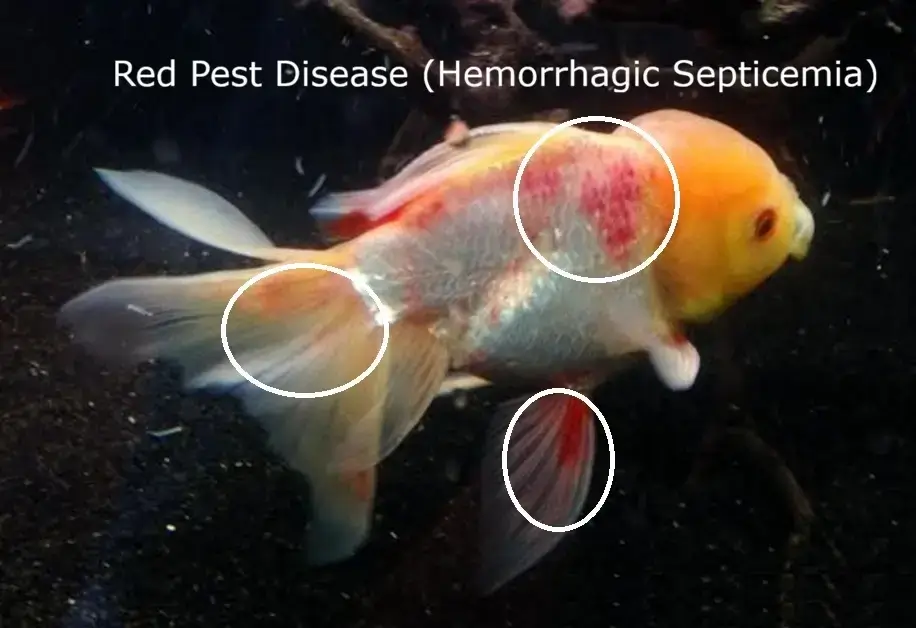
• Redness may be especially noticeable on the fins, although hemorrhaging can appear elsewhere on the body.
• Redness can be harder to see on red or dark-colored goldfish such as Black Moors, so other signs of illness may be more noticeable.
• Increased mucus production can give the fish’s body a noticeably slick appearance.
• Clamped fins may occur as the fish becomes stressed or unwell.
• Lethargy and reduced appetite can develop, sometimes progressing to refusal to eat as the illness becomes more severe.
• In advanced cases, ulcers and fin or tissue deterioration may develop alongside the hemorrhaging.
What Causes Red Pest Disease in Goldfish?
• Poor water quality — High ammonia or nitrite and excessive organic waste can stress goldfish and make them more susceptible to bacterial infection.
• Overcrowding — Too many fish increases waste and stress and can make disease outbreaks more likely.
• Poor filtration — An undersized, clogged, or poorly maintained filter can allow water quality to deteriorate.
• Injuries and stress — Damaged skin and prolonged stress can weaken the fish’s natural defenses and provide an entry point for bacteria.
• Poor nutrition — An inadequate diet can weaken the fish’s overall condition and resistance to infection.
Are Red Spots Always Red Pest Disease?
No. Red spots or streaks are a common sign of Red Pest, but several other problems can cause similar redness.
• Widespread hemorrhaging or red streaking can be consistent with Red Pest, particularly when accompanied by lethargy, loss of appetite, clamped fins, or other signs of illness.
• A single localized red spot or patch may be caused by an injury or irritation rather than a systemic bacterial infection.
• Red Pest can sometimes be confused with ammonia poisoning. High ammonia can damage the skin and gills, causing redness and irritation, while some goldfish may later develop dark or black patches as the damaged tissue heals. Test the ammonia and nitrite levels rather than relying on color alone.
• Parasites can also cause localized redness and inflammation, particularly where they attach to or damage the skin. See our guides on goldfish anchor worm and goldfish gill flukes if other signs point toward parasites.
• Always test the water before treating. Ammonia, nitrite, and other water-quality problems can cause or contribute to redness and can also make bacterial infections more likely.
Goldfish Red Pest vs. Ammonia Poisoning
Red Pest and ammonia poisoning can both cause redness, but there are some useful clues that can help tell them apart.
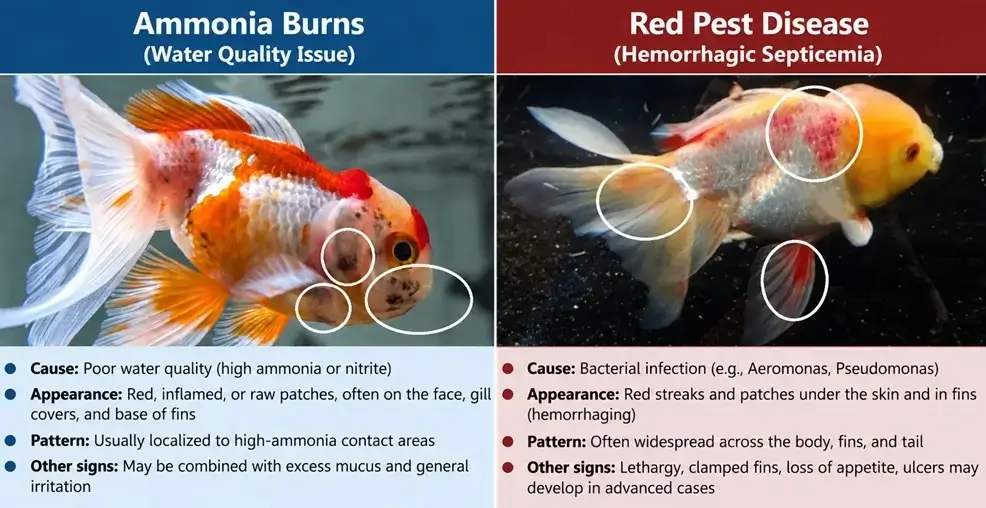
• Ammonia poisoning usually comes with signs of gill irritation. Rapid breathing, gasping at the surface, inflamed gills, and general distress are common when ammonia is damaging the fish. Some goldfish develop dark or black patches as damaged tissue begins to heal.
• Red Pest is more suggestive when you see hemorrhaging. Blood-red streaks in the fins, pinpoint red spots beneath the scales, larger hemorrhagic patches, ulcers, and worsening lethargy or loss of appetite are more consistent with bacterial septicemia.
• Look at the other fish in the aquarium too. If several fish suddenly develop breathing problems or signs of irritation, a water-quality problem should be high on your list. A bacterial infection may initially be more obvious in one weakened or injured fish, although other fish can also become affected.
• The water test is the most useful immediate check. Detectable ammonia or nitrite tells you there is a water-quality problem that needs correcting immediately. If ammonia and nitrite are both zero but the fish has progressive hemorrhaging, ulcers, and systemic signs of illness, bacterial disease becomes more concerning.
Goldfish Red Pest Disease Treatment
Treatment for Goldfish Red Pest Disease involves two things: correcting any underlying water-quality or environmental problems and treating the bacterial infection when antibiotics are warranted. Because hemorrhagic septicemia can involve different bacteria, there isn’t one medication that will work in every case.
1. Correct the Water Quality First
Test ammonia, nitrite, nitrate, and pH, and make sure the filter is working properly. Ammonia and nitrite should be at zero. If water quality is poor, perform an appropriate water change before starting treatment and correct the underlying problem.
Good water quality alone may not cure an established systemic bacterial infection, but leaving the fish in poor conditions can make treatment much less successful.
2. Move the Sick Goldfish to a Hospital Tank
If possible, move a seriously affected goldfish to a hospital tank. This makes it easier to observe the fish, control medication doses, and avoid unnecessarily exposing healthy fish or the main aquarium’s biological filter to antibiotics.
Keep the hospital tank clean, stable, and well aerated throughout treatment.
3. Treat the Bacterial Infection
If the goldfish is still eating, medicated food is generally preferable for a systemic bacterial infection because the antibiotic is delivered internally.
One practical hobby option is kanamycin (Seachem KanaPlex), which the manufacturer allows to be mixed with food. Seachem Focus can be used to bind the medication to the food. Other antibiotics, including oxytetracycline, are also used against susceptible bacterial infections in fish, although availability and appropriate use may vary.
There is no single antibiotic guaranteed to treat every case of Red Pest because different bacteria can be involved and antibiotic resistance can occur. Always follow the medication manufacturer’s instructions for preparation, dosage, and duration rather than improvising a dose or combining several antibiotics.
4. If the Goldfish Has Stopped Eating
If the goldfish has stopped eating, medicated food is no longer a practical option because the fish will not receive an adequate amount of medication. In this situation, an antibiotic specifically labeled for treatment through the water may be used.
Hobby medications such as kanamycin (Seachem KanaPlex) and doxycycline (API Fin & Body Cure) are examples of products whose manufacturers list hemorrhagic septicemia among their uses.
Again, follow the product label carefully. Do not increase the dose or combine several antibiotics in an attempt to make the treatment stronger. If the fish continues to deteriorate despite completing treatment correctly, the diagnosis or choice of antibiotic may need to be reconsidered.
5. Remove Activated Carbon When Required
When medication is being added directly to the water, remove activated carbon or other chemical filtration if the product instructions tell you to do so, since these materials can remove some medications from the water.
Do not automatically turn off the entire filter. Biological and mechanical filtration should normally remain running unless the medication manufacturer specifically instructs otherwise.
6. Maintain Good Aeration
Keep the treatment tank well aerated throughout the treatment period. Sick goldfish may already be under respiratory stress, and medication or deteriorating water conditions can add further stress.
An air stone or strong surface agitation is usually sufficient to maintain good oxygen exchange.
7. Complete the Full Treatment Course
Antibiotic treatment for ornamental fish commonly runs for approximately 5–10 days, although the exact duration and dosing schedule depend entirely on the medication being used. Some products are dosed daily, while others require doses separated by water changes.
For that reason, the product label always takes priority over a general treatment duration. Do not stop the antibiotic course simply because the redness starts disappearing, and do not continue treatment beyond the recommended course without a good reason.
8. Remove the Medication After Treatment
Once the complete treatment course is finished, perform the water change recommended by the medication manufacturer. This helps remove residual medication and accumulated waste from the treatment tank.
If you normally use activated carbon, fresh carbon can then be returned to the filter to help remove remaining medication from the water. Continue maintaining good aeration and stable water conditions while the goldfish recovers.
9. Monitor the Goldfish During Recovery
As the infection comes under control, the hemorrhaging and red streaking should gradually improve and the fish’s appetite and activity should begin returning.
Continue watching for new hemorrhaging, ulcers, worsening fin damage, loss of appetite, or increasing lethargy. If the fish continues to deteriorate despite completing the medication correctly and maintaining good water quality, don’t simply keep repeating or combining antibiotics. The original diagnosis or the choice of antibiotic may be wrong.
How to Prevent Red Pest Disease
• Maintain good water quality — Keep ammonia and nitrite at zero and perform regular water changes.
• Avoid overcrowding — Give goldfish enough space and filtration for their heavy waste production.
• Maintain the filter — Check regularly for clogging, reduced flow, or other problems.
• Feed a balanced diet — Good nutrition helps maintain overall health and resistance to disease.
• Prevent injuries and stress — Handle fish carefully and avoid sharp decor, aggression, and sudden changes in water conditions.
FAQ
Is Red Pest Disease Contagious to Other Fish?
The bacteria associated with hemorrhagic septicemia can be present in the aquatic environment, and other fish may also become infected, particularly when poor water quality, injuries, or stress weaken their defenses. This is another reason to correct tank conditions even if only one fish is showing symptoms.
Is Red Pest Disease Contagious to Humans?
Red Pest itself isn’t considered a typical human infection. However, some aquatic bacteria can infect people through cuts or wounds, so wash your hands after handling sick fish or aquarium water and avoid exposing open wounds.
Final Thoughts
Goldfish Red Pest Disease can become serious once the infection progresses, so early treatment is important. Correct any water-quality problems, treat the bacterial infection appropriately, and complete the recommended treatment course. Remember that red spots alone don’t confirm Red Pest, so rule out water-quality problems, injuries, and other possible causes before medicating.
For more on keeping your goldfish healthy, see our complete guide to goldfish diseases and our guides on goldfish mouth rot and goldfish fin rot.