
If your goldfish is losing weight despite eating normally, goldfish Hexamita is one of the conditions worth investigating, especially if your goldfish has pale, long, stringy waste alongside other symptoms rather than on its own. Hexamita is a microscopic internal parasite that primarily affects the digestive tract and has also been linked, somewhat controversially, to Hole-in-the-Head disease.
Despite the name goldfish Hexamita, it is not specific to goldfish. Hexamita and related parasites are found in a range of freshwater fish, including cichlids such as discus and angelfish.
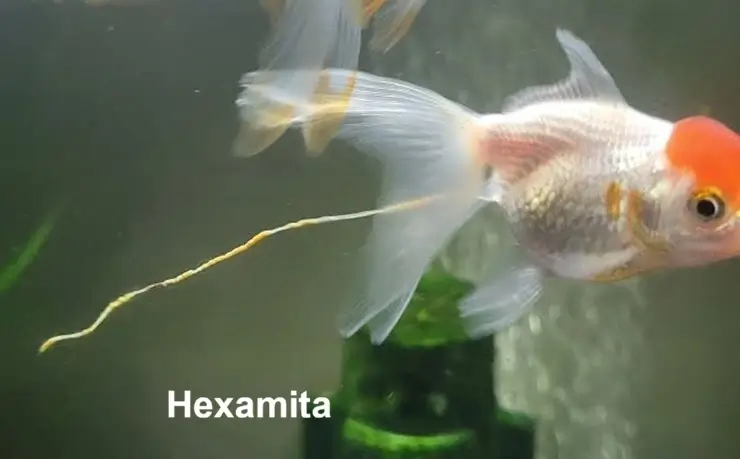
This guide covers goldfish Hexamita symptoms, causes, treatment, and its possible connection with Hole-in-the-Head disease.
Quick Navigation
1) What Is Hexamita?
2) Hexamita Quick Facts
3) Hexamita Symptoms
4) What Causes Hexamita in Goldfish?
5) Hexamita and Hole-in-the-Head Disease
6) Hexamita Treatment
7) How to Prevent Hexamita
8) FAQ
9) Final Thoughts
What Is Hexamita?
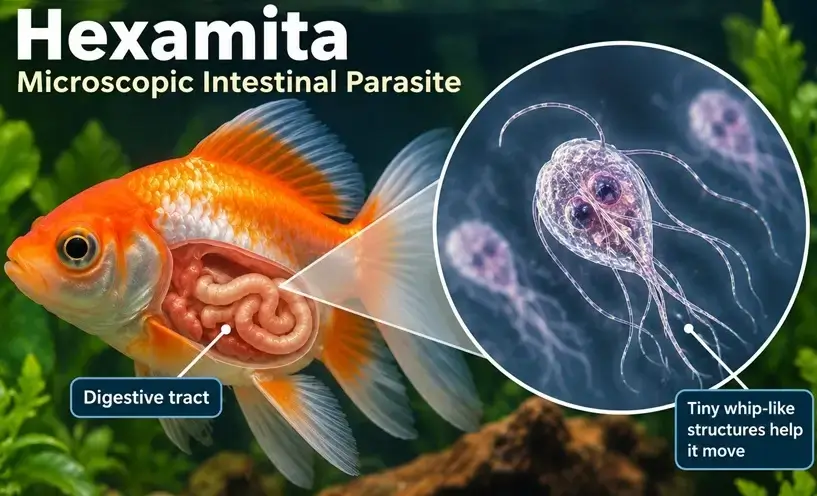
Hexamita is a microscopic, single-celled parasite that lives mainly in a fish’s digestive system. It has tiny, whip-like structures that help it move, but the parasite itself is too small to see with the naked eye.
The name can sometimes be confusing because scientific sources may refer to closely related parasites as Spironucleus. For the purpose of this guide, we will use the familiar aquarium term Hexamita.
• It can be present in a fish without obvious symptoms. Some infected fish may initially appear healthy, especially when parasite numbers are low.
• Stress can make an infection more serious. Crowding, poor living conditions, inadequate nutrition, shipping, and other stresses can make it easier for an infection to become a problem. These conditions do not create Hexamita, but they can make an infected fish more vulnerable.
• Symptoms alone cannot confirm Hexamita. Weight loss, reduced appetite, lethargy, and pale or stringy waste can occur with Hexamita, but they can also have other causes. Confirming the parasite requires examination under a microscope.
Hexamita Quick Facts
| Attribute | Details |
| Type | Microscopic internal parasite that primarily affects the digestive tract. |
| Common Name | Hexamita; closely related Spironucleus parasites may also be discussed under this name in the aquarium hobby |
| Visible? | No. Microscopic examination is needed for reliable identification. |
| Linked Condition | Hole-in-the-Head disease, although the exact connection remains unclear. |
| Can It Spread? | Yes — intestinal parasites can spread between fish, including through contaminated fecal material. |
| Main Treatment | Metronidazole; medicated food is generally preferred when the fish is still eating. |
| Treatment Length | Depends on the treatment method and product; a commonly referenced oral metronidazole protocol is 5 consecutive days. |
Hexamita Symptoms
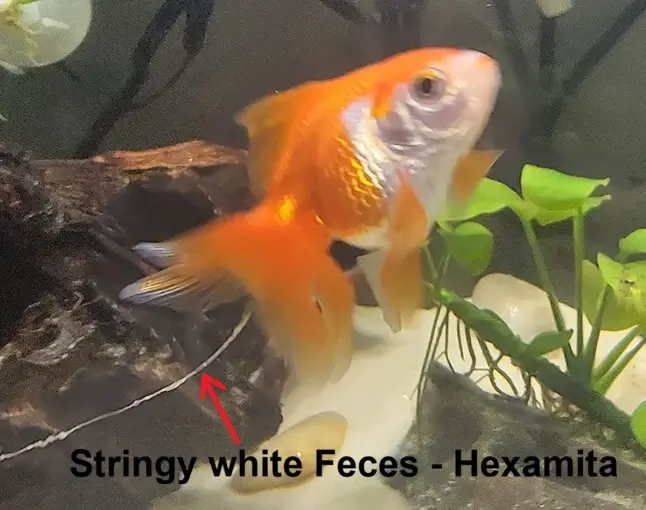
• White or pale, stringy feces — a common sign, but not proof of Hexamita on its own. It becomes more concerning when accompanied by weight loss, poor appetite, or lethargy.
• Weight loss — the fish may gradually become thinner as the infection progresses.
• Reduced appetite — affected fish may eat less or eventually stop eating.
• Lethargy — the fish may become less active as the infection becomes more severe.
• Pits or erosions around the head — sometimes associated with Hexamita-like infections, but the connection with Hole-in-the-Head disease is not fully understood. More on this below.
What Causes Hexamita in Goldfish?
Hexamita is caused by infection with the parasite, but several factors can make an infection more likely to become a serious problem.
• Infected fish — can introduce intestinal parasites into an aquarium and spread them through contaminated fecal material.
• Poor water quality — ammonia, nitrite, high nitrate, and unstable conditions can stress the fish and make disease more likely.
• Poor nutrition — an inadequate diet can leave fish less able to cope with infection.
• Stress and overcrowding — crowding, shipping, handling, and sudden environmental changes can contribute to an outbreak.
Poor water quality or stress does not create Hexamita. The parasite must already be present, but these conditions can make an infection more likely to become a problem.
Hexamita and Hole-in-the-Head Disease
Hexamita and related intestinal parasites have long been associated with Hole-in-the-Head disease (HITH), which causes pits or erosions around the head and sometimes along the lateral line.
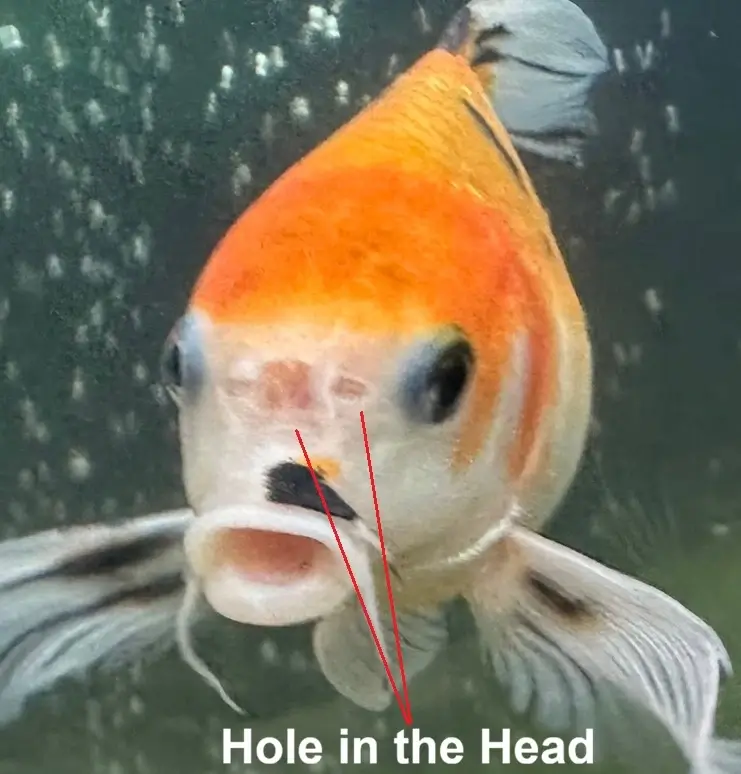
However, the connection is not completely understood. Related parasites such as Spironucleus have been found in HITH lesions, but current evidence does not show that these parasites are the only cause of the condition.
Head pits alone should not be used to diagnose Hexamita. Water quality, nutrition, other health problems, and the fish’s overall condition should also be considered.
Hexamita Treatment
Hexamita is usually treated with metronidazole, but how you give the medication depends mainly on whether the goldfish is still eating. Medicated food is preferred for an intestinal infection when the fish will eat, while treatment through the water can be used when it has stopped eating.
Water quality also matters throughout treatment. Correct any problems before starting and keep the aquarium stable while the fish recovers.
1. Correct the Water Conditions
Test ammonia, nitrite, and nitrate before treatment and correct any poor or unstable water conditions. A water change may be needed if anything is out of range.
Good water quality helps the fish recover, but a water change alone will not eliminate an internal Hexamita infection.
2. Treat With Metronidazole
Metronidazole is the main medication used for Hexamita and related intestinal parasites. When the goldfish is still eating, medicated food is generally the preferred treatment because the infection is primarily inside the digestive tract.
A commonly recommended oral dose is 50 mg/kg of fish body weight daily for 5 days.
Accurately calculating a dose based on a goldfish’s body weight can be difficult for most hobbyists. If you are using a commercial metronidazole medication or prepared medicated food, follow the product’s dosing instructions rather than guessing how much medication to mix into the food.
3. If the Goldfish Has Stopped Eating
If the fish refuses food, metronidazole can instead be administered through the water.
A commonly recommended bath treatment is 7 mg/L (about 250 mg per 10 gallons) once daily for 5 days. A water change should be performed a few hours after each treatment before the next day’s dose.
4. Remove Activated Carbon During Water Treatment
If metronidazole is being added directly to the water, remove activated carbon and other chemical filtration that may remove the medication.
Keep the normal biological and mechanical filtration running unless the medication label specifically instructs otherwise. There is no need to switch off the entire filter.
If the medication is being given only through food, removing activated carbon is generally unnecessary.
5. Keep the Water Well Aerated
Maintain good water movement and aeration throughout treatment. An air stone with gentle flow can help keep oxygen levels up while the fish recovers.
6. Complete the Full Treatment
Complete the full treatment course even if the goldfish begins looking better earlier.
The protocols above use 5 days of treatment, but commercial products can have different concentrations and dosing schedules. If you are using one, follow its label instructions.
7. After Treatment
Once treatment is complete, continue monitoring the goldfish’s appetite, activity, body condition, and feces.
If medication was added directly to the aquarium, perform a water change after the final treatment. Fresh activated carbon can then be added back to the filter if you normally use it, which will help remove remaining medication from the water.
Continue maintaining good water quality and providing a nutritious diet while the fish recovers.
What If the Goldfish Doesn’t Improve?
Do not automatically start another course of metronidazole.
Weight loss, poor appetite, lethargy, and stringy feces can have several causes and are not specific to Hexamita. If the fish shows little or no improvement after a correctly completed treatment, reconsider the diagnosis before giving more medication.
How to Prevent Hexamita
• Quarantine new fish — ideally for about 4 weeks, watching for weight loss, abnormal feces, poor appetite, or lethargy.
• Maintain good water quality — keep ammonia and nitrite at zero and avoid unstable conditions.
• Feed a nutritious, varied diet to keep your goldfish in good overall condition.
• Reduce stress and overcrowding — avoid sudden temperature changes, excessive handling, and aggressive tank mates.
FAQ
Is Hexamita Contagious to Other Fish?
Yes. The parasites can spread between fish, including through contaminated fecal material. Quarantining new fish and maintaining good tank hygiene can reduce the risk.
Can I Treat Goldfish Hexamita at Home?
Yes. Metronidazole treatment can be carried out at home when Hexamita is reasonably suspected. Follow the correct dose and full treatment course, and do not repeatedly medicate if the fish fails to improve.
Is Goldfish Hexamita Dangerous to Humans?
Hexamita and related intestinal parasites that infect aquarium fish are not considered a human health risk.
Final Thoughts
Hexamita can be difficult to identify because its symptoms overlap with many other goldfish health problems. Good water quality, proper nutrition, and reducing stress are important, but an active infection may require metronidazole treatment.
For more on keeping your goldfish healthy, see our complete guide to goldfish diseases, along with our guides to goldfish Camallanus worms and goldfish anchor worm.