
Discus fish care starts with understanding one thing: this is not a beginner’s first tropical fish. Discus (Symphysodon spp.) are one of the most popular and sought-after fish in the hobby, prized for their vibrant colors and elegant, disc-shaped bodies — but they are also considered an advanced-level fish because of how specific their care requirements are. This guide covers everything from tank setup and water parameters to lifespan, tank mates, and breeding, then walks through the most popular Discus color varieties.
Quick Navigation
➜ What Is a Discus Fish?
➜ Discus Quick Facts
➜ Discus Fish Types
➜ Discus Fish Care Requirements & Tank Setup
➜ Discus Fish Lifespan
➜ Discus Fish Tank Mates
➜ How Big Do Discus Fish Get?
➜ Discus Fish Breeding
➜ Discus Fish Cost & Buying Guide
➜ FAQ
➜ Final Thoughts
What Is a Discus Fish?
Discus (Symphysodon spp.) are a popular, beautiful fish and one of the most sought-after in the aquarium hobby, known for their vibrant colors and stunning looks. Native to the Amazon River Basin in South America, Discus fish are praised for their elegance and social nature.
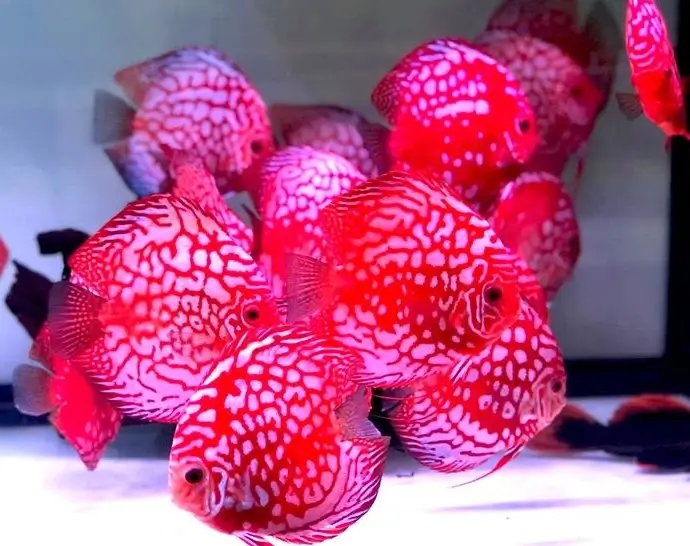
Discus have a circular disc-shaped body, hence their name. They come in a variety of colors, including shades of red, blue, green, brown, and more. Their coloration and patterns are influenced by genetics, diet, and the tank’s environmental conditions. Discus are considered an advanced level of fishkeeping due to the specific care requirements needed to raise them successfully.
Let’s look at some of the stunning Discus fish types and varieties, along with their care and breeding.
Discus Fish Quick Facts
| Attribute | Details |
|---|---|
| Scientific Name | Symphysodon spp. |
| Family | Cichlidae |
| Adult Size | 4–8 inches |
| Lifespan | 8–10 years (up to 15 with excellent care) |
| Temperature | 78–86°F (26–30°C) |
| pH | 6.0–7.5 |
| Tank Size | 55+ gallons (for a group of 5–6) |
| Diet | Omnivore (protein-heavy diet) |
| Temperament | Peaceful, social (shoaling) |
Discus Fish Types
Discus fish (Symphysodon spp.) come in various types with unique color patterns and characteristics. The Discus fish varieties can be classified into different strains and color patterns. Here are some popular types of Discus fish:
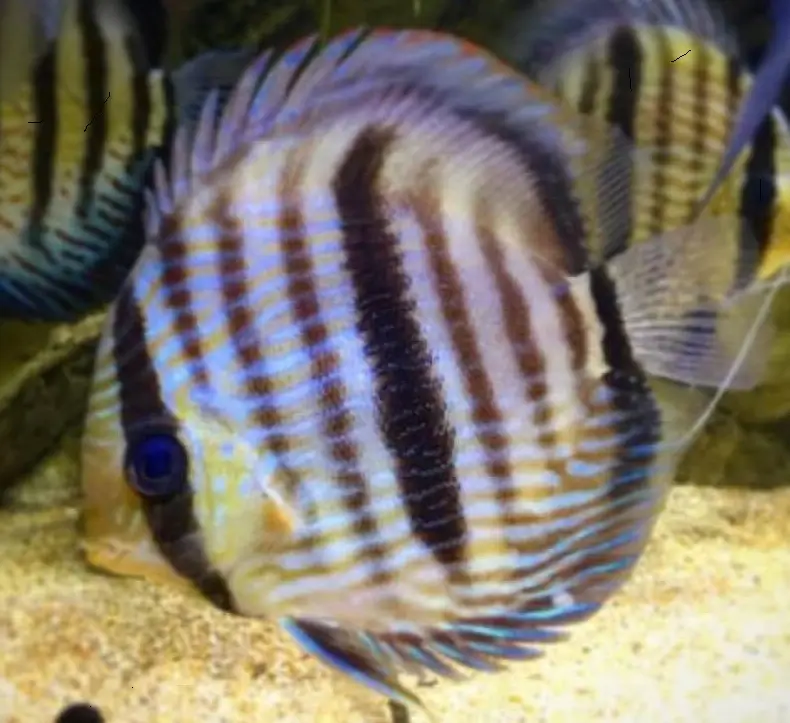
Heckel Discus: Known for its distinctive and classic Discus shape. Typically has a red-brown base color with vertical stress bars.
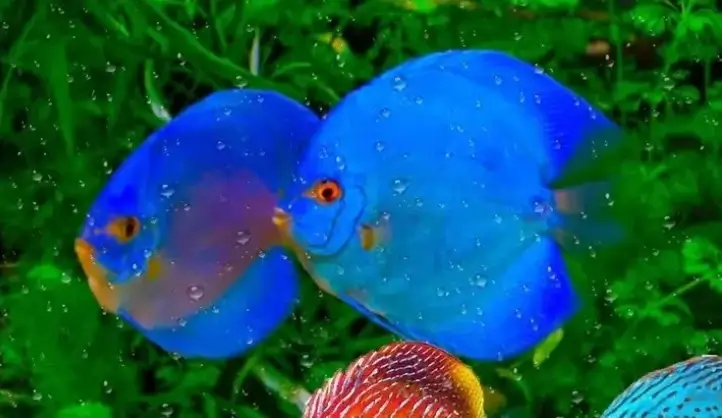
Blue Discus: Exhibits a blue coloration, and there are several strains within this type. Blue Discus can vary from pale blue to deeper shades.
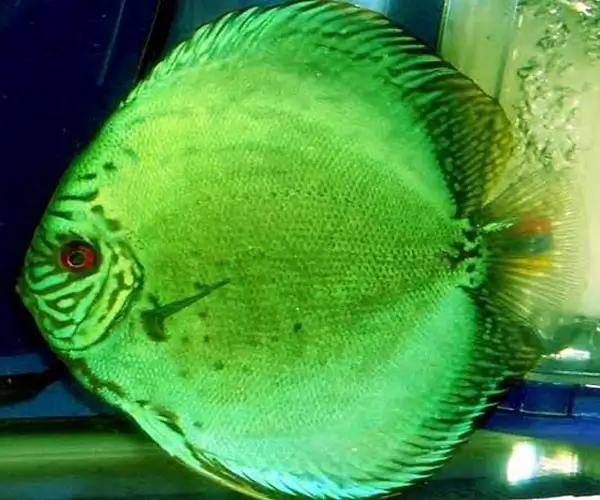
Green Discus: Often displays a greenish hue, especially on the body. Some strains may have blue or turquoise markings.
Red Discus: Features a red coloration, with different strains available within this category, including the Red Melon Discus and Red Pigeon Blood Discus.
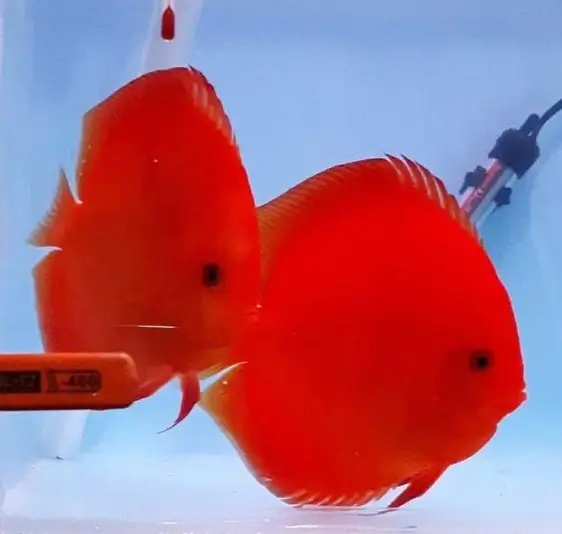
Brown Discus: Comes in brown shades, with some having a reddish hue. Some may exhibit iridescent stripes.
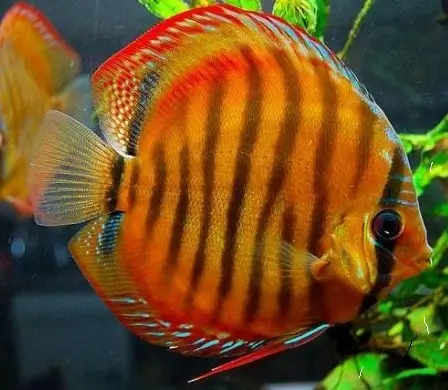
Turquoise Discus: These Discus fish come in a turquoise-blue color combination. There may be variations in the color intensity and pattern.
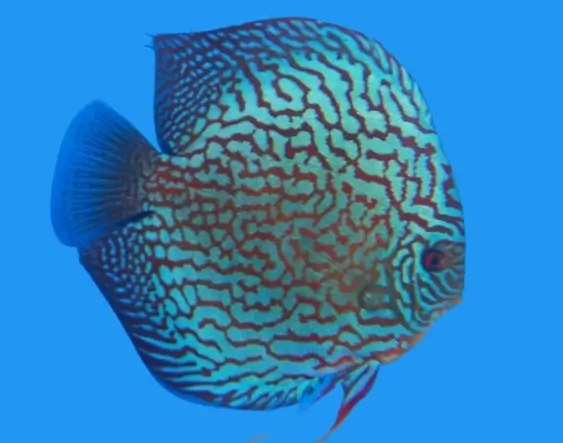
Yellow Discus: Exhibits a yellow coloration, with variations in intensity within this type.
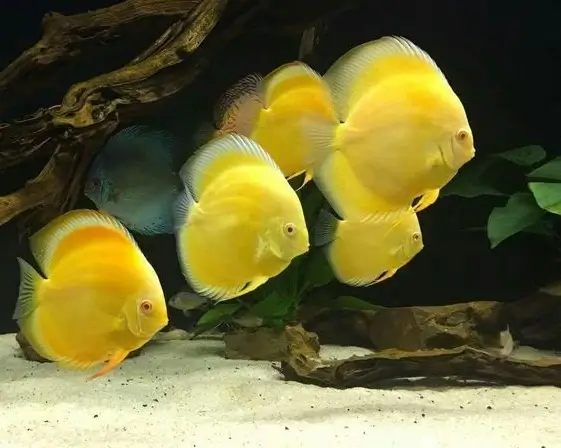
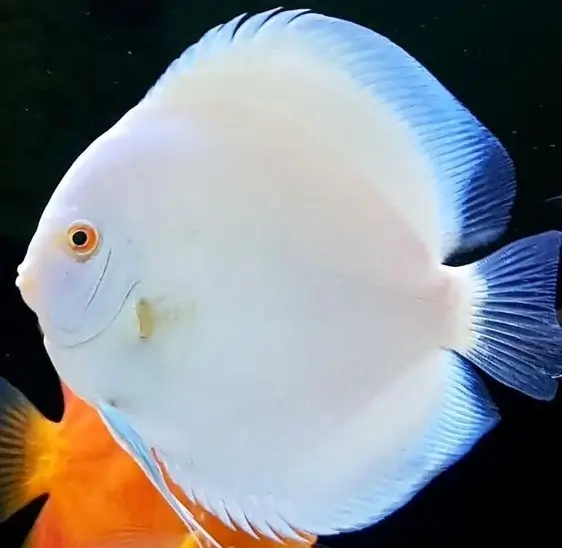
Albino Discus (White Discus): This variety lacks pigmentation, which results in a fully white appearance.
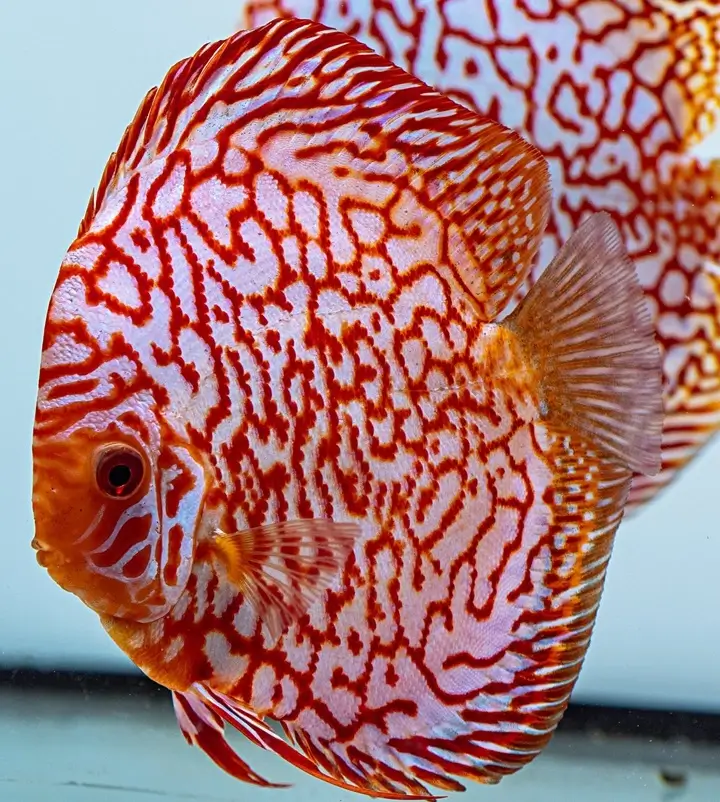
Pigeon Blood Discus: Features an intensely vibrant red coloration, among the most striking of all Discus varieties.
Discus Fish Care Requirements & Tank Setup
Discus have some of the most specific care requirements of any common freshwater fish, which is exactly why so many of them fail to thrive in a typical community tank setup. Here’s everything you need to get right, from tank size to water chemistry to the physical setup itself.
| Requirement | Optimal Range / Specification |
|---|---|
| Minimum Tank Size | 55+ gallons (for a small group of 5–6) |
| Water Temperature | 78°F to 86°F (26°C to 30°C) |
| Water pH | 6.0 to 7.5 (slightly acidic to neutral) |
| Water Hardness | GH 1–8 dGH, KH 1–4 dKH |
| Filtration Type | Efficient, gentle flow — avoid strong currents |
Discus Fish Tank Size
The tank size for Discus fish depends on factors such as the number of Discus, their size, and the presence of other fish. Discus are known for their social nature and prefer living in groups, so a larger tank is generally better for their well-being.
The minimum tank size for a small group of 5 to 6 mature Discus fish is around 55 gallons of water — though larger is always better.
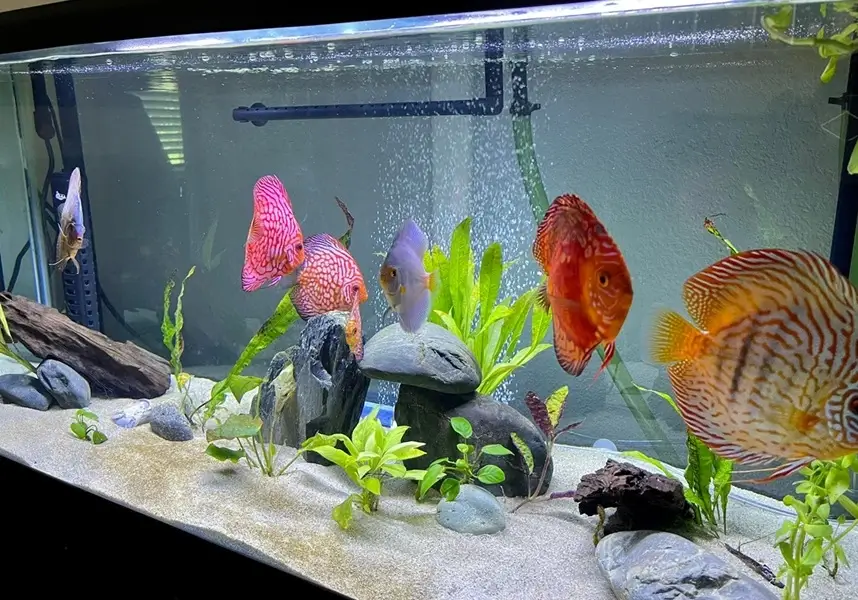
Discus also swim in vertical patterns, so a tank with sufficient vertical height is beneficial — a height of 20 inches or more is preferable.
If you plan to keep a larger number of Discus or include other tank mates, you’ll need an even larger aquarium. Always add plenty of plants to a Discus aquarium to help keep them stress-free.
Discus Fish Water Parameters
Discus fish are sensitive to water conditions, and maintaining appropriate water parameters is crucial for their health.
• Temperature: 78°F to 86°F — a stable temperature with minimal fluctuation should be maintained
• pH Level: slightly acidic to neutral, between 6.0 and 7.5 — some Discus keepers prefer closer to neutral for optimal conditions
• Water Hardness: General Hardness (GH) between 1 and 8 dGH, with Carbonate Hardness (KH) ideally between 1 and 4 dKH
• Ammonia and Nitrite: both should be kept at zero or as close to zero as possible — both are toxic to freshwater fish, and regular water changes or a strong filtration system prevent buildup
• Nitrate Levels: keep as low as possible, ideally below 20 ppm — regular water changes and proper filtration help control nitrate
• Filtration: efficient, gentle filtration to keep water clean and well-oxygenated — Discus are sensitive to ammonia and nitrite, and avoiding strong currents matters too, since Discus are not strong swimmers and can be stressed by them
Discus Fish Tank Setup Essentials
Beyond tank size and water chemistry, a few physical setup details make a real difference for Discus:
• Tank Substrate: a soft substrate such as fine gravel or sand — Discus often sift through the substrate in search of food, and a soft substrate prevents injuries to their delicate mouths
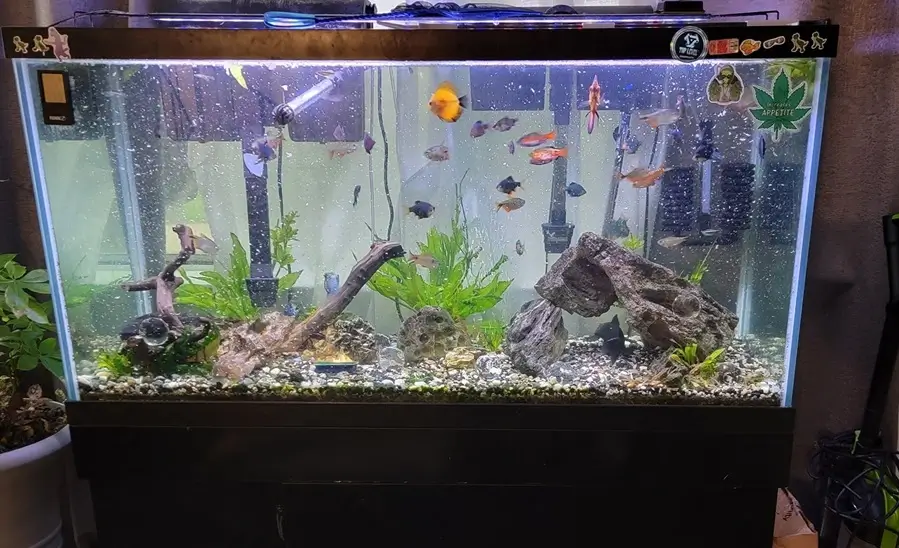
• Decorations: driftwood, rocks, and plants to mimic the natural habitat — live plants such as Amazon swords, Vallisneria, and Anubias provide hiding spaces and a natural aesthetic
• Lighting: subdued lighting — Discus come from shaded areas in their natural habitat, and bright light can stress them
• Heating: a reliable heater to maintain the desired temperature range — Discus are sensitive to temperature fluctuations
• Water Changes: regular water changes are essential — Discus benefit from more frequent, larger water changes, often around 50% every 10 to 15 days
Discus Fish Lifespan
Discus fish lifespan depends on their environment, care, genetics, and overall health. In well-maintained aquariums with proper care, Discus typically live 8 to 10 years, and some individuals reach up to 15 years under excellent conditions.
Key factors that influence the lifespan of Discus fish:
• Water Quality: Discus are sensitive to water conditions — clean, stable water parameters, regular water changes, and proper filtration are essential for their health and longevity
• Diet: a well-balanced, varied diet including high-quality pellets, frozen, or live foods supports overall health
• Tank Size: a sufficiently sized aquarium gives more swimming space and reduces stress — adding plants helps too
• Genetics: the genetic background of a Discus can influence its longevity — buying from reputable breeders means better vigor and a disease-free start
• Stress and Compatibility: minimizing stress with a peaceful environment and compatible tank mates keeps stress levels lower, supporting a longer lifespan
Discus Fish Tank Mates
Discus fish are peace-loving, gentle, and soft, so it’s crucial to ensure a harmonious, social aquarium environment. Discus are known for their calm temperament and are very sensitive to the behavior of their tank mates.
Here are some compatible tank mates for Discus fish:
Tetras:
• Cardinal tetras — a safer choice than neon tetras, since their slightly larger size makes them less likely to be mistaken for a snack by an adult Discus
• Rummy nose tetras
• Neon tetras — can work, but their small size puts them at some risk of being eaten by a hungry adult Discus, so Cardinal tetras are the more reliable pick if you want a similar look with less risk
Corydoras Catfish: Various species, such as Corydoras panda, can coexist peacefully with Discus.
Bottom Dwellers: Bottom-dwelling fish like Bristlenose plecos or other small plecos can be added.
Gouramis: Peaceful gouramis, such as honey gouramis, can live well with Discus in most setups, though opinions here aren’t unanimous — some experienced keepers consider gouramis too territorial and surface-focused for a calm Discus tank. Watch how they settle in and be ready to rehome them if they turn out more territorial than expected.
Rainbowfish: Some rainbowfish species, such as Boesemani rainbowfish, can be suitable if the tank is large enough.
Always consider the size of the tank, water parameters, and the specific needs of each species when planning a community tank with Discus, and avoid aggressive or fin-nipping fish.
How Big Do Discus Fish Get?
The size of Discus fish varies based on factors such as genetics, diet, and tank size. An adult Discus can have a body diameter ranging from 4 to 8 inches, with size varying among different strains and varieties. A larger tank and a regular high-quality diet can support growth up to 8 inches.
Large Discus fish:
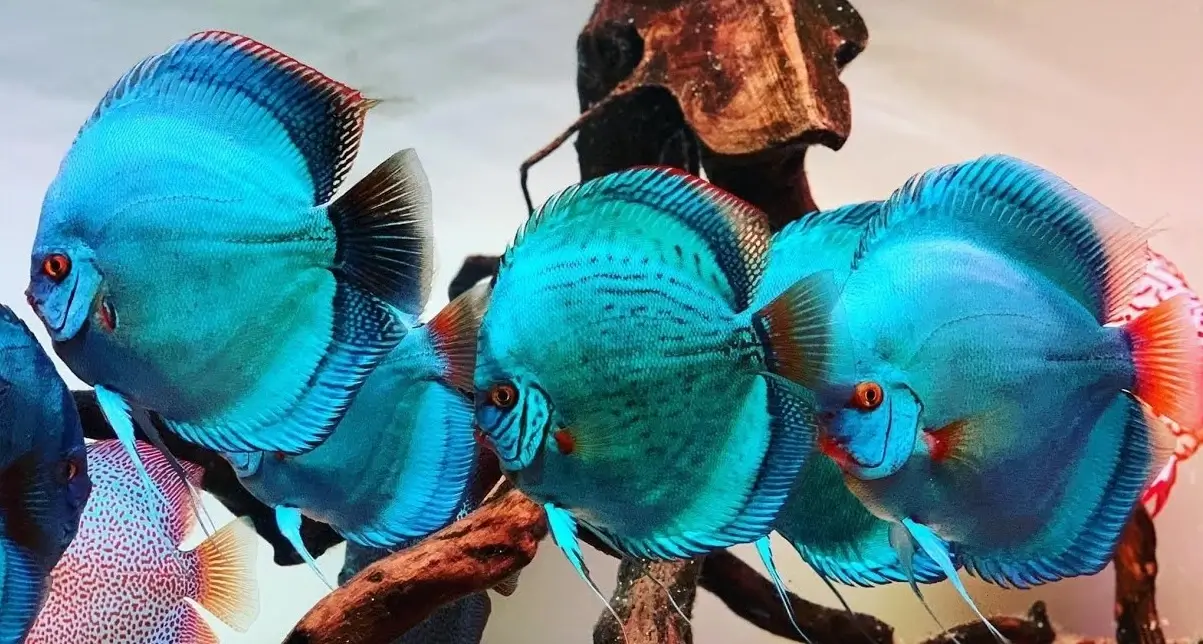
Juvenile Discus fish usually start around 1.5 to 2 inches in size, sometimes smaller depending on age.
The growth rate of Discus fish depends on feeding frequency, tank size, and genetics — generally, growth is faster in larger tanks.
Discus Fish Breeding
Breeding Discus fish is rewarding and interesting. Discus lay eggs, and the eggs are guarded and fanned by both parents. The breeding process involves the male and female pairing up, the female laying eggs, and the male fertilizing them. You’ll need to set up the right water conditions, a good diet, and a calm atmosphere to encourage Discus fish to mate and breed. Here are the steps to consider when breeding Discus fish:
Setting Up the Breeding Tank and Choosing Breeding Pairs:
Use a separate tank for breeding, preferably around 50 gallons for a group of 6 Discus — 4 males and 2 females. Provide a soft substrate, such as sand, for the Discus to lay eggs on, and include hiding spots like plants, PVC pipes, and driftwood to create a sense of security and mimic their natural habitat. Ensure the lighting mimics a natural day-night cycle.
Look for fish with vibrant colors, well-defined markings, and a good round shape, and make sure the selected pairs are compatible with each other.
Breeding Tank Water Parameters:
Maintain water temperature between 78–81°F, with pH slightly acidic, around 6.0 to 6.8. Gradually raise the temperature over a week to 82–87°F and hold it there to simulate the onset of the rainy season.
Feeding:
Feed the breeding pair a nutritious diet to support their health and color — a variety of high-quality foods, including live or frozen bloodworms and brine shrimp, fed two or three times a day leading up to breeding.
Observing Breeding Discus Fish:
Discus pairs exhibit courtship behavior such as lip-locking and swimming side-by-side. Discus are known to be excellent parents, with both taking turns guarding and caring for the eggs.
Caring for Fry:
Once the eggs hatch (usually within 2–3 days), the fry initially feed on a mucous secretion produced by their parents. After a few days, introduce baby brine shrimp or powdered fry food.
Raising Fry to Juveniles:
As the fry grow, gradually introduce more varied and larger foods, and monitor water parameters closely to keep conditions optimal.
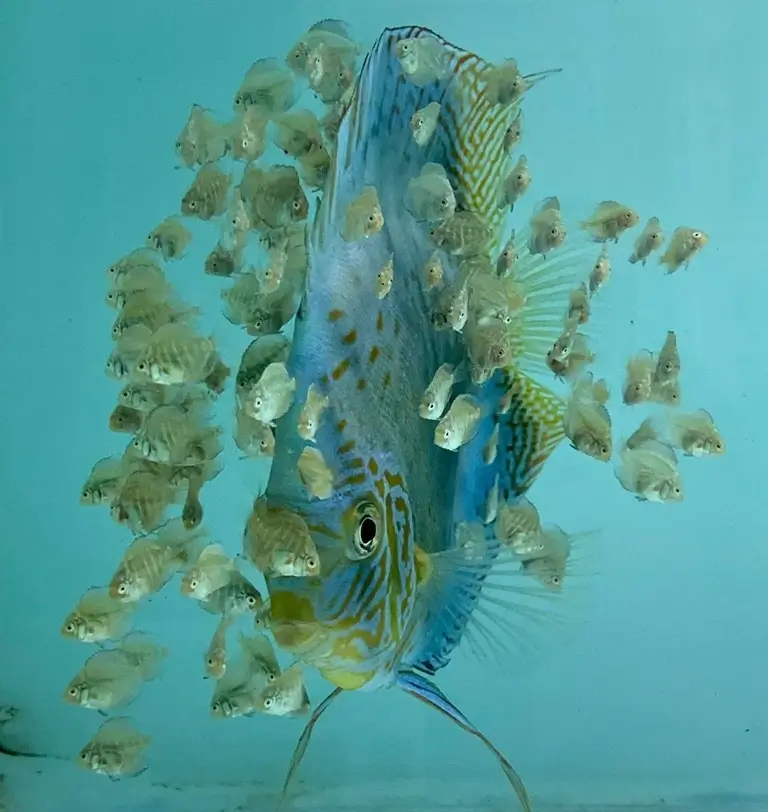
As the juveniles mature, separate them to avoid overcrowding.
Successful Discus breeding requires patience, dedication, and a good understanding of these fish’s specific needs. Regular monitoring of water parameters, proper diet, and a suitable breeding environment are the keys to success.
Discus Fish Cost & Buying Guide
Where to Find Discus Fish for Sale
Discus fish for sale can be found through various online platforms, local aquarium stores, or specialized Discus shops. Availability may vary based on your location and the specific type of Discus you’re after. Here are some general suggestions for finding Discus fish for sale:
• Check reputable online aquarium retailers and websites that specialize in selling Discus fish
• Explore auction sites like eBay, where individuals and breeders may list Discus for sale
• Visit local aquarium stores that specialize in Discus — staff can often provide more detailed guidance
• Look into Facebook groups dedicated to Discus aquarium enthusiasts, where members often share Discus for sale
Before making a purchase, make sure the seller is reputable and has positive reviews, confirm the fish’s health, and check shipping and transportation policies if you’re importing them.
How Much Do Discus Fish Cost?
Discus fish price varies widely depending on the variety, size, and quality of the fish.
Common or standard strains of Discus fish typically range from $50 to $60 per fish. Colorful, high-quality varieties such as Blue Diamond, Red Turquoise, or Pigeon Blood can range from $70 to $150 or more per fish. Rare or premium varieties, such as certain wild-caught species or unique colored lines, can run significantly higher — from $150 to several hundred dollars per Discus fish.
Breeding pairs of Discus fish are often more expensive, typically ranging from $200 to over $500, depending on quality and rarity.
Size also affects price — larger, mature Discus are priced higher than smaller juveniles. Prices also vary based on your location, the availability of certain strains, and the reputation of the seller or breeder.
Discus Fish FAQ
Are Discus fish good for beginners?
Not really. Discus are widely considered an advanced fish because of how sensitive they are to water quality and temperature swings. New keepers who want to start with Discus should be ready to test water frequently and do larger, more frequent water changes than most tropical fish need.
What’s the minimum tank size for Discus fish?
Around 55 gallons for a small group of 5 to 6 mature Discus. Since Discus are social and prefer living in groups, a single small tank isn’t a good fit — plan for a larger, taller aquarium from the start.
Can Discus fish live with Betta fish?
Opinions differ here. Their temperature ranges do overlap, and some keepers report success around 82°F. But Discus are unusually sensitive to stress, and a territorial Betta’s temperament is a real risk to a calmer, more delicate fish like Discus — most experienced Betta and Discus keepers recommend keeping them separate rather than relying on the overlap working out.
How often should I change the water in a Discus tank?
Discus benefit from larger, more frequent water changes than most fish — commonly around 50% every 10 to 15 days, or more often with a lighter filtration setup. Stable water quality matters more for Discus than for almost any other common aquarium fish.
Why won’t my Discus fish eat?
Discus can go off their food due to stress, poor water quality, illness, or being newly introduced to a tank. Check ammonia, nitrite, and temperature first, since these are the most common culprits, and give a new Discus time to settle before assuming something’s wrong.
Can Discus fish live alone?
They can survive alone, but it isn’t recommended. Discus are a social, shoaling species that do best in groups of 5 or more — a solitary Discus is more prone to stress and hiding.
How long do Discus fish live?
Typically 8 to 10 years with good care, with some individuals reaching up to 15 years under excellent conditions.
Final Thoughts
Discus fish reward patience more than almost any other freshwater fish in the hobby. Their needs are specific — warm, soft, pristine water; a large, tall tank; a calm social group of their own kind — but get those right and you’re rewarded with one of the most striking, personable fish you can keep.
They’re not a fish to buy on impulse for a small starter tank. If you’re coming from easier species and ready for the extra water-quality discipline Discus demand, they’re one of the most satisfying fish in the hobby to keep long-term.