
Guppy staying at the bottom of the tank is usually a sign of stress, illness, poor water quality, or an advanced stage of pregnancy. Sometimes guppies rest near the bottom for short periods, especially at night. But if your guppy spends most of the day hiding, barely moving, or refusing food, something is likely wrong.
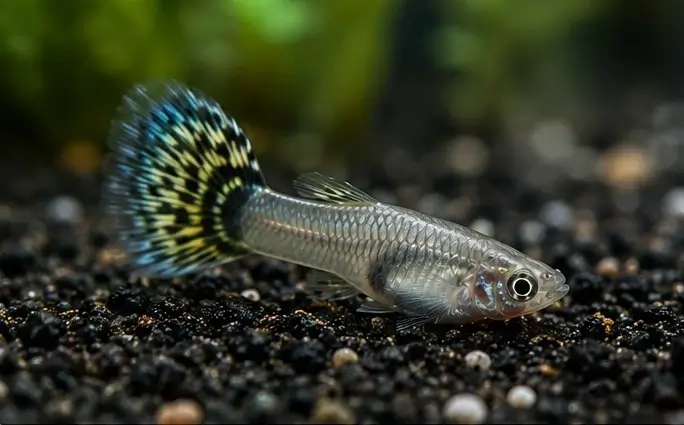
The good news is that most bottom-sitting behavior in guppies is fixable once you identify the real cause.
Quick Navigation
➜ Is It Normal for Guppies to Stay at the Bottom?
➜ Why Are Guppies Sitting at the Bottom of the Tank?
➜ Signs Your Guppy Is Sick
➜ How to Help a Guppy Staying at the Bottom
➜ When Should You Be Concerned?
➜ Can Guppies Recover from Bottom Sitting?
➜ Quick Checklist to Help a Guppy Staying at the Bottom
➜ Frequently Asked Questions
Is It Normal for Guppies to Stay at the Bottom?
Sometimes, yes.
Guppies may stay near the bottom temporarily because of:
➜ resting or sleeping, especially right after lights are off, and guppies can take 15–20 minutes to fully wake up and become active again once the lights come back on
➜ stress after transport
➜ new tank adjustment
➜ Advanced pregnancy stage in female guppies
However, healthy guppies are usually active swimmers. If the behavior continues for many hours or days, it shouldn’t be ignored.
Why Are Guppies Sitting at the Bottom of the Tank?
Poor Water Quality
Dirty water is the most common cause, and the mechanism is different from a simple lack of oxygen in the tank. Ammonia damages gill tissue directly and disrupts the fish’s salt balance, while nitrite gets absorbed into the bloodstream and converts hemoglobin into a form that can’t carry oxygen, called methemoglobin or brown blood disease. Either way, the fish ends up starved of usable oxygen internally even if the water itself is not short of oxygen, which is why ammonia and nitrite poisoning shows up as weakness and hence the bottom-sitting. See our guppy ammonia guide for the full symptoms and emergency steps, and our guppy water parameters guide for the ideal ranges to test against.
Fix: Test the water immediately and perform a small water change. A dechlorinator like Seachem Prime also neutralizes ammonia and nitrite during the change, which helps if levels are already elevated.
Improper maintenance can also shock fish. Read this guide on why guppies die after water changes and how to avoid common mistakes.
Stress or Sudden Changes
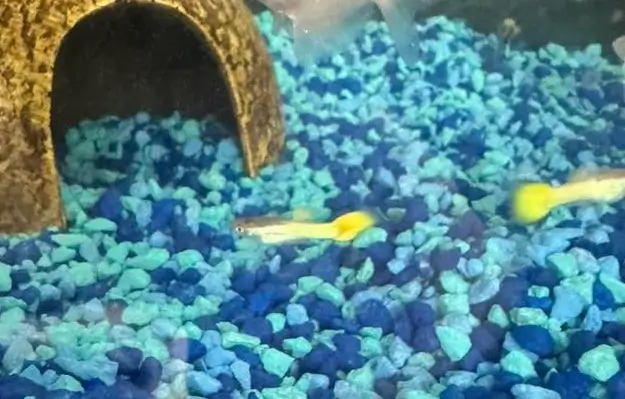
Guppies dislike sudden environmental changes. Common triggers include:
➜ large water changes
➜ sudden and drastic temperature shifts
➜ new tank mates
➜ loud vibrations or movement near the tank
Stress triggers the same instinctive response fish use to avoid predators: seek the most sheltered spot available and go still. The bottom and corners offer the most cover, so a stressed guppy retreats there to stay out of sight and conserve energy while it adjusts, rather than swimming exposed in open water.
What makes a change sudden rather than just different is that it outpaces the fish’s ability to physically adjust. A guppy’s body constantly works to keep its internal fluid and salt balance steady against the surrounding water, and a large or abrupt water change shifts that balance faster than the gills can recalibrate, which is what’s actually known as osmotic shock. Rapid temperature swings cause a similar problem, since a guppy’s whole metabolism runs at a pace set by water temperature, and a sudden shift doesn’t give those processes time to adjust the way a slow change would. New tank mates and loud vibrations work through the same fear response as general stress, since unfamiliar movement or sudden vibration in the water reads as a potential threat through the guppy’s lateral line.
In significant cases, the fluid imbalance from osmotic shock can extend to organ swelling, which is part of why dropsy is often linked back to stress and poor water quality rather than a single standalone cause.
Fix: Keep conditions stable and avoid sudden changes.
Strong Water Flow
A filter outflow that’s too strong for the tank size can make it hard for a guppy to hold its position in open water, so it may retreat to the bottom or a corner where the current is weaker, simply to conserve energy rather than fight the flow all day.
Fix: Add a flow baffle, redirect the outflow toward the glass instead of open water, or switch to a filter rated closer to your tank’s actual volume.
Swim Bladder Issues or Bloating
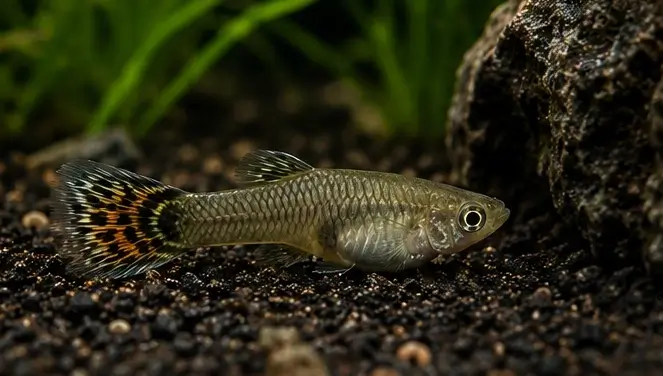
Overfeeding, constipation, or a swollen belly from bloating can put pressure on the swim bladder, the organ that controls buoyancy, making it hard for the guppy to stay upright or swim normally. A fish in this state often sinks to the bottom rather than choosing to rest there. The same swim bladder problem can also cause the opposite issue in some fish, see our guppy swimming upside down guide for the floating and sideways-swimming presentations.
Fix: Stop feeding for 24–48 hours, then offer a small piece of blanched, deshelled pea once feeding resumes. For the full breakdown of causes and treatment, see our guppy bloated guide.
Illness or Disease
A sick fish hides and goes still for the same reason a stressed one does, plus one more: looking weak or erratic draws the attention of tankmates and predators alike, and the energy it would spend swimming is needed for fighting off the infection instead. Reduced activity is the fish’s way of conserving what energy it has left.
Look for a sick fish with symptoms like:
➜ clamped fins
➜ white spots
➜ rapid breathing
➜ loss of color
Fix: Monitor closely and move the fish to a quarantine tank if illness is suspected. See our common guppy diseases guide for identification and treatment.
Water Temperature Problems
Guppies are cold-blooded, so their muscle activity and metabolism are directly driven by water temperature. In cold water, the chemical reactions that power swimming slow down along with everything else, leaving less usable energy for the fish to stay active. Resting on the substrate, where it doesn’t have to expend effort holding its position in open water, becomes the cheapest option energetically.
Fix: Use a reliable heater and thermometer, and keep the temperature stable rather than letting it drift. See our temperature for guppies guide for the full safe range and heater guidance.
Bullying or Aggressive Tank Mates
Sometimes guppies hide at the bottom to escape aggressive fish. Fin nipping and chasing create ongoing stress, and species like angelfish, tiger barbs, and aggressive cichlids are common triggers in a guppy tank, while swordtails, platies, mollies, and corydoras tend to coexist peacefully.
Fix: Observe tank behavior and separate aggressive fish if needed. For a full compatibility breakdown, see our guppy tank mates guide.
Aging
As guppies age, metabolic rate and muscle efficiency decline the same way they do in most animals, so active swimming costs more relative to the energy available. Resting becomes the default rather than the exception.
Fix: No treatment needed beyond making sure the rest of the tank stays clean and low-stress for an older fish.
Signs Your Guppy Is Sick
A guppy staying at the bottom becomes more concerning if you notice:
➜ refusing food
➜ rapid breathing
➜ curved body posture
➜ faded color
➜ clamped fins
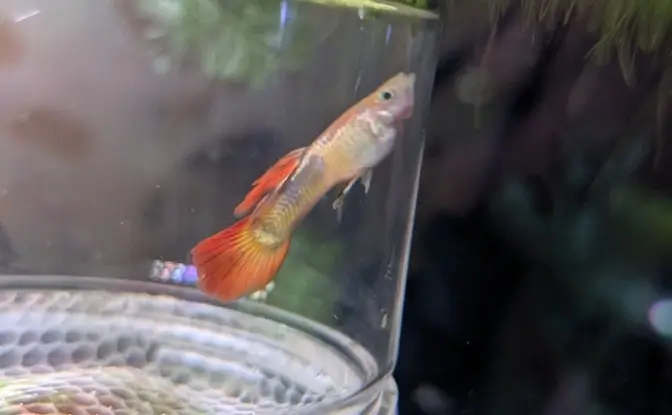
If your fish is also refusing food, check this detailed guide on why guppies stop eating and how to fix it.
How to Help a Guppy Staying at the Bottom
Start with the basics first:
➜ check water quality
➜ match proper temperature
➜ reduce stress in the tank
➜ improve oxygen levels
➜ avoid overfeeding
➜ avoid aggressive and bullying fish
Most guppies improve once the environment becomes stable again.
When Should You Be Concerned?
Take immediate action if your guppy:
➜ stays at the bottom for more than 24 hours
➜ stops eating completely
➜ breathes rapidly
➜ lies on its side
➜ shows signs of disease
Early treatment greatly improves survival chances. Long-term stress and illness can also reduce fish lifespan. Learn more in this complete guide on guppy lifespan and health.
Can Guppies Recover from Bottom Sitting?
Yes, in many cases they can recover fully. Recovery depends on:
➜ how quickly you identify the problem
➜ water quality improvement
➜ stress reduction
➜ proper feeding and care
Mild stress-related behavior often improves within 1–3 days.
Quick Checklist to Help a Guppy Staying at the Bottom
➜ test water quality
➜ perform a small water change
➜ improve oxygen levels
➜ maintain stable temperature
➜ observe for signs of illness or swim bladder problems
➜ reduce stress from tank mates
➜ Start medications in case any disease is found
Frequently Asked Questions
Why is my guppy sitting at the bottom but still alive?
This usually indicates stress, poor water quality, or early illness rather than something fatal.
Is my guppy sleeping at the bottom?
Guppies sometimes rest near the bottom at night, but remaining there all day isn’t normal.
Can stress cause guppies to stay at the bottom?
Yes. Stress is one of the most common causes of bottom-sitting behavior.
Why is my guppy not moving much?
Illness, temperature shock, swim bladder problems, or poor water conditions can all reduce activity.
Should I isolate a guppy staying at the bottom?
If the fish shows signs of illness or is being bullied, isolation can help recovery.
Can poor filtration cause bottom sitting?
Yes. Poor filtration can let harmful toxins build up leaving the guppy bottom-sitting.
Why is my guppy staying at the bottom after a water change?
Sudden changes in temperature or water chemistry can stress guppies and make them inactive temporarily.
Do guppies stay at the bottom before dying?
Sometimes. Weak or severely stressed guppies often become inactive and remain near the bottom.
Why is my guppy hiding at the bottom corner of the tank?
Guppies often hide in corners when stressed, bullied, or uncomfortable with water conditions. Sudden environmental changes can also trigger this.
Why is my guppy staying at the bottom and breathing fast?
Rapid breathing combined with bottom sitting usually points to stress, low oxygen concentration in the fish blood , ammonia problems, or illness. Check water quality immediately.
Can ammonia poisoning make guppies stay at the bottom?
Yes. High ammonia levels damage the gills and make guppies weak, stressed, and inactive.
Why is my male guppy staying at the bottom of the tank?
The same causes apply to males as females, minus pregnancy. Check water quality, temperature, swim bladder symptoms, and whether other fish are bullying him before assuming illness.
Why is my guppy sitting at the bottom after adding new fish?
New tank mates can create stress or bullying. Guppies may hide at the bottom until they feel safe again.
Why is my guppy staying at the bottom after feeding?
Occasional resting after feeding can be normal, but constant inactivity may point to overfeeding, swim bladder pressure, or poor water quality.
Can cold water make guppies stay at the bottom?
Yes. Cold water slows metabolism and reduces activity, and water below 65°F (18°C) should be corrected promptly.
Why is my female guppy staying at the bottom?
Pregnant females sometimes stay near the bottom before giving birth. Stress and illness should still be ruled out if she’s also showing other warning signs.
Can overfeeding cause guppies to sit at the bottom?
Yes. Overfeeding can pollute the water, reduce oxygen, and put pressure on the swim bladder, all of which affect activity levels.
Should I do a water change if my guppy is at the bottom?
If water quality is poor, a small water change can help. Avoid large, sudden changes, since they can increase stress instead of relieving it.
How long can a guppy stay at the bottom before it becomes serious?
If the behavior continues for more than 24 hours along with symptoms like appetite loss or rapid breathing, it’s time for immediate attention.
Why is my guppy staying near the heater at the bottom?
This can happen if the rest of the tank runs too cold or if the fish is weak and seeking out the warmest available spot.
Can stress from transportation cause bottom sitting?
Yes. Newly purchased guppies often stay near the bottom temporarily while adjusting to a new environment.
Can swim bladder problems make a guppy stay at the bottom?
Yes. A guppy with swim bladder trouble from overfeeding, constipation, or bloating often can’t control its buoyancy properly and sinks rather than swimming normally.