
Glofish Shark, sometimes called glow sharks, are genetically modified versions of the Rainbow Shark (Epalzeorhynchos frenatum). Scientists originally introduced genes from marine organisms like jellyfish and sea anemones into these freshwater fish to produce fluorescent colors. These modifications are now inheritable, the fluorescent traits are passed naturally to offspring, not injected or dyed. GloFish Sharks are popular for their vibrant glow and are easy to care for with relatively low maintenance.
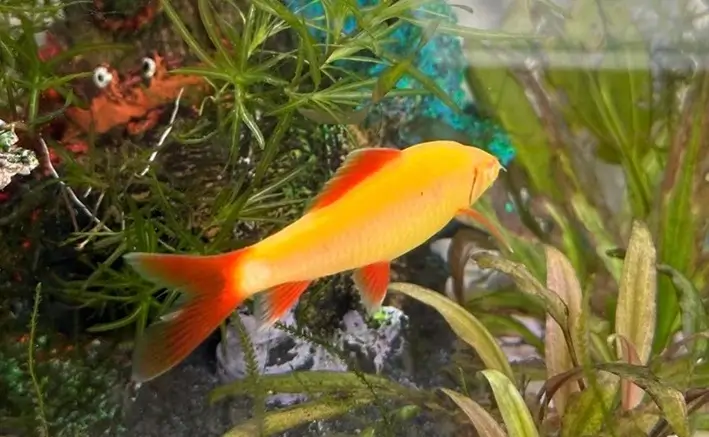
GloFish Sharks are tropical fish, and some individuals become semi-aggressive, often claiming specific areas of the tank as their own and chasing away fish that encroach on that territory. For this reason, it’s generally recommended to keep only one GloFish Shark per tank. Some fishkeepers report success keeping multiple GloFish Sharks together, but only in a large tank (75 gallons or more) with plenty of hiding space in the form of natural caves and plants.
GloFish Sharks have a sleek, streamlined body shape similar to their natural counterpart, the Rainbow Shark. They are active swimmers, often seen at the bottom and mid-levels of the tank.
Quick Navigation
➜ GloFish Shark Colors
➜ GloFish Shark Size
➜ GloFish Shark Tank Size
➜ GloFish Shark Tank Mates
➜ GloFish Shark Water Parameters
➜ GloFish Shark Lifespan
➜ GloFish Shark Food
➜ Buying a GloFish Shark
➜ Frequently Asked Questions
GloFish Shark Colors
Below are the GloFish Shark colors covered in this guide.
• Sunburst Orange
• Electric Green
• Galactic Purple
• Cosmic Blue
Sunburst Orange GloFish Shark
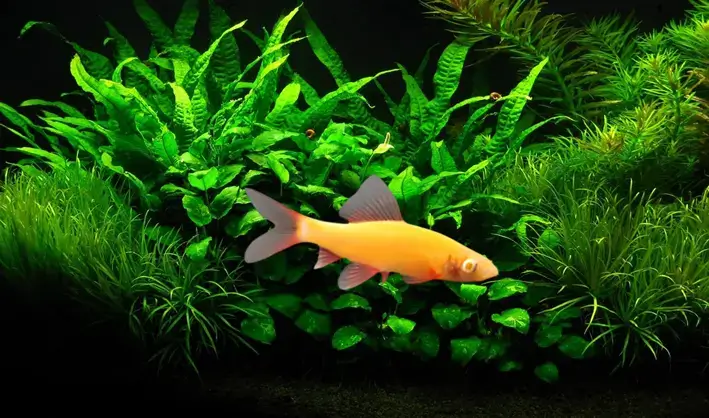
• Color: Bright, fluorescent orange, almost luminescent under blue LED or black lights.
• Under white light: Still visibly bright orange, though the glow effect is far less pronounced than under specialized lighting.
• Body: Sleek, similar to the Rainbow Shark, in a sunburst orange shade.
• Fins: Dark orange, adding to the overall brightness.
Electric Green GloFish Shark
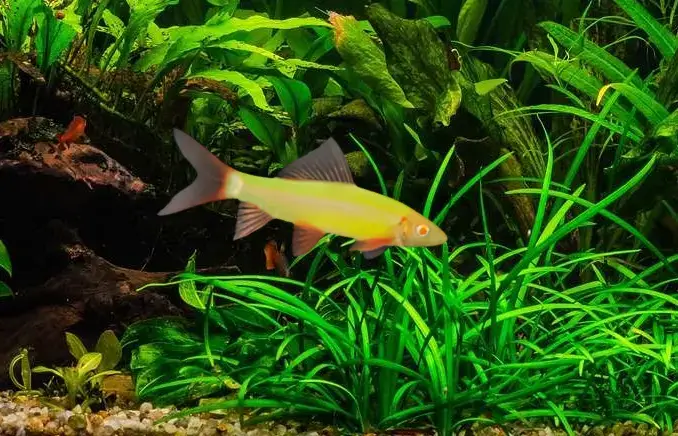
• Color: Electric or neon green, glowing brightly under blue LED lighting.
• Under white light: Still bright green, though less pronounced than under blue LED or black light.
• Body: Sleek Rainbow Shark shape in electric green.
• Fins: Often dark orange, enhancing overall fluorescence.
Galactic Purple GloFish Shark
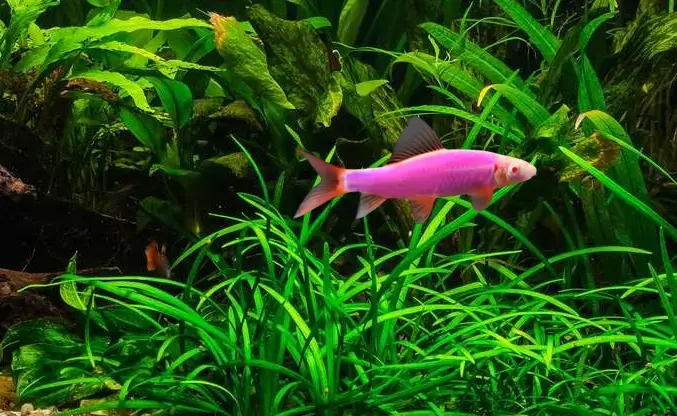
• Color: Striking galactic purple, glowing brightly under blue LED lighting.
• Under white light: Less pronounced than under blue LED or black light.
• Body: Same sleek shape, bright purple.
• Fins: Usually orange and purple, complementing the body.
Cosmic Blue GloFish Shark
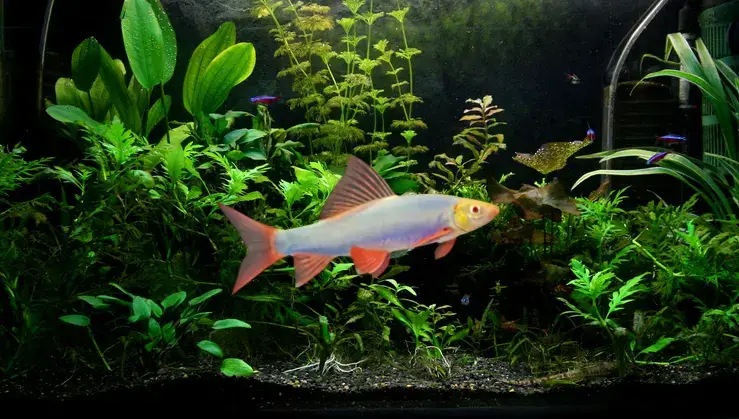
• Color: Light, vibrant blue, shining brightly under blue or black LED lighting, less pronounced under white light.
• Body: Same sleek shape, cosmic blue.
• Fins: Blue and orange.
GloFish Shark Size
GloFish Sharks share similar size characteristics with their non-fluorescent counterpart, the Rainbow Shark. Juveniles are typically 1 to 2 inches long. A full-grown GloFish Shark reaches about 5 to 6 inches at adulthood, and some individuals grow up to 8 inches in a sufficiently large tank with good feeding.
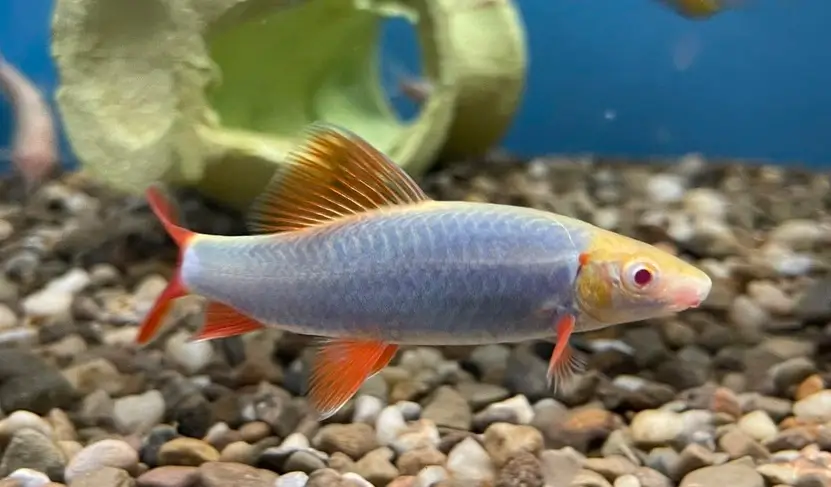
They grow relatively slowly, typically reaching full size over about a year to a year and a half. Regular monitoring and proper care during this growth phase help them reach their full potential size.
Factors Influencing GloFish Shark Size:
• Tank Size: Adequate space is crucial for healthy growth, larger tanks (70 gallons or more) support faster, bigger growth than the minimum.
• Diet: A varied, balanced diet, including high-quality flake or pellet food plus occasional live or frozen foods and vegetable matter, supports faster, healthier growth.
GloFish Shark Tank Size
A tank size 50 gallons or more is recommend as Glo Sharks can grow larger in size. We’ve included the ranges below, but if you’re choosing between sizes, going larger rather than smaller is always the safer choice for this active, territorial fish.
Minimum Tank Size:
• Single GloFish Shark: At least 20 gallons with good bottom space, though a larger tank is always better for swimming room and territory.
• Multiple GloFish Sharks: 40 gallons or more, with a rough rule of adding 20 gallons per additional Shark, plus plenty of natural caves and plants for each to establish its own territory.
Ideal Tank Size:
• Single GloFish Shark: 30 gallons or larger with generous bottom space, offering ample swimming room and reducing stress.
• Multiple GloFish Sharks (2+): 70 gallons or more, with abundant hiding spaces to reduce aggressive behavior between fish.
GloFish Shark Tank Mates
Choosing appropriate tank mates matters given the GloFish Shark’s semi-aggressive, territorial nature.
What to look for:
• Peaceful, active, fast-swimming fish that can easily evade the Shark if needed, tetras, barbs, and danios are good choices, since they stay in the upper and middle sections of the tank away from the bottom-dwelling Shark. Avoid similar species like Rainbow Sharks, which invite territorial disputes.
• Limit other bottom dwellers to reduce competition for space, though some algae eaters like certain plecos and snails can coexist reasonably well.
• Medium-sized, peaceful fish make the best companions, avoid anything large and aggressive that might bully the Shark instead.
Suitable Tank Mates:
• Large Tetras and Barbs — Black Skirt Tetra, Serpae Tetra, Tiger Barb, Rosy Barb, Cherry Barb. Fast swimmers with a peaceful temperament and similar water requirements.
• Gouramis — Blue Gourami, Pearl Gourami. Medium-sized, staying at the top and middle levels, reducing chances of conflict.
• Danios — Zebra Danio, Giant Danio. Fast, agile swimmers that stay in the upper and middle levels.
• Corydoras Catfish — Bronze Corydoras, Panda Corydoras, Bristlenose Plecos. Peaceful bottom dwellers that stay out of the Shark’s way.
Unsuitable Tank Mates:
• Small, slow-moving fish like Guppies or Neon Tetras, they can be harassed or bullied by a larger GloFish Shark. See our guppy tank mates guide for species that are actually a good match for guppies specifically.
• Long-finned fish like Angelfish or Betta Fish, their long fins can draw nipping from the Shark, causing stress and injury.
GloFish Shark Water Parameters
GloFish Sharks, like their Rainbow Shark counterparts, tolerate a range of water conditions reasonably well, but stable parameters are still essential for their long-term health.
• Temperature: 72–82°F, optimal around 75–78°F. Fluctuations cause stress and increase disease susceptibility.
• pH: 6.5–7.5, optimal around 7.0. They tolerate slightly acidic to slightly alkaline conditions as long as it stays stable.
• Water Hardness: 5–15 dGH, optimal 8–12 dGH. Consistency matters more than the exact number.
• Ammonia & Nitrite: Both should read as close to 0 ppm as possible.
• Nitrate: Below 20 ppm, maintained through regular water changes and good filtration.
• Filtration: A good external or internal filter with mechanical, biological, and chemical filtration stages keeps water quality stable. Good aeration also helps maintain healthy oxygen levels.
Test your water regularly with a reliable kit, and watch your fish for behavior, color, or appetite changes that might signal a parameter problem.
GloFish Shark Lifespan
GloFish Sharks typically live 5 to 8 years, similar to standard Rainbow Sharks. Several factors influence how close a fish gets to the higher end of that range:
• Water Quality: Clean, well-oxygenated, stable water is the single biggest factor in longevity.
• Diet: A balanced diet with both animal and vegetable matter supports overall health.
• Tank Size: An appropriately sized tank reduces stress and territorial aggression, see the Tank Size section above for the full breakdown.
• Tank Mates: Compatible companions reduce infighting, injuries, and stress, all of which affect longevity.
• Disease Prevention: Regular monitoring and prompt treatment of any illness helps prevent it from shortening the fish’s life.
GloFish Shark Food
GloFish Sharks are omnivores that need a balanced diet of both plant and animal matter. Since they’re bottom dwellers, food that sinks is essential, and choosing high-quality food helps avoid unnecessary water clouding.
Commercial Fish Food:
• Flakes: High-quality flake food formulated for GloFish, soft enough to be bitten or swallowed whole, ideally containing both plant matter (like spirulina) and animal matter (like silkworm or brine shrimp).
• Pellets: Sinking pellets are ideal given their bottom-feeding habits, look for high spirulina and animal-protein content, similar to food made for other bottom dwellers like catfish and loaches.
Live Food:
• Live bloodworms, brine shrimp, and daphnia all make excellent occasional protein-rich treats.
Frozen Food:
• Frozen bloodworms, brine shrimp, and daphnia are widely available and offer similar benefits to their live counterparts, with more consistent availability.
• Blanched vegetables like cucumber, spinach, and peas can be added occasionally to support digestion.
Buying a GloFish Shark
Price varies depending on the fish’s size, coloration, quality, and where you buy it.
Typical Prices
• Juvenile GloFish Shark: Typically $5 to $15, depending on size and coloration.
• Adult GloFish Shark: Larger, more mature fish with well-developed coloration can run $15 to $30 or more per fish.
Where to Buy
• Local fish stores: check the livestock section of your nearest pet or aquarium specialty store
• Online specialty sellers: search for “GloFish Shark” plus the specific color you want. Many sellers ship live fish, but exercise caution, check reviews, live arrival guarantees, and seller reputation before ordering
• Facebook groups and hobbyist communities: search for GloFish-specific or general fish-keeping groups in your region, where local sellers regularly post available fish
Since GloFish Sharks can be territorial, check whether you’re buying one fish or planning for multiples before you shop, since a single Shark and a group have very different tank size needs (covered in the Tank Size section above). When picking a fish, look for even, vibrant coloration under normal light, active swimming, and no clamped fins or visible spots.
Frequently Asked Questions
Are GloFish Sharks aggressive?
They can be semi-aggressive, particularly as they mature and begin defending bottom territory. Keeping just one Shark per tank is the safest approach unless your aquarium is large (75 gallons or more) with plenty of hiding spots.
What is the minimum tank size for a GloFish Shark?
Recommendations vary by source, from 20 to 30 gallons as a minimum for one fish, though bigger is always safer for this active, territorial species. See the Tank Size section above for the full breakdown.
Can GloFish Sharks live with a Betta?
Not recommended. A Betta’s long, flowing fins can draw nipping from the Shark, leading to stress and injury, covered in the Tank Mates section above.
Can GloFish Sharks live with guppies?
Not recommended. Guppies are small and slow-moving compared to a GloFish Shark and can end up bullied or harassed, covered in the Tank Mates section above.
What do GloFish Sharks eat?
A mix of high-quality sinking flakes or pellets as a staple, supplemented with live or frozen bloodworms, brine shrimp, and daphnia, plus occasional blanched vegetables.
How big do GloFish Sharks get?
Most reach 5 to 6 inches at full adult size, with some individuals growing up to 8 inches in spacious, well-fed conditions.
What colors do GloFish Sharks come in?
Sunburst Orange, Electric Green, Galactic Purple, and Cosmic Blue.
How long do GloFish Sharks live?
Typically 5 to 8 years with good water quality, diet, and an appropriately sized tank.